 Faroe Islands


Faroe Islands Population: 51,018
«  Previous Country | Next Country Previous Country | Next Country  » » | 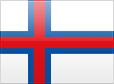 |
| History | |
| The population of the Faroe Islands is largely descended from Viking settlers who arrived in the 9th century. The islands have been connected politically to Denmark since the 14th century. A high degree of self-government was granted the Faroese in 1948, who have autonomy over most internal affairs while Denmark is responsible for justice, defense, and foreign affairs. The Faroe Islands are not part of the European Union. |
|
|  |
| |
| Geography | |
| |
| Location: | Northern Europe, island group between the Norwegian Sea and the North Atlantic Ocean, about halfway between Iceland and Norway |
| Geographic coordinates: | 62 00 N, 7 00 W |
| Area: | total: 1,393 sq km land: 1,393 sq km water: 0 sq km (some lakes and streams) Size comparison: eight times the size of Washington, DC |
| Land Boundaries: | 0 km |
| Coastline: | 1,117 km |
| Maritime claims: | territorial sea: 12 nm continental shelf: 200 nm or agreed boundaries or median line exclusive fishing zone: 200 nm or agreed boundaries or median line |
| Climate: | mild winters, cool summers; usually overcast; foggy, windy |
| Terrain: | rugged, rocky, some low peaks; cliffs along most of coast |
| Natural resources: | fish, whales, hydropower, possible oil and gas |
| Land use: | agricultural land: 2.1% (2011 est.) arable land: 2.1% (2011 est.) permanent crops: 0% (2011 est.) permanent pasture: 0% (2011 est.) forest: 0.1% (2011 est.) other: 97.8% (2011 est.) |
| Natural hazards: | strong winds and heavy rains can occur throughout the year |
| Current Environment Issues: | coastal erosion, landslides and rockfalls, flash flooding, wind storms; oil spills |
| International Environment Agreements: | party to: Marine Dumping - associate member to the London Convention and Ship Pollution |
| ^Back to Top | |
| People | |
| |
| Nationality: | noun: Faroese (singular and plural) adjective: Faroese |
| Ethnic groups: | Faroese 87.6% (Scandinavian and Anglo-Saxon descent), Danish 7.8%, other Nordic 1.4%, other 3.2% (includes Filipino, Thai, British) (2018 est.) note: data represent respondents by country of birth |
| Languages: | Faroese 93.8% (derived from Old Norse), Danish 3.2%, other 3% (2011 est.) note: data represent population by primary language |
| Religions: | Christian 87% (predominantly Evangelical Lutheran), other 0.9%, none 3.7%, unspecified or not queried 8.9% (2011 est.) |
| Population: | 51,018 (July 2018 est.) |
| Age structure: | 0-14 years: 19.79% (male 5,220 /female 4,878) 15-24 years: 14.17% (male 3,714 /female 3,515) 25-54 years: 37.24% (male 10,280 /female 8,718) 55-64 years: 11.82% (male 3,094 /female 2,934) 65 years and over: 16.98% (male 4,194 /female 4,471) (2018 est.) |
| Median age: | total: 37.6 years male: 37.1 years female: 38.2 years (2018 est.) |
| Population growth rate: | 0.58% (2018 est.) |
| Birth rate: | 14.5 births/1,000 population (2018 est.) |
| Death rate: | 8.8 deaths/1,000 population (2018 est.) |
| Net migration rate: | 0 migrant(s)/1,000 population (2018 est.) |
| Urbanization: | urban population: 42.1% of total population (2018) rate of urbanization: 0.74% annual rate of change (2015-20 est.) |
| Major urban areas - population: | 21,000 TORSHAVN (capital) (2018) |
| Sex ratio: | at birth: 1.07 male(s)/female 0-14 years: 1.07 male(s)/female 15-24 years: 1.06 male(s)/female 25-54 years: 1.18 male(s)/female 55-64 years: 1.05 male(s)/female 65 years and over: 0.94 male(s)/female total population: 1.08 male(s)/female (2018 est.) |
| Infant mortality rate: | total: 5.3 deaths/1,000 live births male: 5.6 deaths/1,000 live births female: 5 deaths/1,000 live births (2018 est.) |
| Life expectancy at birth: | total population: 80.6 years male: 78.1 years female: 83.3 years (2018 est.) |
| Total fertility rate: | 2.34 children born/woman (2018 est.) |
| Physicians density: | 2.62 physicians/1,000 population (2016) |
| Hospital bed density: | 4.1 beds/1,000 population (2015) |
| HIV/AIDS - adult prevalence rate: | n/a |
| HIV/AIDS - people living with HIV/AIDS: | n/a |
| HIV/AIDS - deaths: | n/a |
| Literacy: | |
| ^Back to Top | |
| Government | |
| |
| Country name: | conventional long form: none conventional short form: Faroe Islands local long form: none local short form: Foroyar etymology: the archipelago's name may derive from the Old Norse word "faer," meaning sheep |
| Government type: | parliamentary democracy (Faroese Parliament); part of the Kingdom of Denmark |
| Capital: | name: Torshavn geographic coordinates: 62 00 N, 6 46 W time difference: UTC 0 (5 hours ahead of Washington, DC, during Standard Time) daylight saving time: +1hr, begins last Sunday in March; ends last Sunday in October |
| Administrative divisions: | part of the Kingdom of Denmark; self-governing overseas administrative division of Denmark; there are 29 first-order municipalities (kommunur, singular - kommuna) Eidhis, Eystur, Famjins, Fuglafjardhar, Fugloyar, Hovs, Husavikar, Hvalbiar, Hvannasunds, Klaksvikar, Kunoyar, Kvivik, Nes, Porkeris, Runavikar, Sands, Sjovar, Skalavikar, Skopunar, Skuvoyar, Sorvags, Sumbiar, Sunda, Torshavnar, Tvoroyrar, Vaga, Vags, Vestmanna, Vidhareidhis |
| Independence: | none (part of the Kingdom of Denmark; self-governing overseas administrative division of Denmark) |
| National holiday: | Olaifest (Olavsoka) (commemorates the death in battle of King OLAF II of Norway, later St. OLAF), 29 July (1030) |
| Constitution: | history: 5 June 1953 (Danish Constitution), 23 March 1948 (Home Rule Act), and 24 June 2005 (Takeover Act) serve as the Faroe Islands constitutional position in the Unity of the Realm amendments: see entry for Denmark (2016) |
| Legal system: | the laws of Denmark, where applicable, apply |
| Suffrage: | 18 years of age; universal |
| Executive branch: | chief of state: Queen MARGRETHE II of Denmark (since 14 January 1972), represented by High Commissioner Lene Moyell JOHANSEN, chief administrative officer (since 15 May 2017) head of government: Prime Minister Aksel V. JOHANNESEN (since 15 September 2015) cabinet: Landsstyri appointed by the prime minister elections/appointments: the monarchy is hereditary; high commissioner appointed by the monarch; following legislative elections, the leader of the majority party or majority coalition usually elected prime minister by the Faroese Parliament; election last held on 1 September 2015 (next to be held in 2019) election results: Aksel V. JOHANNESEN elected prime minister; Parliament vote - NA |
| Legislative branch: | description: unicameral Faroese Parliament or Logting (33 seats; members directly elected in a single nationwide constituency by proportional representation vote; members serve 4-year terms) the Faroe Islands elect 2 members to the Danish Parliament to serve 4-year terms elections: Faroese Parliament - last held on 1 September 2015 (next to be held 31 August 2019) Faroese seats in the Danish Parliament last held on 5 June 2019(next to be held no later than June 2023) election results: Faroese Parliament percent of vote by party - JF 25.1%, Republic 20.7%, People's Party, 18.9%, Union Party 18.7%, Progressive Party 7%, Center Party 5.5%, New Self-Government Party 4.1%; seats by party - JF 8, Republic 7, People's Party 6, Union Party 6, Center Party 2, Progressive Party 2, New Self-Government Party 2; composition - men 23, women 10, percent of women 30.3%; note - 1 member from JF and 1 member of the Union Party are now independent Faroese seats in Danish Parliament - percent of vote by party - NA; seats by party - Social Democratic Party 1, Republican Party 1; composition - 2 men |
| Judicial branch: | highest courts: Faroese Court or Raett (Rett - Danish) decides both civil and criminal cases; the Court is part of the Danish legal system subordinate courts: Court of the First Instance or Tribunal de Premiere Instance; Court of Administrative Law or Tribunal Administratif; Mixed Commercial Court; Land Court |
| Political parties and leaders: | Center Party (Midflokkurin) [Rani SKAALUM] Self-Government Party (Sjalvstyri or Sjalvstyrisflokkurin) [Jogvan SKORHEIM] People's Party (Folkaflokkurin) [Jorgen NICLASEN] Progressive Party (Framsokn) [Poul MICHELSEN] Republic (Tjodveldi) [Hogni HOYDAL] (formerly the Republican Party) Social Democratic Party (Javnadarflokkurin) or JF [Aksel V. JOHANNESEN] Union Party (Sambandsflokkurin) [Bardur A STEIG NIELSEN] |
| International organization participation: | Arctic Council, IMO (associate), NC, NIB, UNESCO (associate), UPU |
| National symbol(s): | ram; national colors: red, white, blue |
| National anthem: | name: "Mitt alfagra land" (My Fairest Land) lyrics/music: Simun av SKAROI/Peter ALBERG note: adopted 1948; the anthem is also known as "Tu alfagra land mitt" (Thou Fairest Land of Mine); as a self-governing overseas administrative division of Denmark, the Faroe Islands are permitted their own national anthem |
| Diplomatic representation in the US: | none (self-governing overseas administrative division of Denmark) |
| Diplomatic representation from the US: | none (self-governing overseas administrative division of Denmark) |
| ^Back to Top | |
| Economy | |
The Faroese economy has experienced a period of significant growth since 2011, due to higher fish prices and increased salmon farming and catches in the pelagic fisheries. Fishing has been the main source of income for the Faroe Islands since the late 19th century, but dependence on fishing makes the economy vulnerable to price fluctuations. Nominal GDP, measured in current prices, grew 5.6% in 2015 and 6.8% in 2016. GDP growth was forecast at 6.2% in 2017, slowing to 0.5% in 2018, due to lower fisheries quotas, higher oil prices and fewer farmed salmon combined with lower salmon prices. The fisheries sector accounts for about 97% of exports, and half of GDP. Unemployment is low, estimated at 2.1% in early 2018. Aided by an annual subsidy from Denmark, which amounts to about 11% of Faroese GDP , Faroese have a standard of living equal to that of Denmark. The Faroe Islands have bilateral free trade agreements with the EU, Iceland, Norway, Switzerland, and Turkey. For the first time in 8 years, the Faroe Islands managed to generate a public budget surplus in 2016, a trend which continued in 2017. The local government intends to use this to reduce public debt, which reached 38% of GDP in 2015. A fiscal sustainability analysis of the Faroese economy shows that a long-term tightening of fiscal policy of 5% of GDP is required for fiscal sustainability. Increasing public infrastructure investments are likely to lead to continued growth in the short term, and the Faroese economy is becoming somewhat more diversified. Growing industries include financial services, petroleum-related businesses, shipping, maritime manufacturing services, civil aviation, IT, telecommunications, and tourism. | |
| GDP (purchasing power parity): | $2.001 billion (2014 est.) $1.89 billion (2013 est.) $1.608 billion (2012 est.) |
| GDP (official exchange rate): | $2.765 billion (2014 est.) (2014 est.) |
| GDP - real growth rate: | 5.9% (2017 est.) 7.5% (2016 est.) 2.4% (2015 est.) |
| GDP - per capita (PPP): | $40,000 (2014 est.) |
| Gross national saving: | 25.7% of GDP (2012 est.) 25.2% of GDP (2011 est.) 25.9% of GDP (2010 est.) GDP - composition, by end use: household consumption: 52% (2013) government consumption: 29.6% (2013) investment in fixed capital: 18.4% (2013) GDP - composition, by sector of origin: agriculture: 18% (2013 est.) industry: 39% (2013 est.) services: 43% (2013 est.) |
| Agriculture - products: | milk, potatoes, vegetables, sheep, salmon, herring, mackerel and other fish |
| Industries: | fishing, fish processing, tourism, small ship repair and refurbishment, handicrafts |
| Industrial production growth rate: | 3.4% (2009 est.) |
| Labor force: | 27,540 (2017 est.) |
| Labor force - by occupation: | agriculture: 15% industry: 15% services: 70% (December 2016 est.) |
| Unemployment rate: | 2.2% (2017 est.) 3.4% (2016 est.) |
| Population below poverty line: | 10% (2015 est.) |
| Household income or consumption by percentage share: | lowest 10%: n/a highest 10%: n/a |
| Distribution of family income - Gini index: | 22.7 (2013 est.) 21.6 (2011 est.) |
| Budget: | revenues: 835.6 million (2014 est.) expenditures: 883.8 million (2014) note: Denmark supplies the Faroe Islands with almost one-third of its public funds |
| Taxes and other revenues: | 30.2% (of GDP) (2014 est.) Budget surplus (+) or deficit (-): -1.7% (of GDP) (2014 est.) |
| Public debt: | 35% of GDP (2014 est.) |
| Fiscal year: | calendar year |
| Inflation rate (consumer prices): | -0.3% (2016) -1.7% (2015) |
| Exports: | $1.184 billion (2016 est.) $1.019 billion (2015 est.) |
| Exports - commodities: | fish and fish products (97%) (2017 est.) |
| Exports - partners: | Russia 26.4%, UK 14.1%, Germany 8.4%, China 7.9%, Spain 6.8%, Denmark 6.2%, US 4.7%, Poland 4.4%, Norway 4.1% (2017) |
| Imports: | $978.4 million (2016 est.) $906.1 million (2015 est.) |
| Imports - commodities: | goods for household consumption, machinery and transport equipment, fuels, raw materials and semi-manufactures, cars |
| Imports - partners: | Denmark 33%, China 10.7%, Germany 7.6%, Poland 6.8%, Norway 6.7%, Ireland 5%, Chile 4.3% (2017) |
| Debt - external: | $387.6 million (2012) $274.5 million (2010) |
| Stock of direct foreign investment - at home: | n/a |
| Exchange rates: | Danish kroner (DKK) per US dollar - 6.586 (2017 est.) 6.7269 (2016 est.) 6.7269 (2015 est.) 6.7236 (2014 est.) 5.6125 (2013 est.) |
| ^Back to Top | |
| Energy | |
| |
| Electricity - production: | 307 million kWh (2016 est.) |
| Electricity - consumption: | 285.5 million kWh (2016 est.) |
| Electricity - exports: | 0 kWh (2016 est.) |
| Electricity - imports: | 0 kWh (2016 est.) |
| Electricity - installed generating capacity: | 128,300 kW (2016 est.) |
| Electricity - from fossil fuels: | 54% of total installed capacity (2016 est.) |
| Electricity - from nuclear fuels: | 0% of total installed capacity (2017 est.) |
| Electricity - from hydroelectric plants: | 31% of total installed capacity (2017 est.) |
| Electricity - from other renewable sources: | 16% of total installed capacity (2017 est.) |
| Crude oil - production: | 0 bbl/day (2017 est.) |
| Crude oil - exports: | 0 bbl/day (2015 est.) |
| Crude oil - imports: | 0 bbl/day (2015 est.) |
| Crude oil - proved reserves: | 0 bbl (1 January 2018 est.) |
| Refined petroleum products - production: | 0 bbl/day (2015 est.) |
| Refined petroleum products - consumption: | 4,600 bbl/day (2016 est.) |
| Refined petroleum products - exports: | 0 bbl/day (2015 est.) |
| Refined petroleum products - imports: | 4,555 bbl/day (2015 est.) |
| Natural gas - production: | 0 cu m (2017 est.) |
| Natural gas - consumption: | 0 cu m (2017 est.) |
| Natural gas - exports: | 0 cu m (2017 est.) |
| Natural gas - imports: | 0 cu m (2017 est.) |
| Natural gas - proved reserves: | 0 cu m (1 January 2014 est.) |
| Carbon dioxide emissions from consumption of energy: | 739,300 Mt (2017 est.) |
| ^Back to Top | |
| Communications | |
| |
| Cellular Phones in use: | total subscriptions: 54,487 subscriptions per 100 inhabitants: 107 (July 2016 est.) |
| Telephone system: | general assessment: good international communications; good domestic facilities domestic: conversion to digital system completed in 1998; both NMT (analog) and GSM (digital) mobile telephone systems are installed international: country code - 298; satellite earth stations - 1 Orion; 1 fiber-optic submarine cable to the Shetland Islands, linking the Faroe Islands with Denmark and Iceland; fiber-optic submarine cable connection to Canada-Europe cable |
| Broadcast media: | 1 publicly owned TV station; the Faroese telecommunications company distributes local and international channels through its digital terrestrial network; publicly owned radio station supplemented by 3 privately owned stations broadcasting over multiple frequencies |
| Internet country code: | .fo |
| Internet users: | total: 47,988 percent of population: 95.1% (July 2016 est.) |
| ^Back to Top | |
| Transportation | |
| |
| Airports: | 1 (2013) |
| Airports (paved runways): | total 1 (2017) 1,524 to 2,437 m: 1 (2017) |
| Roadways: | total 960 km (2017) paved: 500 km (2017) unpaved: 460 km (2017) note: those islands not connected by roads (bridges or tunnels) are connected by seven different ferry links operated by the nationally owned company SSL; 28 km of tunnels |
| Merchant marine: | total 100 by type: container ship 3, general cargo 42, oil tanker 1, other 54 (2018) |
| Ports and terminals: | major seaport(s): Fuglafjordur, Torshavn, Vagur |
| ^Back to Top | |
| Military | |
| |
| Defense is the responsibility of Denmark | |
| Military branches: | no regular military forces or conscription; the Government of Denmark has responsibility for defense; as such, the Danish military’s Joint Arctic Command in Nuuk, Greenland is responsible for territorial defense of the Faroe Islands; the Joint Arctic Command has a contact element in the capital of Torshavn (2017) |
| ^Back to Top | |
| Transnational Issues | |
| |
| Disputes - International: | because anticipated offshore hydrocarbon resources have not been realized, earlier Faroese proposals for full independence have been deferred; Iceland, the UK, and Ireland dispute Denmark's claim to UNCLOS that the Faroe Islands' continental shelf extends beyond 200 nm |
| ^Back to Top | |
Faroe Islands Previous Country | Next Country »
Source: CIA - The World Factbook