 Falkland Islands


Falkland Islands Population: 3,198
«  Previous Country | Next Country Previous Country | Next Country  » » |  |
| History | |
| Although first sighted by an English navigator in 1592, the first landing (English) did not occur until almost a century later in 1690, and the first settlement (French) was not established until 1764. The colony was turned over to Spain two years later and the islands have since been the subject of a territorial dispute, first between Britain and Spain, then between Britain and Argentina. The UK asserted its claim to the islands by establishing a naval garrison there in 1833. Argentina invaded the islands on 2 April 1982. The British responded with an expeditionary force that landed seven weeks later and after fierce fighting forced an Argentine surrender on 14 June 1982. With hostilities ended and Argentine forces withdrawn, UK administration resumed. In response to renewed calls from Argentina for Britain to relinquish control of the islands, a referendum was held in March 2013, which resulted in 99.8% of the population voting to remain a part of the UK. |
|
|  |


| |
| Geography | |
| |
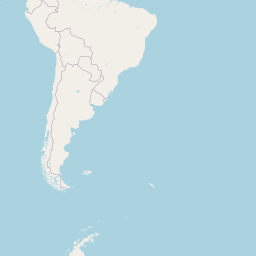
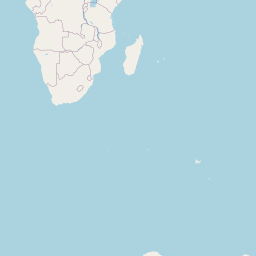
| Location: | Southern South America, islands in the South Atlantic Ocean, about 500 km east of southern Argentina |
| Geographic coordinates: | 51 45 S, 59 00 W |
| Area: | total: 12,173 sq km land: 12,173 sq km water: 0 sq km note: includes the two main islands of East and West Falkland and about 200 small islands Size comparison: slightly smaller than Connecticut |
| Land Boundaries: | 0 km |
| Coastline: | 1,288 km |
| Maritime claims: | territorial sea: 12 nm continental shelf: 200 nm exclusive fishing zone: 200 nm |
| Climate: | cold marine; strong westerly winds, cloudy, humid; rain occurs on more than half of days in year; average annual rainfall is 60 cm in Stanley; occasional snow all year, except in January and February, but typically does not accumulate |
| Terrain: | rocky, hilly, mountainous with some boggy, undulating plains |
| Natural resources: | fish, squid, wildlife, calcified seaweed, sphagnum moss |
| Land use: | agricultural land: 92.4% (2011 est.) arable land: 0% (2011 est.) permanent crops: 0% (2011 est.) permanent pasture: 92.4% (2011 est.) forest: 0% (2011 est.) other: 7.6% (2011 est.) |
| Irrigated land: | n/a |
| Natural hazards: | strong winds persist throughout the year |
| Current Environment Issues: | overfishing by unlicensed vessels is a problem; reindeer - introduced to the islands in 2001 from South Georgia - are part of a farming effort to produce specialty meat and diversify the islands' economy; this is the only commercial reindeer herd in the world unaffected by the 1986 Chornobyl disaster; grazing threatens important habitats including tussac grass and its ecosystem with penguins and sea lions; soil erosion from fires |
| ^Back to Top | |
| People | |
| |
| Nationality: | noun: Falkland Islander(s) adjective: Falkland Island |
| Ethnic groups: | Falkland Islander 48.3%, British 23.1%, St. Helenian 7.5%, Chilean 4.6%, mixed 6%, other 8.5%, unspecified 2% (2016 est.) |
| Languages: | English 89%, Spanish 7.7%, other 3.3% (2006 est.) |
| Religions: | Christian 57.1%, other 1.6%, none 35.4%, unspecified 6% (2016 est.) |
| Population: | 3,198 (2016 est.) note: data include all persons usually resident in the islands at the time of the 2016 census |
| Population growth rate: | 0.01% (2014 est.) |
| Birth rate: | 10.9 births/1,000 population (2012 est.) |
| Death rate: | 4.9 deaths/1,000 population (2012 est.) |
| Net migration rate: | n/a |
| Urbanization: | urban population: 77.7% of total population (2018) rate of urbanization: 0.76% annual rate of change (2015-20 est.) |
| Major urban areas - population: | 2,000 STANLEY (capital) (2018) |
| Sex ratio: | 1.12 male(s)/female (2016 est.) note: sex ratio is somewhat skewed by the high proportion of males at the Royal Air Force station, Mount Pleasant Airport (MPA); excluding MPA, the sex ratio of the total population would be 1.04 |
| Infant mortality rate: | total: n/a male: n/a female: n/a |
| Life expectancy at birth: | total population: 77.9 male: 75.6 female: 79.6 (2017 est.) |
| Total fertility rate: | n/a |
| HIV/AIDS - adult prevalence rate: | n/a |
| HIV/AIDS - people living with HIV/AIDS: | n/a |
| HIV/AIDS - deaths: | n/a |
| Literacy: | |
| ^Back to Top | |
| Government | |
| |
| Country name: | conventional long form: none conventional short form: Falkland Islands (Islas Malvinas) etymology: the archipelago takes its name from the Falkland Sound, the strait separating the two main islands; the channel itself was named after the Viscount of Falkland who sponsored an expedition to the islands in 1690; the Spanish name for the archipelago derives from the French "Iles Malouines," the name applied to the islands by French explorer Louis-Antoine de BOUGAINVILLE in 1764 |
| Government type: | parliamentary democracy (Legislative Assembly); self-governing overseas territory of the UK |
| Capital: | name: Stanley geographic coordinates: 51 42 S, 57 51 W time difference: UTC-4 (1 hour ahead of Washington, DC, during Standard Time) etymology: named after Edward Smith-Stanley (1799-1869), the 14th Earl of Derby, a British statesman and three-time prime minister of the UK who never visited the islands |
| Administrative divisions: | none (overseas territory of the UK; also claimed by Argentina) |
| Independence: | none (overseas territory of the UK; also claimed by Argentina) |
| National holiday: | Liberation Day, 14 June (1982) |
| Constitution: | previous 1985; latest entered into force 1 January 2009 (The Falkland Islands Constitution Order 2008) |
| Legal system: | English common law and local statutes |
| Suffrage: | 18 years of age; universal |
| Executive branch: | chief of state: Queen ELIZABETH II (since 6 February 1952); represented by Governor Nigel PHILLIPS (since 12 September 2017) head of government: Chief Executive Barry ROWLAND (since 3 October 2016) cabinet: Executive Council elected by the Legislative Council elections/appointments: the monarchy is hereditary; governor appointed by the monarch; chief executive appointed by the governor |
| Legislative branch: | description: unicameral Legislative Assembly, formerly the Legislative Council (10 seats; 8 members directly elected by majority vote and 2 appointed ex-officio members - the chief executive, appointed by the governor, and the financial secretary; members serve 4-year terms) elections: last held on 9 November 2017 (next to be held in November 2021) election results: percent of vote - NA; seats - independent 8; composition -men 8, women 2, percent of women 20% |
| Judicial branch: | highest courts: Court of Appeal (consists of the court president, the chief justice as an ex officio, non-resident member, and 2 justices of appeal); Supreme Court (consists of the chief justice); note - appeals beyond the Court of Appeal are referred to the Judicial Committee of the Privy Council (in London) judge selection and term of office: all justices appointed by the governor; tenure specified in each justice's instrument of appointment subordinate courts: Magistrate's Court (senior magistrate presides over civil and criminal divisions); Court of Summary Jurisdiction |
| Political parties and leaders: | none; all independents |
| International organization participation: | UPU |
| National symbol(s): | ram |
| National anthem: | name: Song of the Falklands" lyrics/music: Christopher LANHAM note: adopted 1930s; the song is the local unofficial anthem; as a territory of the United Kingdom, "God Save the Queen" is official (see United Kingdom) |
| Diplomatic representation in the US: | none (overseas territory of the UK) |
| Diplomatic representation from the US: | none (overseas territory of the UK; also claimed by Argentina) |
| ^Back to Top | |
| Economy | |
The economy was formerly based on agriculture, mainly sheep farming, but fishing and tourism currently comprise the bulk of economic activity. In 1987, the government began selling fishing licenses to foreign trawlers operating within the Falkland Islands' exclusive fishing zone. These license fees net more than $40 million per year, which help support the island's health, education, and welfare system. The waters around the Falkland Islands are known for their squid, which account for around 75% of the annual 200,000-ton catch. Dairy farming supports domestic consumption; crops furnish winter fodder. Foreign exchange earnings come from shipments of high-grade wool to the UK and from the sale of postage stamps and coins. Tourism, especially ecotourism, is increasing rapidly, with about 69,000 visitors in 2009 and adds approximately $5.5 million to the Falkland’s annual GDP. The British military presence also provides a sizable economic boost. The islands are now self-financing except for defense. In 1993, the British Geological Survey announced a 200-mile oil exploration zone around the islands, and early seismic surveys suggest substantial reserves capable of producing 500,000 barrels per day. Political tensions between the UK and Argentina remain high following the start of oil drilling activities in the waters. In May 2010 the first commercial oil discovery was made, signaling the potential for the development of a long term hydrocarbon industry in the Falkland Islands. | |
| GDP (purchasing power parity): | $206.4 million (2015 est.) $164.5 million (2014 est.) $167.5 million (2013 est.) |
| GDP (official exchange rate): | $206.4 million (2015 est.) (2015 est.) |
| GDP - real growth rate: | 25.5% (2015 est.) -1.8% (2014 est.) -20.4% (2013 est.) |
| GDP - per capita (PPP): | $70,800 (2015 est.) $63,000 (2014 est.) GDP - composition, by sector of origin: agriculture: 41% (2015 est.) industry: 20.6% n/a (2015 est.) services: 38.4% n/a (2015 est.) |
| Agriculture - products: | fodder and vegetable crops; venison, sheep, dairy products; fish, squid |
| Industries: | fish and wool processing; tourism |
| Industrial production growth rate: | n/a |
| Labor force: | 1,850 (2016 est.) |
| Labor force - by occupation: | agriculture: 41% industry: 24.5% services: 34.5% (2015 est.) |
| Unemployment rate: | 1% (2016 est.) |
| Population below poverty line: | n/a |
| Household income or consumption by percentage share: | lowest 10%: n/a highest 10%: n/a |
| Distribution of family income - Gini index: | 36 (2015) |
| Budget: | revenues: 67.1 million (FY09/10) expenditures: 75.3 million (FY09/10) |
| Taxes and other revenues: | 32.5% (of GDP) (FY09/10) Budget surplus (+) or deficit (-): -4% (of GDP) (FY09/10) |
| Public debt: | 0% of GDP (2015 est.) |
| Fiscal year: | 1 April - 31 March |
| Inflation rate (consumer prices): | 1.4% (2014 est.) |
| Exports: | $257.3 million (2015 est.) $125 million (2004 est.) |
| Exports - commodities: | wool, hides, meat, venison, fish, squid |
| Exports - partners: | Spain 74.4%, Namibia 10.4%, US 5% (2017) |
| Imports: | $90 million (2004 est.) |
| Imports - commodities: | fuel, food and drink, building materials, clothing |
| Imports - partners: | UK 47.8%, Spain 28.4%, Greece 10.2%, Netherlands 5.7%, Cote dIvoire 4.3% (2017) |
| Debt - external: | $0 (2017 est.) $0 (2016 est.) |
| Stock of direct foreign investment - at home: | (31 December 2009 est.) |
| Exchange rates: | Falkland pounds (FKP) per US dollar - 0.7836 (2017 est.) 0.6542 (2016 est.) 0.6542 (2015) 0.6542 (2014 est.) 0.6391 (2013 est.) |
| ^Back to Top | |
| Energy | |
| |
| Electricity - production: | 19 million kWh (2016 est.) |
| Electricity - consumption: | 17.67 million kWh (2016 est.) |
| Electricity - exports: | 0 kWh (2016 est.) |
| Electricity - imports: | 0 kWh (2016 est.) |
| Electricity - installed generating capacity: | 12,100 kW (2016 est.) |
| Electricity - from fossil fuels: | 74% of total installed capacity (2016 est.) |
| Electricity - from nuclear fuels: | 0% of total installed capacity (2017 est.) |
| Electricity - from hydroelectric plants: | 0% of total installed capacity (2017 est.) |
| Electricity - from other renewable sources: | 26% of total installed capacity (2017 est.) |
| Crude oil - production: | 0 bbl/day (2017 est.) |
| Crude oil - exports: | 0 bbl/day (2015 est.) |
| Crude oil - imports: | 0 bbl/day (2015 est.) |
| Crude oil - proved reserves: | 0 bbl (1 January 2018 est.) |
| Refined petroleum products - production: | 0 bbl/day (2017 est.) |
| Refined petroleum products - consumption: | 290 bbl/day (2016 est.) |
| Refined petroleum products - exports: | 0 bbl/day (2015 est.) |
| Refined petroleum products - imports: | 286 bbl/day (2015 est.) |
| Natural gas - production: | 0 cu m (2017 est.) |
| Natural gas - consumption: | 0 cu m (2017 est.) |
| Natural gas - exports: | 0 cu m (2017 est.) |
| Natural gas - imports: | 0 cu m (2017 est.) |
| Natural gas - proved reserves: | 0 cu m (1 January 2014 est.) |
| Carbon dioxide emissions from consumption of energy: | 44,070 Mt (2017 est.) |
| ^Back to Top | |
| Communications | |
| |
| Cellular Phones in use: | total subscriptions: 4,674 subscriptions per 100 inhabitants: 146 (July 2016 est.) |
| Telephone system: | general assessment: government-operated radiotelephone and private VHF/CB radiotelephone networks provide effective service to almost all points on both islands domestic: fixed-line subscriptions 77 per 100, 146 per 100 for mobile-cellular (2015) international: country code - 500; satellite earth station - 1 Intelsat (Atlantic Ocean) with links through London to other countries (2015) |
| Broadcast media: | TV service provided by a multi-channel service provider; radio services provided by the public broadcaster, Falkland Islands Radio Service, broadcasting on both AM and FM frequencies, and by the British Forces Broadcasting Service (BFBS) (2007) |
| Internet country code: | .fk |
| Internet users: | total: 3,000 percent of population: 98.3% (July 2016 est.) |
| ^Back to Top | |
| Transportation | |
| |
| Airports: | 7 (2013) |
| Airports (paved runways): | total 2 (2017) 2,438 to 3,047 m: 1 (2017) 914 to 1,523 m: 1 (2017) |
| Airports (unpaved runways): | total 5 (2013) under 914 m: 5 (2013) |
| Roadways: | total 440 km (2008) paved: 50 km (2008) unpaved: 390 km (2008) |
| Merchant marine: | total 3 by type: general cargo 1, other 2 (2018) |
| Ports and terminals: | major seaport(s): Stanley |
| ^Back to Top | |
| Military | |
| |
| Defense is the responsibility of the UK | |
| Military branches: | no regular military forces |
| ^Back to Top | |
| Transnational Issues | |
| |
| Disputes - International: | Argentina, which claims the islands in its constitution and briefly occupied them by force in 1982, agreed in 1995 to no longer seek settlement by force; UK continues to reject Argentine requests for sovereignty talks |
| ^Back to Top | |
Falkland Islands Previous Country | Next Country »
Source: CIA - The World Factbook