 Fiji
Fiji


Fiji Population: 926,276
«  Previous Country | Next Country Previous Country | Next Country  » » |  |
| History | |
| Fiji became independent in 1970 after nearly a century as a British colony. Democratic rule was interrupted by two military coups in 1987 caused by concern over a government perceived as dominated by the Indian community (descendants of contract laborers brought to the islands by the British in the 19th century). The coups and a 1990 constitution that cemented native Melanesian control of Fiji led to heavy Indian emigration; the population loss resulted in economic difficulties, but ensured that Melanesians became the majority. A new constitution enacted in 1997 was more equitable. Free and peaceful elections in 1999 resulted in a government led by an Indo-Fijian, but a civilian-led coup in 2000 ushered in a prolonged period of political turmoil. Parliamentary elections held in 2001 provided Fiji with a democratically elected government led by Prime Minister Laisenia QARASE. Reelected in May 2006, QARASE was ousted in a December 2006 military coup led by Commodore Voreqe BAINIMARAMA, who initially appointed himself acting president but in January 2007 became interim prime minister. Following years of political turmoil, long-delayed legislative elections were held in September 2014 that were deemed "credible" by international observers and that resulted in BAINIMARAMA being reelected. He was reelected in November 2018 in elections deemed free and fair. |
|
|  |

| |
| Geography | |
| |
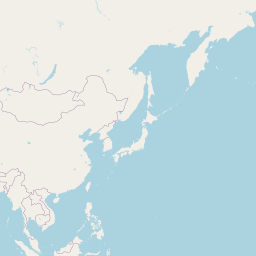
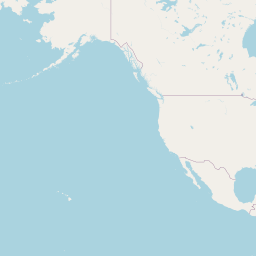
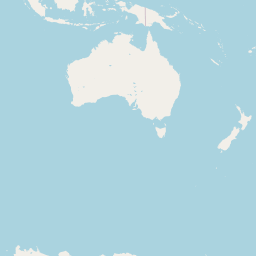
| Location: | Oceania, island group in the South Pacific Ocean, about two-thirds of the way from Hawaii to New Zealand |
| Geographic coordinates: | 18 00 S, 175 00 E |
| Area: | total: 18,274 sq km land: 18,274 sq km water: 0 sq km Size comparison: slightly smaller than New Jersey |
| Land Boundaries: | 0 km |
| Coastline: | 1,129 km |
| Maritime claims: | territorial sea: 12 nm exclusive economic zone: 200 nm contiguous zone: 24 nm continental shelf: 200-m depth or to the depth of exploitation measured from claimed archipelagic straight baselines |
| Climate: | tropical marine; only slight seasonal temperature variation |
| Terrain: | mostly mountains of volcanic origin |
| Natural resources: | timber, fish, gold, copper, offshore oil potential, hydropower |
| Land use: | agricultural land: 23.3% (2011 est.) arable land: 9% (2011 est.) permanent crops: 4.7% (2011 est.) permanent pasture: 9.6% (2011 est.) forest: 55.7% (2011 est.) other: 21% (2011 est.) |
| Irrigated land: | 40 sq km (2012) |
| Natural hazards: | cyclonic storms can occur from November to January |
| Current Environment Issues: | the widespread practice of waste incineration is a major contributor to air pollution in the country, as are vehicle emissions in urban areas; deforestation and soil erosion are significant problems; a contributory factor to erosion is clearing of land by bush burning, a widespread practie that threatens biodiversity |
| International Environment Agreements: | party to: Biodiversity, Climate Change, Climate Change-Kyoto Protocol, Desertification, Endangered Species, Law of the Sea, Marine Life Conservation, Ozone Layer Protection, Tropical Timber 83, Tropical Timber 94, Wetlands signed, but not ratified: none of the selected agreements |
| ^Back to Top | |
| People | |
| |
| Nationality: | noun: Fijian(s) adjective: Fijian |
| Ethnic groups: | iTaukei 56.8% (predominantly Melanesian with a Polynesian admixture), Indo-Fijian 37.5%, Rotuman 1.2%, other 4.5% (European, part European, other Pacific Islanders, Chinese) (2007 est.) note: a 2010 law replaces 'Fijian' with 'iTaukei' when referring to the original and native settlers of Fiji |
| Languages: | English (official), Fijian (official), Hindustani |
| Religions: | Protestant 45% (Methodist 34.6%, Assembly of God 5.7%, Seventh Day Adventist 3.9%, and Anglican 0.8%), Hindu 27.9%, other Christian 10.4%, Roman Catholic 9.1%, Muslim 6.3%, Sikh 0.3%, other 0.3%, none 0.8% (2007 est.) |
| Population: | 926,276 (July 2018 est.) |
| Age structure: | 0-14 years: 27.45% (male 129,962 /female 124,305) 15-24 years: 15.91% (male 75,165 /female 72,219) 25-54 years: 41.05% (male 194,743 /female 185,469) 55-64 years: 8.79% (male 41,286 /female 40,167) 65 years and over: 6.8% (male 28,924 /female 34,036) (2018 est.) |
| Dependency ratios: | total dependency ratio: 52.8 (2015 est.) youth dependency ratio: 43.9 (2015 est.) elderly dependency ratio: 8.9 (2015 est.) potential support ratio: 11.2 (2015 est.) |
| Median age: | total: 29.2 years male: 29 years female: 29.4 years (2018 est.) |
| Population growth rate: | 0.56% (2018 est.) |
| Birth rate: | 18.2 births/1,000 population (2018 est.) |
| Death rate: | 6.2 deaths/1,000 population (2018 est.) |
| Net migration rate: | -6.4 migrant(s)/1,000 population (2018 est.) |
| Urbanization: | urban population: 56.2% of total population (2018) rate of urbanization: 1.62% annual rate of change (2015-20 est.) |
| Major urban areas - population: | 178,000 SUVA (capital) (2018) |
| Sex ratio: | at birth: 1.05 male(s)/female 0-14 years: 1.05 male(s)/female 15-24 years: 1.04 male(s)/female 25-54 years: 1.05 male(s)/female 55-64 years: 1.03 male(s)/female 65 years and over: 0.85 male(s)/female total population: 1.03 male(s)/female (2018 est.) |
| Maternal mortality rate: | 30 deaths/100,000 live births (2015 est.) |
| Infant mortality rate: | total: 9.3 deaths/1,000 live births male: 10.2 deaths/1,000 live births female: 8.2 deaths/1,000 live births (2018 est.) |
| Life expectancy at birth: | total population: 73.2 years male: 70.5 years female: 76 years (2018 est.) |
| Total fertility rate: | 2.37 children born/woman (2018 est.) |
| Physicians density: | 0.84 physicians/1,000 population (2015) |
| Hospital bed density: | 2.3 beds/1,000 population (2011) |
| Drinking water source: | improved: urban: 99.5% of population rural: 91.2% of population total: 95.7% of population unimproved: urban: 0.5% of population rural: 8.8% of population total: 4.3% of population (2015 est.) |
| Sanitation facility access: | improved: urban: 93.4% of population (2015 est.) rural: 88.4% of population (2015 est.) total: 91.1% of population (2015 est.) unimproved: urban: 6.6% of population (2015 est.) rural: 11.6% of population (2015 est.) total: 8.9% of population (2015 est.) |
| HIV/AIDS - adult prevalence rate: | 0.1% (2016 est.) |
| HIV/AIDS - people living with HIV/AIDS: | <1000 (2016 est.) |
| HIV/AIDS - deaths: | <100 (2016 est.) |
| Obesity - adult prevalence rate: | 30.2% (2016) |
| Education expenditures: | 3.9% of GDP (2013) Unemployment, youth ages 15-24: total: 15.4% male: 11.9% female: 22.4% (2016 est.) |
| Literacy: | |
| ^Back to Top | |
| Government | |
| |
| Country name: | conventional long form: Republic of Fiji conventional short form: Fiji local long form: Republic of Fiji/Matanitu ko Viti local short form: Fiji/Viti etymology: the Fijians called their home Viti, but the neighboring Tongans called it Fisi, and in the Anglicized spelling of the Tongan pronunciation - promulgated by explorer Captain James COOK - the designation became Fiji |
| Government type: | parliamentary republic |
| Capital: | name: Suva (on Viti Levu) geographic coordinates: 18 08 S, 178 25 E time difference: UTC+12 (17 hours ahead of Washington, DC, during Standard Time) daylight saving time: +1hr, begins first Sunday in November; ends second Sunday in January |
| Administrative divisions: | 14 provinces and 1 dependency*; Ba, Bua, Cakaudrove, Kadavu, Lau, Lomaiviti, Macuata, Nadroga and Navosa, Naitasiri, Namosi, Ra, Rewa, Rotuma*, Serua, Tailevu |
| Independence: | 10 October 1970 (from the UK) |
| National holiday: | Fiji (Independence) Day, 10 October (1970) |
| Constitution: | several previous; latest signed into law 6 September 2013 |
| Legal system: | common law system based on the English model |
| Suffrage: | 18 years of age; universal |
| Executive branch: | chief of state: President Jioji Konousi KONROTE (since 12 November 2015) head of government: Prime Minister Voreqe "Frank" BAINIMARAMA (since 22 September 2014) cabinet: Cabinet appointed by the prime minister from among members of Parliament and is responsible to Parliament elections/appointments: president elected by Parliament for a 3-year term (eligible for a second term); election last held on 31 August 2018 (next to be held in 2021); prime minister endorsed by the president election results: Jioji Konousi KONROTE reelected president (unopposed) |
| Legislative branch: | description: unicameral Parliament (51 seats; members directly elected in a nationwide, multi-seat constituency by open-list proportional representation vote to serve 4-year terms) elections: last held on 14 November 2018 (next to be held in 2022) election results: percent of vote by party - FijiFirst 50%, SODELPA 39.6%, NFP 7.4%; seats by party - FijiFirst 27, SODELPA 21, NFP 3; composition - men 41, women 10, percent of women 19.6% |
| Judicial branch: | highest courts: Supreme Court (consists of the chief justice, all justices of the Court of Appeal, and judges appointed specifically as Supreme Court judges); Court of Appeal (consists of the court president, all puisne judges of the High Court, and judges specifically appointed to the Court of Appeal); High Court (chaired by the chief justice and includes a minimum of 10 puisne judges; High Court organized into civil, criminal, family, employment, and tax divisions) judge selection and term of office: chief justice appointed by the president of Fiji on the advice of the prime minister following consultation with the parliamentary leader of the opposition; judges of the Supreme Court, the president of the Court of Appeal, the justices of the Court of Appeal, and puisne judges of the High Court appointed by the president of Fiji upon the nomination of the Judicial Service Commission after consulting with the cabinet minister and the committee of the House of Representatives responsible for the administration of justice; the chief justice, Supreme Court judges and justices of Appeal generally required to retire at age 70 but this requirement may be waived for one or more sessions of the court; puisne judges appointed for not less than 4 years nor more than 7 years, with mandatory retirement at age 65 subordinate courts: Magistrates' Court (organized into civil, criminal, juvenile, and small claims divisions) |
| Political parties and leaders: | FijiFirst [Veroqe "Frank" BAINIMARAMA] Fiji Labor Party or FLP [Mahendra CHAUDHRY] Fiji United Freedon Party or FUFP [Jagath KARUNARATNE] National Federation Party or NFP [Biman PRASAD] (primarily Indian) Peoples Democratic Party or PDP [Lynda TABUYA] Social Democratic Liberal Party or SODELPA Unity Fiji [Adi QORO] |
| International organization participation: | ACP, ADB, AOSIS, C, CP, FAO, G-77, IAEA, IBRD, ICAO, ICCt, ICRM, IDA, IFAD, IFC, IFRCS, IHO, ILO, IMF, IMO, Interpol, IOC, IOM, ISO, ITSO, ITU, ITUC (NGOs), MIGA, OPCW, PCA, PIF, Sparteca (suspended), SPC, UN, UNCTAD, UNDOF, UNESCO, UNIDO, UNMISS, UNWTO, UPU, WCO, WFTU (NGOs), WHO, WIPO, WMO, WTO |
| National symbol(s): | Fijian canoe; national color: light blue |
| National anthem: | name: God Bless Fiji lyrics/music: Michael Francis Alexander PRESCOTT/C. Austin MILES (adapted by Michael Francis Alexander PRESCOTT) note: adopted 1970; known in Fijian as "Meda Dau Doka" (Let Us Show Pride); adapted from the hymn, "Dwelling in Beulah Land," the anthem's English lyrics are generally sung, although they differ in meaning from the official Fijian lyrics |
| Diplomatic representation in the US: | chief of mission: Ambassador Solo MARA (since 28 January 2016) chancery: 2000 M Street NW, Suite 710, Washington, DC 20036 telephone: [1] (202) 466-8320 FAX: [1] (202) 466-8325 |
| Diplomatic representation from the US: | chief of mission: Ambassador Judith CEFKIN (since 3 February 2015); note - also accredited to Kiribati, Nauru, Tonga, and Tuvalu embassy: 158 Princes Rd, Tamavua mailing address: P. O. Box 218, Suva telephone: [679] 331-4466 FAX: [679] 330-8685 |
| ^Back to Top | |
| Economy | |
Fiji, endowed with forest, mineral, and fish resources, is one of the most developed and connected of the Pacific island economies. Earnings from the tourism industry, with an estimated 842,884 tourists visiting in 2017, and remittances from Fijian’s working abroad are the country’s largest foreign exchange earners. Bottled water exports to the US is Fiji’s largest domestic export. Fiji's sugar sector remains a significant industry and a major export, but crops and one of the sugar mills suffered damage during Cyclone Winston in 2016. Fiji’s trade imbalance continues to widen with increased imports and sluggish performance of domestic exports. The return to parliamentary democracy and successful elections in September 2014 improved investor confidence, but increasing bureaucratic regulation, new taxes, and lack of consultation with relevant stakeholders brought four consecutive years of decline for Fiji on the World Bank Ease of Doing Business index. Private sector investment in 2017 approached 20% of GDP, compared to 13% in 2013. | |
| GDP (purchasing power parity): | $8.629 billion (2017 est.) $8.376 billion (2016 est.) $8.321 billion (2015 est.) note: data are in 2017 dollars |
| GDP (official exchange rate): | $4.891 billion (2017 est.) |
| GDP - real growth rate: | 3% (2017 est.) 0.7% (2016 est.) 3.8% (2015 est.) |
| GDP - per capita (PPP): | $9,800 (2017 est.) $9,600 (2016 est.) $9,600 (2015 est.) note: data are in 2017 dollars |
| Gross national saving: | 12.7% of GDP (2017 est.) 13.4% of GDP (2016 est.) 16.1% of GDP (2015 est.) GDP - composition, by end use: household consumption: 81.3% (2017 est.) government consumption: 24.4% (2017 est.) investment in fixed capital: 16.9% (2017 est.) investment in inventories: 0% (2017 est.) exports of goods and services: 29% (2017 est.) imports of goods and services: -51.6% (2017 est.) GDP - composition, by sector of origin: agriculture: 13.5% (2017 est.) industry: 17.4% (2017 est.) services: 69.1% (2017 est.) |
| Agriculture - products: | sugarcane, copra, ginger, tropical fruits, vegetables; beef, pork, chicken, fish |
| Industries: | tourism, sugar processing, clothing, copra, gold, silver, lumber |
| Industrial production growth rate: | 2.8% (2017 est.) |
| Labor force: | 353,100 (2017 est.) |
| Labor force - by occupation: | agriculture: 44.2% industry: 14.3% services: 41.6% (2011) |
| Unemployment rate: | 4.5% (2017 est.) 5.5% (2016 est.) |
| Population below poverty line: | 31% (2009 est.) |
| Household income or consumption by percentage share: | lowest 10%: 2.6% highest 10%: 34.9% (2009 est.) |
| Budget: | revenues: 1.454 billion (2017 est.) expenditures: 1.648 billion (2017 est.) |
| Taxes and other revenues: | 29.7% (of GDP) (2017 est.) Budget surplus (+) or deficit (-): -4% (of GDP) (2017 est.) |
| Public debt: | 48.9% of GDP (2017 est.) 47.5% of GDP (2016 est.) |
| Fiscal year: | calendar year |
| Inflation rate (consumer prices): | 3.4% (2017 est.) 3.9% (2016 est.) |
| Current account balance: | -$277 million (2017 est.) -$131 million (2016 est.) |
| Exports: | $908.2 million (2017 est.) $709 million (2016 est.) |
| Exports - commodities: | fuel, including oil, fish, beverages, gems, sugar, garments, gold, timber, fish, molasses, coconut oil, mineral water |
| Exports - partners: | US 20.8%, Australia 14.9%, NZ 7.7%, Tonga 5%, Vanuatu 4.6%, China 4.5%, Spain 4.3%, UK 4.3%, Kiribati 4.1% (2017) |
| Imports: | $1.911 billion (2017 est.) $1.761 billion (2016 est.) |
| Imports - commodities: | manufactured goods, machinery and transport equipment, petroleum products, food and beverages, chemicals, tobacco |
| Imports - partners: | Australia 19.2%, NZ 17.2%, Singapore 17%, China 13.8% (2017) |
| Reserves of foreign exchange and gold: | $1.116 billion (31 December 2017 est.) $908.6 million (31 December 2016 est.) |
| Debt - external: | $1.022 billion (31 December 2017 est.) $696.4 million (31 December 2016 est.) |
| Stock of direct foreign investment - at home: | $4.342 billion (31 December 2017 est.) $4.022 billion (31 December 2016 est.) |
| Stock of direct foreign investment - abroad: | $117.1 million (31 December 2017 est.) $115.1 million (31 December 2016 est.) |
| Market value of publicly traded shares: | $452.5 million (31 December 2012 est.) $392.2 million (31 December 2011 est.) $418.8 million (31 December 2010 est.) |
| Exchange rates: | Fijian dollars (FJD) per US dollar - 2.075 (2017 est.) 2.0947 (2016 est.) 2.0947 (2015 est.) 2.0976 (2014 est.) 1.8874 (2013 est.) |
| ^Back to Top | |
| Energy | |
| |
| Electricity - production: | 914 million kWh (2016 est.) |
| Electricity - consumption: | 850 million kWh (2016 est.) |
| Electricity - exports: | 0 kWh (2016 est.) |
| Electricity - imports: | 0 kWh (2016 est.) |
| Electricity - installed generating capacity: | 338,000 kW (2016 est.) |
| Electricity - from fossil fuels: | 34% of total installed capacity (2016 est.) |
| Electricity - from nuclear fuels: | 0% of total installed capacity (2017 est.) |
| Electricity - from hydroelectric plants: | 38% of total installed capacity (2017 est.) |
| Electricity - from other renewable sources: | 27% of total installed capacity (2017 est.) |
| Crude oil - production: | 0 bbl/day (2017 est.) |
| Crude oil - exports: | 0 bbl/day (2015 est.) |
| Crude oil - imports: | 0 bbl/day (2015 est.) |
| Crude oil - proved reserves: | 0 bbl (1 January 2018 est.) |
| Refined petroleum products - production: | 0 bbl/day (2015 est.) |
| Refined petroleum products - consumption: | 16,000 bbl/day (2016 est.) |
| Refined petroleum products - exports: | 0 bbl/day (2015 est.) |
| Refined petroleum products - imports: | 17,460 bbl/day (2015 est.) |
| Natural gas - production: | 0 cu m (2017 est.) |
| Natural gas - consumption: | 0 cu m (2017 est.) |
| Natural gas - exports: | 0 cu m (2017 est.) |
| Natural gas - imports: | 0 cu m (2017 est.) |
| Natural gas - proved reserves: | 0 cu m (1 January 2014 est.) |
| Carbon dioxide emissions from consumption of energy: | 2.369 million Mt (2017 est.) |
| ^Back to Top | |
| Communications | |
| |
| Cellular Phones in use: | total subscriptions: 1,033,915 subscriptions per 100 inhabitants: 112 (2017 est.) |
| Telephone system: | general assessment: modern local, interisland, and international (wire/radio integrated) public and special-purpose telephone, telegraph, and teleprinter facilities; regional radio communications center; subject to occasional devastating cyclones; Fiji is a leader in the Pacific region in terms of development of its ICT (Information & Communications Technology) sector and investment in telecoms infrastructure; initial progress towards 5G readiness (2018) domestic: telephone or radio telephone links to almost all inhabited islands; most towns and large villages have automatic telephone exchanges and direct dialing; fixed-line 8 per 100 persons and mobile-cellular teledensity roughly 112 per 100 persons (2018) international: country code - 679; access to important cable links between US and Canada, as well as between NZ and Australia; satellite earth stations - 2 Inmarsat (Pacific Ocean); 2018 Fijian Government to implement cable to connect the two major islands via submarine cable system |
| Broadcast media: | Fiji TV, a publicly traded company, operates a free-to-air channel; Digicel Fiji operates the Sky Fiji and Sky Pacific multi-channel pay-TV services; state-owned commercial company, Fiji Broadcasting Corporation, Ltd, operates 6 radio stations - 2 public broadcasters and 4 commercial broadcasters with multiple repeaters; 5 radio stations with repeaters operated by Communications Fiji, Ltd; transmissions of multiple international broadcasters are available |
| Internet country code: | .fj |
| Internet users: | total: 425,680 percent of population: 46.5% (July 2016 est.) |
| ^Back to Top | |
| Transportation | |
| |
| Airports: | 28 (2013) |
| Airports (paved runways): | total 4 (2017) over 3,047 m: 1 (2017) 1,524 to 2,437 m: 1 (2017) 914 to 1,523 m: 2 (2017) |
| Airports (unpaved runways): | total 24 (2013) 914 to 1,523 m: 5 (2013) under 914 m: 19 (2013) |
| Railways: | total 597 km (2008) narrow gauge: 597 km 0.600-m gauge (2008) note: belongs to the government-owned Fiji Sugar Corporation; used to haul sugarcane during the harvest season, which runs from May to December |
| Roadways: | total 3,440 km (2011) paved: 1,686 km (2011) unpaved: 1,754 km (2011) |
| Waterways: | 203 km (122 km are navigable by motorized craft and 200-metric-ton barges) (2012) |
| Merchant marine: | total 60 by type: general cargo 21, oil tanker 1, other 38 (2018) |
| Ports and terminals: | major seaport(s): Lautoka, Levuka, Suva |
| ^Back to Top | |
| Military | |
| |
| Military branches: | Republic of Fiji Military Forces (RFMF): Land Forces, Naval Forces (2011) |
| Military service age and obligation: | 18 years of age for voluntary military service; mandatory retirement at age 55 (2013) |
| Military expenditures: | 0.98% of GDP (2016) 1.07% of GDP (2015) 1.03% of GDP (2014) 1.39% of GDP (2013) 1.49% of GDP (2012) |
| ^Back to Top | |
| Transnational Issues | |
| |
| Disputes - International: | maritime boundary dispute with Tonga |
| ^Back to Top | |
Fiji Previous Country | Next Country »
Source: CIA - The World Factbook