 Rwanda


Rwanda Population: 12,187,400
«  Previous Country | Next Country Previous Country | Next Country  » » | 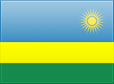 |
| History | |
| In 1959, three years before independence from Belgium, the majority ethnic group, the Hutus, overthrew the ruling Tutsi king. Over the next several years, thousands of Tutsis were killed, and some 150,000 driven into exile in neighboring countries. The children of these exiles later formed a rebel group, the Rwandan Patriotic Front (RPF), and began a civil war in 1990. The war, along with several political and economic upheavals, exacerbated ethnic tensions, culminating in April 1994 in a state-orchestrated genocide, in which Rwandans killed over 800,000 of their fellow citizens, including approximately three-quarters of the Tutsi population. The genocide ended later that same year when the predominantly Tutsi RPF, operating out of Uganda and northern Rwanda, defeated the national army and Hutu militias, and established an RPF-led government of national unity. Rwanda held its first local elections in 1999 and its first post-genocide presidential and legislative elections in 2003. Rwanda joined the Commonwealth in late 2009. President Paul KAGAME won the presidential election in August 2017 after changing the constitution in 2016 to allow him to run for a third term. |
|
|  |
| |
| Geography | |
| |
| Location: | Central Africa, east of the Democratic Republic of the Congo, north of Burundi |
| Geographic coordinates: | 2 00 S, 30 00 E |
| Area: | total: 26,338 sq km land: 24,668 sq km water: 1,670 sq km Size comparison: slightly smaller than Maryland |
| Land Boundaries: | total: 930 km border countries (4): Burundi 315 km, Democratic Republic of the Congo 221 km, Tanzania 222 km, Uganda 172 km |
| Coastline: | 0 km (landlocked) |
| Maritime claims: | none (landlocked) |
| Climate: | temperate; two rainy seasons (February to April, November to January); mild in mountains with frost and snow possible |
| Terrain: | mostly grassy uplands and hills; relief is mountainous with altitude declining from west to east |
| Natural resources: | gold, cassiterite (tin ore), wolframite (tungsten ore), methane, hydropower, arable land |
| Land use: | agricultural land: 74.5% (2011 est.) arable land: 47% (2011 est.) permanent crops: 10.1% (2011 est.) permanent pasture: 17.4% (2011 est.) forest: 18% (2011 est.) other: 7.5% (2011 est.) |
| Irrigated land: | 96 sq km (2012) |
| Natural hazards: | periodic droughts; the volcanic Virunga Mountains are in the northwest along the border with Democratic Republic of the Congo volcanism: Visoke (3,711 m), located on the border with the Democratic Republic of the Congo, is the country's only historically active volcano |
| Current Environment Issues: | deforestation results from uncontrolled cutting of trees for fuel; overgrazing; land degradation; soil erosion; a decline in soil fertility (soil exhaustion); wetland degradation and loss of biodiversity; widespread poaching |
| International Environment Agreements: | party to: Biodiversity, Climate Change, Climate Change-Kyoto Protocol, Desertification, Endangered Species, Hazardous Wastes, Ozone Layer Protection, Wetlands signed, but not ratified: Law of the Sea |
| ^Back to Top | |
| People | |
| |
| Nationality: | noun: Rwandan(s) adjective: Rwandan |
| Ethnic groups: | Hutu, Tutsi, Twa (Pygmy) |
| Languages: | Kinyarwanda (official, universal Bantu vernacular) 93.2%, French (official) <.1, English (official) <.1, Swahili/Kiswahili (official, used in commercial centers) <.1, more than one language, other 6.3%, unspecified 0.3% (2002 est.) |
| Religions: | Protestant 49.5% (includes Adventist 11.8% and other Protestant 37.7%), Roman Catholic 43.7%, Muslim 2%, other 0.9% (includes Jehovah's Witness), none 2.5%, unspecified 1.3% (2012 est.) |
| Population: | 12,187,400 (July 2018 est.) note: estimates for this country explicitly take into account the effects of excess mortality due to AIDS; this can result in lower life expectancy, higher infant mortality, higher death rates, lower population growth rates, and changes in the distribution of population by age and sex than would otherwise be expected |
| Age structure: | 0-14 years: 40.98% (male 2,521,169 /female 2,473,055) 15-24 years: 19.45% (male 1,187,249 /female 1,183,278) 25-54 years: 32.93% (male 1,903,087 /female 2,109,839) 55-64 years: 4.15% (male 225,273 /female 280,545) 65 years and over: 2.49% (male 120,952 /female 182,953) (2018 est.) |
| Dependency ratios: | total dependency ratio: 77.3 (2015 est.) youth dependency ratio: 72.4 (2015 est.) elderly dependency ratio: 5 (2015 est.) potential support ratio: 20.1 (2015 est.) |
| Median age: | total: 19.2 years male: 18.5 years female: 20 years (2018 est.) |
| Population growth rate: | 2.3% (2018 est.) |
| Birth rate: | 29.8 births/1,000 population (2018 est.) |
| Death rate: | 6.3 deaths/1,000 population (2018 est.) |
| Net migration rate: | -0.5 migrant(s)/1,000 population (2018 est.) |
| Urbanization: | urban population: 17.2% of total population (2018) rate of urbanization: 2.86% annual rate of change (2015-20 est.) |
| Major urban areas - population: | 1.058 million KIGALI (capital) (2018) |
| Sex ratio: | at birth: 1.03 male(s)/female 0-14 years: 1.02 male(s)/female 15-24 years: 1 male(s)/female 25-54 years: 0.9 male(s)/female 55-64 years: 0.8 male(s)/female 65 years and over: 0.66 male(s)/female total population: 0.96 male(s)/female (2018 est.) Mother's mean age at first birth: 23 years (2014/15 est.) note: median age at first birth among women 25-29 |
| Maternal mortality rate: | 290 deaths/100,000 live births (2015 est.) |
| Infant mortality rate: | total: 29.1 deaths/1,000 live births male: 32 deaths/1,000 live births female: 26.2 deaths/1,000 live births (2018 est.) |
| Life expectancy at birth: | total population: 64.5 years male: 62.6 years female: 66.5 years (2018 est.) |
| Total fertility rate: | 3.75 children born/woman (2018 est.) |
| Contraceptive prevalence rate: | 53.2% (2014/15) |
| Physicians density: | 0.13 physicians/1,000 population (2017) |
| Drinking water source: | improved: urban: 86.6% of population rural: 71.9% of population total: 76.1% of population unimproved: urban: 13.4% of population rural: 28.1% of population total: 23.9% of population (2015 est.) |
| Sanitation facility access: | improved: urban: 58.5% of population (2015 est.) rural: 62.9% of population (2015 est.) total: 61.6% of population (2015 est.) unimproved: urban: 41.5% of population (2015 est.) rural: 37.1% of population (2015 est.) total: 38.4% of population (2015 est.) |
| HIV/AIDS - adult prevalence rate: | 2.7% (2017 est.) |
| HIV/AIDS - people living with HIV/AIDS: | 220,000 (2017 est.) |
| HIV/AIDS - deaths: | 3,100 (2017 est.) |
| Obesity - adult prevalence rate: | 5.8% (2016) |
| Children under the age of 5 years underweight: | 9.6% (2015) |
| Education expenditures: | 3.2% of GDP (2017) |
| Literacy: | definition: age 15 and over can read and write (2015 est.) total population: 70.5% male: 73.2% female: 68% (2015 est.) |
| School life expectancy (primary to tertiary education): | total: 11 years male: 11 years female: 11 years (2017) Unemployment, youth ages 15-24: total: 22.6% male: 20.6% female: 24.8% (2017 est.) |
| ^Back to Top | |
| Government | |
| |
| Country name: | conventional long form: Republic of Rwanda conventional short form: Rwanda local long form: Republika y'u Rwanda local short form: Rwanda former: Ruanda, German East Africa etymology: the name translates as "domain" in the native Kinyarwanda language |
| Government type: | presidential republic |
| Capital: | name: Kigali geographic coordinates: 1 57 S, 30 03 E time difference: UTC+2 (7 hours ahead of Washington, DC, during Standard Time) etymology: the city takes its name from nearby Mount Kigali; the name "Kigali" is composed of the Bantu prefix "ki" and the Rwandan "gali" meaning "broad" and likely refers to the broad, sprawling hill that has been dignified with the title of "mount" |
| Administrative divisions: | 4 provinces (in French - provinces, singular - province; in Kinyarwanda - intara for singular and plural) and 1 city* (in French - ville; in Kinyarwanda - umujyi); Est (Eastern), Kigali*, Nord (Northern), Ouest (Western), Sud (Southern) |
| Independence: | 1 July 1962 (from Belgium-administered UN trusteeship) |
| National holiday: | Independence Day, 1 July (1962) |
| Constitution: | history: several previous; latest adopted by referendum 26 May 2003, effective 4 June 2003 amendments: proposed by the president of the republic (with Council of Ministers approval) or by two-thirds majority support of both houses of Parliament; passage requires at least three-quarters majority vote in both houses; changes to constitutional articles on national sovereignty, the presidential term, the form and system of government, and political pluralism also require approval in a referendum; amended 2008, 2010, 2015 (2017) |
| Legal system: | mixed legal system of civil law, based on German and Belgian models, and customary law; judicial review of legislative acts in the Supreme Court |
| Suffrage: | 18 years of age; universal |
| Executive branch: | chief of state: President Paul KAGAME (since 22 April 2000) head of government: Prime Minister Edouard NGIRENTE (since 30 August 2017) cabinet: Council of Ministers appointed by the president elections/appointments: president directly elected by simple majority vote for a 5-year term (eligible for a second term); note - a constitutional amendment approved in December 2016 reduced the presidential term from 7 to 5 years but included an exception that allowed President KAGAME to serve another 7-year term in 2017, potentially followed by two additional 5-year terms; election last held on 4 August 2017 (next to be held in August 2024); prime minister appointed by the president election results: Paul KAGAME reelected president; Paul KAGAME (RPF) 98.8%, Philippe MPAYIMANA (independent) 0.7%, Frank HABINEZA (DGPR)0.5% |
| Legislative branch: | description: bicameral Parliament consists of: Senate or Senat (26 seats; 12 members indirectly elected by local councils, 8 appointed by the president, 4 appointed by the Political Organizations Forum - a body of registered political parties, and 2 selected by institutions of higher learning; members serve 8-year terms) Chamber of Deputies or Chambre des Deputes (80 seats; 53 members directly elected by proportional representation vote, 24 women selected by special interest groups, and 3 selected by youth and disability organizations; members serve 5-year terms) elections: Senate - last held on 26-27 September 2011 (next to be held in 2019) Chamber of Deputies - last held on 3 September 2018 (next to be held in September 2023) election results: Senate - percent of vote by party - NA; seats by party - NA; composition - men 16, women 10, percent of women 38.5% Chamber of Deputies - percent of vote by party - NA; seats by party - Rwandan Patriotic Front Coalition 40, PSD 5, PL 4, other 4 indirectly elected 27; composition - men 26, women 54, percent of women 67.5%; note - total Parliament percent of women 60.4% |
| Judicial branch: | highest courts: Supreme Court (consists of the chief and deputy chief justices and 15 judges; normally organized into 3-judge panels); High Court (consists of the court president, vice president, and a minimum of 24 judges and organized into 5 chambers) judge selection and term of office: Supreme Court judges nominated by the president after consultation with the Cabinet and the Superior Council of the Judiciary (SCJ), a 27-member body of judges, other judicial officials, and legal professionals) and approved by the Senate; chief and deputy chief justices appointed for 8-year nonrenewable terms; tenure of judges NA; High Court president and vice president appointed by the president of the republic upon approval by the Senate; judges appointed by the Supreme Court chief justice upon approval of the SCJ; judge tenure NA subordinate courts: High Court of the Republic; commercial courts including the High Commercial Court; intermediate courts; primary courts; and military specialized courts |
| Political parties and leaders: | Democratic Green Party of Rwanda or DGPR [Frank HABINEZA] Liberal Party or PL [Donatille MUKABALISA] Party for Progress and Concord or PPC [Dr. Alivera MUKABARAMBA] Party Imberakuri or PS-Imberakuri [Christine MUKABUNANI] Rwandan Patriotic Front or RPF [Paul KAGAME] Rwandan Patriotic Front Coalition (includes RPF, PPC) [Paul KAGAME] Social Democratic Party or PSD [Vincent BIRUTA] |
| International organization participation: | ACP, AfDB, AU, C, CEPGL, COMESA, EAC, EADB, FAO, G-77, IAEA, IBRD, ICAO, ICRM, IDA, IFAD, IFC, IFRCS, ILO, IMF, Interpol, IOC, IOM, IPU, ISO, ITSO, ITU, ITUC (NGOs), MIGA, MINUSMA, NAM, OIF, OPCW, PCA, UN, UNAMID, UNCTAD, UNESCO, UNHCR, UNIDO, UNISFA, UNMISS, UNWTO, UPU, WCO, WHO, WIPO, WMO, WTO |
| National symbol(s): | traditional woven basket with peaked lid; national colors: blue, yellow, green |
| National anthem: | name: "Rwanda nziza" (Rwanda, Our Beautiful Country) lyrics/music: Faustin MURIGO/Jean-Bosco HASHAKAIMANA note: adopted 2001 |
| Diplomatic representation in the US: | chief of mission: Ambassador Mathilde MUKANTABANA (since 18 July 2013) chancery: 1875 Connecticut Avenue, NW, Suite 418, Washington, DC, 20009 telephone: [1] (202) 232-2882 FAX: [1] (202) 232-4544 |
| Diplomatic representation from the US: | chief of mission: Ambassador Peter H. VROOMAN (since 5 April 2018) embassy: 2657 Avenue de la Gendarmerie, P. O. Box 28, Kigali mailing address: B.P. 28, Kigali telephone: [250] 252 596-400 FAX: [250] 252 580 325 |
| ^Back to Top | |
| Economy | |
Rwanda is a rural, agrarian country with agriculture accounting for about 63% of export earnings, and with some mineral and agro-processing. Population density is high but, with the exception of the capital Kigali, is not concentrated in large cities – its 12 million people are spread out on a small amount of land (smaller than the state of Maryland). Tourism, minerals, coffee, and tea are Rwanda's main sources of foreign exchange. Despite Rwanda's fertile ecosystem, food production often does not keep pace with demand, requiring food imports. Energy shortages, instability in neighboring states, and lack of adequate transportation linkages to other countries continue to handicap private sector growth. The 1994 genocide decimated Rwanda's fragile economic base, severely impoverished the population, particularly women, and temporarily stalled the country's ability to attract private and external investment. However, Rwanda has made substantial progress in stabilizing and rehabilitating its economy well beyond pre-1994 levels. GDP has rebounded with an average annual growth of 6%-8% since 2003 and inflation has been reduced to single digits. In 2015, 39% of the population lived below the poverty line, according to government statistics, compared to 57% in 2006. The government has embraced an expansionary fiscal policy to reduce poverty by improving education, infrastructure, and foreign and domestic investment. Rwanda consistently ranks well for ease of doing business and transparency. The Rwandan Government is seeking to become a regional leader in information and communication technologies and aims to reach middle-income status by 2020 by leveraging the service industry. In 2012, Rwanda completed the first modern Special Economic Zone (SEZ) in Kigali. The SEZ seeks to attract investment in all sectors, but specifically in agribusiness, information and communications, trade and logistics, mining, and construction. In 2016, the government launched an online system to give investors information about public land and its suitability for agricultural development. | |
| GDP (purchasing power parity): | $24.68 billion (2017 est.) $23.26 billion (2016 est.) $21.94 billion (2015 est.) note: data are in 2017 dollars |
| GDP (official exchange rate): | $9.136 billion (2017 est.) |
| GDP - real growth rate: | 6.1% (2017 est.) 6% (2016 est.) 8.9% (2015 est.) |
| GDP - per capita (PPP): | $2,100 (2017 est.) $2,000 (2016 est.) $1,900 (2015 est.) note: data are in 2017 dollars |
| Gross national saving: | 12.5% of GDP (2017 est.) 6.1% of GDP (2016 est.) 7.5% of GDP (2015 est.) GDP - composition, by end use: household consumption: 75.9% (2017 est.) government consumption: 15.2% (2017 est.) investment in fixed capital: 22.9% (2017 est.) investment in inventories: 0.5% (2017 est.) exports of goods and services: 18.2% (2017 est.) imports of goods and services: -32.8% (2017 est.) GDP - composition, by sector of origin: agriculture: 30.9% (2017 est.) industry: 17.6% (2017 est.) services: 51.5% (2017 est.) |
| Agriculture - products: | coffee, tea, pyrethrum (insecticide made from chrysanthemums), bananas, beans, sorghum, potatoes; livestock |
| Industries: | cement, agricultural products, small-scale beverages, soap, furniture, shoes, plastic goods, textiles, cigarettes |
| Industrial production growth rate: | 4.2% (2017 est.) |
| Labor force: | 6.227 million (2017 est.) |
| Labor force - by occupation: | agriculture: 75.3% industry: 6.7% services: 18% (2012 est.) |
| Unemployment rate: | 2.7% (2014 est.) |
| Population below poverty line: | 39.1% (2015 est.) |
| Household income or consumption by percentage share: | lowest 10%: 2.1% highest 10%: 43.2% (2011 est.) |
| Distribution of family income - Gini index: | 50.4 (2013 est.) 51.3 (2010 est.) |
| Budget: | revenues: 1.943 billion (2017 est.) expenditures: 2.337 billion (2017 est.) |
| Taxes and other revenues: | 21.3% (of GDP) (2017 est.) Budget surplus (+) or deficit (-): -4.3% (of GDP) (2017 est.) |
| Public debt: | 40.5% of GDP (2017 est.) 37.3% of GDP (2016 est.) |
| Fiscal year: | calendar year |
| Inflation rate (consumer prices): | 4.8% (2017 est.) 5.7% (2016 est.) |
| Current account balance: | -$622 million (2017 est.) -$1.336 billion (2016 est.) |
| Exports: | $1.05 billion (2017 est.) $745 million (2016 est.) |
| Exports - commodities: | coffee, tea, hides, tin ore |
| Exports - partners: | UAE 38.3%, Kenya 15.1%, Switzerland 9.9%, Democratic Republic of the Congo 9.5%, US 4.9%, Singapore 4.5% (2017) |
| Imports: | $1.922 billion (2017 est.) $2.036 billion (2016 est.) |
| Imports - commodities: | foodstuffs, machinery and equipment, steel, petroleum products, cement and construction material |
| Imports - partners: | China 20.4%, Uganda 11%, India 7.2%, Kenya 7.1%, Tanzania 5.3%, UAE 5.1% (2017) |
| Reserves of foreign exchange and gold: | $997.6 million (31 December 2017 est.) $1.104 billion (31 December 2016 est.) |
| Debt - external: | $3.258 billion (31 December 2017 est.) $2.611 billion (31 December 2016 est.) |
| Stock of direct foreign investment - at home: | $2.378 billion (31 December 2017 est.) $2.072 billion (31 December 2016 est.) |
| Stock of direct foreign investment - abroad: | $113.2 million (31 December 2017 est.) $26.8 million (31 December 2016 est.) |
| Market value of publicly traded shares: | n/a |
| Exchange rates: | Rwandan francs (RWF) per US dollar - 839.1 (2017 est.) 787.25 (2016 est.) 787.25 (2015 est.) 720.54 (2014 est.) 680.95 (2013 est.) |
| ^Back to Top | |
| Energy | |
| |
| Electricity - production: | 525 million kWh (2016 est.) |
| Electricity - consumption: | 527.3 million kWh (2016 est.) |
| Electricity - exports: | 4 million kWh (2015 est.) |
| Electricity - imports: | 42 million kWh (2016 est.) |
| Electricity - installed generating capacity: | 191,000 kW (2016 est.) |
| Electricity - from fossil fuels: | 42% of total installed capacity (2016 est.) |
| Electricity - from nuclear fuels: | 0% of total installed capacity (2017 est.) |
| Electricity - from hydroelectric plants: | 51% of total installed capacity (2017 est.) |
| Electricity - from other renewable sources: | 7% of total installed capacity (2017 est.) |
| Crude oil - production: | 0 bbl/day (2017 est.) |
| Crude oil - exports: | 0 bbl/day (2015 est.) |
| Crude oil - imports: | 0 bbl/day (2015 est.) |
| Crude oil - proved reserves: | 0 bbl (1 January 2018 est.) |
| Refined petroleum products - production: | 0 bbl/day (2015 est.) |
| Refined petroleum products - consumption: | 6,700 bbl/day (2016 est.) |
| Refined petroleum products - exports: | 0 bbl/day (2015 est.) |
| Refined petroleum products - imports: | 6,628 bbl/day (2015 est.) |
| Natural gas - production: | 0 cu m (2017 est.) |
| Natural gas - consumption: | 0 cu m (2017 est.) |
| Natural gas - exports: | 0 cu m (2017 est.) |
| Natural gas - imports: | 0 cu m (2017 est.) |
| Natural gas - proved reserves: | 56.63 billion cu m (1 January 2018 est.) |
| Carbon dioxide emissions from consumption of energy: | 985,600 Mt (2017 est.) |
| ^Back to Top | |
| Communications | |
| |
| Cellular Phones in use: | total subscriptions: 8,819,217 subscriptions per 100 inhabitants: 74 (2017 est.) |
| Telephone system: | general assessment: small, inadequate telephone system primarily serves business, education, and government; government carries out investment in smart city infrastructure; expands wholesale LTE services (2018) domestic: the capital, Kigali, is connected to provincial centers by microwave radio relay and, recently, by cellular telephone service; much of the network depends on wire and HF radiotelephone; fixed-line less than 1 per 100 and mobile-cellular telephone density has increased 74 telephones per 100 persons (2018) international: country code - 250; international connections employ microwave radio relay to neighboring countries and satellite communications to more distant countries; satellite earth stations - 1 Intelsat (Indian Ocean) in Kigali (includes telex and telefax service); international submarine fiber-optic cables on the African east coast has brought international bandwidth and lessened the dependency on satellites |
| Broadcast media: | 13 TV stations; 35 radio stations registered, including international broadcasters, government owns most popular TV and radio stations; regional satellite-based TV services available |
| Internet country code: | .rw |
| Internet users: | total: 3,724,678 percent of population: 29.8% (Dec 2017 est.) |
| ^Back to Top | |
| Transportation | |
| |
| Airports: | 7 (2013) |
| Airports (paved runways): | total 4 (2017) over 3,047 m: 1 (2017) 914 to 1,523 m: 2 (2017) under 914 m: 1 (2017) |
| Airports (unpaved runways): | total 3 (2013) 914 to 1,523 m: 2 (2013) under 914 m: 1 (2013) |
| Roadways: | total 4,700 km (2012) paved: 1,207 km (2012) unpaved: 3,493 km (2012) |
| Waterways: | (Lac Kivu navigable by shallow-draft barges and native craft) (2011) |
| Ports and terminals: | lake port(s): Cyangugu, Gisenyi, Kibuye (Lake Kivu) |
| ^Back to Top | |
| Military | |
| |
| Military branches: | Rwanda Defense Force (RDF): Rwanda Army (Rwanda Land Force), Rwanda Air Force (Force Aerienne Rwandaise, FAR) (2013) |
| Military service age and obligation: | 18 years of age for voluntary military service; no conscription; Rwandan citizenship is required, as is a 9th-grade education for enlisted recruits and an A-level certificate for officer candidates; enlistment is either as contract (5-years, renewable twice) or career; retirement (for officers and senior NCOs) after 20 years of service or at 40-60 years of age (2012) |
| Military expenditures: | 1.21% of GDP (2016) 1.25% of GDP (2015) 1.13% of GDP (2014) 1.08% of GDP (2013) 1.09% of GDP (2012) |
| ^Back to Top | |
| Transnational Issues | |
| |
| Disputes - International: | Burundi and Rwanda dispute two sq km (0.8 sq mi) of Sabanerwa, a farmed area in the Rukurazi Valley where the Akanyaru/Kanyaru River shifted its course southward after heavy rains in 1965; fighting among ethnic groups - loosely associated political rebels, armed gangs, and various government forces in Great Lakes region transcending the boundaries of Burundi, Democratic Republic of the Congo (DROC), Rwanda, and Uganda - abated substantially from a decade ago due largely to UN peacekeeping, international mediation, and efforts by local governments to create civil societies; nonetheless, 57,000 Rwandan refugees still reside in 21 African states, including Zambia, Gabon, and 20,000 who fled to Burundi in 2005 and 2006 to escape drought and recriminations from traditional courts investigating the 1994 massacres; the 2005 DROC and Rwanda border verification mechanism to stem rebel actions on both sides of the border remains in place |
| Refugees and internally displaced persons: | refugees (country of origin): 76,579 (Democratic Republic of the Congo), 71,490 (Burundi) (2019) |
| ^Back to Top | |
Rwanda Previous Country | Next Country »
Source: CIA - The World Factbook