 Algeria


Algeria Population: 41,657,488
«  Previous Country | Next Country Previous Country | Next Country  » » | 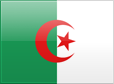 |
| History | |
| After more than a century of rule by France, Algerians fought through much of the 1950s to achieve independence in 1962. Algeria's primary political party, the National Liberation Front (FLN), was established in 1954 as part of the struggle for independence and has since largely dominated politics. The Government of Algeria in 1988 instituted a multi-party system in response to public unrest, but the surprising first round success of the Islamic Salvation Front (FIS) in the December 1991 legislative elections led the Algerian army to intervene and postpone the second round of elections to prevent what the secular elite feared would be an extremist-led government from assuming power. The army began a crackdown on the FIS that spurred FIS supporters to begin attacking government targets. Fighting escalated into an insurgency, which saw intense violence from 1992-98, resulting in over 100,000 deaths - many attributed to indiscriminate massacres of villagers by extremists. The government gained the upper hand by the late-1990s, and FIS's armed wing, the Islamic Salvation Army, disbanded in January 2000. Abdelaziz BOUTEFLIKA, with the backing of the military, won the presidency in 1999 in an election that was boycotted by several candidates protesting alleged fraud, and won subsequent elections in 2004, 2009, and 2014. The government in 2011 introduced some political reforms in response to the Arab Spring, including lifting the 19-year-old state of emergency restrictions and increasing women's quotas for elected assemblies, while also increasing subsidies to the populace. Since 2014, Algeria’s reliance on hydrocarbon revenues to fund the government and finance the large subsidies for the population has fallen under stress because of declining oil prices. Protests broke out across the country in late February 2019 against President BOUTEFLIKA’s decision to seek a fifth term. BOUTEFLIKA resigned on 2 April 2019, and the speaker of the upper house of parliament, Abdelkader BENSALAH, became interim head of state on 9 April. Per the constitution, BENSALAH has 90 days to organize elections to elect a new president. |
|
|  |

| |
| Geography | |
| |
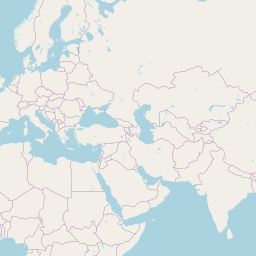
| Location: | Northern Africa, bordering the Mediterranean Sea, between Morocco and Tunisia |
| Geographic coordinates: | 28 00 N, 3 00 E |
| Area: | total: 2,381,740 sq km land: 2,381,740 sq km water: 0 sq km Size comparison: slightly less than 3.5 times the size of Texas |
| Land Boundaries: | total: 6,734 km border countries (7): Libya 989 km, Mali 1359 km, Mauritania 460 km, Morocco 1900 km, Niger 951 km, Tunisia 1034 km, Western Sahara 41 km |
| Coastline: | 998 km |
| Maritime claims: | territorial sea: 12 nm exclusive fishing zone: 32-52 nm |
| Climate: | arid to semiarid; mild, wet winters with hot, dry summers along coast; drier with cold winters and hot summers on high plateau; sirocco is a hot, dust/sand-laden wind especially common in summer |
| Terrain: | mostly high plateau and desert; Atlas Mountains in the far north and Hoggar Mountains in the south; narrow, discontinuous coastal plain |
| Natural resources: | petroleum, natural gas, iron ore, phosphates, uranium, lead, zinc |
| Land use: | agricultural land: 17.4% (2016 est.) arable land: 3.1% (2016 est.) permanent crops: 0.4% (2016 est.) permanent pasture: 13.8% (2016 est.) forest: 0.8% (2016 est.) other: 81.8% (2016 est.) |
| Irrigated land: | 13,600 sq km (2014) |
| Natural hazards: | mountainous areas subject to severe earthquakes; mudslides and floods in rainy season; droughts |
| Current Environment Issues: | air pollution in major cities; soil erosion from overgrazing and other poor farming practices; desertification; dumping of raw sewage, petroleum refining wastes, and other industrial effluents is leading to the pollution of rivers and coastal waters; Mediterranean Sea, in particular, becoming polluted from oil wastes, soil erosion, and fertilizer runoff; inadequate supplies of potable water |
| International Environment Agreements: | party to: Biodiversity, Climate Change, Climate Change-Kyoto Protocol, Desertification, Endangered Species, Environmental Modification, Hazardous Wastes, Law of the Sea, Ozone Layer Protection, Ship Pollution, Wetlands signed, but not ratified: none of the selected agreements |
| ^Back to Top | |
| People | |
| |
| Nationality: | noun: Algerian(s) adjective: Algerian |
| Ethnic groups: | Arab-Berber 99%, European less than 1% note: although almost all Algerians are Berber in origin (not Arab), only a minority identify themselves as primarily Berber, about 15% of the total population; these people live mostly in the mountainous region of Kabylie east of Algiers and several other communities; the Berbers are also Muslim but identify with their Berber rather than Arab cultural heritage; Berbers have long agitated, sometimes violently, for autonomy; the government is unlikely to grant autonomy but has officially recognized Berber languages and introduced them into public schools |
| Languages: | Arabic (official), French (lingua franca), Berber or Tamazight (official); dialects include Kabyle Berber (Taqbaylit), Shawiya Berber (Tacawit), Mzab Berber, Tuareg Berber (Tamahaq) |
| Religions: | Muslim (official; predominantly Sunni) 99%, other (includes Christian and Jewish) <1% (2012 est.) |
| Population: | 41,657,488 (July 2018 est.) |
| Age structure: | 0-14 years: 29.49% (male 6,290,619 /female 5,993,733) 15-24 years: 14.72% (male 3,137,975 /female 2,994,056) 25-54 years: 42.97% (male 9,067,597 /female 8,833,238) 55-64 years: 7.01% (male 1,472,527 /female 1,446,083) 65 years and over: 5.81% (male 1,133,852 /female 1,287,808) (2018 est.) |
| Dependency ratios: | total dependency ratio: 52.7 (2015 est.) youth dependency ratio: 43.8 (2015 est.) elderly dependency ratio: 9 (2015 est.) potential support ratio: 11.2 (2015 est.) |
| Median age: | total: 28.3 years male: 28 years female: 28.7 years (2018 est.) |
| Population growth rate: | 1.63% (2018 est.) |
| Birth rate: | 21.5 births/1,000 population (2018 est.) |
| Death rate: | 4.3 deaths/1,000 population (2018 est.) |
| Net migration rate: | -0.9 migrant(s)/1,000 population (2018 est.) |
| Urbanization: | urban population: 72.6% of total population (2018) rate of urbanization: 2.46% annual rate of change (2015-20 est.) |
| Major urban areas - population: | 2.694 million ALGIERS (capital) 881,000 Oran (2018) |
| Sex ratio: | at birth: 1.05 male(s)/female 0-14 years: 1.05 male(s)/female 15-24 years: 1.05 male(s)/female 25-54 years: 1.03 male(s)/female 55-64 years: 1.02 male(s)/female 65 years and over: 0.88 male(s)/female total population: 1.03 male(s)/female (2018 est.) |
| Maternal mortality rate: | 140 deaths/100,000 live births (2015 est.) |
| Infant mortality rate: | total: 18.9 deaths/1,000 live births male: 20.4 deaths/1,000 live births female: 17.2 deaths/1,000 live births (2018 est.) |
| Life expectancy at birth: | total population: 77.2 years male: 75.8 years female: 78.7 years (2018 est.) |
| Total fertility rate: | 2.66 children born/woman (2018 est.) |
| Contraceptive prevalence rate: | 57.1% (2012/13) |
| Physicians density: | 1.83 physicians/1,000 population (2016) |
| Hospital bed density: | 1.9 beds/1,000 population (2015) |
| Drinking water source: | improved: urban: 84.3% of population rural: 81.8% of population total: 83.6% of population unimproved: urban: 15.7% of population rural: 18.2% of population total: 16.4% of population (2015 est.) |
| Sanitation facility access: | improved: urban: 89.8% of population (2015 est.) rural: 82.2% of population (2015 est.) total: 87.6% of population (2015 est.) unimproved: urban: 10.2% of population (2015 est.) rural: 17.8% of population (2015 est.) total: 12.4% of population (2015 est.) |
| HIV/AIDS - adult prevalence rate: | <.1% (2017 est.) |
| HIV/AIDS - people living with HIV/AIDS: | 14,000 (2017 est.) |
| HIV/AIDS - deaths: | <200 (2017 est.) |
| Obesity - adult prevalence rate: | 27.4% (2016) |
| Children under the age of 5 years underweight: | 3% (2012) |
| Education expenditures: | n/a |
| Literacy: | definition: age 15 and over can read and write (2015 est.) total population: 80.2% male: 87.2% female: 73.1% (2015 est.) |
| School life expectancy (primary to tertiary education): | total: 14 years male: 14 years female: 15 years (2011) Unemployment, youth ages 15-24: total: 25.7% male: 22.1% female: 44.9% (2016 est.) |
| ^Back to Top | |
| Government | |
| |
| Country name: | conventional long form: People's Democratic Republic of Algeria conventional short form: Algeria local long form: Al Jumhuriyah al Jaza'iriyah ad Dimuqratiyah ash Sha'biyah local short form: Al Jaza'ir etymology: the country name derives from the capital city of Algiers |
| Government type: | presidential republic |
| Capital: | name: Algiers geographic coordinates: 36 45 N, 3 03 E time difference: UTC+1 (6 hours ahead of Washington, DC, during Standard Time) etymology: name derives from the Arabic "al-Jazair" meaning "the islands" and refers to the four islands formerly off the coast but joined to the mainland since 1525 |
| Administrative divisions: | 48 provinces (wilayas, singular - wilaya); Adrar, Ain Defla, Ain Temouchent, Alger, Annaba, Batna, Bechar, Bejaia, Biskra, Blida, Bordj Bou Arreridj, Bouira, Boumerdes, Chlef, Constantine, Djelfa, El Bayadh, El Oued, El Tarf, Ghardaia, Guelma, Illizi, Jijel, Khenchela, Laghouat, Mascara, Medea, Mila, Mostaganem, M'Sila, Naama, Oran, Ouargla, Oum el Bouaghi, Relizane, Saida, Setif, Sidi Bel Abbes, Skikda, Souk Ahras, Tamanrasset, Tebessa, Tiaret, Tindouf, Tipaza, Tissemsilt, Tizi Ouzou, Tlemcen |
| Independence: | 5 July 1962 (from France) |
| National holiday: | Independence Day, 5 July (1962);Revolution Day, 1 November (1954) |
| Constitution: | history: several previous; latest approved by referendum 23 February 1989 amendments: proposed by the president of the republic or through the president with the support of three-fourths of the members of both houses of Parliament in joint session; passage requires approval by both houses, approval by referendum, and promulgation by the president; the president can forego a referendum if the Constitutional Council determines the proposed amendment does not conflict with basic constitutional principles; articles including the republican form of government, the integrity and unity of the country, and fundamental citizens’ liberties and rights cannot be amended; amended several times, last in 2016 (2016) |
| Legal system: | mixed legal system of French civil law and Islamic law; judicial review of legislative acts in ad hoc Constitutional Council composed of various public officials including several Supreme Court justices |
| Suffrage: | 18 years of age; universal |
| Executive branch: | chief of state: Interim President Abdelkader BENSALAH (since 9 April 2019); note - Abdelaziz BOUTEFLIKA resigned the presidency on 2 April 2019 head of government: Prime Minister Noureddine BEDOUI (since 11 March 2019) cabinet: Cabinet of Ministers appointed by the president elections/appointments: president directly elected by absolute majority popular vote in two rounds if needed for a 5-year term (2-term limit reinstated by constitutional amendment in February 2016); election last held on 17 April 2014 (next was scheduled for 4 July 2019, but cancelled on 2 June 2019 by the Constitutional Council); prime minister nominated by the president after consultation with the majority party in Parliament |
| Legislative branch: | description: bicameral Parliament consists of: Council of the Nation (upper house with 144 seats; one-third of members appointed by the president, two-thirds indirectly elected by simple majority vote by an electoral college composed of local council members; members serve 6-year terms with one-half of the membership renewed every 3 years) National People's Assembly (lower house with 462 seats including 8 seats for Algerians living abroad); members directly elected in multi-seat constituencies by proportional representation vote to serve 5-year terms) elections: Council of the Nation - last held on 29 December 2018 (next to be held in December 2021) National People's Assembly - last held on 4 May 2017 (next to be held in 2022) election results: Council of the Nation - percent of vote by party - NA; seats by party - NA; composition - men 137, women 7, percent of women 5% National People's Assembly - percent of vote by party - NA; seats by party - FLN 164, RND 97, MSP-FC 33, TAJ 19, Ennahda-FJD 15, FFS 14, El Mostakbel 14, MPA 13, PT 11, RCD 9, ANR 8, MEN 4, other 33, independent 28; composition - men 343, women 119, percent of women 25.8%; note - total Parliament percent of women 20.8% |
| Judicial branch: | highest courts: Supreme Court or Cour Suprême, (consists of 150 judges organized into 8 chambers: Civil, Commercial and Maritime, Criminal, House of Offenses and Contraventions, House of Petitions, Land, Personal Status, and Social; Constitutional Council (consists of 12 members including the court chairman and deputy chairman); note - Algeria's judicial system does not include sharia courts judge selection and term of office: Supreme Court judges appointed by the High Council of Magistracy, an administrative body presided over by the president of the republic, and includes the republic vice-president and several members; judges appointed for life; Constitutional Council members - 4 appointed by the president of the republic, 2 each by the 2 houses of Parliament, 2 by the Supreme Court, and 2 by the Council of State; Council president and members appointed for single 6-year terms with half the membership renewed every 3 years subordinate courts: appellate or wilaya courts; first instance or daira tribunals |
| Political parties and leaders: | Algerian National Front or FNA [Moussa TOUATI] Algerian Popular Movement or MPA [Amara BENYOUNES] Algerian Rally or RA [Ali ZAGHDOUD] Algeria's Hope Rally or TAJ [Amar GHOUL] Democratic and Social Movement or MDS [Hamid FERHI] Dignity or El Karama [Aymene HARKATI] Ennour El Djazairi Party (Algerian Radiance Party) or PED [Badreddine BELBAZ] Front for Justice and Development or El Adala [Abdallah DJABALLAH] Future Front or El Mostakbel [Abdelaziz BELAID] Islamic Renaissance Movement or Ennahda Movement [Mohamed DOUIBI] Justice and Development Front or FJD [Abdellah DJABALLAH] Movement of National Construction (Harakat El-Binaa El-Watani) [Abdelkader BENGRINA] Movement of National Understanding or MEN Movement for National Reform or Islah [Filali GHOUINI] Movement of Society for Peace or MSP [Abderrazak MOKRI] National Democratic Rally (Rassemblement National Democratique) or RND [Ahmed OUYAHIA] National Front for Social Justice or FNJS [Khaled BOUNEDJEMA] National Liberation Front or FLN [Mohamed DJEMAI] National Party for Solidarity and Development or PNSD [Dalila YALAQUI] National Reform Movement or Islah [Djahid YOUNSI] National Republican Alliance or ANR [Belkacem SAHLI] New Dawn Party or PFJ [Tahar BENBAIBECHE] New Generation or Jil Jadid [Soufiane DJILALI] Oath of 1954 or Ahd 54 [Ali Fawzi REBAINE] Party of Justice and Liberty [Mohammed SAID] Rally for Culture and Democracy or RCD [Mohcine BELABBAS] Socialist Forces Front or FFS [Hakim BELAHCEL] Union for Change and Progress or UCP [Zoubida Assoul] Union of Democratic and Social Forces or UFDS [Noureddine BAHBOUH] Vanguard of Freedoms [Ali BENFLIS] Youth Party or PJ [Hamana BOUCHARMA] Workers Party or PT [Louisa HANOUNE] note: a law banning political parties based on religion was enacted in March 1997 |
| International organization participation: | ABEDA, AfDB, AFESD, AMF, AMU, AU, BIS, CAEU, CD, FAO, G-15, G-24, G-77, IAEA, IBRD, ICAO, ICC (national committees), ICRM, IDA, IDB, IFAD, IFC, IFRCS, IHO, ILO, IMF, IMO, IMSO, Interpol, IOC, IOM, IPU, ISO, ITSO, ITU, ITUC (NGOs), LAS, MIGA, MONUSCO, NAM, OAPEC, OAS (observer), OIC, OPCW, OPEC, OSCE (partner), UN, UNCTAD, UNESCO, UNHCR, UNIDO, UNITAR, UNWTO, UPU, WCO, WHO, WIPO, WMO, WTO (observer) |
| National symbol(s): | five-pointed star between the extended horns of a crescent moon, fennec fox; national colors: green, white, red |
| National anthem: | name: "Kassaman" (We Pledge) lyrics/music: Mufdi ZAKARIAH/Mohamed FAWZI note: adopted 1962; ZAKARIAH wrote "Kassaman" as a poem while imprisoned in Algiers by French colonial forces |
| Diplomatic representation in the US: | chief of mission: Ambassador Madjid BOUGUERRA (since 23 February 2015) chancery: 2118 Kalorama Road NW, Washington, DC 20008 telephone: [1] (202) 265-2800 FAX: [1] (202) 986-5906 consulate(s) general: New York |
| Diplomatic representation from the US: | chief of mission: Ambassador John P. DESROCHER (since 5 September 2017) embassy: 05 Chemin Cheikh Bachir, El Ibrahimi, El-Biar 16030 Algeria mailing address: B. P. 408, Alger-Gare, 16030 Algiers telephone: [213] (0) 770-08-2000 FAX: [213] (0) 770-08-2064 |
| ^Back to Top | |
| Economy | |
Algeria's economy remains dominated by the state, a legacy of the country's socialist post-independence development model. In recent years the Algerian Government has halted the privatization of state-owned industries and imposed restrictions on imports and foreign involvement in its economy, pursuing an explicit import substitution policy. Hydrocarbons have long been the backbone of the economy, accounting for roughly 30% of GDP, 60% of budget revenues, and nearly 95% of export earnings. Algeria has the 10th-largest reserves of natural gas in the world - including the 3rd-largest reserves of shale gas - and is the 6th-largest gas exporter. It ranks 16th in proven oil reserves. Hydrocarbon exports enabled Algeria to maintain macroeconomic stability, amass large foreign currency reserves, and maintain low external debt while global oil prices were high. With lower oil prices since 2014, Algeria’s foreign exchange reserves have declined by more than half and its oil stabilization fund has decreased from about $20 billion at the end of 2013 to about $7 billion in 2017, which is the statutory minimum. Declining oil prices have also reduced the government’s ability to use state-driven growth to distribute rents and fund generous public subsidies, and the government has been under pressure to reduce spending. Over the past three years, the government has enacted incremental increases in some taxes, resulting in modest increases in prices for gasoline, cigarettes, alcohol, and certain imported goods, but it has refrained from reducing subsidies, particularly for education, healthcare, and housing programs. Algiers has increased protectionist measures since 2015 to limit its import bill and encourage domestic production of non-oil and gas industries. Since 2015, the government has imposed additional restrictions on access to foreign exchange for imports, and import quotas for specific products, such as cars. In January 2018 the government imposed an indefinite suspension on the importation of roughly 850 products, subject to periodic review. President BOUTEFLIKA announced in fall 2017 that Algeria intends to develop its non-conventional energy resources. Algeria has struggled to develop non-hydrocarbon industries because of heavy regulation and an emphasis on state-driven growth. Algeria has not increased non-hydrocarbon exports, and hydrocarbon exports have declined because of field depletion and increased domestic demand. | |
| GDP (purchasing power parity): | $630 billion (2017 est.) $621.3 billion (2016 est.) $602 billion (2015 est.) note: data are in 2017 dollars |
| GDP (official exchange rate): | $167.6 billion (2017 est.) |
| GDP - real growth rate: | 1.4% (2017 est.) 3.2% (2016 est.) 3.7% (2015 est.) |
| GDP - per capita (PPP): | $15,200 (2017 est.) $15,200 (2016 est.) $15,100 (2015 est.) note: data are in 2017 dollars |
| Gross national saving: | 37.8% of GDP (2017 est.) 37.4% of GDP (2016 est.) 36.4% of GDP (2015 est.) GDP - composition, by end use: household consumption: 42.7% (2017 est.) government consumption: 20.2% (2017 est.) investment in fixed capital: 38.1% (2017 est.) investment in inventories: 11.2% (2017 est.) exports of goods and services: 23.6% (2017 est.) imports of goods and services: -35.8% (2017 est.) GDP - composition, by sector of origin: agriculture: 13.3% (2017 est.) industry: 39.3% (2017 est.) services: 47.4% (2017 est.) |
| Agriculture - products: | wheat, barley, oats, grapes, olives, citrus, fruits; sheep, cattle |
| Industries: | petroleum, natural gas, light industries, mining, electrical, petrochemical, food processing |
| Industrial production growth rate: | 0.6% (2017 est.) |
| Labor force: | 11.82 million (2017 est.) |
| Labor force - by occupation: | agriculture: 10.8% industry: 30.9% services: 58.4% (2011 est.) |
| Unemployment rate: | 11.7% (2017 est.) 10.5% (2016 est.) |
| Population below poverty line: | 23% (2006 est.) |
| Household income or consumption by percentage share: | lowest 10%: 2.8% highest 10%: 26.8% (1995) |
| Distribution of family income - Gini index: | 35.3 (1995) |
| Budget: | revenues: 54.15 billion (2017 est.) expenditures: 70.2 billion (2017 est.) |
| Taxes and other revenues: | 32.3% (of GDP) (2017 est.) Budget surplus (+) or deficit (-): -9.6% (of GDP) (2017 est.) |
| Public debt: | 27.5% of GDP (2017 est.) 20.4% of GDP (2016 est.) note: data cover central government debt as well as debt issued by subnational entities and intra-governmental debt |
| Fiscal year: | calendar year |
| Inflation rate (consumer prices): | 5.6% (2017 est.) 6.4% (2016 est.) |
| Current account balance: | -$22.1 billion (2017 est.) -$26.47 billion (2016 est.) |
| Exports: | $34.37 billion (2017 est.) $29.06 billion (2016 est.) |
| Exports - commodities: | petroleum, natural gas, and petroleum products 97% (2009 est.) |
| Exports - partners: | Italy 17.4%, Spain 13%, France 11.9%, US 9.4%, Brazil 6.2%, Netherlands 5.5% (2017) |
| Imports: | $48.54 billion (2017 est.) $49.43 billion (2016 est.) |
| Imports - commodities: | capital goods, foodstuffs, consumer goods |
| Imports - partners: | China 18.2%, France 9.1%, Italy 8%, Germany 7%, Spain 6.9%, Turkey 4.4% (2017) |
| Reserves of foreign exchange and gold: | $97.89 billion (31 December 2017 est.) $114.7 billion (31 December 2016 est.) |
| Debt - external: | $6.26 billion (31 December 2017 est.) $5.088 billion (31 December 2016 est.) |
| Stock of direct foreign investment - at home: | $29.05 billion (31 December 2017 est.) $25.74 billion (31 December 2016 est.) |
| Stock of direct foreign investment - abroad: | $1.893 billion (31 December 2017 est.) $2.025 billion (31 December 2016 est.) |
| Market value of publicly traded shares: | n/a |
| Exchange rates: | Algerian dinars (DZD) per US dollar - 108.9 (2017 est.) 109.443 (2016 est.) 109.443 (2015 est.) 100.691 (2014 est.) 80.579 (2013 est.) |
| ^Back to Top | |
| Energy | |
| |
| Electricity - production: | 66.89 billion kWh (2016 est.) |
| Electricity - consumption: | 55.96 billion kWh (2016 est.) |
| Electricity - exports: | 641 million kWh (2015 est.) |
| Electricity - imports: | 257 million kWh (2016 est.) |
| Electricity - installed generating capacity: | 19.27 million kW (2016 est.) |
| Electricity - from fossil fuels: | 96% of total installed capacity (2016 est.) |
| Electricity - from nuclear fuels: | 0% of total installed capacity (2017 est.) |
| Electricity - from hydroelectric plants: | 1% of total installed capacity (2017 est.) |
| Electricity - from other renewable sources: | 2% of total installed capacity (2017 est.) |
| Crude oil - production: | 1.306 million bbl/day (2017 est.) |
| Crude oil - exports: | 756,400 bbl/day (2015 est.) |
| Crude oil - imports: | 5,340 bbl/day (2015 est.) |
| Crude oil - proved reserves: | 12.2 billion bbl (1 January 2018 est.) |
| Refined petroleum products - production: | 627,900 bbl/day (2015 est.) |
| Refined petroleum products - consumption: | 405,000 bbl/day (2016 est.) |
| Refined petroleum products - exports: | 578,800 bbl/day (2015 est.) |
| Refined petroleum products - imports: | 82,930 bbl/day (2015 est.) |
| Natural gas - production: | 93.5 billion cu m (2017 est.) |
| Natural gas - consumption: | 41.28 billion cu m (2017 est.) |
| Natural gas - exports: | 53.88 billion cu m (2017 est.) |
| Natural gas - imports: | 0 cu m (2017 est.) |
| Natural gas - proved reserves: | 4.504 trillion cu m (1 January 2018 est.) |
| Carbon dioxide emissions from consumption of energy: | 135.9 million Mt (2017 est.) |
| ^Back to Top | |
| Communications | |
| |
| Cellular Phones in use: | total subscriptions: 49,873,389 subscriptions per 100 inhabitants: 122 (2017 est.) |
| Telephone system: | general assessment: privatization of Algeria's telecommunications sector began in 2000; three mobile-cellular licenses have been issued; regulator permits network operators to extend LTE services to additional provinces; a consortium led by Egypt's Orascom Telecom won a 15-year license to build and operate a fixed-line network in Algeria; migration to 5G (2018) domestic: a limited network of fixed-lines with a teledensity of less than 10 telephones per 100 persons has been offset by the rapid increase in mobile-cellular subscribership; mobile-cellular teledensity was roughly 122 telephones per 100 persons (2018) international: country code - 213; ALPAL-2 is a submarine telecommunications cable system in the Mediterranean Sea linking Algeria and the Spanish Balearic island of Majorca; ORVAL is a submarine cable to Spain; landing point for the TE North/TGN-Eurasia/SEACOM/SEA-ME-WE-4 fiber-optic submarine cable system that provides links to Europe, the Middle East, and Asia; MED cable connecting Algeria with France; microwave radio relay to Italy, France, Spain, Morocco, and Tunisia; coaxial cable to Morocco and Tunisia; new submarine cables to link to the US and France |
| Broadcast media: | state-run Radio-Television Algerienne operates the broadcast media and carries programming in Arabic, Berber dialects, and French; use of satellite dishes is widespread, providing easy access to European and Arab satellite stations; state-run radio operates several national networks and roughly 40 regional radio stations |
| Internet country code: | .dz |
| Internet users: | total: 17,291,463 percent of population: 42.9% (July 2016 est.) |
| ^Back to Top | |
| Transportation | |
| |
| Airports: | 157 (2016) |
| Airports (paved runways): | total 64 (2017) over 3,047 m: 12 (2017) 2,438 to 3,047 m: 29 (2017) 1,524 to 2,437 m: 17 (2017) 914 to 1,523 m: 5 (2017) under 914 m: 1 (2017) |
| Airports (unpaved runways): | total 93 (2013) 2,438 to 3,047 m: 2 (2013) 1,524 to 2,437 m: 18 (2013) 914 to 1,523 m: 39 (2013) under 914 m: 34 (2013) |
| Heliports: | 3 (2013) |
| Pipelines: | 2600 km condensate, 16415 km gas, 3447 km liquid petroleum gas, 7036 km oil, 144 km refined products (2013) |
| Railways: | total 3,973 km (2014) standard gauge: 2,888 km 1.432-m gauge (283 km electrified) (2014) narrow gauge: 1,085 km 1.055-m gauge (2014) |
| Roadways: | total 104,000 km (2015) paved: 71,656 km (2015) unpaved: 32,344 km (2015) |
| Merchant marine: | total 106 by type: container ship 1, general cargo 11, oil tanker 10, other 84 (2018) |
| Ports and terminals: | major seaport(s): Algiers, Annaba, Arzew, Bejaia, Djendjene, Jijel, Mostaganem, Oran, Skikda LNG terminal(s) (export): Arzew, Bethioua, Skikda |
| ^Back to Top | |
| Military | |
| |
| Military branches: | People's National Army (Armee Nationale Populaire, ANP): Land Forces (Forces Terrestres, FT), Navy of the Republic of Algeria (Marine de la Republique Algerienne, MRA), Air Force (Al-Quwwat al-Jawwiya al-Jaza'eriya, QJJ), Territorial Air Defense Force (2016) |
| Military service age and obligation: | 18 is the legal minimum age for voluntary military service; 19-30 years of age for compulsory service; conscript service obligation is 18 months (6 months basic training, 12 months civil projects) (2018) |
| Military expenditures: | 5.81% of GDP (2017) 6.55% of GDP (2016) 6.32% of GDP (2015) 5.54% of GDP (2014) 4.84% of GDP (2013) |
| ^Back to Top | |
| Transnational Issues | |
| |
| Disputes - International: | Algeria and many other states reject Moroccan administration of Western Sahara; the Polisario Front, exiled in Algeria, represents the "Sahrawi Arab Democratic Republic" which Algeria recognizes; the Algerian-Moroccan land border remains closed; dormant disputes include Libyan claims of about 32,000 sq km of southeastern Algeria and the National Liberation Front's (FLN) assertions of a claim to Chirac Pastures in southeastern Morocco. |
| Refugees and internally displaced persons: | refugees (country of origin): more than 100,000 (Western Saharan Sahrawi, mostly living in Algerian-sponsored camps in the southwestern Algerian town of Tindouf) (2018) |
| ^Back to Top | |
Algeria Previous Country | Next Country »
Source: CIA - The World Factbook