 American Samoa


American Samoa Population: 50,826
«  Previous Country | Next Country Previous Country | Next Country  » » | 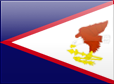 |
| History | |
| Settled as early as 1000 B.C., Samoa was not reached by European explorers until the 18th century. International rivalries in the latter half of the 19th century were settled by an 1899 treaty in which Germany and the US divided the Samoan archipelago. The US formally occupied its portion - a smaller group of eastern islands with the excellent harbor of Pago Pago - the following year. |
|
|  |

| |
| Geography | |
| |
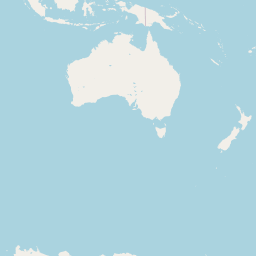
| Location: | Oceania, group of islands in the South Pacific Ocean, about halfway between Hawaii and New Zealand |
| Geographic coordinates: | 14 20 S, 170 00 W |
| Area: | total: 224 sq km land: 224 sq km water: 0 sq km note: includes Rose Island and Swains Island Size comparison: slightly larger than Washington, DC |
| Land Boundaries: | 0 km |
| Coastline: | 116 km |
| Maritime claims: | territorial sea: 12 nm exclusive economic zone: 200 nm |
| Climate: | tropical marine, moderated by southeast trade winds; annual rainfall averages about 3 m; rainy season (November to April), dry season (May to October); little seasonal temperature variation |
| Terrain: | five volcanic islands with rugged peaks and limited coastal plains, two coral atolls (Rose Island, Swains Island) |
| Natural resources: | pumice, pumicite |
| Land use: | agricultural land: 21.9% (2016 est.) arable land: 13.4% (2016 est.) permanent crops: 8.5% (2016 est.) permanent pasture: 0% (2016 est.) forest: 78.1% (2016 est.) other: 0% (2016 est.) |
| Irrigated land: | 0 sq km (2012) |
| Natural hazards: | cyclones common from December to March volcanism: limited volcanic activity on the Ofu and Olosega Islands; neither has erupted since the 19th century |
| Current Environment Issues: | limited supply of drinking water; pollution; waste disposal; coastal and stream alteration; soil erosion |
| ^Back to Top | |
| People | |
| |
| Nationality: | noun: American Samoan(s) (US nationals) adjective: American Samoan |
| Ethnic groups: | Pacific Islander 92.6% (includes Samoan 88.9%, Tongan 2.9%, other .8%), Asian 3.6% (includes Filipino 2.2%, other 1.4%), mixed 2.7%, other 1.2% (2010 est.) note: data represent population by ethnic origin or race |
| Languages: | Samoan 88.6% (closely related to Hawaiian and other Polynesian languages), English 3.9%, Tongan 2.7%, other Pacific islander 3%, other 1.8% (2010 est.) note: most people are bilingual |
| Religions: | Christian 98.3%, other 1%, unaffiliated 0.7% (2010 est.) |
| Population: | 50,826 (July 2018 est.) |
| Age structure: | 0-14 years: 29.59% (male 7,732 /female 7,305) 15-24 years: 18.42% (male 4,695 /female 4,669) 25-54 years: 36.79% (male 9,255 /female 9,442) 55-64 years: 8.96% (male 2,244 /female 2,310) 65 years and over: 6.24% (male 1,486 /female 1,688) (2018 est.) |
| Median age: | total: 26.1 years male: 25.6 years female: 26.5 years (2018 est.) |
| Population growth rate: | -1.35% (2018 est.) |
| Birth rate: | 19 births/1,000 population (2018 est.) |
| Death rate: | 5.9 deaths/1,000 population (2018 est.) |
| Net migration rate: | -26.6 migrant(s)/1,000 population (2018 est.) |
| Urbanization: | urban population: 87.2% of total population (2018) rate of urbanization: 0.07% annual rate of change (2015-20 est.) |
| Major urban areas - population: | 49,000 PAGO PAGO (capital) (2018) |
| Sex ratio: | at birth: 1.06 male(s)/female 0-14 years: 1.06 male(s)/female 15-24 years: 1.01 male(s)/female 25-54 years: 0.98 male(s)/female 55-64 years: 0.97 male(s)/female 65 years and over: 0.88 male(s)/female total population: 1 male(s)/female (2018 est.) |
| Infant mortality rate: | total: 10.8 deaths/1,000 live births male: 12.7 deaths/1,000 live births female: 8.9 deaths/1,000 live births (2018 est.) |
| Life expectancy at birth: | total population: 73.9 years male: 71.6 years female: 76.2 years (2018 est.) |
| Total fertility rate: | 2.57 children born/woman (2018 est.) |
| Drinking water source: | improved: urban: 100% of population rural: 100% of population total: 100% of population unimproved: urban: 0% of population rural: 0% of population total: 0% of population (2015 est.) |
| Sanitation facility access: | improved: urban: 62.5% of population (2015 est.) rural: 62.5% of population (2015 est.) total: 62.5% of population (2015 est.) unimproved: urban: 37.5% of population (2015 est.) rural: 37.5% of population (2015 est.) total: 37.5% of population (2015 est.) |
| HIV/AIDS - adult prevalence rate: | n/a |
| HIV/AIDS - people living with HIV/AIDS: | n/a |
| HIV/AIDS - deaths: | n/a |
| Education expenditures: | n/a |
| Literacy: | |
| ^Back to Top | |
| Government | |
| |
| Country name: | conventional long form: American Samoa conventional short form: American Samoa abbreviation: AS etymology: the name Samoa is composed of two parts, "sa" meaning "sacred" and "moa" meaning "center," so the name can mean Holy Center; alternatively, it can mean "place of the sacred moa bird" of Polynesian mythology |
| Government type: | presidential democracy; a self-governing territory of the US |
| Capital: | name: Pago Pago geographic coordinates: 14 16 S, 170 42 W time difference: UTC-11 (6 hours behind Washington, DC, during Standard Time) note: pronounced "pahn-go pahn-go" |
| Administrative divisions: | none (territory of the US); there are no first-order administrative divisions as defined by the US Government, but there are 3 districts and 2 islands* at the second order; Eastern, Manu'a, Rose Island*, Swains Island*, Western |
| Independence: | none (territory of the US) |
| National holiday: | Flag Day, 17 April (1900) |
| Constitution: | history: adopted 17 October 1960; revised 1 July 1967 amendments: proposed by either house of the Legislative Assembly; passage requires three-fifths majority vote by the membership of each house, approval in a referendum, and approval by the US Secretary of the Interior; amended 1971, 1977, 1979 (2017) |
| Legal system: | mixed legal system of US common law and customary law |
| Suffrage: | 18 years of age; universal |
| Executive branch: | chief of state: President Donald J. TRUMP (since 20 January 2017); Vice President Michael R. PENCE (since 20 January 2017) head of government: Governor Lolo Matalasi MOLIGA (since 3 January 2013) cabinet: Cabinet consists of 12 department directors appointed by the governor with the consent of the Legislature or Fono elections/appointments: president and vice president indirectly elected on the same ballot by an Electoral College of 'electors' chosen from each state to serve a 4-year term (eligible for a second term); under the US Constitution, residents of unincorporated territories, such as American Samoa, do not vote in elections for US president and vice president; however, they may vote in Democratic and Republican presidential primary elections; governor and lieutenant governor directly elected on the same ballot by absolute majority popular vote in 2 rounds if needed for a 4-year term (eligible for a second term); election last held on 8 November 2016 (next to be held in November 2020) election results: Lolo Matalasi MOLIGA reelected governor in first round; percent of vote - Lolo Matalasi MOLIGA (independent) 60.2%, Faoa Aitofele SUNIA (Democratic Party) 35.8%, Tuika TUIKA (independent) 4% |
| Legislative branch: | description: bicameral Legislature or Fono consists of: Senate (18 seats; members indirectly selected by regional governing councils to serve 4-year terms) House of Representatives (21 seats; 20 members directly elected by simple majority vote and 1 decided by public meeting on Swains Island; members serve 2-year terms) elections: Senate - last held on 8 November 2016 (next to be held in November 2020) House of Representatives - last held on 6 November 2018 (next to be held in November 2020) election results: Senate - percent of vote by party - NA; seats by party - independent 18; composition - men 17, women 1, percent of women 9.5% House of Representatives - percent of vote by party - NA; seats by party - NA; composition - men 14, women 7, percent of women 33.3%; note - total percent of women in Legislature 20.5% note: American Samoa elects 1 member by simple majority vote to serve a 2-year term as a delegate to the US House of Representatives; the delegate can vote when serving on a committee and when the House meets as the Committee of the Whole House, but not when legislation is submitted for a “full floor” House vote; election of delegate last held on 6 November 2018 (next to be held in November 2020) |
| Judicial branch: | highest courts: High Court of American Samoa (consists of the chief justice, associate chief justice, and 6 Samoan associate judges and organized into trial, family, drug, and appellate divisions); note - American Samoa has no US federal courts judge selection and term of office: chief justice and associate chief justice appointed by the US Secretary of the Interior to serve for life; Samoan associate judges appointed by the governor to serve for life subordinate courts: district and village courts |
| Political parties and leaders: | Democratic Party [Fagafaga Daniel LANGKILDE, chairman] Republican Party [William SWORD, chairman] |
| International organization participation: | AOSIS (observer), Interpol (subbureau), IOC, PIF (observer), SPC |
| National symbol(s): | a fue (coconut fiber fly whisk; representing wisdom) crossed with a to'oto'o (staff; representing authority); national colors: red, white, blue |
| National anthem: | name: "Amerika Samoa" (American Samoa) lyrics/music: Mariota Tiumalu TUIASOSOPO/Napoleon Andrew TUITELELEAPAGA note: local anthem adopted 1950; as a territory of the United States, "The Star-Spangled Banner" is official (see United States) |
| Diplomatic representation in the US: | none (territory of the US) |
| Diplomatic representation from the US: | none (territory of the US) |
| ^Back to Top | |
| Economy | |
American Samoa s a traditional Polynesian economy in which more than 90% of the land is communally owned. Economic activity is strongly linked to the US with which American Samoa conducts most of its commerce. Tuna fishing and processing are the backbone of the private sector with processed fish products as the primary exports. The fish processing business accounted for 15.5% of employment in 2015. In late September 2009, an earthquake and the resulting tsunami devastated American Samoa and nearby Samoa, disrupting transportation and power generation, and resulting in about 200 deaths. The US Federal Emergency Management Agency oversaw a relief program of nearly $25 million. Transfers from the US Government add substantially to American Samoa's economic well-being. Attempts by the government to develop a larger and broader economy are restrained by Samoa's remote location, its limited transportation, and its devastating hurricanes. Tourism has some potential as a source of income and jobs. | |
| GDP (purchasing power parity): | $658 million (2016 est.) $674.9 million (2015 est.) $666.9 million (2014 est.) note: data are in 2016 US dollars |
| GDP (official exchange rate): | $658 million (2016 est.) (2016 est.) |
| GDP - real growth rate: | -2.5% (2016 est.) 1.2% (2015 est.) 1% (2014 est.) |
| GDP - per capita (PPP): | $11,200 (2016 est.) $11,300 (2015 est.) $11,200 (2014 est.) GDP - composition, by end use: household consumption: 66.4% (2016 est.) government consumption: 49.7% (2016 est.) investment in fixed capital: 7.3% (2016 est.) investment in inventories: 5.1% (2016 est.) exports of goods and services: 65% (2016 est.) imports of goods and services: -93.5% (2016 est.) GDP - composition, by sector of origin: agriculture: 27.4% (2012) industry: 12.4% (2012) services: 60.2% (2012) |
| Agriculture - products: | bananas, coconuts, vegetables, taro, breadfruit, yams, copra, pineapples, papayas; dairy products, livestock |
| Industries: | tuna canneries (largely supplied by foreign fishing vessels), handicrafts |
| Industrial production growth rate: | n/a |
| Labor force: | 17,850 (2015 est.) |
| Labor force - by occupation: | agriculture: n/a industry: 15.5% services: 46.4% (2015 est.) |
| Unemployment rate: | 29.8% (2005) |
| Population below poverty line: | n/a |
| Household income or consumption by percentage share: | lowest 10%: n/a highest 10%: n/a |
| Budget: | revenues: 249 million (2016 est.) expenditures: 262.5 million (2016 est.) |
| Taxes and other revenues: | 37.8% (of GDP) (2016 est.) Budget surplus (+) or deficit (-): -2.1% (of GDP) (2016 est.) |
| Public debt: | 12.2% of GDP (2016 est.) |
| Fiscal year: | 1 October - 30 September |
| Inflation rate (consumer prices): | -0.5% (2015 est.) 1.4% (2014 est.) |
| Exports: | $428 million (2016 est.) $427 million (2015 est.) |
| Exports - commodities: | canned tuna 93% |
| Exports - partners: | Australia 25%, Ghana 19%, Indonesia 15.6%, Burma 10.4%, Portugal 5.1% (2017) |
| Imports: | $615 million (2016 est.) $657 million (2015 est.) |
| Imports - commodities: | raw materials for canneries, food, petroleum products, machinery and parts |
| Imports - partners: | Fiji 10.7%, Singapore 10.4%, NZ 10.4%, South Korea 9.3%, Samoa 8.2%, Kenya 6.4%, Australia 5.2% (2017) |
| Debt - external: | n/a |
| Exchange rates: | the US dollar is used |
| ^Back to Top | |
| Energy | |
| |
| Electricity - production: | 169 million kWh (2016 est.) |
| Electricity - consumption: | 157.2 million kWh (2016 est.) |
| Electricity - exports: | 0 kWh (2016 est.) |
| Electricity - imports: | 0 kWh (2016 est.) |
| Electricity - installed generating capacity: | 43,000 kW (2016 est.) |
| Electricity - from fossil fuels: | 98% of total installed capacity (2016 est.) |
| Electricity - from nuclear fuels: | 0% of total installed capacity (2017 est.) |
| Electricity - from hydroelectric plants: | 0% of total installed capacity (2017 est.) |
| Electricity - from other renewable sources: | 2% of total installed capacity (2017 est.) |
| Crude oil - production: | 0 bbl/day (2017 est.) |
| Crude oil - exports: | 0 bbl/day (2015 est.) |
| Crude oil - imports: | 0 bbl/day (2015 est.) |
| Crude oil - proved reserves: | 0 bbl (1 January 2018 est.) |
| Refined petroleum products - production: | 0 bbl/day (2015 est.) |
| Refined petroleum products - consumption: | 2,375 bbl/day (2016 est.) |
| Refined petroleum products - exports: | 0 bbl/day (2015 est.) |
| Refined petroleum products - imports: | 2,346 bbl/day (2015 est.) |
| Natural gas - production: | 0 cu m (2017 est.) |
| Natural gas - consumption: | 0 cu m (2017 est.) |
| Natural gas - exports: | 0 cu m (2017 est.) |
| Natural gas - imports: | 0 cu m (2017 est.) |
| Natural gas - proved reserves: | 0 cu m (1 January 2014 est.) |
| Carbon dioxide emissions from consumption of energy: | 361,100 Mt (2017 est.) |
| ^Back to Top | |
| Communications | |
| |
| Telephone system: | general assessment: good telex, telegraph, facsimile, and cellular telephone services; one of the most complete and modern telecommunications systems in the South Pacific Islands; all inhabited islands have telephone connectivity domestic: 18 per 100 fixed-line teledensity, domestic satellite system with 1 Comsat earth station international: country code - 1-684; landing point for the ASH, Southern Cross NEXT and Hawaiki providing connectivity to New Zealand, Australia, American Samoa, Hawaii, California, and SAS connecting American Samoa with Samoa; satellite earth station - 1 (Intelsat-Pacific Ocean) |
| Broadcast media: | 3 TV stations; multi-channel pay TV services are available; about a dozen radio stations, some of which are repeater stations |
| Internet country code: | .as |
| Internet users: | total: 17,000 percent of population: 31.3% (July 2016 est.) |
| ^Back to Top | |
| Transportation | |
| |
| Airports: | 3 (2016) |
| Airports (paved runways): | total 3 (2017) over 3,047 m: 1 (2017) 914 to 1,523 m: 1 (2017) under 914 m: 1 (2017) |
| Roadways: | total 241 km (2008) |
| Ports and terminals: | major seaport(s): Pago Pago |
| ^Back to Top | |
| Military | |
| |
| Defense is the responsibility of the US | |
| ^Back to Top | |
| Transnational Issues | |
| |
| Disputes - International: | Tokelau included American Samoa's Swains Island (Olosega) in its 2006 draft independence constitution |
| ^Back to Top | |
American Samoa Previous Country | Next Country »
Source: CIA - The World Factbook