 Zambia


Zambia Population: 16,445,079
«  Previous Country | Next Country Previous Country | Next Country  » » | 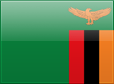 |
| History | |
| The territory of Northern Rhodesia was administered by the former British South Africa Company from 1891 until it was taken over by the UK in 1923. During the 1920s and 1930s, advances in mining spurred development and immigration. The name was changed to Zambia upon independence in 1964. In the 1980s and 1990s, declining copper prices, economic mismanagement, and a prolonged drought hurt the economy. Elections in 1991 brought an end to one-party rule and propelled the Movement for Multiparty Democracy (MMD) to government. The subsequent vote in 1996, however, saw increasing harassment of opposition parties and abuse of state media and other resources. The election in 2001 was marked by administrative problems, with three parties filing a legal petition challenging the election of ruling party candidate Levy MWANAWASA. MWANAWASA was reelected in 2006 in an election that was deemed free and fair. Upon his death in August 2008, he was succeeded by his vice president, Rupiah BANDA, who won a special presidential byelection later that year. The MMD and BANDA lost to the Patriotic Front (PF) and Michael SATA in the 2011 general elections. SATA, however, presided over a period of haphazard economic management and attempted to silence opposition to PF policies. SATA died in October 2014 and was succeeded by his vice president, Guy SCOTT, who served as interim president until January 2015, when Edgar LUNGU won the presidential byelection and completed SATA's term. LUNGU then won a full term in August 2016 presidential elections. |
|
|  |
| |
| Geography | |
| |
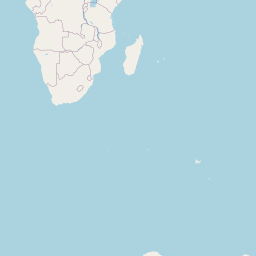
| Location: | Southern Africa, east of Angola, south of the Democratic Republic of the Congo |
| Geographic coordinates: | 15 00 S, 30 00 E |
| Area: | total: 752,618 sq km land: 743,398 sq km water: 9,220 sq km Size comparison: almost five times the size of Georgia; slightly larger than Texas |
| Land Boundaries: | total: 6,043.15 km border countries (8): Angola 1065 km, Botswana 0.15 km, Democratic Republic of the Congo 2332 km, Malawi 847 km, Mozambique 439 km, Namibia 244 km, Tanzania 353 km, Zimbabwe 763 km |
| Coastline: | 0 km (landlocked) |
| Maritime claims: | none (landlocked) |
| Climate: | tropical; modified by altitude; rainy season (October to April) |
| Terrain: | mostly high plateau with some hills and mountains |
| Natural resources: | copper, cobalt, zinc, lead, coal, emeralds, gold, silver, uranium, hydropower |
| Land use: | agricultural land: 31.7% (2011 est.) arable land: 4.8% (2011 est.) permanent crops: 0% (2011 est.) permanent pasture: 26.9% (2011 est.) forest: 66.3% (2011 est.) other: 2% (2011 est.) |
| Irrigated land: | 1,560 sq km (2012) |
| Natural hazards: | periodic drought; tropical storms (November to April) |
| Current Environment Issues: | air pollution and resulting acid rain in the mineral extraction and refining region; chemical runoff into watersheds; loss of biodiversity; poaching seriously threatens rhinoceros, elephant, antelope, and large cat populations; deforestation; soil erosion; desertification; lack of adequate water treatment presents human health risks |
| International Environment Agreements: | party to: Biodiversity, Climate Change, Climate Change-Kyoto Protocol, Desertification, Endangered Species, Hazardous Wastes, Law of the Sea, Ozone Layer Protection, Wetlands signed, but not ratified: none of the selected agreements |
| ^Back to Top | |
| People | |
| |
| Nationality: | noun: Zambian(s) adjective: Zambian |
| Ethnic groups: | Bemba 21%, Tonga 13.6%, Chewa 7.4%, Lozi 5.7%, Nsenga 5.3%, Tumbuka 4.4%, Ngoni 4%, Lala 3.1%, Kaonde 2.9%, Namwanga 2.8%, Lunda (north Western) 2.6%, Mambwe 2.5%, Luvale 2.2%, Lamba 2.1%, Ushi 1.9%, Lenje 1.6%, Bisa 1.6%, Mbunda 1.2%, other 13.8%, unspecified 0.4% (2010 est.) |
| Languages: | Bemba 33.4%, Nyanja 14.7%, Tonga 11.4%, Lozi 5.5%, Chewa 4.5%, Nsenga 2.9%, Tumbuka 2.5%, Lunda (North Western) 1.9%, Kaonde 1.8%, Lala 1.8%, Lamba 1.8%, English (official) 1.7%, Luvale 1.5%, Mambwe 1.3%, Namwanga 1.2%, Lenje 1.1%, Bisa 1%, other 9.7%, unspecified 0.2% (2010 est.) note: Zambia is said to have over 70 languages, although many of these may be considered dialects; all of Zambia's major languages are members of the Bantu family |
| Religions: | Protestant 75.3%, Roman Catholic 20.2%, other 2.7% (includes Muslim Buddhist, Hindu, and Baha'i), none 1.8% (2010 est.) |
| Population: | 16,445,079 (July 2018 est.) note: estimates for this country explicitly take into account the effects of excess mortality due to AIDS; this can result in lower life expectancy, higher infant mortality, higher death rates, lower population growth rates, and changes in the distribution of population by age and sex than would otherwise be expected |
| Age structure: | 0-14 years: 45.95% (male 3,796,548 /female 3,759,624) 15-24 years: 20% (male 1,643,364 /female 1,645,713) 25-54 years: 28.79% (male 2,384,765 /female 2,349,877) 55-64 years: 2.95% (male 225,586 /female 260,252) 65 years and over: 2.31% (male 166,224 /female 213,126) (2018 est.) |
| Dependency ratios: | total dependency ratio: 91.9 (2015 est.) youth dependency ratio: 87.1 (2015 est.) elderly dependency ratio: 4.8 (2015 est.) potential support ratio: 20.8 (2015 est.) |
| Median age: | total: 16.8 years male: 16.7 years female: 16.9 years (2018 est.) |
| Population growth rate: | 2.91% (2018 est.) |
| Birth rate: | 41.1 births/1,000 population (2018 est.) |
| Death rate: | 12 deaths/1,000 population (2018 est.) |
| Net migration rate: | 0 migrant(s)/1,000 population (2018 est.) |
| Urbanization: | urban population: 43.5% of total population (2018) rate of urbanization: 4.23% annual rate of change (2015-20 est.) |
| Major urban areas - population: | 2.524 million LUSAKA (capital) (2018) |
| Sex ratio: | at birth: 1.03 male(s)/female 0-14 years: 1.01 male(s)/female 15-24 years: 1 male(s)/female 25-54 years: 1.01 male(s)/female 55-64 years: 0.87 male(s)/female 65 years and over: 0.78 male(s)/female total population: 1 male(s)/female (2018 est.) Mother's mean age at first birth: 19.2 years (2013/14 est.) note: median age at first birth among women 25-29 |
| Maternal mortality rate: | 224 deaths/100,000 live births (2015 est.) |
| Infant mortality rate: | total: 59.3 deaths/1,000 live births male: 64.6 deaths/1,000 live births female: 53.9 deaths/1,000 live births (2018 est.) |
| Life expectancy at birth: | total population: 53 years male: 51.4 years female: 54.7 years (2018 est.) |
| Total fertility rate: | 5.58 children born/woman (2018 est.) |
| Contraceptive prevalence rate: | 49% (2013/14) |
| Physicians density: | 0.09 physicians/1,000 population (2016) |
| Hospital bed density: | 2 beds/1,000 population (2010) |
| Drinking water source: | improved: urban: 85.6% of population rural: 51.3% of population total: 65.4% of population unimproved: urban: 14.4% of population rural: 48.7% of population total: 34.6% of population (2015 est.) |
| Sanitation facility access: | improved: urban: 55.6% of population (2015 est.) rural: 35.7% of population (2015 est.) total: 43.9% of population (2015 est.) unimproved: urban: 44.4% of population (2015 est.) rural: 64.3% of population (2015 est.) total: 56.1% of population (2015 est.) |
| HIV/AIDS - adult prevalence rate: | 11.5% (2017 est.) |
| HIV/AIDS - people living with HIV/AIDS: | 1.1 million (2017 est.) |
| HIV/AIDS - deaths: | 16,000 (2017 est.) |
| Obesity - adult prevalence rate: | 8.1% (2016) |
| Children under the age of 5 years underweight: | 14.9% (2013) |
| Education expenditures: | n/a |
| Literacy: | definition: age 15 and over can read and write English (2015 est.) total population: 63.4% male: 70.9% female: 56% (2015 est.) Unemployment, youth ages 15-24: total: 24% male: 23.6% female: 24.4% (2017 est.) |
| ^Back to Top | |
| Government | |
| |
| Country name: | conventional long form: Republic of Zambia conventional short form: Zambia former: Northern Rhodesia etymology: name derived from the Zambezi River, which flows through the western part of the country and forms its southern border with neighboring Zimbabwe |
| Government type: | presidential republic |
| Capital: | name: Lusaka; note - a proposal to build a new capital city in Ngabwe was announced in May 2017 geographic coordinates: 15 25 S, 28 17 E time difference: UTC+2 (7 hours ahead of Washington, DC, during Standard Time) |
| Administrative divisions: | 10 provinces; Central, Copperbelt, Eastern, Luapula, Lusaka, Muchinga, Northern, North-Western, Southern, Western |
| Independence: | 24 October 1964 (from the UK) |
| National holiday: | Independence Day, 24 October (1964) |
| Constitution: | history: several previous; latest adopted 24 August 1991, promulgated 30 August 1991 amendments: proposed by the National Assembly; passage requires two-thirds majority vote by the Assembly in two separate readings at least 30 days apart; passage of amendments affecting fundamental rights and freedoms requires approval by at least one-half of votes cast in a referendum prior to consideration and voting by the Assembly; amended 1996, 2015, last in 2016 (2019) |
| Legal system: | mixed legal system of English common law and customary law |
| Suffrage: | 18 years of age; universal |
| Executive branch: | chief of state: President Edgar LUNGU (since 25 January 2015); Vice President Inonge WINA (since 26 January 2015); note - the president is both chief of state and head of government head of government: President Edgar LUNGU (since 25 January 2015); Vice President Inonge WINA (since 26 January 2015) cabinet: Cabinet appointed by president from among members of the National Assembly elections/appointments: president directly elected by absolute majority popular vote in 2 rounds if needed for a 5-year term (eligible for a second term); last held on 11 August 2016 (next to be held in 2021) election results: Edgar LUNGU reelected president in the first round; percent of vote - Edgar LUNGU (PF) 50.4%, Hakainde HICHILEMA (UPND) 47.6%, other 2.0% |
| Legislative branch: | description: unicameral National Assembly (165 seats; 156 members directly elected in single-seat constituencies by simple majority vote in 2 rounds if needed, and up to 8 appointed by the president; members serve 5-year terms); note - 6 additional electoral seats were added for the 11 August 2016 election, up from 150 electoral seats in the 2011 election elections: last held on 11 August 2016 (next to be held in 2021) election results: percent of vote by party - PF 42%, UPND 41.7%, MMD 2.7%, FDD 2.2%, other 1.9%,independent 9.5%; seats by party - PF 89, UPND 54, MMD 5, FDD 1, NDC 1, independent 14; composition - men 135, women 30, percent of women 18.2% |
| Judicial branch: | highest courts: Supreme Court (consists of the chief justice, deputy chief justice, and at least 11 judges); Constitutional Court (consists of the court president, vice president, and 11 judges); note - the Constitutional Court began operation in June 2016 judge selection and term of office: Supreme Court and Constitutional Court judges appointed by the president of the republic upon the advice of the 9-member Judicial Service Commission, which is headed by the chief justice, and ratified by the National Assembly; judges normally serve until age 65 subordinate courts: Court of Appeal; High Court; Industrial Relations Court; subordinate courts (3 levels, based on upper limit of money involved); Small Claims Court; local courts (2 grades, based on upper limit of money involved) |
| Political parties and leaders: | Alliance for Democracy and Development or ADD [Charles MILUPI] Forum for Democracy and Development or FDD [Edith NAWAKWI] Movement for Multiparty Democracy or MMD [Felix MUTATI] National Democratic Congress or NDC [Chishimba KAMBWILI] Patriotic Front or PF [Edgar LUNGU] United Party for National Development or UPND [Hakainde HICHILEMA] |
| International organization participation: | ACP, AfDB, AU, C, COMESA, EITI (compliant country), FAO, G-77, IAEA, IBRD, ICAO, ICCt, ICRM, IDA, IFAD, IFC, IFRCS, ILO, IMF, Interpol, IOC, IOM, IPU, ISO (correspondent), ITSO, ITU, ITUC (NGOs), MIGA, MONUSCO, NAM, OPCW, PCA, SADC, UN, UNAMID, UNCTAD, UNESCO, UNHCR, UNIDO, UNISFA, UNMIL, UNMISS, UNOCI, UNWTO, UPU, WCO, WHO, WIPO, WMO, WTO |
| National symbol(s): | African fish eagle; national colors: green, red, black, orange |
| National anthem: | name: "Lumbanyeni Zambia" (Stand and Sing of Zambia, Proud and Free) lyrics/music: multiple/Enoch Mankayi SONTONGA note: adopted 1964; the melody, from the popular song "God Bless Africa," is the same as that of Tanzania but with different lyrics; the melody is also incorporated into South Africa's anthem |
| Diplomatic representation in the US: | chief of mission: Ambassador Ngosa SIMBYAKULA (since 29 November 2017) chancery: 2200 R Street NW, Washington, DC 20008 telephone: [1] (202) 265-9717 through 9719 FAX: [1] (202) 332-0826 |
| Diplomatic representation from the US: | chief of mission: Ambassador Daniel L. FOOTE (since December 2017) embassy: Eastern end of Kabulonga Road, Ibex Hill, Lusaka mailing address: P. O. Box 320065, Lusaka telephone: [260] 211-357-000 FAX: [260] 211-357-224 |
| ^Back to Top | |
| Economy | |
Zambia had one of the world’s fastest growing economies for the ten years up to 2014, with real GDP growth averaging roughly 6.7% per annum, though growth slowed during the period 2015 to 2017, due to falling copper prices, reduced power generation, and depreciation of the kwacha. Zambia’s lack of economic diversification and dependency on copper as its sole major export makes it vulnerable to fluctuations in the world commodities market and prices turned downward in 2015 due to declining demand from China; Zambia was overtaken by the Democratic Republic of Congo as Africa’s largest copper producer. GDP growth picked up in 2017 as mineral prices rose. Despite recent strong economic growth and its status as a lower middle-income country, widespread and extreme rural poverty and high unemployment levels remain significant problems, made worse by a high birth rate, a relatively high HIV/AIDS burden, by market-distorting agricultural and energy policies, and growing government debt. Zambia raised $7 billion from international investors by issuing separate sovereign bonds in 2012, 2014, and 2015. Concurrently, it issued over $4 billion in domestic debt and agreed to Chinese-financed infrastructure projects, significantly increasing the country’s public debt burden to more than 60% of GDP. The government has considered refinancing $3 billion worth of Eurobonds and significant Chinese loans to cut debt servicing costs. | |
| GDP (purchasing power parity): | $68.93 billion (2017 est.) $66.66 billion (2016 est.) $64.25 billion (2015 est.) note: data are in 2017 dollars |
| GDP (official exchange rate): | $25.71 billion (2017 est.) |
| GDP - real growth rate: | 3.4% (2017 est.) 3.8% (2016 est.) 2.9% (2015 est.) |
| GDP - per capita (PPP): | $4,000 (2017 est.) $4,000 (2016 est.) $4,000 (2015 est.) note: data are in 2017 dollars |
| Gross national saving: | 38.3% of GDP (2017 est.) 37.3% of GDP (2016 est.) 38.9% of GDP (2015 est.) GDP - composition, by end use: household consumption: 52.6% (2017 est.) government consumption: 21% (2017 est.) investment in fixed capital: 27.1% (2017 est.) investment in inventories: 1.2% (2017 est.) exports of goods and services: 43% (2017 est.) imports of goods and services: -44.9% (2017 est.) GDP - composition, by sector of origin: agriculture: 7.5% (2017 est.) industry: 35.3% (2017 est.) services: 57% (2017 est.) |
| Agriculture - products: | corn, sorghum, rice, peanuts, sunflower seeds, vegetables, flowers, tobacco, cotton, sugarcane, cassava (manioc, tapioca), coffee; cattle, goats, pigs, poultry, milk, eggs, hides |
| Industries: | copper mining and processing, emerald mining, construction, foodstuffs, beverages, chemicals, textiles, fertilizer, horticulture |
| Industrial production growth rate: | 4.7% (2017 est.) |
| Labor force: | 6.898 million (2017 est.) |
| Labor force - by occupation: | agriculture: 54.8% industry: 9.9% services: 35.3% (2017 est.) |
| Unemployment rate: | 15% (2008 est.) 50% (2000 est.) |
| Population below poverty line: | 54.4% (2015 est.) |
| Household income or consumption by percentage share: | lowest 10%: 1.5% highest 10%: 47.4% (2010) |
| Distribution of family income - Gini index: | 57.5 (2013) 50.8 (2004) |
| Budget: | revenues: 4.473 billion (2017 est.) expenditures: 6.357 billion (2017 est.) |
| Taxes and other revenues: | 17.4% (of GDP) (2017 est.) Budget surplus (+) or deficit (-): -7.3% (of GDP) (2017 est.) |
| Public debt: | 63.1% of GDP (2017 est.) 60.7% of GDP (2016 est.) |
| Fiscal year: | calendar year |
| Inflation rate (consumer prices): | 6.6% (2017 est.) 17.9% (2016 est.) |
| Current account balance: | -$1.006 billion (2017 est.) -$934 million (2016 est.) |
| Exports: | $8.216 billion (2017 est.) $6.514 billion (2016 est.) |
| Exports - commodities: | copper/cobalt, cobalt, electricity; tobacco, flowers, cotton |
| Exports - partners: | Switzerland 44.8%, China 16.1%, Democratic Republic of the Congo 6.2%, Singapore 6%, South Africa 5.9% (2017) |
| Imports: | $7.852 billion (2017 est.) $6.539 billion (2016 est.) |
| Imports - commodities: | machinery, transportation equipment, petroleum products, electricity, fertilizer, foodstuffs, clothing |
| Imports - partners: | South Africa 28.2%, Democratic Republic of the Congo 20.8%, China 12.9%, Kuwait 5.4%, UAE 4.6% (2017) |
| Reserves of foreign exchange and gold: | $2.082 billion (31 December 2017 est.) $2.353 billion (31 December 2016 est.) |
| Debt - external: | $11.66 billion (31 December 2017 est.) $9.562 billion (31 December 2016 est.) |
| Stock of direct foreign investment - at home: | n/a |
| Stock of direct foreign investment - abroad: | n/a |
| Market value of publicly traded shares: | $3.004 billion (31 December 2012 est.) $4.009 billion (31 December 2011 est.) $2.817 billion (31 December 2010 est.) |
| Exchange rates: | Zambian kwacha (ZMK) per US dollar - 9.2 (2017 est.) 10.3 (2016 est.) 10.3 (2015 est.) 8.6 (2014 est.) 6.2 (2013 est.) |
| ^Back to Top | |
| Energy | |
| |
| Electricity - production: | 11.55 billion kWh (2016 est.) |
| Electricity - consumption: | 11.04 billion kWh (2016 est.) |
| Electricity - exports: | 1.176 billion kWh (2015 est.) |
| Electricity - imports: | 2.185 billion kWh (2016 est.) |
| Electricity - installed generating capacity: | 2.573 million kW (2016 est.) |
| Electricity - from fossil fuels: | 5% of total installed capacity (2016 est.) |
| Electricity - from nuclear fuels: | 0% of total installed capacity (2017 est.) |
| Electricity - from hydroelectric plants: | 93% of total installed capacity (2017 est.) |
| Electricity - from other renewable sources: | 2% of total installed capacity (2017 est.) |
| Crude oil - production: | 0 bbl/day (2017 est.) |
| Crude oil - exports: | 0 bbl/day (2015 est.) |
| Crude oil - imports: | 12,860 bbl/day (2015 est.) |
| Crude oil - proved reserves: | 0 bbl (1 January 2018 est.) |
| Refined petroleum products - production: | 13,120 bbl/day (2015 est.) |
| Refined petroleum products - consumption: | 23,000 bbl/day (2016 est.) |
| Refined petroleum products - exports: | 371 bbl/day (2015 est.) |
| Refined petroleum products - imports: | 10,150 bbl/day (2015 est.) |
| Natural gas - production: | 0 cu m (2017 est.) |
| Natural gas - consumption: | 0 cu m (2017 est.) |
| Natural gas - exports: | 0 cu m (2017 est.) |
| Natural gas - imports: | 0 cu m (2017 est.) |
| Natural gas - proved reserves: | 0 cu m (1 January 2014 est.) |
| Carbon dioxide emissions from consumption of energy: | 3.777 million Mt (2017 est.) |
| ^Back to Top | |
| Communications | |
| |
| Cellular Phones in use: | total subscriptions: 13,438,539 subscriptions per 100 inhabitants: 84 (2017 est.) |
| Telephone system: | general assessment: service is among the best in sub-Saharan Africa; regulatory approach promotes competition and a cohort of private sector service providers offering mobile voice and Internet at some of the lowest prices in the region (2018) domestic: fiber optic connections are available between most larger towns and cities with microwave radio relays serving more rural areas; 3 cellular telephone providers currently in operation plus several data only ISPs; fixed-line infrastructure has degraded significantly and is often being discontinued or replaced with fixed wireless service; Internet service is widely available via mobile or fixed wireless terminals (LTE and 3G), with FTTx in limited urban areas and private Ku or Ka band VSAT terminals in remote locations; fixed-line 1 per 100 and mobile-cellular 84 per 100 (2018) international: country code - 260; multiple providers operate overland fiber optic routes via Zimbabwe/South Africa, Botswana/Namibia and Tanzania provide access to the major undersea cables |
| Broadcast media: | according to the Independent Broadcast Authority, there are 137 radio stations and 47 television stations in Zambia; out of the 137 radio stations, 133 are private (categorized as either commercial or community radio stations), while 4 are public-owned; state-owned Zambia National Broadcasting Corporation (ZNBC) operates 2 television channels and 3 radio stations; ZNBC owns 75% shares in GoTV, 40% in MultiChoice, and 40% in TopStar Communications Company, all of which operate in-country (2019) |
| Internet country code: | .zm |
| Internet users: | total: 3,956,252 percent of population: 25.5% (July 2016 est.) |
| ^Back to Top | |
| Transportation | |
| |
| Airports: | 88 (2013) |
| Airports (paved runways): | total 8 (2013) over 3,047 m: 1 (2013) 2,438 to 3,047 m: 3 (2013) 1,524 to 2,437 m: 3 (2013) 914 to 1,523 m: 1 (2013) |
| Airports (unpaved runways): | total 80 (2013) 2,438 to 3,047 m: 1 (2013) 1,524 to 2,437 m: 5 (2013) 914 to 1,523 m: 53 (2013) under 914 m: 21 (2013) |
| Pipelines: | 771 km oil (2013) |
| Railways: | total 3,126 km (2014) narrow gauge: 3,126 km 1.067-m gauge (2014) note: includes 1,860 km of the Tanzania-Zambia Railway Authority (TAZARA) |
| Roadways: | total 67,671 km (2018) paved: 14,888 km (2018) unpaved: 52,783 km (2018) |
| Waterways: | 2,250 km (includes Lake Tanganyika and the Zambezi and Luapula Rivers) (2010) |
| Merchant marine: | total 1 by type: other 1 (2017) |
| Ports and terminals: | river port(s): Mpulungu (Zambezi) |
| ^Back to Top | |
| Military | |
| |
| Military branches: | Zambian Defense Force (ZDF): Zambia Army, Zambia Air Force, Zambia National Service (support organization) (2015) |
| Military service age and obligation: | national registration required at age 16; 18-25 years of age for male and female voluntary military service (16 years of age with parental consent); no conscription; Zambian citizenship required; grade 12 certification required; mandatory HIV testing on enlistment; mandatory retirement for officers at age 65 (Army, Air Force) (2012) |
| Military expenditures: | 1.25% of GDP (2018) 1.3% of GDP (2017) 1.53% of GDP (2016) 1.75% of GDP (2015) 1.63% of GDP (2014) |
| ^Back to Top | |
| Transnational Issues | |
| |
| Disputes - International: | in 2004, Zimbabwe dropped objections to plans between Botswana and Zambia to build a bridge over the Zambezi River, thereby de facto recognizing a short, but not clearly delimited, Botswana-Zambia boundary in the river |
| Refugees and internally displaced persons: | refugees (country of origin): 43,470 (Democratic Republic of the Congo) (refugees and asylum seekers) (2019) |
| Illicit drugs: | transshipment point for moderate amounts of methaqualone, small amounts of heroin, and cocaine bound for southern Africa and possibly Europe; a poorly developed financial infrastructure coupled with a government commitment to combating money laundering make it an unattractive venue for money launderers; major consumer of cannabis |
| ^Back to Top | |
Zambia Previous Country | Next Country »
Source: CIA - The World Factbook