
Venezuela Population: 31,689,176
444 VISITORS FROM HERE!«  Previous Country | Next Country Previous Country | Next Country  » Back to Flag Counter Overview » Back to Flag Counter Overview | 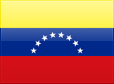 |
| History | |
| Venezuela was one of three countries that emerged from the collapse of Gran Colombia in 1830 (the others being Ecuador and New Granada, which became Colombia). For most of the first half of the 20th century, Venezuela was ruled by generally benevolent military strongmen who promoted the oil industry and allowed for some social reforms. Democratically elected governments have held sway since 1959. Under Hugo CHAVEZ, president from 1999 to 2013, and his hand-picked successor, President Nicolas MADURO, the executive branch has exercised increasingly authoritarian control over other branches of government. In 2016, President MADURO issued a decree to hold an election to form a "Constituent Assembly." A 30 July 2017 poll approved the formation of a 545-member Constituent Assembly and elected its delegates, empowering them to change the constitution and dismiss government institutions and officials. The US Government does not recognize the Assembly, which has generally used its powers to rule by decree rather than to reform the constitution. Simultaneously, democratic institutions continue to deteriorate, freedoms of expression and the press are curtailed, and political polarization has grown. The ruling party's economic policies have expanded the state's role in the economy through expropriations of major enterprises, strict currency exchange and price controls that discourage private sector investment and production, and overdependence on the petroleum industry for revenues, among others. Current concerns include human rights abuses, rampant violent crime, high inflation, and widespread shortages of basic consumer goods, medicine, and medical supplies. |

|  |
| |
| Geography | |
| |
| Location: | Northern South America, bordering the Caribbean Sea and the North Atlantic Ocean, between Colombia and Guyana |
| Geographic coordinates: | 8 00 N, 66 00 W |
| Area: | total: 912,050 sq km land: 882,050 sq km water: 30,000 sq km Size comparison: almost six times the size of Georgia; slightly more than twice the size of California |
| Land Boundaries: | total: 5,267 km border countries (3): Brazil 2137 km, Colombia 2341 km, Guyana 789 km |
| Coastline: | 2,800 km |
| Maritime claims: | territorial sea: 12 nm exclusive economic zone: 200 nm contiguous zone: 15 nm continental shelf: 200-m depth or to the depth of exploitation |
| Climate: | tropical; hot, humid; more moderate in highlands |
| Terrain: | Andes Mountains and Maracaibo Lowlands in northwest; central plains (llanos); Guiana Highlands in southeast |
| Natural resources: | petroleum, natural gas, iron ore, gold, bauxite, other minerals, hydropower, diamonds |
| Land use: | agricultural land: 24.5% (2011 est.) arable land: 3.1% (2011 est.) permanent crops: 0.8% (2011 est.) permanent pasture: 20.6% (2011 est.) forest: 52.1% (2011 est.) other: 23.4% (2011 est.) |
| Irrigated land: | 10,550 sq km (2012) |
| Natural hazards: | subject to floods, rockslides, mudslides; periodic droughts |
| Current Environment Issues: | sewage pollution of Lago de Valencia; oil and urban pollution of Lago de Maracaibo; deforestation; soil degradation; urban and industrial pollution, especially along the Caribbean coast; threat to the rainforest ecosystem from irresponsible mining operations |
| International Environment Agreements: | party to: Antarctic Treaty, Biodiversity, Climate Change, Climate Change-Kyoto Protocol, Desertification, Endangered Species, Hazardous Wastes, Marine Life Conservation, Ozone Layer Protection, Ship Pollution, Tropical Timber 83, Tropical Timber 94, Wetlands signed, but not ratified: none of the selected agreements |
| ^Back to Top | |
| People | |
| |
| Nationality: | noun: Venezuelan(s) adjective: Venezuelan |
| Ethnic groups: | unspecified Spanish, Italian, Portuguese, Arab, German, African, indigenous people |
| Languages: | Spanish (official), numerous indigenous dialects |
| Religions: | nominally Roman Catholic 96%, Protestant 2%, other 2% |
| Population: | 31,689,176 (July 2018 est.) |
| Age structure: | 0-14 years: 27.04% (male 4,392,305 /female 4,176,518) 15-24 years: 16.82% (male 2,709,250 /female 2,621,681) 25-54 years: 40.65% (male 6,393,114 /female 6,487,570) 55-64 years: 8.11% (male 1,233,524 /female 1,336,963) 65 years and over: 7.38% (male 1,056,864 /female 1,281,387) (2018 est.) |
| Dependency ratios: | total dependency ratio: 52.6 (2015 est.) youth dependency ratio: 43 (2015 est.) elderly dependency ratio: 9.5 (2015 est.) potential support ratio: 10.5 (2015 est.) |
| Median age: | total: 28.7 years male: 28 years female: 29.4 years (2018 est.) |
| Population growth rate: | 1.21% (2018 est.) |
| Birth rate: | 18.5 births/1,000 population (2018 est.) |
| Death rate: | 5.3 deaths/1,000 population (2018 est.) |
| Net migration rate: | -1.2 migrant(s)/1,000 population (2018 est.) |
| Urbanization: | urban population: 88.2% of total population (2018) rate of urbanization: 1.28% annual rate of change (2015-20 est.) |
| Major urban areas - population: | 2.935 million CARACAS (capital) 2.179 million Maracaibo 1.734 million Valencia 1.178 million Maracay 1.189 million Barquisimeto (2018) |
| Sex ratio: | at birth: 1.05 male(s)/female 0-14 years: 1.05 male(s)/female 15-24 years: 1.03 male(s)/female 25-54 years: 0.99 male(s)/female 55-64 years: 0.92 male(s)/female 65 years and over: 0.82 male(s)/female total population: 0.99 male(s)/female (2018 est.) |
| Maternal mortality rate: | 95 deaths/100,000 live births (2015 est.) |
| Infant mortality rate: | total: 11.9 deaths/1,000 live births male: 12.5 deaths/1,000 live births female: 11.2 deaths/1,000 live births (2018 est.) |
| Life expectancy at birth: | total population: 76.2 years male: 73.2 years female: 79.3 years (2018 est.) |
| Total fertility rate: | 2.3 children born/woman (2018 est.) |
| Contraceptive prevalence rate: | 75% (2010) |
| Hospital bed density: | 0.8 beds/1,000 population (2014) |
| Drinking water source: | improved: urban: 95% of population rural: 77.9% of population total: 93.1% of population unimproved: urban: 5% of population rural: 22.1% of population total: 6.9% of population (2015 est.) |
| Sanitation facility access: | improved: urban: 97.5% of population (2015 est.) rural: 69.9% of population (2015 est.) total: 94.4% of population (2015 est.) unimproved: urban: 2.5% of population (2015 est.) rural: 30.1% of population (2015 est.) total: 5.6% of population (2015 est.) |
| HIV/AIDS - adult prevalence rate: | 0.6% (2016 est.) |
| HIV/AIDS - people living with HIV/AIDS: | 120,000 (2016 est.) |
| HIV/AIDS - deaths: | 2,500 (2016 est.) |
| Obesity - adult prevalence rate: | 25.6% (2016) |
| Children under the age of 5 years underweight: | 2.9% (2009) |
| Education expenditures: | 6.9% of GDP (2009) |
| Literacy: | definition: age 15 and over can read and write (2016 est.) total population: 97.1% male: 97% female: 97.2% (2016 est.) |
| School life expectancy (primary to tertiary education): | total: 14 years male: n/a female: n/a (2009) Unemployment, youth ages 15-24: total: 14.6% male: n/a female: n/a (2015 est.) |
| ^Back to Top | |
| Government | |
| |
| Country name: | conventional long form: Bolivarian Republic of Venezuela conventional short form: Venezuela local long form: Republica Bolivariana de Venezuela local short form: Venezuela etymology: native stilt-houses built on Lake Maracaibo reminded early explorers Alonso de OJEDA and Amerigo VESPUCCI in 1499 of buildings in Venice and so they named the region "Venezuola," which in Italian means "Little Venice" |
| Government type: | federal presidential republic |
| Capital: | name: Caracas geographic coordinates: 10 29 N, 66 52 W time difference: UTC-4 (1 hour ahead of Washington, DC, during Standard Time) |
| Administrative divisions: | 23 states (estados, singular - estado), 1 capital district* (distrito capital), and 1 federal dependency** (dependencia federal); Amazonas, Anzoategui, Apure, Aragua, Barinas, Bolivar, Carabobo, Cojedes, Delta Amacuro, Dependencias Federales (Federal Dependencies)**, Distrito Capital (Capital District)*, Falcon, Guarico, Lara, Merida, Miranda, Monagas, Nueva Esparta, Portuguesa, Sucre, Tachira, Trujillo, Vargas, Yaracuy, Zulia note: the federal dependency consists of 11 federally controlled island groups with a total of 72 individual islands |
| Independence: | 5 July 1811 (from Spain) |
| National holiday: | Independence Day, 5 July (1811) |
| Constitution: | history: many previous; latest adopted 15 December 1999, effective 30 December 1999 amendments: proposed through agreement by at least 39% of the National Assembly membership, by the president of the republic in session with the cabinet of ministers, or by petition of at least 15% of registered voters; passage requires simple majority vote by the Assembly and simple majority approval in a referendum; amended 2009; note - in 2016, President MADURO issued a decree to hold an election to form a constituent assembly to change the constution; the election in July 2017 approved the formation of a 545-member constituent assembly and elected its delegates, empowering them to change the constitution and dismiss government institutions and officials (2018) |
| Legal system: | civil law system based on the Spanish civil code |
| Suffrage: | 18 years of age; universal |
| Executive branch: | chief of state: Notification Statement: the United States recognizes Juan GUAIDO as the Interim President of Venezuela President Nicolas MADURO Moros (since 19 April 2013); Executive Vice President Delcy RODRIGUEZ Gomez (since 14 June 2018); note - the president is both chief of state and head of government head of government: President Nicolas MADURO Moros (since 19 April 2013); Executive Vice President Delcy RODRIGUEZ Gomez (since 14 June 2018) cabinet: Council of Ministers appointed by the president elections/appointments: president directly elected by simple majority popular vote for a 6-year term (no term limits); election last held on 20 May 2018 (next election scheduled for 2024) election results: Nicolas MADURO Moros reelected president; percent of vote - Nicolas MADURO Moros (PSUV) 68%, Henri FALCON (AP) 21%, Javier BERTUCCI 11%; note - the election was marked by serious shortcomings and electoral fraud; voter turnout was approximately 46% due largely to an opposition boycott of the election |
| Legislative branch: | description: unicameral National Assembly or Asamblea Nacional (167 seats; 113 members directly elected in single- and multi-seat constituencies by simple majority vote, 51 directly elected in multi-seat constituencies by closed, party-list proportional representation vote, and 3 seats reserved for indigenous peoples of Venezuela; members serve 5-year terms) elections: last held on 6 December 2015 (next to be held by 2020) election results: percent of vote by party - MUD (opposition coalition) 56.2%, PSUV (pro-government) 40.9%, other 2.9%; seats by party - MUD 109, PSUV 55, indigenous peoples 3; composition - men 143, women 24, percent of women 14.4% |
| Judicial branch: | highest courts: Supreme Tribunal of Justice (consists of 32 judges organized into constitutional, political-administrative, electoral, civil appeals, criminal appeals, and social divisions) judge selection and term of office: judges proposed by the Committee of Judicial Postulation (an independent body of organizations dealing with legal issues and of the organs of citizen power) and appointed by the National Assembly; judges serve nonrenewable 12-year terms; note - in July 2017, the National Assembly named 33 judges to the court to replace a series of judges, it argued, had been illegally appointed in late 2015 by the outgoing, socialist-party-led Assembly; the Government of President MADURO and the Socialist Party-appointed judges refused to recognize these appointments, however, and many of the new judges have since been imprisoned or forced into exile subordinate courts: Superior or Appeals Courts (Tribunales Superiores); District Tribunals (Tribunales de Distrito); Courts of First Instance (Tribunales de Primera Instancia); Parish Courts (Tribunales de Parroquia); Justices of the Peace (Justicia de Paz) Network |
| Political parties and leaders: | A New Era or UNT [Manuel ROSALES] Brave People's Alliance or ABP [Richard BLANCO] Christian Democrats or COPEI [Roberto ENRIQUEZ] Clear Accounts or CC [Enzo SCARENO] Coalition of parties loyal to Hugo CHAVEZ -- Great Patriotic Pole or GPP [Nicolas MADURO] Coalition of opposition parties -- The Democratic Unity Table or MUD [Jose Luis CARTAYA] Come On Venezuela or VV [Maria MACHADO] Communist Party of Venezuela or PCV [Oscar FIGUERA] Democratic Action or AD [Henry RAMOS ALLUP] Justice First or PJ [Julio BORGES] Popular Will or VP [Leopoldo LOPEZ] Progressive Wave or AP [Henri FALCON] The Radical Cause or La Causa R [Andres VELAZQUEZ] United Socialist Party of Venezuela or PSUV [Nicolas MADURO] Venezuelan Progressive Movement or MPV [Simon CALZADILLA] Venezuela Project or PV [Henrique Fernando SALAS FEO] |
| International organization participation: | Caricom (observer), CD, CDB, CELAC, FAO, G-15, G-24, G-77, IADB, IAEA, IBRD, ICAO, ICC (national committees), ICCt (signatory), ICRM, IDA, IFAD, IFC, IFRCS, IHO, ILO, IMF, IMO, IMSO, Interpol, IOC, IOM, IPU, ITSO, ITU, ITUC (NGOs), LAES, LAIA, LAS (observer), MIGA, NAM, OAS, OPANAL, OPCW, OPEC, PCA, Petrocaribe, UN, UNASUR, UNCTAD, UNESCO, UNHCR, UNIDO, Union Latina, UNWTO, UPU, WCO, WFTU (NGOs), WHO, WIPO, WMO, WTO |
| National symbol(s): | troupial (bird); national colors: yellow, blue, red |
| National anthem: | name: "Gloria al bravo pueblo" (Glory to the Brave People) lyrics/music: Vicente SALIAS/Juan Jose LANDAETA note: adopted 1881; lyrics written in 1810, the music some years later; both SALIAS and LANDAETA were executed in 1814 during Venezuela's struggle for independence |
| Diplomatic representation in the US: | chief of mission: Ambassador (vacant); Charge d'Affaires Carlos Lissett M. HERNANDEZ Marquez (since May 2018) chancery: 1099 30th Street NW, Washington, DC 20007 telephone: [1] (202) 342-2214 FAX: [1] (202) 342-6820 consulate(s) general: Boston, Chicago, Houston, New Orleans, New York, San Francisco, San Juan (Puerto Rico) |
| Diplomatic representation from the US: | chief of mission: Ambassador (vacant); Deputy Chief of Mission James "Jimmy" STORY (since July 2018); note - due to strained relations between the US and Venezuelan Governments, neither country has shared ambassadors since 2010; on 22 May 2018, Venezuelan President Nicolas MADURO declared Charge d'Affaires Todd D. ROBINSON and his deputy persona non grata and ordered them expelled embassy: Calle F con Calle Suapure, Urbanizacion Colinas de Valle Arriba, Caracas 1080 mailing address: P. O. Box 62291, Caracas 1060-A; APO AA 34037 telephone: [58] (212) 975-6411, 907-8400 (after hours) FAX: [58] (212) 907-8106 |
| ^Back to Top | |
| Economy | |
Venezuela remains highly dependent on oil revenues, which account for almost all export earnings and nearly half of the government’s revenue, despite a continued decline in oil production in 2017. In the absence of official statistics, foreign experts estimate that GDP contracted 12% in 2017, inflation exceeded 2000%, people faced widespread shortages of consumer goods and medicine, and the central bank's international reserves dwindled. In late 2017, Venezuela also entered selective default on some of its sovereign and state oil company, Petroleos de Venezuela, S.A., (PDVSA) bonds. Domestic production and industry continues to severely underperform and the Venezuelan Government continues to rely on imports to meet its basic food and consumer goods needs. Falling oil prices since 2014 have aggravated Venezuela’s economic crisis. Insufficient access to dollars, price controls, and rigid labor regulations have led some US and multinational firms to reduce or shut down their Venezuelan operations. Market uncertainty and PDVSA’s poor cash flow have slowed investment in the petroleum sector, resulting in a decline in oil production. Under President Nicolas MADURO, the Venezuelan Government’s response to the economic crisis has been to increase state control over the economy and blame the private sector for shortages. MADURO has given authority for the production and distribution of basic goods to the military and to local socialist party member committees. The Venezuelan Government has maintained strict currency controls since 2003. The government has been unable to sustain its mechanisms for distributing dollars to the private sector, in part because it needed to withhold some foreign exchange reserves to make its foreign bond payments. As a result of price and currency controls, local industries have struggled to purchase production inputs necessary to maintain their operations or sell goods at a profit on the local market. Expansionary monetary policies and currency controls have created opportunities for arbitrage and corruption and fueled a rapid increase in black market activity. | |
| GDP (purchasing power parity): | $381.6 billion (2017 est.) $443.7 billion (2016 est.) $531.1 billion (2015 est.) note: data are in 2017 dollars |
| GDP (official exchange rate): | $210.1 billion (2017 est.) |
| GDP - real growth rate: | -14% (2017 est.) -16.5% (2016 est.) -6.2% (2015 est.) |
| GDP - per capita (PPP): | $12,500 (2017 est.) $14,400 (2016 est.) $17,300 (2015 est.) note: data are in 2017 dollars |
| Gross national saving: | 12.1% of GDP (2017 est.) 8.6% of GDP (2016 est.) 31.8% of GDP (2015 est.) GDP - composition, by end use: household consumption: 68.5% (2017 est.) government consumption: 19.6% (2017 est.) investment in fixed capital: 13.9% (2017 est.) investment in inventories: 1.7% (2017 est.) exports of goods and services: 7% (2017 est.) imports of goods and services: -10.7% (2017 est.) GDP - composition, by sector of origin: agriculture: 4.7% (2017 est.) industry: 40.4% (2017 est.) services: 54.9% (2017 est.) |
| Agriculture - products: | corn, sorghum, sugarcane, rice, bananas, vegetables, coffee; beef, pork, milk, eggs; fish |
| Industries: | agricultural products, livestock, raw materials, machinery and equipment, transport equipment, construction materials, medical equipment, pharmaceuticals, chemicals, iron and steel products, crude oil and petroleum products |
| Industrial production growth rate: | -2% (2017 est.) |
| Labor force: | 14.21 million (2017 est.) |
| Labor force - by occupation: | agriculture: 7.3% industry: 21.8% services: 70.9% (4th quarter, 2011 est.) |
| Unemployment rate: | 27.1% (2017 est.) 20.6% (2016 est.) |
| Population below poverty line: | 19.7% (2015 est.) |
| Household income or consumption by percentage share: | lowest 10%: 1.7% highest 10%: 32.7% (2006) |
| Distribution of family income - Gini index: | 39 (2011) 49.5 (1998) |
| Budget: | revenues: 92.8 billion (2017 est.) expenditures: 189.7 billion (2017 est.) |
| Taxes and other revenues: | 44.2% (of GDP) (2017 est.) Budget surplus (+) or deficit (-): -46.1% (of GDP) (2017 est.) |
| Public debt: | 38.9% of GDP (2017 est.) 31.3% of GDP (2016 est.) note: data cover central government debt, as well as the debt of state-owned oil company PDVSA; the data include treasury debt held by foreign entities; the data include some debt issued by subnational entities, as well as intragovernmental debt; intragovernmental debt consists of treasury borrowings from surpluses in the social funds, such as for retirement, medical care, and unemployment; some debt instruments for the social funds are sold at public auctions |
| Fiscal year: | calendar year |
| Inflation rate (consumer prices): | 1,087.5% (2017 est.) 254.4% (2016 est.) |
| Current account balance: | $4.277 billion (2017 est.) -$3.87 billion (2016 est.) |
| Exports: | $32.06 billion (2017 est.) $27.2 billion (2016 est.) |
| Exports - commodities: | petroleum and petroleum products, bauxite and aluminum, minerals, chemicals, agricultural products |
| Exports - partners: | US 34.8%, India 17.2%, China 16%, Netherlands Antilles 8.2%, Singapore 6.3%, Cuba 4.2% (2017) |
| Imports: | $11 billion (2017 est.) $16.34 billion (2016 est.) |
| Imports - commodities: | agricultural products, livestock, raw materials, machinery and equipment, transport equipment, construction materials, medical equipment, petroleum products, pharmaceuticals, chemicals, iron and steel products |
| Imports - partners: | US 24.8%, China 14.2%, Mexico 9.5% (2017) |
| Reserves of foreign exchange and gold: | $9.661 billion (31 December 2017 est.) $11 billion (31 December 2016 est.) |
| Debt - external: | $100.3 billion (31 December 2017 est.) $109.8 billion (31 December 2016 est.) |
| Stock of direct foreign investment - at home: | $32.74 billion (31 December 2017 est.) $33.78 billion (31 December 2016 est.) |
| Stock of direct foreign investment - abroad: | $35.15 billion (31 December 2017 est.) $31.12 billion (31 December 2016 est.) |
| Market value of publicly traded shares: | $25.3 billion (31 December 2012 est.) $5.143 billion (31 December 2011 est.) $3.991 billion (31 December 2011 est.) |
| Exchange rates: | bolivars (VEB) per US dollar - 3,345 (2017 est.) 673.76 (2016 est.) 48.07 (2015 est.) 13.72 (2014 est.) 6.284 (2013 est.) |
| ^Back to Top | |
| Energy | |
| |
| Electricity - production: | 109.3 billion kWh (2016 est.) |
| Electricity - consumption: | 71.96 billion kWh (2016 est.) |
| Electricity - exports: | 0 kWh (2015 est.) |
| Electricity - imports: | 0 kWh (2016 est.) |
| Electricity - installed generating capacity: | 31 million kW (2016 est.) |
| Electricity - from fossil fuels: | 51% of total installed capacity (2016 est.) |
| Electricity - from nuclear fuels: | 0% of total installed capacity (2017 est.) |
| Electricity - from hydroelectric plants: | 49% of total installed capacity (2017 est.) |
| Electricity - from other renewable sources: | 0% of total installed capacity (2017 est.) |
| Crude oil - production: | 2.007 million bbl/day (2017 est.) |
| Crude oil - exports: | 1.656 million bbl/day (2015 est.) |
| Crude oil - imports: | 0 bbl/day (2015 est.) |
| Crude oil - proved reserves: | 302.3 billion bbl (1 January 2018 est.) |
| Refined petroleum products - production: | 926,300 bbl/day (2015 est.) |
| Refined petroleum products - consumption: | 659,000 bbl/day (2016 est.) |
| Refined petroleum products - exports: | 325,800 bbl/day (2015 est.) |
| Refined petroleum products - imports: | 20,640 bbl/day (2015 est.) |
| Natural gas - production: | 27.07 billion cu m (2017 est.) |
| Natural gas - consumption: | 24.21 billion cu m (2017 est.) |
| Natural gas - exports: | 0 cu m (2017 est.) |
| Natural gas - imports: | 0 cu m (2017 est.) |
| Natural gas - proved reserves: | 5.739 trillion cu m (1 January 2018 est.) |
| Carbon dioxide emissions from consumption of energy: | 129.9 million Mt (2017 est.) |
| ^Back to Top | |
| Communications | |
| |
| Cellular Phones in use: | total subscriptions: 24,493,687 subscriptions per 100 inhabitants: 78 (2017 est.) |
| Telephone system: | general assessment: modern and expanding; by late 2018 teledensity has fallen due to political upheaval in the country with people holding on to mobile service, but cancelling fixed-line telecom services; poor quality of service in many areas of the country due to financial concerns of customers, decrepit sate of fixed-line network and difficulty to pay for equipment from foreign vendors; popularity of social networks has given growth to mobile data traffic; LTE population coverage about 47% (2018) domestic: two domestic satellite systems with three earth stations; recent substantial improvement in telephone service in rural areas; installation of a national inter-urban fiber-optic network capable of digital multimedia services; 3 major providers operate in the mobile market and compete with state-owned company; fixed-line 19 per 100 and mobile-cellular telephone subscribership about 78 per 100 persons (2018) international: country code - 58; submarine cable systems provide connectivity to Cuba and the Caribbean, Central and South America, and US; satellite earth stations - 1 Intelsat (Atlantic Ocean) and 1 PanAmSat; participating with Colombia, Ecuador, Peru, and Bolivia in the construction of an international fiber-optic network |
| Broadcast media: | government supervises a mixture of state-run and private broadcast media; 13 public service networks, 61 privately owned TV networks, a privately owned news channel with limited national coverage, and a government-backed Pan-American channel; state-run radio network includes roughly 65 news stations and another 30 stations targeted at specific audiences; state-sponsored community broadcasters include 235 radio stations and 44 TV stations; the number of private broadcast radio stations has been declining, but many still remain in operation |
| Internet country code: | .ve |
| Internet users: | total: 18,547,381 percent of population: 60% (July 2016 est.) |
| ^Back to Top | |
| Transportation | |
| |
| Airports: | 444 (2013) |
| Airports (paved runways): | total 127 (2013) over 3,047 m: 6 (2013) 2,438 to 3,047 m: 9 (2013) 1,524 to 2,437 m: 33 (2013) 914 to 1,523 m: 62 (2013) under 914 m: 17 (2013) |
| Airports (unpaved runways): | total 317 (2013) 2,438 to 3,047 m: 3 (2013) 1,524 to 2,437 m: 57 (2013) 914 to 1,523 m: 127 (2013) under 914 m: 130 (2013) |
| Heliports: | 3 (2013) |
| Pipelines: | 981 km extra heavy crude, 5941 km gas, 7588 km oil, 1778 km refined products (2013) |
| Railways: | total 447 km (2014) standard gauge: 447 km 1.435-m gauge (41.4 km electrified) (2014) |
| Roadways: | total 96,189 km (2014) |
| Waterways: | 7,100 km (Orinoco River (400 km) and Lake de Maracaibo navigable by oceangoing vessels) (2011) |
| Merchant marine: | total 269 by type: bulk carrier 4, container ship 1, general cargo 30, oil tanker 26, other 208 (2018) |
| Ports and terminals: | major seaport(s): La Guaira, Maracaibo, Puerto Cabello, Punta Cardon oil terminal(s): Jose terminal |
| ^Back to Top | |
| Military | |
| |
| Military branches: | Bolivarian National Armed Forces (Fuerza Armada Nacional Bolivariana, FANB): Bolivarian Army (Ejercito Bolivariano, EB), Bolivarian Navy (Armada Bolivariana, AB; includes Naval Infantry, Coast Guard, Naval Aviation), Bolivarian Military Aviation (Aviacion Militar Bolivariana, AMB; includes Air National Guard), Bolivarian National Guard (Guardia Nacional Bolivaria, GNB), Bolivarian Militia (Milicia Bolivariana, NMB) (2016) |
| Military service age and obligation: | all citizens of military service age (18-60 years old) are obligated to register for military service, though mandatory recruitment is forbidden; the minimum service obligation is 12 months (2016) |
| Military expenditures: | 1% of GDP (2015) 1.16% of GDP (2014) 1.43% of GDP (2013) 1.3% of GDP (2012) 0.75% of GDP (2011) |
| ^Back to Top | |
| Transnational Issues | |
| |
| Disputes - International: | claims all of the area west of the Essequibo River in Guyana, preventing any discussion of a maritime boundary; Guyana has expressed its intention to join Barbados in asserting claims before the UN Convention on the Law of the Sea that Trinidad and Tobago's maritime boundary with Venezuela extends into their waters; dispute with Colombia over maritime boundary and Venezuelan administered Los Monjes Islands near the Gulf of Venezuela; Colombian organized illegal narcotics and paramilitary activities penetrate Venezuela's shared border region; US, France, and the Netherlands recognize Venezuela's granting full effect to Aves Island, thereby claiming a Venezuelan Economic Exclusion Zone/continental shelf extending over a large portion of the eastern Caribbean Sea; Dominica, Saint Kitts and Nevis, Saint Lucia, and Saint Vincent and the Grenadines protest Venezuela's full effect claim |
| Refugees and internally displaced persons: | refugees (country of origin): 67,156 (Colombia) (2018) |
| Illicit drugs: | small-scale illicit producer of opium and coca for the processing of opiates and coca derivatives; however, large quantities of cocaine, heroin, and marijuana transit the country from Colombia bound for US and Europe; significant narcotics-related money-laundering activity, especially along the border with Colombia and on Margarita Island; active eradication program primarily targeting opium; increasing signs of drug-related activities by Colombian insurgents on border |
| ^Back to Top | |
«
Previous Country | Next Country » Back to Flag Counter OverviewSource: CIA - The World Factbook