 Eswatini


Eswatini Population: 1,087,200
«  Previous Country | Next Country Previous Country | Next Country  » » | 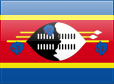 |
| History | |
| Autonomy for Eswatini was guaranteed by the British in the late 19th century; independence was granted in 1968. A new constitution came into effect in 2006, which included provisions for a more independent parliament and judiciary, but the legal status of political parties remains unclear. King MSWATI III renamed the country from Swaziland to Eswatini in April 2018. Despite its classification as a lower-middle income country, Eswatini has one of the lowest GDP growth rates in Sub-Saharan Africa and suffers from severe poverty and high unemployment. Eswatini has the world's highest known HIV/AIDS prevalence rate, although recent years have shown marked declines in new infections. |
|
|  |
| |
| Geography | |
| |
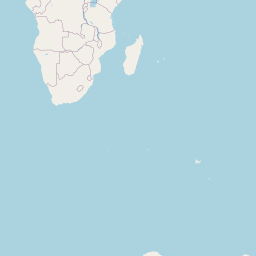
| Location: | Southern Africa, between Mozambique and South Africa |
| Geographic coordinates: | 26 30 S, 31 30 E |
| Area: | total: 17,364 sq km land: 17,204 sq km water: 160 sq km Size comparison: slightly smaller than New Jersey |
| Land Boundaries: | total: 546 km border countries (2): Mozambique 108 km, South Africa 438 km |
| Coastline: | 0 km (landlocked) |
| Maritime claims: | none (landlocked) |
| Climate: | varies from tropical to near temperate |
| Terrain: | mostly mountains and hills; some moderately sloping plains |
| Natural resources: | asbestos, coal, clay, cassiterite, hydropower, forests, small gold and diamond deposits, quarry stone, and talc |
| Land use: | agricultural land: 68.3% (2011 est.) arable land: 9.8% (2011 est.) permanent crops: 0.8% (2011 est.) permanent pasture: 57.7% (2011 est.) forest: 31.7% (2011 est.) other: 0% (2011 est.) |
| Irrigated land: | 500 sq km (2012) |
| Natural hazards: | drought |
| Current Environment Issues: | limited supplies of potable water; wildlife populations being depleted because of excessive hunting; population growth, deforestation, and overgrazing lead to soil erosion and soil degradation |
| International Environment Agreements: | party to: Biodiversity, Climate Change, Climate Change-Kyoto Protocol, Desertification, Endangered Species, Hazardous Wastes, Ozone Layer Protection signed, but not ratified: Law of the Sea |
| ^Back to Top | |
| People | |
| |
| Nationality: | noun: liSwati (singular), emaSwati (plural); note - former term, Swazi(s), still used among English speakers adjective: Swati; note - former term, Swazi, still used among English speakers |
| Ethnic groups: | African 97%, European 3% |
| Languages: | English (official, used for government business), siSwati (official) |
| Religions: | Christian 90% (Zionist - a blend of Christianity and indigenous ancestral worship - 40%, Roman Catholic 20%, other 30% - includes Anglican, Methodist, Mormon, Jehovah's Witness), Muslim 2%, other 8% (includes Baha'i, Buddhist, Hindu, indigenous, Jewish) (2015 est.) |
| Population: | 1,087,200 (July 2018 est.) note: estimates for this country explicitly take into account the effects of excess mortality due to AIDS; this can result in lower life expectancy, higher infant mortality, higher death rates, lower population growth rates, and changes in the distribution of population by age and sex than would otherwise be expected |
| Age structure: | 0-14 years: 34.41% (male 186,747 /female 187,412) 15-24 years: 19.31% (male 99,192 /female 110,770) 25-54 years: 38.22% (male 193,145 /female 222,405) 55-64 years: 4.28% (male 19,915 /female 26,663) 65 years and over: 3.77% (male 15,470 /female 25,481) (2018 est.) |
| Dependency ratios: | total dependency ratio: 68.8 (2015 est.) youth dependency ratio: 63.5 (2015 est.) elderly dependency ratio: 5.2 (2015 est.) potential support ratio: 19.1 (2015 est.) |
| Median age: | total: 23.2 years male: 22.2 years female: 24 years (2018 est.) |
| Population growth rate: | 0.82% (2018 est.) |
| Birth rate: | 25.8 births/1,000 population (2018 est.) |
| Death rate: | 10.7 deaths/1,000 population (2018 est.) |
| Net migration rate: | -6.9 migrant(s)/1,000 population (2018 est.) |
| Urbanization: | urban population: 23.8% of total population (2018) rate of urbanization: 2.46% annual rate of change (2015-20 est.) |
| Major urban areas - population: | 68,000 MBABANE (capital) (2018) |
| Sex ratio: | at birth: 1.03 male(s)/female 0-14 years: 1 male(s)/female 15-24 years: 0.9 male(s)/female 25-54 years: 0.87 male(s)/female 55-64 years: 0.75 male(s)/female 65 years and over: 0.61 male(s)/female total population: 0.9 male(s)/female (2018 est.) |
| Maternal mortality rate: | 389 deaths/100,000 live births (2015 est.) |
| Infant mortality rate: | total: 46.6 deaths/1,000 live births male: 51.4 deaths/1,000 live births female: 41.7 deaths/1,000 live births (2018 est.) |
| Life expectancy at birth: | total population: 57.2 years male: 55.1 years female: 59.3 years (2018 est.) |
| Total fertility rate: | 2.63 children born/woman (2018 est.) |
| Contraceptive prevalence rate: | 66.1% (2014) |
| Physicians density: | 0.08 physicians/1,000 population (2016) |
| Hospital bed density: | 2.1 beds/1,000 population (2011) |
| Drinking water source: | improved: urban: 93.6% of population rural: 68.9% of population total: 74.1% of population unimproved: urban: 6.4% of population rural: 31.1% of population total: 25.9% of population (2015 est.) |
| Sanitation facility access: | improved: urban: 63.1% of population (2015 est.) rural: 56% of population (2015 est.) total: 57.5% of population (2015 est.) unimproved: urban: 36.9% of population (2015 est.) rural: 44% of population (2015 est.) total: 42.5% of population (2015 est.) |
| HIV/AIDS - adult prevalence rate: | 27.4% (2017 est.) |
| HIV/AIDS - people living with HIV/AIDS: | 210,000 (2017 est.) |
| HIV/AIDS - deaths: | 3,500 (2017 est.) |
| Obesity - adult prevalence rate: | 16.5% (2016) |
| Children under the age of 5 years underweight: | 5.8% (2014) |
| Education expenditures: | 7.1% of GDP (2014) |
| Literacy: | definition: age 15 and over can read and write (2015 est.) total population: 87.5% male: 87.4% female: 87.5% (2015 est.) |
| School life expectancy (primary to tertiary education): | total: 11 years male: 12 years female: 11 years (2013) Unemployment, youth ages 15-24: total: 47.1% male: 44.2% female: 50.1% (2016) |
| ^Back to Top | |
| Government | |
| |
| Country name: | conventional long form: Kingdom of Eswatini conventional short form: Eswatini local long form: Umbuso weSwatini local short form: eSwatini etymology: the country name derives from 19th century King MSWATI II, under whose rule Swati territory was expanded and unified note: pronounced ay-swatini or eh-swatini |
| Government type: | absolute monarchy |
| Capital: | name: Mbabane (administrative capital); Lobamba (royal and legislative capital) geographic coordinates: 26 19 S, 31 08 E time difference: UTC+2 (7 hours ahead of Washington, DC, during Standard Time) etymology: named after a Swati chief, Mbabane Kunene, who lived in the area at the onset of British settlement |
| Administrative divisions: | 4 regions; Hhohho, Lubombo, Manzini, Shiselweni |
| Independence: | 6 September 1968 (from the UK) |
| National holiday: | Independence Day (Somhlolo Day), 6 September (1968) |
| Constitution: | history: previous 1968, 1978; latest signed by the king 26 July 2005, effective 8 February 2006 amendments: proposed at a joint sitting of both houses of Parliament; passage requires majority vote by both houses and/or majority vote in a referendum, and assent by the king; passage of amendments affecting "specially entrenched" constitutional provisions requires at least three-fourths majority vote by both houses, passage by simple majority vote in a referendum, and assent by the king; passage of "entrenched" provisions requires at least two-thirds majority vote of both houses, passage in a referendum, and assent by the king (2017) |
| Legal system: | mixed legal system of civil, common, and customary law |
| Suffrage: | 18 years of age |
| Executive branch: | chief of state: King MSWATI III (since 25 April 1986) head of government: Prime Minister Ambrose Mandvulo DLAMINI (since 27 October 2018); Deputy Prime Minister Themba MASUKU (since 6 November 2018) cabinet: Cabinet recommended by the prime minister, confirmed by the monarch; at least one-half of the cabinet membership must be appointed from among elected members of the House of Assembly elections/appointments: the monarchy is hereditary; prime minister appointed by the monarch from among members of the House of Assembly |
| Legislative branch: | description: bicameral Parliament (Libandla) consists of: Senate (30 seats; 20 members appointed by the monarch and 10 indirectly elected by simple majority vote by the House of Assembly; members serve 5-year terms) House of Assembly (73 seats; 59 members directly elected in single-seat constituencies or tinkhundla by absolute majority vote in 2 rounds if needed, 10 members appointed by the monarch, 4 women elected by the members if representation of elected women is less than 30%; members serve 5-year terms) elections: Senate - last held on 23 October 2018 (next to be held - 31 October 2023) House of Assembly - last held on 21 September 2018 (next to be held in 2023) election results: Senate - percent of seats by party - NA; seats by party - NA; composition - men 20, women 10, percent of women 33.3% House of Assembly - percent of vote by party - NA; seats by party - independent 59; composition - men 60, women 5, percent of women 7.7%; note - total Parliament percent of women 15.8% |
| Judicial branch: | highest courts: Supreme Court (consists of the chief justice and at least 4 justices) and the High Court (consists of the chief justice - ex officio - and 4 justices); note - the Supreme Court has jurisdiction in all constitutional matters judge selection and term of office: justices of the Supreme Court and High Court appointed by the monarch on the advice of the Judicial Service Commission (JSC), a judicial advisory body consisting of the Supreme Court Chief Justice, 4 members appointed by the monarch, and the chairman of the Civil Service Commission; justices of both courts eligible for retirement at age 65 with mandatory retirement at age 75 subordinate courts: magistrates' courts; National Swazi Courts for administering customary/traditional laws (jurisdiction restricted to customary law for Swazi citizens) |
| Political parties and leaders: | political parties exist, but conditions for their operations, particularly in elections, are undefined, legally unclear, or culturally restricted; the following are considered political associations: African United Democratic Party or AUDP [Sibusiso DLAMINI] Ngwane National Liberatory Congress or NNLC [Dr. Alvit DLAMINI] People's United Democratic Movement or PUDEMO [Mario MASUKU] Swazi Democratic Party or SWADEPA [Jan SITHOLE] |
| International organization participation: | ACP, AfDB, AU, C, COMESA, FAO, G-77, IAEA, IBRD, ICAO, ICRM, IDA, IFAD, IFC, IFRCS, ILO, IMF, IMO, Interpol, IOC, IOM, ISO (correspondent), ITSO, ITU, ITUC (NGOs), MIGA, NAM, OPCW, PCA, SACU, SADC, UN, UNCTAD, UNESCO, UNIDO, UNWTO, UPU, WCO, WHO, WIPO, WMO, WTO |
| National symbol(s): | lion, elephant; national colors: blue, yellow, red |
| National anthem: | name: "Nkulunkulu Mnikati wetibusiso temaSwati" (Oh God, Bestower of the Blessings of the Swazi) lyrics/music: Andrease Enoke Fanyana SIMELANE/David Kenneth RYCROFT note: adopted 1968; uses elements of both ethnic Swazi and Western music styles |
| Diplomatic representation in the US: | chief of mission: Ambassador Njabuliso Busisiwe Sikhulile GWEBU (since 24 April 2017) chancery: 1712 New Hampshire Avenue, NW, Washington, DC 20009 telephone: [1] (202) 234-5002 FAX: [1] (202) 234-8254 |
| Diplomatic representation from the US: | chief of mission: Ambassador Lisa J. PETERSON (since February 2016) embassy: corner of MR 103 and Cultural Center Drive, Ezulwini, P.O. Box 0202,The Gables, H106, Eswatini mailing address: P.O. Box D202, The Gables, H106 telephone: [268] 2417-9000 FAX: [268] 2416-3344 |
| ^Back to Top | |
| Economy | |
A small, landlocked kingdom, Eswatini is bordered in the north, west and south by the Republic of South Africa and by Mozambique in the east. Eswatini depends on South Africa for a majority of its exports and imports. Eswatini's currency is pegged to the South African rand, effectively relinquishing Eswatini's monetary policy to South Africa. The government is dependent on customs duties from the Southern African Customs Union (SACU) for almost half of its revenue. Eswatini is a lower middle income country. As of 2017, more than one-quarter of the adult population was infected by HIV/AIDS; Eswatini has the world’s highest HIV prevalence rate, a financial strain and source of economic instability. The manufacturing sector diversified in the 1980s and 1990s, but manufacturing has grown little in the last decade. Sugar and soft drink concentrate are the largest foreign exchange earners, although a drought in 2015-16 decreased sugar production and exports. Overgrazing, soil depletion, drought, and floods are persistent problems. Mining has declined in importance in recent years. Coal, gold, diamond, and quarry stone mines are small scale, and the only iron ore mine closed in 2014. With an estimated 28% unemployment rate, Eswatini's need to increase the number and size of small and medium enterprises and to attract foreign direct investment is acute. Eswatini's national development strategy, which expires in 2022, prioritizes increases in infrastructure, agriculture production, and economic diversification, while aiming to reduce poverty and government spending. Eswatini's revenue from SACU receipts are likely to continue to decline as South Africa pushes for a new distribution scheme, making it harder for the government to maintain fiscal balance without introducing new sources of revenue. | |
| GDP (purchasing power parity): | $11.6 billion (2017 est.) $11.41 billion (2016 est.) $11.26 billion (2015 est.) note: data are in 2017 dollars |
| GDP (official exchange rate): | $4.417 billion (2017 est.) |
| GDP - real growth rate: | 1.6% (2017 est.) 1.4% (2016 est.) 0.4% (2015 est.) |
| GDP - per capita (PPP): | $10,100 (2017 est.) $10,100 (2016 est.) $10,100 (2015 est.) note: data are in 2017 dollars |
| Gross national saving: | 25.4% of GDP (2017 est.) 29.7% of GDP (2016 est.) 23.3% of GDP (2015 est.) GDP - composition, by end use: household consumption: 64% (2017 est.) government consumption: 21.3% (2017 est.) investment in fixed capital: 13.4% (2017 est.) investment in inventories: -0.1% (2017 est.) exports of goods and services: 47.9% (2017 est.) imports of goods and services: -46.3% (2017 est.) GDP - composition, by sector of origin: agriculture: 6.5% (2017 est.) industry: 45% (2017 est.) services: 48.6% (2017 est.) |
| Agriculture - products: | sugarcane, corn, cotton, citrus, pineapples, cattle, goats |
| Industries: | soft drink concentrates, coal, forestry, sugar processing, textiles, and apparel |
| Industrial production growth rate: | 5.6% (2017 est.) |
| Labor force: | 427,900 (2016 est.) |
| Labor force - by occupation: | agriculture: 10.7% industry: 30.4% services: 58.9% (2014 est.) |
| Unemployment rate: | 28% (2014 est.) 28% (2013 est.) |
| Population below poverty line: | 63% (2010 est.) |
| Household income or consumption by percentage share: | lowest 10%: 1.7% highest 10%: 40.1% (2010 est.) |
| Distribution of family income - Gini index: | 50.4 (2001) |
| Budget: | revenues: 1.263 billion (2017 est.) expenditures: 1.639 billion (2017 est.) |
| Taxes and other revenues: | 28.6% (of GDP) (2017 est.) Budget surplus (+) or deficit (-): -8.5% (of GDP) (2017 est.) |
| Public debt: | 28.4% of GDP (2017 est.) 25.5% of GDP (2016 est.) |
| Fiscal year: | 1 April - 31 March |
| Inflation rate (consumer prices): | 6.2% (2017 est.) 7.8% (2016 est.) |
| Current account balance: | $604 million (2017 est.) $642 million (2016 est.) |
| Exports: | $1.83 billion (2017 est.) $1.577 billion (2016 est.) |
| Exports - commodities: | soft drink concentrates, sugar, timber, cotton yarn, refrigerators, citrus, and canned fruit |
| Exports - partners: | South Africa 94% (2017) |
| Imports: | $1.451 billion (2017 est.) $1.266 billion (2016 est.) |
| Imports - commodities: | motor vehicles, machinery, transport equipment, foodstuffs, petroleum products, chemicals |
| Imports - partners: | South Africa 81.6%, China 5.2% (2017) |
| Reserves of foreign exchange and gold: | $563.1 million (31 December 2017 est.) $564.4 million (31 December 2016 est.) |
| Debt - external: | $526.3 million (31 December 2017 est.) $468.9 million (31 December 2016 est.) |
| Stock of direct foreign investment - at home: | n/a |
| Stock of direct foreign investment - abroad: | n/a |
| Market value of publicly traded shares: | $203.1 million (31 December 2007) $199.9 million (31 December 2006) n/a |
| Exchange rates: | emalangeni per US dollar - 14.44 (2017 est.) 14.6924 (2016 est.) 14.6924 (2015 est.) 12.7581 (2014 est.) 10.8469 (2013 est.) |
| ^Back to Top | |
| Energy | |
| |
| Electricity - production: | 381 million kWh (2016 est.) |
| Electricity - consumption: | 1.431 billion kWh (2016 est.) |
| Electricity - exports: | 0 kWh (2016) |
| Electricity - imports: | 1.077 billion kWh (2016 est.) |
| Electricity - installed generating capacity: | 295,900 kW (2016 est.) |
| Electricity - from fossil fuels: | 39% of total installed capacity (2016 est.) |
| Electricity - from nuclear fuels: | 0% of total installed capacity (2017 est.) |
| Electricity - from hydroelectric plants: | 20% of total installed capacity (2017 est.) |
| Electricity - from other renewable sources: | 41% of total installed capacity (2017 est.) |
| Crude oil - production: | 0 bbl/day (2017 est.) |
| Crude oil - exports: | 0 bbl/day (2015 est.) |
| Crude oil - imports: | 0 bbl/day (2015 est.) |
| Crude oil - proved reserves: | 0 bbl (1 January 2018) |
| Refined petroleum products - production: | 0 bbl/day (2015 est.) |
| Refined petroleum products - consumption: | 5,300 bbl/day (2016 est.) |
| Refined petroleum products - exports: | 0 bbl/day (2015 est.) |
| Refined petroleum products - imports: | 5,279 bbl/day (2015 est.) |
| Natural gas - production: | 0 cu m (2017 est.) |
| Natural gas - consumption: | 0 cu m (2017 est.) |
| Natural gas - exports: | 0 cu m (2017 est.) |
| Natural gas - imports: | 0 cu m (2017 est.) |
| Natural gas - proved reserves: | 0 cu m (1 January 2014 est.) |
| Carbon dioxide emissions from consumption of energy: | 1.14 million Mt (2017 est.) |
| ^Back to Top | |
| Communications | |
| |
| Cellular Phones in use: | total subscriptions: 995,000 subscriptions per 100 inhabitants: 68 (July 2016 est.) |
| Telephone system: | general assessment: earlier government monopoly in telecommunications hindered its growth; new regulatory authority established in 2013 has aided expansion in the telecom sector; 2G, 3G, 4G and LTE services (2018) domestic: Eswatini has 2 mobile-cellular providers; communication infrastructure has a geographic coverage of about 90% and a rising subscriber base; fixed-line stands at 3 per 100 and mobile-cellular teledensity roughly 68 telephones per 100 persons; telephone system consists of carrier-equipped, open-wire lines and low-capacity, microwave radio relay (2018) international: country code - 268; satellite earth station - 1 Intelsat (Atlantic Ocean) |
| Broadcast media: | 1 state-owned TV station; satellite dishes are able to access South African providers; state-owned radio network with 3 channels; 1 private radio station (2019) |
| Internet country code: | .sz |
| Internet users: | total: 414,724 percent of population: 28.6% (July 2016 est.) |
| ^Back to Top | |
| Transportation | |
| |
| Airports: | 14 (2013) |
| Airports (paved runways): | total 2 (2013) over 3,047 m: 1 (2013) 2,438 to 3,047 m: 1 (2013) |
| Airports (unpaved runways): | total 12 (2013) 914 to 1,523 m: 5 (2013) under 914 m: 7 (2013) |
| Railways: | total 301 km (2014) narrow gauge: 301 km 1.067-m gauge (2014) |
| Roadways: | total 3,769 km (2019) |
| ^Back to Top | |
| Military | |
| |
| Military branches: | Umbutfo Eswatini Defense Force (UEDF): Ground Force (includes Air Wing (no operational aircraft)) (2019) |
| Military service age and obligation: | 18-30 years of age for male and female voluntary military service; no conscription; compulsory HIV testing required, only HIV-negative applicants accepted (2012) |
| Military expenditures: | 1.81% of GDP (2016) 1.78% of GDP (2015) 1.81% of GDP (2014) 1.88% of GDP (2013) 1.89% of GDP (2012) |
| ^Back to Top | |
| Transnational Issues | |
| |
| Disputes - International: | in 2006, Swati king advocated resorting to ICJ to claim parts of Mpumalanga and KwaZulu-Natal from South Africa |
| ^Back to Top | |
Eswatini Previous Country | Next Country »
Source: CIA - The World Factbook