 Palestinian Territory


Palestinian Territory Population: 1,836,713
«  Previous Country | Next Country Previous Country | Next Country  » » |  |
| History | |
| Inhabited since at least the 15th century B.C., Gaza has been dominated by many different peoples and empires throughout its history; it was incorporated into the Ottoman Empire in the early 16th century. Gaza fell to British forces during World War I, becoming a part of the British Mandate of Palestine. Following the 1948 Arab-Israeli War, Egypt administered the newly formed Gaza Strip; it was captured by Israel in the Six-Day War in 1967. Under a series of agreements known as the Oslo accords signed between 1994 and 1999, Israel transferred to the newly-created Palestinian Authority (PA) security and civilian responsibility for many Palestinian-populated areas of the Gaza Strip as well as the West Bank. Negotiations to determine the permanent status of the West Bank and Gaza Strip stalled in 2001, after which the area witnessed a violent intifada or uprising. Israel by late 2005 unilaterally withdrew all of its settlers and soldiers and dismantled its military facilities in the Gaza Strip, but it continues to control the Gaza Strip’s land and maritime borders and airspace. In early 2006, the Islamic Resistance Movement (HAMAS) won a majority in the Palestinian Legislative Council election. Attempts to form a unity government between Fatah and HAMAS failed and violent clashes between their respective supporters ensued, culminating in HAMAS's violent seizure of all military and governmental institutions in the Gaza Strip in June 2007. Since HAMAS’s takeover, Israel and Egypt have enforced tight restrictions on movement and access of goods and individuals into and out of the territory. Fatah and HAMAS have since reached a series of agreements aimed at restoring political unity between the Gaza Strip and the West Bank but have struggled to effect them; a reconciliation agreement signed in October 2017 remains unimplemented. In July 2014, HAMAS and other Gaza-based militant groups engaged in a 51-day conflict with Israel — the third conflict since HAMAS’s takeover in 2007 — culminating in late August with an open-ended truce that continues to tenuously hold despite the absence of a negotiated cease-fire and periodic attacks. The UN in 2015 published a study assessing that the Gaza Strip could become uninhabitable by 2020 unless steps are taken to address Gaza’s economic and humanitarian situation. In September 2018, the UN reported that conditions were worse than when its experts made that prediction. |
|
|  |
| |
| Geography | |
| |
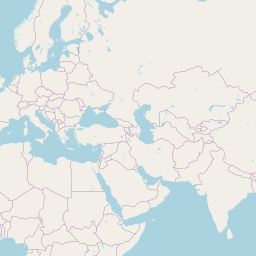
| Location: | Middle East, bordering the Mediterranean Sea, between Egypt and Israel |
| Geographic coordinates: | 31 25 N, 34 20 E |
| Area: | total: 360 sq km land: 360 sq km water: 0 sq km Size comparison: slightly more than twice the size of Washington, DC |
| Land Boundaries: | total: 72 km border countries (2): Egypt 13 km, Israel 59 km |
| Coastline: | 40 km |
| Maritime claims: | see entry for Israel note: effective 3 January 2009, the Gaza maritime area is closed to all maritime traffic and is under blockade imposed by Israeli Navy until further notice |
| Climate: | temperate, mild winters, dry and warm to hot summers |
| Terrain: | flat to rolling, sand- and dune-covered coastal plain |
| Natural resources: | arable land, natural gas |
| Irrigated land: | 240 sq km; note - includes the West Bank (2012) |
| Natural hazards: | droughts |
| Current Environment Issues: | soil degradation; desertification; water pollution from chemicals and pesticides; salination of fresh water; improper sewage treatment; water-borne disease; depletion and contamination of underground water resources |
| ^Back to Top | |
| People | |
| |
| Nationality: | noun: NA adjective: NA |
| Ethnic groups: | Palestinian Arab |
| Languages: | Arabic, Hebrew (spoken by many Palestinians), English (widely understood) |
| Religions: | Muslim 98.0 - 99.0% (predominantly Sunni), Christian <1.0%, other, unaffiliated, unspecified <1.0% (2012 est.) note: dismantlement of Israeli settlements was completed in September 2005; Gaza has had no Jewish population since then |
| Population: | 1,836,713 (July 2018 est.) |
| Age structure: | 0-14 years: 44.1% (male 415,746 /female 394,195) 15-24 years: 21.34% (male 197,797 /female 194,112) 25-54 years: 28.5% (male 256,103 /female 267,285) 55-64 years: 3.48% (male 33,413 /female 30,592) 65 years and over: 2.58% (male 24,863 /female 22,607) (2018 est.) |
| Dependency ratios: | total dependency ratio: 75.8 (2015 est.) youth dependency ratio: 70.5 (2015 est.) elderly dependency ratio: 5.2 (2015 est.) potential support ratio: 19.1 (2015 est.) note: data represent Gaza Strip and the West Bank |
| Median age: | total: 17.4 years male: 17.1 years female: 17.8 years (2018 est.) |
| Population growth rate: | 2.25% (2018 est.) |
| Birth rate: | 30.5 births/1,000 population (2018 est.) |
| Death rate: | 3 deaths/1,000 population (2018 est.) |
| Net migration rate: | -5 migrant(s)/1,000 population (2018 est.) |
| Urbanization: | urban population: 76.2% of total population (2018) rate of urbanization: 3% annual rate of change (2015-20 est.) note: data represent Gaza Strip and the West Bank |
| Sex ratio: | at birth: 1.06 male(s)/female 0-14 years: 1.05 male(s)/female 15-24 years: 1.02 male(s)/female 25-54 years: 0.96 male(s)/female 55-64 years: 1.09 male(s)/female 65 years and over: 1.1 male(s)/female total population: 1.02 male(s)/female (2018 est.) |
| Maternal mortality rate: | 45 deaths/100,000 live births (2015 est.) note: data represent Gaza Strip and the West Bank |
| Infant mortality rate: | total: 16 deaths/1,000 live births male: 17.1 deaths/1,000 live births female: 14.9 deaths/1,000 live births (2018 est.) |
| Life expectancy at birth: | total population: 74.4 years male: 72.7 years female: 76.2 years (2018 est.) |
| Total fertility rate: | 3.97 children born/woman (2018 est.) |
| Contraceptive prevalence rate: | 57.2% (2014) note: includes Gaza Strip and West Bank |
| Physicians density: | 2.2 physicians/1,000 population (2014) |
| Hospital bed density: | 1.3 beds/1,000 population (2017) |
| Drinking water source: | improved: urban: 50.7% of population rural: 81.5% of population total: 58.4% of population unimproved: urban: 49.3% of population rural: 18.5% of population total: 41.6% of population (2015 est.) note: includes Gaza Strip and the West Bank |
| Sanitation facility access: | improved: urban: 93% of population (2015 est.) rural: 90.2% of population (2015 est.) total: 92.3% of population (2015 est.) unimproved: urban: 7% of population (2015 est.) rural: 9.8% of population (2015 est.) total: 7.7% of population (2015 est.) note: note includes Gaza Strip and the West Bank |
| HIV/AIDS - adult prevalence rate: | n/a |
| HIV/AIDS - people living with HIV/AIDS: | n/a |
| HIV/AIDS - deaths: | n/a |
| Children under the age of 5 years underweight: | 1.4% (2014) note: estimate is for Gaza Strip and the West Bank |
| Education expenditures: | 5.3% of GDP (2017) note: includes Gaza Strip and the West Bank |
| Literacy: | definition: age 15 and over can read and write (2016 est.) total population: 96.9% male: 98.6% female: 95.2% (2016 est.) note: estimates are for Gaza and the West Bank |
| School life expectancy (primary to tertiary education): | total: 13 years male: 12 years female: 14 years (2017) note: data represent Gaza Strip and the West Bank Unemployment, youth ages 15-24: total: 46.9% male: 40.5% female: 75.3% (2018 est.) note: includes the West Bank |
| ^Back to Top | |
| Government | |
| |
| Country name: | conventional long form: none conventional short form: Gaza Strip local long form: none local short form: Qita' Ghazzah etymology: named for the largest city in the region, Gaza, whose settlement can be traced back to at least the 15th century B.C. (as "Ghazzat") |
| Government type: | |
| Capital: | |
| Administrative divisions: | |
| Independence: | |
| National holiday: | |
| Constitution: | |
| Legal system: | |
| Suffrage: | |
| Executive branch: | |
| Legislative branch: | |
| Judicial branch: | |
| Political parties and leaders: | |
| International organization participation: | |
| National anthem: | |
| Diplomatic representation in the US: | |
| Diplomatic representation from the US: | |
| ^Back to Top | |
| Economy | |
Movement and access restrictions, violent attacks, and the slow pace of post-conflict reconstruction continue to degrade economic conditions in the Gaza Strip, the smaller of the two areas comprising the Palestinian territories. Israeli controls became more restrictive after HAMAS seized control of the territory in June 2007. Under Hamas control, Gaza has suffered from rising unemployment, elevated poverty rates, and a sharp contraction of the private sector, which had relied primarily on export markets. Since April 2017, the Palestinian Authority has reduced payments for electricity supplied to Gaza and cut salaries for its employees there, exacerbating poor economic conditions. Since 2014, Egypt’s crackdown on the Gaza Strip’s extensive tunnel-based smuggling network has exacerbated fuel, construction material, and consumer goods shortages in the territory. Donor support for reconstruction following the 51-day conflict in 2014 between Israel and HAMAS and other Gaza-based militant groups has fallen short of post-conflict needs. | |
| GDP (purchasing power parity): | see entry for the West Bank |
| GDP (official exchange rate): | $2.938 billion (2014 est.) (2014 est.) note: excludes the West Bank |
| GDP - real growth rate: | -15.2% (2014 est.) 5.6% (2013 est.) 7% (2012 est.) note: excludes the West Bank |
| GDP - per capita (PPP): | see entry for the the West Bank GDP - composition, by end use: household consumption: 88.6% (2017 est.) government consumption: 26.3% (2017 est.) investment in fixed capital: 22.4% (2017 est.) investment in inventories: 0% (2017 est.) exports of goods and services: 18.6% (2017 est.) imports of goods and services: -55.6% (2017 est.) note: data exclude the West Bank GDP - composition, by sector of origin: agriculture: 3% (2017 est.) industry: 21.1% (2017 est.) services: 75% (2017 est.) note: data exclude the West Bank |
| Agriculture - products: | olives, fruit, vegetables, flowers; beef, dairy products |
| Industries: | textiles, food processing, furniture |
| Industrial production growth rate: | 2.2% (2017 est.) note: see entry for the West Bank |
| Labor force: | 1.24 million (2017 est.) note: excludes the West Bank |
| Labor force - by occupation: | agriculture: 5.2% industry: 10% services: 84.8% (2015 est.) note: data exclude the West Bank |
| Unemployment rate: | 27.9% (2017 est.) 27% (2016 est.) note: data exclude the West Bank |
| Population below poverty line: | 30% (2011 est.) note: data exclude the West Bank |
| Budget: | see entry for the West Bank |
| Fiscal year: | calendar year |
| Inflation rate (consumer prices): | 0.2% (2017 est.) -0.2% (2016 est.) note: excludes the West Bank |
| Current account balance: | -$1.444 billion (2017 est.) -$1.348 billion (2016 est.) note: excludes the West Bank |
| Exports: | $1.955 billion (2017 est.) $1.827 billion (2016 est.) |
| Exports - commodities: | strawberries, carnations, vegetables, fish (small and irregular shipments, as permitted to transit the Israeli-controlled Kerem Shalom crossing) |
| Imports: | $8.59 billion (2018 est.) $7.852 billion (2017 est.) see entry for the West Bank |
| Imports - commodities: | food, consumer goods, fuel |
| Reserves of foreign exchange and gold: | $446.3 million (31 December 2017 est.) $583 million (31 December 2015 est.) |
| Debt - external: | see entry for the West Bank |
| Exchange rates: | see entry for the West Bank |
| ^Back to Top | |
| Energy | |
| |
| Electricity - production: | 51,000 kWh (2011 est.) |
| Electricity - consumption: | 202,000 kWh (2009 est.) |
| Electricity - exports: | 0 kWh (2011 est.) |
| Electricity - imports: | 193,000 kWh (2011 est.) |
| Crude oil - proved reserves: | 0 bbl (1 January 2010 est.) |
| ^Back to Top | |
| Communications | |
| |
| Cellular Phones in use: | total subscriptions: 3,531,000 (includes the West Bank) subscriptions per 100 inhabitants: 76 (includes the West Bank) (July 2016 est.) |
| Telephone system: | general assessment: Israel has final say in allocating frequencies in the Gaza Strip and does not permit anything beyond a 2G network (2018) domestic: Israeli company BEZEK and the Palestinian company PALTEL are responsible for fixed-line services; the Palestinian JAWWAL company provides cellular services; a slow 2G network allows calls and limited data transmission (2018) international: country code - 970 (2018) |
| Broadcast media: | 1 TV station and about 10 radio stations; satellite TV accessible |
| Internet country code: | .psnote - same as the West Bank |
| Internet users: | total: 2.673 million (includes the West Bank) percent of population: 57.4% (July 2016 est.) |
| ^Back to Top | |
| Transportation | |
| |
| Airports: | 1 (2013) |
| Airports (paved runways): | total 1 (2017) over 3,047 m: 1 (2017) |
| Heliports: | 1 (2013) |
| Roadways: | note: see entry for the West Bank |
| Ports and terminals: | major seaport(s): Gaza |
| ^Back to Top | |
| Military | |
| |
| Military branches: | HAMAS does not have a conventional military in the Gaza Strip but maintains security forces in addition to its military wing, the 'Izz al-Din al-Qassam Brigades; the military wing reports to the Hamas Political Bureau leadership (2018) |
| ^Back to Top | |
| Transnational Issues | |
| |
| Disputes - International: | the status of the Gaza Strip is a final status issue to be resolved through negotiations; Israel removed settlers and military personnel from Gaza Strip in September 2005 |
| Refugees and internally displaced persons: | refugees (country of origin): 1,421,282 (Palestinian refugees) (2019) IDPs: 238,000 (includes persons displaced within the Gaza Strip due to the intensification of the Israeli-Palestinian conflict since June 2014 and other Palestinian IDPs in the Gaza Strip and West Bank who fled as long ago as 1967, although confirmed cumulative data do not go back beyond 2006) (2018) |
| ^Back to Top | |
Palestinian Territory Previous Country | Next Country »
Source: CIA - The World Factbook