
Mauritius Population: 1,364,283
5,132 VISITORS FROM HERE!«  Previous Country | Next Country Previous Country | Next Country  » Back to Flag Counter Overview » Back to Flag Counter Overview | 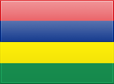 |
| History | |
| Although known to Arab and Malay sailors as early as the 10th century, Mauritius was first explored by the Portuguese in the 16th century and subsequently settled by the Dutch - who named it in honor of Prince Maurits van NASSAU - in the 17th century. The French assumed control in 1715, developing the island into an important naval base overseeing Indian Ocean trade, and establishing a plantation economy of sugar cane. The British captured the island in 1810, during the Napoleonic Wars. Mauritius remained a strategically important British naval base, and later an air station, playing an important role during World War II for anti-submarine and convoy operations, as well as the collection of signals intelligence. Independence from the UK was attained in 1968. A stable democracy with regular free elections and a positive human rights record, the country has attracted considerable foreign investment and has one of Africa's highest per capita incomes. |

|  |
| |
| Geography | |
| |
| Location: | Southern Africa, island in the Indian Ocean, about 800 km (500 mi) east of Madagascar |
| Geographic coordinates: | 20 17 S, 57 33 E |
| Area: | total: 2,040 sq km land: 2,030 sq km water: 10 sq km note: includes Agalega Islands, Cargados Carajos Shoals (Saint Brandon), and Rodrigues Size comparison: almost 11 times the size of Washington, DC |
| Land Boundaries: | 0 km |
| Coastline: | 177 km |
| Maritime claims: | territorial sea: 12 nm exclusive economic zone: 200 nm continental shelf: 200 nm or to the edge of the continental margin measured from claimed archipelagic straight baselines |
| Climate: | tropical, modified by southeast trade winds; warm, dry winter (May to November); hot, wet, humid summer (November to May) |
| Terrain: | small coastal plain rising to discontinuous mountains encircling central plateau |
| Natural resources: | arable land, fish |
| Land use: | agricultural land: 43.8% (2011 est.) arable land: 38.4% (2011 est.) permanent crops: 2% (2011 est.) permanent pasture: 3.4% (2011 est.) forest: 17.3% (2011 est.) other: 38.9% (2011 est.) |
| Irrigated land: | 190 sq km (2012) |
| Natural hazards: | cyclones (November to April); almost completely surrounded by reefs that may pose maritime hazards |
| Current Environment Issues: | water pollution, degradation of coral reefs; soil erosion; wildlife preservation; solid waste disposal |
| International Environment Agreements: | party to: Antarctic-Marine Living Resources, Biodiversity, Climate Change, Climate Change-Kyoto Protocol, Desertification, Endangered Species, Environmental Modification, Hazardous Wastes, Law of the Sea, Marine Life Conservation, Ozone Layer Protection, Ship Pollution, Wetlands signed, but not ratified: none of the selected agreements |
| ^Back to Top | |
| People | |
| |
| Nationality: | noun: Mauritian(s) adjective: Mauritian |
| Ethnic groups: | Indo-Mauritian (compose approximately two thirds of the total population), Creole, Sino-Mauritian, Franco-Mauritian note: Mauritius has not had a question on ethnicity on its national census since 1972 |
| Languages: | Creole 86.5%, Bhojpuri 5.3%, French 4.1%, two languages 1.4%, other 2.6% (includes English, the official language of the National Assembly, which is spoken by less than 1% of the population), unspecified 0.1% (2011 est.) |
| Religions: | Hindu 48.5%, Roman Catholic 26.3%, Muslim 17.3%, other Christian 6.4%, other 0.6%, none 0.7%, unspecified 0.1% (2011 est.) |
| Population: | 1,364,283 (July 2018 est.) |
| Age structure: | 0-14 years: 19.9% (male 138,707 /female 132,774) 15-24 years: 14.52% (male 100,281 /female 97,836) 25-54 years: 43.6% (male 297,558 /female 297,243) 55-64 years: 11.81% (male 76,620 /female 84,554) 65 years and over: 10.17% (male 57,094 /female 81,616) (2018 est.) |
| Dependency ratios: | total dependency ratio: 41.6 (2015 est.) youth dependency ratio: 27.5 (2015 est.) elderly dependency ratio: 14.1 (2015 est.) potential support ratio: 7.1 (2015 est.) |
| Median age: | total: 35.7 years male: 34.5 years female: 36.7 years (2018 est.) |
| Population growth rate: | 0.57% (2018 est.) |
| Birth rate: | 12.8 births/1,000 population (2018 est.) |
| Death rate: | 7.1 deaths/1,000 population (2018 est.) |
| Net migration rate: | 0 migrant(s)/1,000 population (2018 est.) |
| Urbanization: | urban population: 40.8% of total population (2018) rate of urbanization: 0.11% annual rate of change (2015-20 est.) |
| Major urban areas - population: | 149,000 PORT LOUIS (capital) (2018) |
| Sex ratio: | at birth: 1.05 male(s)/female 0-14 years: 1.04 male(s)/female 15-24 years: 1.02 male(s)/female 25-54 years: 1 male(s)/female 55-64 years: 0.91 male(s)/female 65 years and over: 0.7 male(s)/female total population: 0.97 male(s)/female (2018 est.) |
| Maternal mortality rate: | 53 deaths/100,000 live births (2015 est.) |
| Infant mortality rate: | total: 9.5 deaths/1,000 live births male: 11.3 deaths/1,000 live births female: 7.7 deaths/1,000 live births (2018 est.) |
| Life expectancy at birth: | total population: 76 years male: 72.6 years female: 79.7 years (2018 est.) |
| Total fertility rate: | 1.74 children born/woman (2018 est.) |
| Contraceptive prevalence rate: | 63.8% (2014) |
| Physicians density: | 2.31 physicians/1,000 population (2016) |
| Hospital bed density: | 3.54 beds/1,000 population (2017) |
| Drinking water source: | improved: urban: 99.9% of population rural: 99.8% of population total: 99.9% of population unimproved: urban: 0.1% of population rural: 0.2% of population total: 0.1% of population (2015 est.) |
| Sanitation facility access: | improved: urban: 93.9% of population (2015 est.) rural: 92.6% of population (2015 est.) total: 93.1% of population (2015 est.) unimproved: urban: 6.1% of population (2015 est.) rural: 7.4% of population (2015 est.) total: 6.9% of population (2015 est.) |
| HIV/AIDS - adult prevalence rate: | n/a |
| HIV/AIDS - people living with HIV/AIDS: | n/a |
| HIV/AIDS - deaths: | n/a |
| Obesity - adult prevalence rate: | 10.8% (2016) |
| Education expenditures: | 5% of GDP (2017) |
| Literacy: | definition: age 15 and over can read and write (2016 est.) total population: 93.2% male: 95.4% female: 91% (2016 est.) |
| School life expectancy (primary to tertiary education): | total: 15 years male: 14 years female: 16 years (2017) Unemployment, youth ages 15-24: total: 24% male: 18.6% female: 31% (2017 est.) |
| ^Back to Top | |
| Government | |
| |
| Country name: | conventional long form: Republic of Mauritius conventional short form: Mauritius local long form: Republic of Mauritius local short form: Mauritius etymology: island named after Prince Maurice VAN NASSAU, stadtholder of the Dutch Republic, in 1598 note: pronounced mar-i-shus |
| Government type: | parliamentary republic |
| Capital: | name: Port Louis geographic coordinates: 20 09 S, 57 29 E time difference: UTC+4 (9 hours ahead of Washington, DC, during Standard Time) etymology: named after Louis XV, who was king of France in 1736 when the port became the administrative center of Mauritius and a major reprovisioning stop for French ships traveling between Europe and Asia |
| Administrative divisions: | 9 districts and 3 dependencies*; Agalega Islands*, Black River, Cargados Carajos Shoals*, Flacq, Grand Port, Moka, Pamplemousses, Plaines Wilhems, Port Louis, Riviere du Rempart, Rodrigues*, Savanne |
| Independence: | 12 March 1968 (from the UK) |
| National holiday: | Independence and Republic Day, 12 March (1968 & 1992); note - became independent and a republic on the same date in 1968 and 1992 respectively |
| Constitution: | history: several previous; latest adopted 12 March 1968 amendments: proposed by the National Assembly; passage of amendments affecting constitutional articles including the sovereignty of the state, fundamental rights and freedoms, citizenship, or the branches of government requires approval in a referendum by at least three-fourths majority of voters followed by a unanimous vote by the Assembly; passage of other amendments requires only two-thirds majority vote by the Assembly; amended many times, last in 2016 (2017) |
| Legal system: | civil legal system based on French civil law with some elements of English common law |
| Suffrage: | 18 years of age; universal |
| Executive branch: | chief of state: Acting President Paramasiyum (aka Barlen) Pillay VYAPOORY (since 23 March 2018); Vice President (vacant); note - President Ameenah GURIB-FAKIM (since 5 June 2015) resigned on 23 March 2018 amid a credit card scandal head of government: Prime Minister Pravind JUGNAUTH (since 23 January 2017); note - Prime Minister Sir Anerood JUGNAUTH (since 17 December 2014) stepped down on 23 January 2017 in favor of his son, Pravind Kumar JUGNAUTH, who was then appointed prime minister; Sir Anerood JUGNAUTH now holds the positions of Minister Mentor, a position created when he stepped down, as well as Minister of Defense and Minister of Rodrigues cabinet: Cabinet of Ministers (Council of Ministers) appointed by the president on the recommendation of the prime minister elections/appointments: president and vice president indirectly elected by the National Assembly for 5-year renewable terms; election last held on 4 June 2015 (next to be held in late 2019 or early 2020); prime minister and deputy prime minister appointed by the president, responsible to the National Assembly election results: Ameenah GURIB-FAKIM (independent) elected president by the National Assembly - unanimous vote; note - GURIB-FAKIM, Mauritius'- first female president, resigned on 23 March 2018 |
| Legislative branch: | description: unicameral National Assembly or Assemblee Nationale (70 seats maximum; 62 members directly elected multi-seat constituencies by simple majority vote and up to 8 seats allocated to non-elected party candidates by the Office of Electoral Commissioner; members serve a 5-year term) elections: last held on 10 December 2014 following dissolution of the Assembly on 6 October 2014 (next to be held by late 2019 or early 2020) election results: percent of vote by party - Alliance Lepep 49.8%, PTR-MMM 38.5%, FSM 2.1%, OPR 1.1%, other 8.5%; elected seats by party - Alliance Lepep 47, PTR-MMM 13, OPR 2; appointed seats Alliance Lepep 4, PTR-MMM 3; composition - men 62, women 8, percent of women 11.4% |
| Judicial branch: | highest courts: Supreme Court of Mauritius (consists of the chief justice, a senior puisne judge, and 18 puisne judges); note - the Judicial Committee of the Privy Council (in London) serves as the final court of appeal judge selection and term of office: chief justice appointed by the president after consultation with the prime minister; senior puisne judge appointed by the president with the advice of the chief justice; other puisne judges appointed by the president with the advice of the Judicial and Legal Commission, a 4-member body of judicial officials including the chief justice; all judges serve until retirement at age 67 subordinate courts: lower regional courts known as District Courts, Court of Civil Appeal; Court of Criminal Appeal; Public Bodies Appeal Tribunal |
| Political parties and leaders: | Alliance Lepep (Alliance of the People) [Pravind JUGNAUTH] (coalition includes MSM and ML) Labor Party (Parti Travailliste) or PTR or MLP [Navinchandra RAMGOOLAM] Mauritian Militant Movement (Mouvement Militant Mauricien) or MMM [Paul BERENGER] Mauritian Social Democratic Party (Parti Mauricien Social Democrate) or PMSD [Xavier Luc DUVAL] Mauritian Solidarity Front (Front Solidarite Mauricienne) or FSM [Cehl FAKEERMEEAH, aka Cehl MEEAH] Militant Socialist Movement (Mouvement Socialist Mauricien) or MSM [Pravind JUGNAUTH] Muvman Liberater or ML [Ivan COLLENDAVELLOO] Patriotic Movement (Mouvement Patriotic) [Alan GANOO] Rodrigues Peoples Organization (Organisation du Peuple Rodriguais) or OPR [Serge CLAIR] |
| International organization participation: | ACP, AfDB, AOSIS, AU, C, CD, COMESA, CPLP (associate), FAO, G-77, IAEA, IBRD, ICAO, ICC (NGOs), ICCt, ICRM, IDA, IFAD, IFC, IFRCS, IHO, ILO, IMF, IMO, IMSO, InOC, Interpol, IOC, IOM, IPU, ISO, ITSO, ITU, ITUC (NGOs), MIGA, NAM, OIF, OPCW, PCA, SAARC (observer), SADC, UN, UNCTAD, UNESCO, UNIDO, UNWTO, UPU, WCO, WFTU (NGOs), WHO, WIPO, WMO, WTO |
| National symbol(s): | dodo bird, Trochetia Boutoniana flower; national colors: red, blue, yellow, green |
| National anthem: | name: Motherland lyrics/music: Jean Georges PROSPER/Philippe GENTIL note: adopted 1968 |
| Diplomatic representation in the US: | chief of mission: Ambassador Sooroojdev PHOKEER (since 3 August 2015) chancery: 1709 N Street NW, Washington, DC 20036; administrative offices at 3201 Connecticut Avenue NW, Suite 441, Washington, DC 20036 telephone: [1] (202) 244-1491 through 1492 FAX: [1] (202) 966-0983 |
| Diplomatic representation from the US: | chief of mission: Ambassador David D. REIMER (since 10 January 2018); note - also accredited to Seychelles embassy: 4th Floor, Rogers House, John Kennedy Avenue, Port Louis mailing address: international mail: P.O. Box 544, Port Louis; US mail: American Embassy, Port Louis, US Department of State, Washington, DC 20521-2450 telephone: [230] 202-4400 FAX: [230] 208-9534 |
| ^Back to Top | |
| Economy | |
Since independence in 1968, Mauritius has undergone a remarkable economic transformation from a low-income, agriculturally-based economy to a diversified, upper middle-income economy with growing industrial, financial, and tourist sectors. Mauritius has achieved steady growth over the last several decades, resulting in more equitable income distribution, increased life expectancy, lowered infant mortality, and a much-improved infrastructure. The economy currently depends on sugar, tourism, textiles and apparel, and financial services, but is expanding into fish processing, information and communications technology, education, and hospitality and property development. Sugarcane is grown on about 90% of the cultivated land area but sugar makes up only around 3-4% of national GDP. Authorities plan to emphasize services and innovation in the coming years. After several years of slow growth, government policies now seek to stimulate economic growth in five areas: serving as a gateway for international investment into Africa; increasing the use of renewable energy; developing smart cities; growing the ocean economy; and upgrading and modernizing infrastructure, including public transportation, the port, and the airport. Mauritius has attracted more than 32,000 offshore entities, many aimed at commerce in India, South Africa, and China. The Mauritius International Financial Center is under scrutiny by international bodies promoting fair tax competition and Mauritius has been cooperating with the European Union and the United states in the automatic exchange of account information. Mauritius is also a member of the OECD/G20’s Inclusive Framework on Base Erosion and Profit Shifting and is under pressure to review its Double Taxation Avoidance Agreements. The offshore sector is vulnerable to changes in the tax framework and authorities have been working on a Financial Services Sector Blueprint to enable Mauritius to transition to a jurisdiction of higher value added. Mauritius’ textile sector has taken advantage of the Africa Growth and Opportunity Act, a preferential trade program that allows duty free access to the US market, with Mauritian exports to the US growing by 35.6 % from 2000 to 2014. However, lack of local labor as well as rising labor costs eroding the competitiveness of textile firms in Mauritius. Mauritius' sound economic policies and prudent banking practices helped mitigate negative effects of the global financial crisis in 2008-09. GDP grew in the 3-4% per year range in 2010-17, and the country continues to expand its trade and investment outreach around the globe. Growth in the US and Europe fostered goods and services exports, including tourism, while lower oil prices kept inflation low. Mauritius continues to rank as one of the most business-friendly environments on the continent and passed a Business Facilitation Act to improve competitiveness and long-term growth prospects. A new National Economic Development Board was set up in 2017-2018 to spearhead efforts to promote exports and attract inward investment. | |
| GDP (purchasing power parity): | $28.27 billion (2017 est.) $27.23 billion (2016 est.) $26.23 billion (2015 est.) note: data are in 2017 dollars |
| GDP (official exchange rate): | $13.33 billion (2017 est.) |
| GDP - real growth rate: | 3.8% (2017 est.) 3.8% (2016 est.) 3.6% (2015 est.) |
| GDP - per capita (PPP): | $22,300 (2017 est.) $21,500 (2016 est.) $20,800 (2015 est.) note: data are in 2017 dollars |
| Gross national saving: | 16.9% of GDP (2017 est.) 15.8% of GDP (2016 est.) 15.2% of GDP (2015 est.) GDP - composition, by end use: household consumption: 81% (2017 est.) government consumption: 15.1% (2017 est.) investment in fixed capital: 17.3% (2017 est.) investment in inventories: -0.4% (2017 est.) exports of goods and services: 42.1% (2017 est.) imports of goods and services: -55.1% (2017 est.) GDP - composition, by sector of origin: agriculture: 4% (2017 est.) industry: 21.8% (2017 est.) services: 74.1% (2017 est.) |
| Agriculture - products: | sugarcane, tea, corn, potatoes, bananas, pulses; cattle, goats; fish |
| Industries: | food processing (largely sugar milling), textiles, clothing, mining, chemicals, metal products, transport equipment, nonelectrical machinery, tourism |
| Industrial production growth rate: | 3.2% (2017 est.) |
| Labor force: | 633,900 (2017 est.) |
| Labor force - by occupation: | agriculture: 8% industry: 29.8% services: 62.2% (2014 est.) |
| Unemployment rate: | 7.1% (2017 est.) 7.3% (2016 est.) |
| Population below poverty line: | 8% (2006 est.) |
| Household income or consumption by percentage share: | lowest 10%: n/a highest 10%: n/a |
| Distribution of family income - Gini index: | 35.9 (2012 est.) 39 (2006 est.) |
| Budget: | revenues: 2.994 billion (2017 est.) expenditures: 3.038 billion (2017 est.) |
| Taxes and other revenues: | 22.5% (of GDP) (2017 est.) Budget surplus (+) or deficit (-): -0.3% (of GDP) (2017 est.) |
| Public debt: | 64% of GDP (2017 est.) 66.1% of GDP (2016 est.) |
| Fiscal year: | 1 July - 30 June |
| Inflation rate (consumer prices): | 3.7% (2017 est.) 1% (2016 est.) |
| Current account balance: | -$875 million (2017 est.) -$531 million (2016 est.) |
| Exports: | $2.36 billion (2017 est.) $2.359 billion (2016 est.) |
| Exports - commodities: | clothing and textiles, sugar, cut flowers, molasses, fish, primates (for research) |
| Exports - partners: | France 16.7%, US 12.5%, UK 12%, South Africa 9%, Madagascar 6.7%, Italy 6.6%, Spain 5.2% (2017) |
| Imports: | $4.986 billion (2017 est.) $4.406 billion (2016 est.) |
| Imports - commodities: | manufactured goods, capital equipment, foodstuffs, petroleum products, chemicals |
| Imports - partners: | India 17.9%, China 15.7%, France 11.1%, South Africa 9.7% (2017) |
| Reserves of foreign exchange and gold: | $5.984 billion (31 December 2017 est.) $4.967 billion (31 December 2016 est.) |
| Debt - external: | $19.99 billion (31 December 2017 est.) $14.34 billion (31 December 2016 est.) |
| Stock of direct foreign investment - at home: | n/a |
| Stock of direct foreign investment - abroad: | n/a |
| Market value of publicly traded shares: | $7.239 billion (31 December 2015 est.) $8.751 billion (31 December 2014 est.) $8.942 billion (31 December 2013 est.) |
| Exchange rates: | Mauritian rupees (MUR) per US dollar - 35.17 (2017 est.) 35.542 (2016 est.) 35.542 (2015 est.) 35.057 (2014 est.) 30.622 (2013 est.) |
| ^Back to Top | |
| Energy | |
| |
| Electricity - production: | 2.898 billion kWh (2016 est.) |
| Electricity - consumption: | 2.726 billion kWh (2016 est.) |
| Electricity - exports: | 0 kWh (2016 est.) |
| Electricity - imports: | 0 kWh (2016 est.) |
| Electricity - installed generating capacity: | 894,000 kW (2016 est.) |
| Electricity - from fossil fuels: | 79% of total installed capacity (2016 est.) |
| Electricity - from nuclear fuels: | 0% of total installed capacity (2017 est.) |
| Electricity - from hydroelectric plants: | 7% of total installed capacity (2017 est.) |
| Electricity - from other renewable sources: | 14% of total installed capacity (2017 est.) |
| Crude oil - production: | 0 bbl/day (2017 est.) |
| Crude oil - exports: | 0 bbl/day (2015 est.) |
| Crude oil - imports: | 0 bbl/day (2015 est.) |
| Crude oil - proved reserves: | 0 bbl (1 January 2018 est.) |
| Refined petroleum products - production: | 0 bbl/day (2017 est.) |
| Refined petroleum products - consumption: | 27,000 bbl/day (2016 est.) |
| Refined petroleum products - exports: | 0 bbl/day (2015 est.) |
| Refined petroleum products - imports: | 26,960 bbl/day (2015 est.) |
| Natural gas - production: | 0 cu m (2017 est.) |
| Natural gas - consumption: | 0 cu m (2017 est.) |
| Natural gas - exports: | 0 cu m (2017 est.) |
| Natural gas - imports: | 0 cu m (2017 est.) |
| Natural gas - proved reserves: | 0 cu m (1 January 2014 est.) |
| Carbon dioxide emissions from consumption of energy: | 6.429 million Mt (2017 est.) |
| ^Back to Top | |
| Communications | |
| |
| Cellular Phones in use: | total subscriptions: 1,839,500 subscriptions per 100 inhabitants: 136 (2017 est.) |
| Telephone system: | general assessment: small system with good service; LTE and fiber broadband service are available; government building a national Wi-Fi network; partial privatization of biggest telecommunications company, open to competition (2018) domestic: fixed-line teledensity roughly 30 per 100 persons; mobile-cellular services teledensity approaching 136 per 100 persons (2018) international: country code - 230; landing point or hub for the SAFE submarine cable that provides links to Asia and South Africa where it connects to the SAT-3/WASC submarine cable that provides further links to parts of East Africa, and Europe; satellite earth station - 1 Intelsat (Indian Ocean); new microwave link to Reunion; HF radiotelephone links to several countries |
| Broadcast media: | the government maintains control over TV broadcasting through the Mauritius Broadcasting Corporation (MBC), which only operates digital TV stations since June 2015; MBC is a shareholder in a local company that operates 2 pay-TV stations; the state retains the largest radio broadcast network with multiple stations; several private radio broadcasters have entered the market since 2001; transmissions of at least 2 international broadcasters are available (2019) |
| Internet country code: | .mu |
| Internet users: | total: 717,618 percent of population: 53.2% (July 2016 est.) |
| ^Back to Top | |
| Transportation | |
| |
| Airports: | 5 (2013) |
| Airports (paved runways): | total 2 (2017) over 3,047 m: 1 (2017) 914 to 1,523 m: 1 (2017) |
| Airports (unpaved runways): | total 3 (2013) 914 to 1,523 m: 2 (2013) under 914 m: 1 (2013) |
| Roadways: | total 2,428 km (2015) paved: 2,379 km (includes 99 km of expressways) (2015) unpaved: 49 km (2015) |
| Merchant marine: | total 28 by type: general cargo 1, oil tanker 4, other 23 (2018) |
| Ports and terminals: | major seaport(s): Port Louis |
| ^Back to Top | |
| Military | |
| |
| Military branches: | no regular military forces; Mauritius Police Force, Special Mobile Force, National Coast Guard (2014) |
| Military expenditures: | 0.18% of GDP (2017) 0.19% of GDP (2016) 0.18% of GDP (2015) 0.15% of GDP (2014) 0.19% of GDP (2013) |
| ^Back to Top | |
| Transnational Issues | |
| |
| Disputes - International: | Mauritius and Seychelles claim the Chagos Islands; claims French-administered Tromelin Island |
| Illicit drugs: | consumer and transshipment point for heroin from South Asia; small amounts of cannabis produced and consumed locally; significant offshore financial industry creates potential for money laundering, but corruption levels are relatively low and the government appears generally to be committed to regulating its banking industry |
| ^Back to Top | |
«
Previous Country | Next Country » Back to Flag Counter OverviewSource: CIA - The World Factbook