 Morocco


Morocco Population: 34,314,130
«  Previous Country | Next Country Previous Country | Next Country  » » | 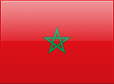 |
| History | |
| In 788, about a century after the Arab conquest of North Africa, a series of Moroccan Muslim dynasties began to rule in Morocco. In the 16th century, the Sa'adi monarchy, particularly under Ahmad al-MANSUR (1578-1603), repelled foreign invaders and inaugurated a golden age. The Alaouite Dynasty, to which the current Moroccan royal family belongs, dates from the 17th century. In 1860, Spain occupied northern Morocco and ushered in a half-century of trade rivalry among European powers that saw Morocco's sovereignty steadily erode; in 1912, the French imposed a protectorate over the country. A protracted independence struggle with France ended successfully in 1956. The internationalized city of Tangier and most Spanish possessions were turned over to the new country that same year. Sultan MOHAMMED V, the current monarch's grandfather, organized the new state as a constitutional monarchy and in 1957 assumed the title of king. Since Spain's 1976 withdrawal from what is today called Western Sahara, Morocco has extended its de facto administrative control to roughly 75% of this territory; however, the UN does not recognize Morocco as the administering power for Western Sahara. The UN since 1991 has monitored a cease-fire between Morocco and the Polisario Front - an organization advocating the territory’s independence - and restarted negotiations over the status of the territory in December 2018. King MOHAMMED VI in early 2011 responded to the spread of pro-democracy protests in the region by implementing a reform program that included a new constitution, passed by popular referendum in July 2011, under which some new powers were extended to parliament and the prime minister, but ultimate authority remains in the hands of the monarch. In November 2011, the Justice and Development Party (PJD) - a moderate Islamist party - won the largest number of seats in parliamentary elections, becoming the first Islamist party to lead the Moroccan Government. In September 2015, Morocco held its first direct elections for regional councils, one of the reforms included in the 2011 constitution. The PJD again won the largest number of seats in nationwide parliamentary elections in October 2016. |
|
|  |

| |
| Geography | |
| |
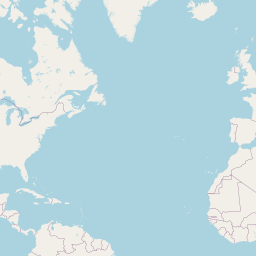
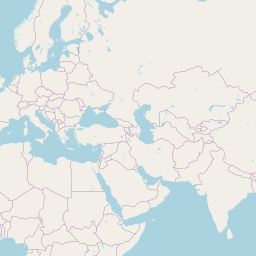
| Location: | Northern Africa, bordering the North Atlantic Ocean and the Mediterranean Sea, between Algeria and Western Sahara |
| Geographic coordinates: | 32 00 N, 5 00 W |
| Area: | total: 446,550 sq km land: 446,300 sq km water: 250 sq km Size comparison: slightly more than three times the size of New York; slightly larger than California |
| Land Boundaries: | total: 2,362.5 km border countries (4): Algeria 1900 km, Western Sahara 444 km, Spain (Ceuta) 8 km, Spain (Melilla) 10.5 km note: an additional 75-meter border segment exists between Morocco and the Spanish exclave of Penon de Velez de la Gomera |
| Coastline: | 1,835 km |
| Maritime claims: | territorial sea: 12 nm exclusive economic zone: 200 nm contiguous zone: 24 nm continental shelf: 200-m depth or to the depth of exploitation |
| Climate: | Mediterranean, becoming more extreme in the interior |
| Terrain: | mountainous northern coast (Rif Mountains) and interior (Atlas Mountains) bordered by large plateaus with intermontane valleys, and fertile coastal plains |
| Natural resources: | phosphates, iron ore, manganese, lead, zinc, fish, salt |
| Land use: | agricultural land: 67.5% (2011 est.) arable land: 17.5% (2011 est.) permanent crops: 2.9% (2011 est.) permanent pasture: 47.1% (2011 est.) forest: 11.5% (2011 est.) other: 21% (2011 est.) |
| Irrigated land: | 14,850 sq km (2012) |
| Natural hazards: | northern mountains geologically unstable and subject to earthquakes; periodic droughts; windstorms; flash floods; landslides |
| Current Environment Issues: | land degradation/desertification (soil erosion resulting from farming of marginal areas, overgrazing, destruction of vegetation); water and soil pollution due to dumping of industrial wastes into the ocean and inland water sources, and onto the land |
| International Environment Agreements: | party to: Biodiversity, Climate Change, Climate Change-Kyoto Protocol, Desertification, Endangered Species, Hazardous Wastes, Law of the Sea, Marine Dumping, Ozone Layer Protection, Ship Pollution, Wetlands, Whaling signed, but not ratified: Environmental Modification |
| ^Back to Top | |
| People | |
| |
| Nationality: | noun: Moroccan(s) adjective: Moroccan |
| Ethnic groups: | Arab-Berber 99%, other 1% |
| Languages: | Arabic (official), Berber languages (Tamazight (official), Tachelhit, Tarifit), French (often the language of business, government, and diplomacy) note: the proportion of Berber speakers is disputed |
| Religions: | Muslim 99% (official; virtually all Sunni, <0.1% Shia), other 1% (includes Christian, Jewish, and Baha'i); note - Jewish about 6,000 (2010 est.) |
| Population: | 34,314,130 (July 2018 est.) |
| Age structure: | 0-14 years: 25.47% (male 4,441,554 /female 4,298,715) 15-24 years: 16.83% (male 2,873,939 /female 2,902,206) 25-54 years: 42.41% (male 7,039,912 /female 7,513,651) 55-64 years: 8.33% (male 1,404,527 /female 1,454,304) 65 years and over: 6.95% (male 1,081,035 /female 1,304,287) (2018 est.) |
| Dependency ratios: | total dependency ratio: 51.6 (2015 est.) youth dependency ratio: 41.9 (2015 est.) elderly dependency ratio: 9.7 (2015 est.) potential support ratio: 10.3 (2015 est.) |
| Median age: | total: 29.7 years male: 29 years female: 30.3 years (2018 est.) |
| Population growth rate: | 0.95% (2018 est.) |
| Birth rate: | 17.5 births/1,000 population (2018 est.) |
| Death rate: | 4.9 deaths/1,000 population (2018 est.) |
| Net migration rate: | -3.1 migrant(s)/1,000 population (2018 est.) |
| Urbanization: | urban population: 62.5% of total population (2018) rate of urbanization: 2.14% annual rate of change (2015-20 est.) |
| Major urban areas - population: | 3.684 million Casablanca 1.847 million RABAT (capital) 1.184 million Fes 1.116 million Tangier 976,000 Marrakech 888,000 Agadir (2018) |
| Sex ratio: | at birth: 1.05 male(s)/female 0-14 years: 1.03 male(s)/female 15-24 years: 0.99 male(s)/female 25-54 years: 0.94 male(s)/female 55-64 years: 0.97 male(s)/female 65 years and over: 0.83 male(s)/female total population: 0.96 male(s)/female (2018 est.) |
| Maternal mortality rate: | 121 deaths/100,000 live births (2015 est.) |
| Infant mortality rate: | total: 21.1 deaths/1,000 live births male: 25 deaths/1,000 live births female: 16.9 deaths/1,000 live births (2018 est.) |
| Life expectancy at birth: | total population: 77.3 years male: 74.2 years female: 80.5 years (2018 est.) |
| Total fertility rate: | 2.09 children born/woman (2018 est.) |
| Contraceptive prevalence rate: | 70.8% (2018) |
| Physicians density: | 0.73 physicians/1,000 population (2017) |
| Hospital bed density: | 1.1 beds/1,000 population (2014) |
| Drinking water source: | improved: urban: 98.7% of population rural: 65.3% of population total: 85.4% of population unimproved: urban: 1.3% of population rural: 34.7% of population total: 14.6% of population (2015 est.) |
| Sanitation facility access: | improved: urban: 84.1% of population (2015 est.) rural: 65.5% of population (2015 est.) total: 76.7% of population (2015 est.) unimproved: urban: 15.9% of population (2015 est.) rural: 34.5% of population (2015 est.) total: 23.3% of population (2015 est.) |
| HIV/AIDS - adult prevalence rate: | <.1% (2017 est.) |
| HIV/AIDS - people living with HIV/AIDS: | 20,000 (2017 est.) |
| HIV/AIDS - deaths: | <500 (2017 est.) |
| Obesity - adult prevalence rate: | 26.1% (2016) |
| Children under the age of 5 years underweight: | 2.9% (2011) |
| Education expenditures: | 5.3% of GDP (2009) |
| Literacy: | definition: age 15 and over can read and write (2015 est.) total population: 68.5% male: 78.6% female: 58.8% (2015 est.) |
| School life expectancy (primary to tertiary education): | total: 13 years male: 14 years female: 13 years (2017) Unemployment, youth ages 15-24: total: 22.2% male: 20% female: 22.8% (2016 est.) |
| ^Back to Top | |
| Government | |
| |
| Country name: | conventional long form: Kingdom of Morocco conventional short form: Morocco local long form: Al Mamlakah al Maghribiyah local short form: Al Maghrib former: French Protectorate in Morocco, Spanish Protectorate in Morocco etymology: the English name "Morocco" derives from, respectively, the Spanish and Portuguese names "Marruecos" and "Marrocos," which stem from "Marrakesh" the Latin name for the former capital of ancient Morocco; the Arabic name "Al Maghrib" translates as "The West" |
| Government type: | parliamentary constitutional monarchy |
| Capital: | name: Rabat geographic coordinates: 34 01 N, 6 49 W time difference: UTC 0 (5 hours ahead of Washington, DC, during Standard Time) daylight saving time: +1 hr, begins last Sunday in March; ends last Sunday in October etymology: name derives from the Arabic title "Ribat el-Fath," meaning "stronghold of victory," applied to the newly constructed citadel in 1170 |
| Administrative divisions: | 11 regions (recognized); Beni Mellal-Khenifra, Casablanca-Settat, Draa-Tafilalet, Fes-Meknes, Guelmim-Oued Noun, Laayoune-Sakia al Hamra, Oriental, Marrakech-Safi, Rabat-Sale-Kenitra, Souss-Massa, Tanger-Tetouan-Al Hoceima note: Morocco claims the territory of Western Sahara, the political status of which is considered undetermined by the US Government; portions of the regions Guelmim-Oued Noun and Laayoune-Sakia al Hamra as claimed by Morocco lie within Western Sahara; Morocco also claims a 12th region, Dakhla-Oued ed Dahab, that falls entirely within Western Sahara |
| Independence: | 2 March 1956 (from France) |
| National holiday: | Throne Day (accession of King MOHAMMED VI to the throne), 30 July (1999) |
| Constitution: | history: several previous; latest drafted 17 June 2011, approved by referendum 1 July 2011; note - sources disagree on whether the 2011 referendum was for a new constitution or for reforms to the previous constitution amendments: proposed by the king, by the prime minister, or by members in either chamber of Parliament; passage requires at least two-thirds majority vote by both chambers and approval in a referendum; the king can opt to submit self-initiated proposals directly to a referendum (2016) |
| Legal system: | mixed legal system of civil law based on French law and Islamic law; judicial review of legislative acts by Constitutional Court |
| Suffrage: | 18 years of age; universal |
| Executive branch: | chief of state: King MOHAMMED VI (since 30 July 1999) head of government: Prime Minister Saad-Eddine al-OTHMANI (since 17 March 2017) cabinet: Council of Ministers chosen by the prime minister in consultation with Parliament and appointed by the monarch elections/appointments: the monarchy is hereditary; prime minister appointed by the monarch from the majority party following legislative elections |
| Legislative branch: | description: bicameral Parliament consists of: Chamber of Advisors (120 seats; members indirectly elected by an electoral college of local councils, professional organizations, and labor unions; members serve 6-year terms) Chamber of Representatives (395 seats; 305 members directly elected in multi-seat constituencies by proportional representation vote and 90 directly elected in a single nationwide constituency by proportional representation vote; members serve 5-year terms); note - in the national constituency, 60 seats are reserved for women and 30 reserved for those under age 40 elections: Chamber of Advisors - last held on 2 October 2015 (next to be held in fall 2021) Chamber of Representatives - last held on 7 October 2016 (next to be held in fall 2021) election results: Chamber of Advisors - percent of vote by party - NA; seats by party - NA; composition - men 106, women 14, percent of women 11.7% Chamber of Representatives - percent of vote by party NA; seats by party - PJD 125, PAM 102, PI 46, RNI 37, MP 27, USFP 20, UC 19, PPS 12, MDS 3, other 4; composition - men 314, women 81, percent of women 20.5%; note - total Parliament percent of women 18.4% |
| Judicial branch: | highest courts: Supreme Court or Court of Cassation (consists of 5-judge panels organized into civil, family matters, commercial, administrative, social, and criminal sections); Constitutional Court (consists of 12 members) judge selection and term of office: Supreme Court judges appointed by the Superior Council of Judicial Power, a 20-member body presided by the monarch, which includes the Supreme Court president, the prosecutor general, representatives of the appeals and first instance courts (among them 1 woman magistrate), the president of the National Council of the Rights of Man, and 5 "notable persons" appointed by the monarch; judges appointed for life; Constitutional Court members - 6 designated by the monarch and 6 elected by Parliament; court president appointed by the monarch from among the court members; members serve 9-year nonrenewable terms subordinate courts: courts of appeal; High Court of Justice; administrative and commercial courts; regional and sadad courts (for religious, civil and administrative, and penal adjudication); first instance courts |
| Political parties and leaders: | Action Party or PA [Mohammed EL IDRISSI] Amal (hope) Party [Mohamed BANI] An-Nahj Ad-Dimocrati or An-Nahj [Mustapha BRAHMA] Authenticity and Modernity Party or PAM [Ilyas al-OMARI] Constitutional Union Party or UC [Mohamed SAJID] Democratic and Social Movement or MDS [Abdessamad ARCHANE] Democratic Forces Front or FFD [Mustapha BENALI] Democratic Oath Party or SD Democratic Socialist Vanguard Party or PADS [Abderrahman BENAMROU] Democratic Society Party [Zhour CHAKKAFI] Environment and Development Party or PED [Karim HRITAN] Green Left Party [Mohamed FARES] Istiqlal (Independence) Party or PI [Nizar BARAKA] Ittihadi National Congress or CNI [Abdesalam EL AZIZ] Labor Party or PT Moroccan Liberal Party or PML [Mohammed ZIANE] Moroccan Union for Democracy or UMD [Jamal MANDRI] National Rally of Independents or RNI [Aziz AKHANNOUCH] Neo-Democrats Party [Mohamed DARIF] Party of Development Reform or PRD [Abderrahmane EL KOHEN] Party of Justice and Development or PJD [Saad Eddine al-OTHMANI] Party of Liberty and Social Justice [Miloud MOUSSAOUI] Popular Movement or MP [Mohand LAENSER] Progress and Socialism Party or PPS [Nabil BENABDELLAH] Renaissance and Virtue Party [Mohamed KHALIDI] Renaissance Party [Said EL GHENNIOUI] Renewal and Equity Party or PRE [Chakir ACHEHABAR] Shoura (consultation) and Istiqlal Party [Ahmed BELGHAZI] Social Center Party or PCS [Lahcen MADIH] Socialist Party [Abdelmajid BOUZOUBAA] Socialist Union of Popular Forces or USFP [Driss LACHGAR] Unified Socialist Party or GSU [Nabila MOUNIB] Unity and Democracy Party [Ahmed FITRI] |
| International organization participation: | ABEDA, AfDB, AFESD, AMF, AMU, CAEU, CD, EBRD, FAO, G-11, G-77, IAEA, IBRD, ICAO, ICC (national committees), ICRM, IDA, IDB, IFAD, IFC, IFRCS, IHO, ILO, IMF, IMO, IMSO, Interpol, IOC, IOM, IPU, ISO, ITSO, ITU, ITUC (NGOs), LAS, MIGA, MONUSCO, NAM, OAS (observer), OIC, OIF, OPCW, OSCE (partner), Pacific Alliance (observer), Paris Club (associate), PCA, SICA (observer), UN, UNCTAD, UNESCO, UNHCR, UNIDO, UNOCI, UNSC (temporary), UNWTO, UPU, WCO, WHO, WIPO, WMO, WTO |
| National symbol(s): | pentacle symbol, lion; national colors: red, green |
| National anthem: | name: "Hymne Cherifien" (Hymn of the Sharif) lyrics/music: Ali Squalli HOUSSAINI/Leo MORGAN note: music adopted 1956, lyrics adopted 1970 |
| Diplomatic representation in the US: | chief of mission: Ambassador Lalla Joumala ALAOUI (since 24 April 2017) chancery: 3508 International Drive NW, Washington, DC 20008 telephone: [1] (202) 462-7979 FAX: [1] (202) 462-7643 consulate(s) general: New York |
| Diplomatic representation from the US: | chief of mission: Ambassador (vacant); Charge d'Affaires Stephanie MILEY (since 20 January 2017) embassy: Km 5.7 Avenue Mohammed VI, Souissi, Rabat 10170 mailing address: Unit 9400, Box Front Office, DPO, AE 09718 telephone: [212] 537 637 200 FAX: [212] 537 637 201 consulate(s) general: Casablanca |
| ^Back to Top | |
| Economy | |
Morocco has capitalized on its proximity to Europe and relatively low labor costs to work towards building a diverse, open, market-oriented economy. Key sectors of the economy include agriculture, tourism, aerospace, automotive, phosphates, textiles, apparel, and subcomponents. Morocco has increased investment in its port, transportation, and industrial infrastructure to position itself as a center and broker for business throughout Africa. Industrial development strategies and infrastructure improvements - most visibly illustrated by a new port and free trade zone near Tangier - are improving Morocco's competitiveness. In the 1980s, Morocco was a heavily indebted country before pursuing austerity measures and pro-market reforms, overseen by the IMF. Since taking the throne in 1999, King MOHAMMED VI has presided over a stable economy marked by steady growth, low inflation, and gradually falling unemployment, although poor harvests and economic difficulties in Europe contributed to an economic slowdown. To boost exports, Morocco entered into a bilateral Free Trade Agreement with the US in 2006 and an Advanced Status agreement with the EU in 2008. In late 2014, Morocco eliminated subsidies for gasoline, diesel, and fuel oil, dramatically reducing outlays that weighed on the country’s budget and current account. Subsidies on butane gas and certain food products remain in place. Morocco also seeks to expand its renewable energy capacity with a goal of making renewable more than 50% of installed electricity generation capacity by 2030. Despite Morocco's economic progress, the country suffers from high unemployment, poverty, and illiteracy, particularly in rural areas. Key economic challenges for Morocco include reforming the education system and the judiciary. | |
| GDP (purchasing power parity): | $298.6 billion (2017 est.) $286.8 billion (2016 est.) $283.6 billion (2015 est.) note: data are in 2017 dollars |
| GDP (official exchange rate): | $109.3 billion (2017 est.) |
| GDP - real growth rate: | 4.1% (2017 est.) 1.1% (2016 est.) 4.6% (2015 est.) |
| GDP - per capita (PPP): | $8,600 (2017 est.) $8,300 (2016 est.) $8,300 (2015 est.) note: data are in 2017 dollars |
| Gross national saving: | 30.1% of GDP (2017 est.) 28.9% of GDP (2016 est.) 28.8% of GDP (2015 est.) GDP - composition, by end use: household consumption: 58% (2017 est.) government consumption: 18.9% (2017 est.) investment in fixed capital: 28.4% (2017 est.) investment in inventories: 4.2% (2017 est.) exports of goods and services: 37.1% (2017 est.) imports of goods and services: -46.6% (2017 est.) GDP - composition, by sector of origin: agriculture: 14% (2017 est.) industry: 29.5% (2017 est.) services: 56.5% (2017 est.) |
| Agriculture - products: | barley, wheat, citrus fruits, grapes, vegetables, olives; livestock; wine |
| Industries: | automotive parts, phosphate mining and processing, aerospace, food processing, leather goods, textiles, construction, energy, tourism |
| Industrial production growth rate: | 2.8% (2017 est.) |
| Labor force: | 12 million (2017 est.) |
| Labor force - by occupation: | agriculture: 39.1% industry: 20.3% services: 40.5% (2014 est.) |
| Unemployment rate: | 10.2% (2017 est.) 9.9% (2016 est.) |
| Population below poverty line: | 15% (2007 est.) |
| Household income or consumption by percentage share: | lowest 10%: 2.7% highest 10%: 33.2% (2007) |
| Distribution of family income - Gini index: | 40.9 (2007 est.) 39.5 (1999 est.) |
| Budget: | revenues: 22.81 billion (2017 est.) expenditures: 26.75 billion (2017 est.) |
| Taxes and other revenues: | 20.9% (of GDP) (2017 est.) Budget surplus (+) or deficit (-): -3.6% (of GDP) (2017 est.) |
| Public debt: | 65.1% of GDP (2017 est.) 64.9% of GDP (2016 est.) |
| Fiscal year: | calendar year |
| Inflation rate (consumer prices): | 0.8% (2017 est.) 1.6% (2016 est.) |
| Current account balance: | -$3.92 billion (2017 est.) -$4.363 billion (2016 est.) |
| Exports: | $21.48 billion (2017 est.) $22.66 billion (2016 est.) |
| Exports - commodities: | clothing and textiles, automobiles, electric components, inorganic chemicals, transistors, crude minerals, fertilizers (including phosphates), petroleum products, citrus fruits, vegetables, fish |
| Exports - partners: | Spain 23.2%, France 22.6%, Italy 4.5%, US 4.2% (2017) |
| Imports: | $39.64 billion (2017 est.) $36.59 billion (2016 est.) |
| Imports - commodities: | crude petroleum, textile fabric, telecommunications equipment, wheat, gas and electricity, transistors, plastics |
| Imports - partners: | Spain 16.7%, France 12.2%, China 9.2%, US 6.9%, Germany 6%, Italy 5.9%, Turkey 4.5% (2017) |
| Reserves of foreign exchange and gold: | $26.27 billion (31 December 2017 est.) $25.37 billion (31 December 2016 est.) |
| Debt - external: | $51.48 billion (31 December 2017 est.) $44.65 billion (31 December 2016 est.) |
| Stock of direct foreign investment - at home: | $63.17 billion (31 December 2017 est.) $54.78 billion (31 December 2016 est.) |
| Stock of direct foreign investment - abroad: | $5.351 billion (31 December 2017 est.) $5.203 billion (31 December 2016 est.) |
| Market value of publicly traded shares: | $45.93 billion (31 December 2015 est.) $52.75 billion (31 December 2014 est.) $53.83 billion (31 December 2013 est.) |
| Exchange rates: | Moroccan dirhams (MAD) per US dollar - 9.639 (2017 est.) 9.7787 (2016 est.) 9.7787 (2015 est.) 9.7351 (2014 est.) 8.3798 (2013 est.) |
| ^Back to Top | |
| Energy | |
| |
| Electricity - production: | 28.75 billion kWh (2016 est.) |
| Electricity - consumption: | 28.25 billion kWh (2016 est.) |
| Electricity - exports: | 165 million kWh (2015 est.) |
| Electricity - imports: | 5.289 billion kWh (2016 est.) |
| Electricity - installed generating capacity: | 8.303 million kW (2016 est.) |
| Electricity - from fossil fuels: | 68% of total installed capacity (2016 est.) |
| Electricity - from nuclear fuels: | 0% of total installed capacity (2017 est.) |
| Electricity - from hydroelectric plants: | 16% of total installed capacity (2017 est.) |
| Electricity - from other renewable sources: | 15% of total installed capacity (2017 est.) |
| Crude oil - production: | 160 bbl/day (2017 est.) |
| Crude oil - exports: | 0 bbl/day (2015 est.) |
| Crude oil - imports: | 61,160 bbl/day (2015 est.) |
| Crude oil - proved reserves: | 684,000 bbl (1 January 2018 est.) |
| Refined petroleum products - production: | 66,230 bbl/day (2017 est.) |
| Refined petroleum products - consumption: | 278,000 bbl/day (2016 est.) |
| Refined petroleum products - exports: | 9,504 bbl/day (2015 est.) |
| Refined petroleum products - imports: | 229,300 bbl/day (2015 est.) |
| Natural gas - production: | 87.78 million cu m (2017 est.) |
| Natural gas - consumption: | 1.218 billion cu m (2017 est.) |
| Natural gas - exports: | 0 cu m (2017 est.) |
| Natural gas - imports: | 1.133 billion cu m (2017 est.) |
| Natural gas - proved reserves: | 1.444 billion cu m (1 January 2018 est.) |
| Carbon dioxide emissions from consumption of energy: | 55.4 million Mt (2017 est.) |
| ^Back to Top | |
| Communications | |
| |
| Cellular Phones in use: | total subscriptions: 43,916,066 subscriptions per 100 inhabitants: 129 (2017 est.) |
| Telephone system: | general assessment: good system composed of open-wire lines, cables, and microwave radio relay links; principal switching centers are Casablanca and Rabat; national network nearly 100% digital using fiber-optic links; improved rural service employs microwave radio relay; one of the most state-of-the-art markets in Africa; high mobile penetration rates in the region with low cost for broadband Internet access; LTE and VoD (Video on Demand) launched (2018) domestic: fixed-line teledensity is 6 per 100 persons; mobile-cellular subscribership exceeds 129 per 100 persons (2018) international: country code - 212; landing point for the Atlas Offshore, Estepona-Tetouan, Euroafrica, Spain-Morocco, and SEA-ME-WE-3 fiber-optic telecommunications undersea cables that provide connectivity to Asia, the Middle East, and Europe; satellite earth stations - 2 Intelsat (Atlantic Ocean) and 1 Arabsat; microwave radio relay to Gibraltar, Spain, and Western Sahara; coaxial cable and microwave radio relay to Algeria; participant in Medarabtel; fiber-optic cable link from Agadir to Algeria and Tunisia; satellite telecom licenses awarded; cable connected to Mali and Morocco |
| Broadcast media: | 2 TV broadcast networks with state-run Radio-Television Marocaine (RTM) operating one network and the state partially owning the other; foreign TV broadcasts are available via satellite dish; 3 radio broadcast networks with RTM operating one; the government-owned network includes 10 regional radio channels in addition to its national service (2019) |
| Internet country code: | .ma |
| Internet users: | total: 19,611,643 percent of population: 58.3% (July 2016 est.) |
| ^Back to Top | |
| Transportation | |
| |
| Airports: | 55 (2013) |
| Airports (paved runways): | total 31 (2017) over 3,047 m: 11 (2017) 2,438 to 3,047 m: 9 (2017) 1,524 to 2,437 m: 7 (2017) 914 to 1,523 m: 4 (2017) |
| Airports (unpaved runways): | total 24 (2013) 2,438 to 3,047 m: 1 (2013) 1,524 to 2,437 m: 7 (2013) 914 to 1,523 m: 11 (2013) under 914 m: 5 (2013) |
| Heliports: | 1 (2013) |
| Pipelines: | 944 km gas, 270 km oil, 175 km refined products (2013) |
| Railways: | total 2,067 km (2014) standard gauge: 2,067 km 1.435-m gauge (1,022 km electrified) (2014) |
| Roadways: | total 57,300 km (2018) |
| Merchant marine: | total 87 by type: container ship 7, general cargo 6, oil tanker 3, other 71 (2018) |
| Ports and terminals: | major seaport(s): Casablanca, Jorf Lasfar, Mohammedia, Safi, Tangier container port(s) (TEUs): Tangier (3,312,409) (2017) LNG terminal(s) (import): Jorf Lasfar |
| ^Back to Top | |
| Military | |
| |
| Military branches: | Royal Armed Forces: Royal Moroccan Army, Royal Moroccan Navy (includes Coast Guard, Marines), Royal Moroccan Air Force, Royal Morroccan Gendarmerie, Morroccan Royal Guard (provides security for the royal family; officially part of the Royal Army) (2018) |
| Military service age and obligation: | 19 years of age for compulsory military service; both sexes are obligated to military service; conscript service obligation - 12 months (2019) |
| Military expenditures: | 3.2% of GDP (2017) 3.28% of GDP (2016) 3.25% of GDP (2015) 3.68% of GDP (2014) 3.81% of GDP (2013) |
| ^Back to Top | |
| Transnational Issues | |
| |
| Disputes - International: | claims and administers Western Sahara whose sovereignty remains unresolved; Morocco protests Spain's control over the coastal enclaves of Ceuta, Melilla, and Penon de Velez de la Gomera, the islands of Penon de Alhucemas and Islas Chafarinas, and surrounding waters; both countries claim Isla Perejil (Leila Island); discussions have not progressed on a comprehensive maritime delimitation, setting limits on resource exploration and refugee interdiction, since Morocco's 2002 rejection of Spain's unilateral designation of a median line from the Canary Islands; Morocco serves as one of the primary launching areas of illegal migration into Spain from North Africa; Algeria's border with Morocco remains an irritant to bilateral relations, each nation accusing the other of harboring militants and arms smuggling; the National Liberation Front's assertions of a claim to Chirac Pastures in southeastern Morocco is a dormant dispute |
| Illicit drugs: | the world's largest producer and exporter of cannabis; total production for 2015-2016 growing season estimated to be 700 metric tons; shipments of hashish mostly directed to Western Europe; transit point for cocaine from South America destined for Western Europe; significant consumer of cannabis |
| ^Back to Top | |
Morocco Previous Country | Next Country »
Source: CIA - The World Factbook