 Libya
Libya


Libya Population: 6,754,507
«  Previous Country | Next Country Previous Country | Next Country  » » | 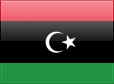 |
| History | |
| The Italians supplanted the Ottoman Turks in the area around Tripoli in 1911 and did not relinquish their hold until 1943 when they were defeated in World War II. Libya then passed to UN administration and achieved independence in 1951. Following a 1969 military coup, Col. Muammar al-QADHAFI assumed leadership and began to espouse his political system at home, which was a combination of socialism and Islam. During the 1970s, QADHAFI used oil revenues to promote his ideology outside Libya, supporting subversive and terrorist activities that included the downing of two airliners - one over Scotland, another in Northern Africa - and a discotheque bombing in Berlin. UN sanctions in 1992 isolated QADHAFI politically and economically following the attacks; sanctions were lifted in 2003 following Libyan acceptance of responsibility for the bombings and agreement to claimant compensation. QADHAFI also agreed to end Libya's program to develop weapons of mass destruction, and he made significant strides in normalizing relations with Western nations. Unrest that began in several Middle Eastern and North African countries in late 2010 erupted in Libyan cities in early 2011. QADHAFI's brutal crackdown on protesters spawned a civil war that triggered UN authorization of air and naval intervention by the international community. After months of seesaw fighting between government and opposition forces, the QADHAFI regime was toppled in mid-2011 and replaced by a transitional government known as the National Transitional Council (NTC). In 2012, the NTC handed power to an elected parliament, the General National Congress (GNC). Voters chose a new parliament to replace the GNC in June 2014 - the House of Representatives (HoR), which relocated to the eastern city of Tobruk after fighting broke out in Tripoli and Benghazi in July 2014. In October 2015, the UN brokered an agreement among a broad array of Libyan political parties and social groups - known as the Libyan Political Agreement (LPA). Members of the Libyan Political Dialogue, including representatives of the HoR and defunct-GNC, signed the LPA in December 2015. The LPA called for the formation of an interim Government of National Accord or GNA, with a nine-member Presidency Council, the HoR, and an advisory High Council of State that most ex-GNC members joined. The LPA’s roadmap for a transition to a new constitution and elected government was subsequently endorsed by UN Security Council Resolution 2259, which also called upon member states to cease official contact with parallel institutions. In January 2016, the HoR voted to approve the LPA, including the Presidency Council, while voting against a controversial provision on security leadership positions and the Presidency Council’s proposed cabinet of ministers. In March 2016, the GNA Presidency Council seated itself in Tripoli. In 2016, the GNA twice announced a slate of ministers who operate in an acting capacity, but the HoR did not endorse the ministerial list. HoR and defunct-GNC-affiliated political hardliners continued to oppose the GNA and hamper the LPA’s implementation. In September 2017, UN Special Representative Ghassan SALAME announced a new roadmap for national political reconciliation. SALAME’s plan called for amendments to the LPA, a national conference of Libyan leaders, and a constitutional referendum and general elections. In November 2018, the international partners supported SALAME’s recalibrated Action Plan for Libya that aimed to break the political deadlock by holding a National Conference in Libya in 2019 on a timeline for political transition. The National Conference was delayed following a failure of the parties to implement an agreement mediated by SALAME in Abu Dhabi on February 27, and the subsequent military action by Khalifa HAFTAR’s "Libya National Army" against GNA forces in Tripoli that began April 3. |
|
|  |
| |
| Geography | |
| |
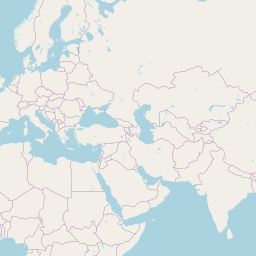
| Location: | Northern Africa, bordering the Mediterranean Sea, between Egypt, Tunisia, and Algeria |
| Geographic coordinates: | 25 00 N, 17 00 E |
| Area: | total: 1,759,540 sq km land: 1,759,540 sq km water: 0 sq km Size comparison: about 2.5 times the size of Texas; slightly larger than Alaska |
| Land Boundaries: | total: 4,339 km border countries (6): Algeria 989 km, Chad 1050 km, Egypt 1115 km, Niger 342 km, Sudan 382 km, Tunisia 461 km |
| Coastline: | 1,770 km |
| Maritime claims: | territorial sea: 12 nm exclusive fishing zone: 62 nm note: Gulf of Sidra closing line - 32 degrees, 30 minutes north |
| Climate: | Mediterranean along coast; dry, extreme desert interior |
| Terrain: | mostly barren, flat to undulating plains, plateaus, depressions |
| Natural resources: | petroleum, natural gas, gypsum |
| Land use: | agricultural land: 8.8% (2011 est.) arable land: 1% (2011 est.) permanent crops: 0.2% (2011 est.) permanent pasture: 7.6% (2011 est.) forest: 0.1% (2011 est.) other: 91.1% (2011 est.) |
| Irrigated land: | 4,700 sq km (2012) |
| Natural hazards: | hot, dry, dust-laden ghibli is a southern wind lasting one to four days in spring and fall; dust storms, sandstorms |
| Current Environment Issues: | desertification; limited natural freshwater resources; the Great Manmade River Project, the largest water development scheme in the world, brings water from large aquifers under the Sahara to coastal cities; water pollution is a significant problem; the combined impact of sewage, oil byproducts, and industrial waste threatens Libya's coast and the Mediterranean Sea |
| International Environment Agreements: | party to: Biodiversity, Climate Change, Climate Change-Kyoto Protocol, Desertification, Endangered Species, Hazardous Wastes, Marine Dumping, Ozone Layer Protection, Ship Pollution, Wetlands signed, but not ratified: Law of the Sea |
| ^Back to Top | |
| People | |
| |
| Nationality: | noun: Libyan(s) adjective: Libyan |
| Ethnic groups: | Berber and Arab 97%, other 3% (includes Greeks, Maltese, Italians, Egyptians, Pakistanis, Turks, Indians, and Tunisians) |
| Languages: | Arabic (official), Italian, English (all widely understood in the major cities); Berber (Nafusi, Ghadamis, Suknah, Awjilah, Tamasheq) |
| Religions: | Muslim (official; virtually all Sunni) 96.6%, Christian 2.7%, Buddhist 0.3%, Hindu <0.1, Jewish <0.1, folk religion <0.1, unafilliated 0.2%, other <0.1 (2010 est.) note: non-Sunni Muslims include native Ibadhi Muslims (<1% of the population) and foreign Muslims |
| Population: | 6,754,507 (July 2017 est.) (July 2018 est.) note: immigrants make up just over 12% of the total population, according to UN data (2017) |
| Age structure: | 0-14 years: 25.53% (male 882,099 /female 842,320) 15-24 years: 16.81% (male 582,247 /female 553,004) 25-54 years: 47.47% (male 1,684,019 /female 1,522,027) 55-64 years: 5.77% (male 197,196 /female 192,320) 65 years and over: 4.43% (male 147,168 /female 152,107) (2018 est.) |
| Dependency ratios: | total dependency ratio: 49.1 (2015 est.) youth dependency ratio: 42.6 (2015 est.) elderly dependency ratio: 6.4 (2015 est.) potential support ratio: 15.5 (2015 est.) |
| Median age: | total: 29.4 years male: 29.5 years female: 29.2 years (2018 est.) |
| Population growth rate: | 1.45% (2018 est.) |
| Birth rate: | 17.2 births/1,000 population (2018 est.) |
| Death rate: | 3.7 deaths/1,000 population (2018 est.) |
| Net migration rate: | 0.9 migrant(s)/1,000 population (2018 est.) |
| Urbanization: | urban population: 80.1% of total population (2018) rate of urbanization: 1.68% annual rate of change (2015-20 est.) |
| Major urban areas - population: | 1.158 million TRIPOLI (capital) 799,000 Benghazi 801,000 Misratah (2018) |
| Sex ratio: | at birth: 1.05 male(s)/female 0-14 years: 1.05 male(s)/female 15-24 years: 1.05 male(s)/female 25-54 years: 1.11 male(s)/female 55-64 years: 1.03 male(s)/female 65 years and over: 0.97 male(s)/female total population: 1.07 male(s)/female (2018 est.) |
| Maternal mortality rate: | 9 deaths/100,000 live births (2015 est.) |
| Infant mortality rate: | total: 10.5 deaths/1,000 live births male: 11.3 deaths/1,000 live births female: 9.6 deaths/1,000 live births (2018 est.) |
| Life expectancy at birth: | total population: 76.9 years male: 75.1 years female: 78.7 years (2018 est.) |
| Total fertility rate: | 2.03 children born/woman (2018 est.) |
| Contraceptive prevalence rate: | 27.7% (2014) |
| Physicians density: | 2.16 physicians/1,000 population (2017) |
| Hospital bed density: | 3.7 beds/1,000 population (2014) |
| Drinking water source: | improved: urban: 54.2% of population rural: 54.9% of population total: 54.4% of population unimproved: urban: 45.8% of population rural: 45.1% of population total: 45.6% of population (2001 est.) |
| Sanitation facility access: | improved: urban: 96.8% of population (2015 est.) rural: 95.7% of population (2015 est.) total: 96.6% of population (2015 est.) unimproved: urban: 3.2% of population (2015 est.) rural: 4.3% of population (2015 est.) total: 3.4% of population (2015 est.) |
| HIV/AIDS - adult prevalence rate: | n/a |
| HIV/AIDS - people living with HIV/AIDS: | n/a |
| HIV/AIDS - deaths: | n/a |
| Obesity - adult prevalence rate: | 32.5% (2016) |
| Education expenditures: | n/a |
| Literacy: | definition: age 15 and over can read and write (2015 est.) total population: 91% male: 96.7% female: 85.6% (2015 est.) Unemployment, youth ages 15-24: total: 48.7% male: 40.8% female: 67.8% (2012 est.) |
| ^Back to Top | |
| Government | |
| |
| Country name: | conventional long form: State of Libya conventional short form: Libya local long form: Dawiat Libiya local short form: Libiya etymology: name derives from the Libu, an ancient Libyan tribe first mentioned in texts from the 13th century B.C. |
| Government type: | in transition |
| Capital: | name: Tripoli (Tarabulus) geographic coordinates: 32 53 N, 13 10 E time difference: UTC+2 (7 hours ahead of Washington, DC, during Standard Time) etymology: originally founded by the Phoenicians as Oea in the 7th century B.C., the city changed rulers many times over the successive centuries; by the beginning of the 3rd century A.D. the region around the city was referred to as Regio Tripolitana by the Romans, meaning "region of the three cities" - namely Oea (i.e., modern Tripoli), Sabratha (to the west), and Leptis Magna (to the east); over time, the shortened name of "Tripoli" came to refer to just Oea, which derives from the Greek words "tria" and "polis" meaning "three cities" |
| Administrative divisions: | 22 districts (muhafazah, singular - muhafazat); Al Butnan, Al Jabal al Akhdar, Al Jabal al Gharbi, Al Jafarah, Al Jufrah, Al Kufrah, Al Marj, Al Marqab, Al Wahat, An Nuqat al Khams, Az Zawiyah, Banghazi (Benghazi), Darnah, Ghat, Misratah, Murzuq, Nalut, Sabha, Surt, Tarabulus (Tripoli), Wadi al Hayat, Wadi ash Shati |
| Independence: | 24 December 1951 (from UN trusteeship) |
| National holiday: | Liberation Day, 23 October (2011) |
| Constitution: | previous 1951, 1977; in July 2017, the Constitutional Assembly completed and approved a draft of a new permanent constitution; in September 2018, the House of Representatives passed a constitutional referendum law in a session with contested reports of the quorum needed to pass the vote, and submitted it to the High National Elections Commission in December to begin preparations for a constitutional referendum. [SAM1] LEO: Please review and revise as needed. |
| Legal system: | Libya's post-revolution legal system is in flux and driven by state and non-state entities |
| Suffrage: | 18 years of age, universal |
| Executive branch: | chief of state: Chairman, Presidential Council, Fayiz al-SARAJ (since December 2015) head of government: Prime Minister Fayiz al-SARAJ (since December 2015) cabinet: GNA Presidency Council (pending approval by the House of Representatives - as of December 2018) elections/appointments: direct presidential election to be held pending election-related legislation and constitutional referendum law election results: NA |
| Legislative branch: | description: unicameral House of Representatives (Majlis Al Nuwab) or HoR (200 seats including 32 reserved for women; members directly elected by majority vote; member term NA); note - the High Council of State serves as an advisory group for the HoR elections: last held on 25 June 2014 ( parliamentary election to be held pending election-related legislation); note - the Libyan Supreme Court in November 2014 declared the HoR election unconstitutional, but the HoR and the international community rejected the ruling election results: percent of vote by party - NA; seats by party - NA; composition - men 158, women 30, percent of women 16%; note - only 188 of the 200 seats were filled in the June 2014 election because of boycotts and lack of security at some polling stations; some elected members of the HoR also boycotted the election |
| Judicial branch: | NA; note - government is in transition |
| Political parties and leaders: | n/a |
| International organization participation: | ABEDA, AfDB, AFESD, AMF, AMU, AU, BDEAC, CAEU, COMESA, FAO, G-77, IAEA, IBRD, ICAO, ICC (NGOs), ICRM, IDA, IDB, IFAD, IFC, IFRCS, ILO, IMF, IMO, IMSO, Interpol, IOC, IOM, IPU, ISO, ITSO, ITU, LAS, MIGA, NAM, OAPEC, OIC, OPCW, OPEC, PCA, UN, UNCTAD, UNESCO, UNIDO, UNWTO, UPU, WCO, WFTU (NGOs), WHO, WIPO, WMO, WTO (observer) |
| National symbol(s): | star and crescent, hawk; national colors: red, black, green |
| National anthem: | name: Libya, Libya, Libya lyrics/music: Al Bashir AL AREBI/Mohamad Abdel WAHAB note: also known as "Ya Beladi" or "Oh, My Country!"; adopted 1951; readopted 2011 with some modification to the lyrics; during the QADHAFI years between 1969 and 2011, the anthem was "Allahu Akbar," (God is Great) a marching song of the Egyptian Army in the 1956 Suez War |
| Diplomatic representation in the US: | chief of mission: Ambassador Wafa M.T. BUGHAIGHIS (since 29 November 2017) chancery: chancery:1460 Dahlia St NW, Washington, DC telephone: [1] (202) 944-9601 FAX: [1] (202) 944-9606 |
| Diplomatic representation from the US: | chief of mission: Ambassador (vacant); Charge d'Affaires Ambassador Peter W. BODDE (since 15 November 2018) embassy: Sidi Slim Area/Walie Al-Ahed Road, Tripoli (temporarily closed) mailing address: US Embassy, 8850 Tripoli Place, Washington, DC 20521-8850 telephone: [218] (0) 91-220-3239 note: the US Embassy in Tripoli closed in July 2014 due to fighting near the embassy related to Libyan civil unrest; embassy staff and operations temporarily first relocated to Valetta, Malta and currently are temporarily relocated to Tunis, Tunisia |
| ^Back to Top | |
| Economy | |
Libya's economy, almost entirely dependent on oil and gas exports, has struggled since 2014 given security and political instability, disruptions in oil production, and decline in global oil prices. The Libyan dinar has lost much of its value since 2014 and the resulting gap between official and black market exchange rates has spurred the growth of a shadow economy and contributed to inflation. The country suffers from widespread power outages, caused by shortages of fuel for power generation. Living conditions, including access to clean drinking water, medical services, and safe housing have all declined since 2011. Oil production in 2017 reached a five-year high, driving GDP growth, with daily average production rising to 879,000 barrels per day. However, oil production levels remain below the average pre-Revolution highs of 1.6 million barrels per day. The Central Bank of Libya continued to pay government salaries to a majority of the Libyan workforce and to fund subsidies for fuel and food, resulting in an estimated budget deficit of about 17% of GDP in 2017. Low consumer confidence in the banking sector and the economy as a whole has driven a severe liquidity shortage. | |
| GDP (purchasing power parity): | $61.97 billion (2017 est.) $37.78 billion (2016 est.) $40.8 billion (2015 est.) note: data are in 2017 dollars |
| GDP (official exchange rate): | $30.57 billion (2017 est.) |
| GDP - real growth rate: | 64% (2017 est.) -7.4% (2016 est.) -13% (2015 est.) |
| GDP - per capita (PPP): | $9,600 (2017 est.) $5,900 (2016 est.) $6,500 (2015 est.) note: data are in 2017 dollars |
| Gross national saving: | 5% of GDP (2017 est.) -9% of GDP (2016 est.) -25.1% of GDP (2015 est.) GDP - composition, by end use: household consumption: 71.6% (2017 est.) government consumption: 19.4% (2017 est.) investment in fixed capital: 2.7% (2017 est.) investment in inventories: 1.3% (2016 est.) exports of goods and services: 38.8% (2017 est.) imports of goods and services: -33.8% (2017 est.) GDP - composition, by sector of origin: agriculture: 1.3% (2017 est.) industry: 52.3% (2017 est.) services: 46.4% (2017 est.) |
| Agriculture - products: | wheat, barley, olives, dates, citrus, vegetables, peanuts, soybeans; cattle |
| Industries: | petroleum, petrochemicals, aluminum, iron and steel, food processing, textiles, handicrafts, cement |
| Industrial production growth rate: | 60.3% (2017 est.) |
| Labor force: | 1.114 million (2017 est.) |
| Labor force - by occupation: | agriculture: 17% industry: 23% services: 59% (2004 est.) |
| Unemployment rate: | 30% (2004 est.) |
| Population below poverty line: | note: about one-third of Libyans live at or below the national poverty line |
| Household income or consumption by percentage share: | lowest 10%: n/a highest 10%: n/a |
| Budget: | revenues: 15.78 billion (2017 est.) expenditures: 23.46 billion (2017 est.) |
| Taxes and other revenues: | 51.6% (of GDP) (2017 est.) Budget surplus (+) or deficit (-): -25.1% (of GDP) (2017 est.) |
| Public debt: | 4.7% of GDP (2017 est.) 7.5% of GDP (2016 est.) |
| Fiscal year: | calendar year |
| Inflation rate (consumer prices): | 28.5% (2017 est.) 25.9% (2016 est.) |
| Current account balance: | $2.574 billion (2017 est.) -$4.575 billion (2016 est.) |
| Exports: | $18.38 billion (2017 est.) $11.99 billion (2016 est.) |
| Exports - commodities: | crude oil, refined petroleum products, natural gas, chemicals |
| Exports - partners: | Italy 19%, Spain 12.5%, France 11%, Egypt 8.6%, Germany 8.6%, China 8.3%, US 4.9%, UK 4.6%, Netherlands 4.5% (2017) |
| Imports: | $11.36 billion (2017 est.) $8.667 billion (2016 est.) |
| Imports - commodities: | machinery, semi-finished goods, food, transport equipment, consumer products |
| Imports - partners: | China 13.5%, Turkey 11.3%, Italy 6.9%, South Korea 5.9%, Spain 4.8% (2017) |
| Reserves of foreign exchange and gold: | $74.71 billion (31 December 2017 est.) $66.05 billion (31 December 2016 est.) |
| Debt - external: | $3.02 billion (31 December 2017 est.) $3.116 billion (31 December 2016 est.) |
| Stock of direct foreign investment - at home: | $20.21 billion (31 December 2017 est.) $18.96 billion (31 December 2016 est.) |
| Stock of direct foreign investment - abroad: | $20.97 billion (31 December 2017 est.) $22.19 billion (31 December 2016 est.) |
| Market value of publicly traded shares: | n/a |
| Exchange rates: | Libyan dinars (LYD) per US dollar - 1.413 (2017 est.) 1.3904 (2016 est.) 1.3904 (2015 est.) 1.379 (2014 est.) 1.2724 (2013 est.) |
| ^Back to Top | |
| Energy | |
| |
| Electricity - production: | 34.24 billion kWh (2016 est.) note: persistent electricity shortages have contributed to the ongoing instability throughout the country |
| Electricity - consumption: | 27.3 billion kWh (2016 est.) |
| Electricity - exports: | 0 kWh (2015 est.) |
| Electricity - imports: | 376 million kWh (2016 est.) |
| Electricity - installed generating capacity: | 9.46 million kW (2016 est.) |
| Electricity - from fossil fuels: | 100% of total installed capacity (2016 est.) |
| Electricity - from nuclear fuels: | 0% of total installed capacity (2017 est.) |
| Electricity - from hydroelectric plants: | 0% of total installed capacity (2017 est.) |
| Electricity - from other renewable sources: | 0% of total installed capacity (2017 est.) |
| Crude oil - production: | 897,100 bbl/day (2017 est.) |
| Crude oil - exports: | 337,800 bbl/day (2015 est.) note: Libyan crude oil export values are highly volatile because of continuing protests and other disruptions across the country |
| Crude oil - imports: | 0 bbl/day (2015 est.) |
| Crude oil - proved reserves: | 48.36 billion bbl (1 January 2018 est.) |
| Refined petroleum products - production: | 89,620 bbl/day (2015 est.) |
| Refined petroleum products - consumption: | 260,000 bbl/day (2016 est.) |
| Refined petroleum products - exports: | 16,880 bbl/day (2015 est.) |
| Refined petroleum products - imports: | 168,200 bbl/day (2015 est.) |
| Natural gas - production: | 9.089 billion cu m (2017 est.) |
| Natural gas - consumption: | 4.446 billion cu m (2017 est.) |
| Natural gas - exports: | 4.644 billion cu m (2017 est.) |
| Natural gas - imports: | 0 cu m (2017 est.) |
| Natural gas - proved reserves: | 1.505 trillion cu m (1 January 2018 est.) |
| Carbon dioxide emissions from consumption of energy: | 46.48 million Mt (2017 est.) |
| ^Back to Top | |
| Communications | |
| |
| Cellular Phones in use: | total subscriptions: 7,660,068 subscriptions per 100 inhabitants: 115 (July 2016 est.) |
| Telephone system: | general assessment: political and security instability in Libya has disrupted its telecommunications sector, but much of its infrastructure remains superior to that in most other African countries; registering a SIM card now requires proof of ID; govt. established new independent regulatory authority; LTE-based fixed broadband network launched (2018) domestic: 21 per 100 fixed-line and 115 per 100 mobile-cellular subscriptions; service generally adequate, but pressure to rebuild damaged infrastructure growing (2018) international: country code - 218; satellite earth stations - 4 Intelsat,n/aArabsat, andn/aIntersputnik; submarine cable to France and Italy; microwave radio relay to Tunisia and Egypt; tropospheric scatter to Greece; participant in Medarabtel (2018) |
| Broadcast media: | state-funded and private TV stations; some provinces operate local TV stations; pan-Arab satellite TV stations are available; state-funded radio (2019) |
| Internet country code: | .ly |
| Internet users: | total: 1,326,194 percent of population: 20.3% (July 2016 est.) |
| ^Back to Top | |
| Transportation | |
| |
| Airports: | 146 (2013) |
| Airports (paved runways): | total 68 (2017) over 3,047 m: 23 (2017) 2,438 to 3,047 m: 7 (2017) 1,524 to 2,437 m: 30 (2017) 914 to 1,523 m: 7 (2017) under 914 m: 1 (2017) |
| Airports (unpaved runways): | total 78 (2013) over 3,047 m: 2 (2013) 2,438 to 3,047 m: 5 (2013) 1,524 to 2,437 m: 14 (2013) 914 to 1,523 m: 37 (2013) under 914 m: 20 (2013) |
| Heliports: | 2 (2013) |
| Pipelines: | 882 km condensate, 3743 km gas, 7005 km oil (2013) |
| Roadways: | total 37,000 km (2010) paved: 34,000 km (2010) unpaved: 3,000 km (2010) |
| Merchant marine: | total 98 by type: general cargo 2, oil tanker 16, other 80 (2018) |
| Ports and terminals: | major seaport(s): Marsa al Burayqah (Marsa el Brega), Tripoli oil terminal(s): Az Zawiyah, Ra's Lanuf LNG terminal(s) (export): Marsa el Brega |
| ^Back to Top | |
| Military | |
| |
| Military branches: | note - in transition; Libyan Government of National Accord has affiliated ground, air, naval, and coast guard forces (2018) |
| Military service age and obligation: | 18 years of age for mandatory or voluntary service (2012) |
| ^Back to Top | |
| Transnational Issues | |
| |
| Disputes - International: | dormant disputes include Libyan claims of about 32,000 sq km still reflected on its maps of southeastern Algeria and the FLN's assertions of a claim to Chirac Pastures in southeastern Morocco; various Chadian rebels from the Aozou region reside in southern Libya |
| Refugees and internally displaced persons: | refugees (country of origin): 20,491 (Syria) (refugees and asylum seekers0, 12,166 (Sudan) (refugees and asylum seekers), 7,018 (Eritrea) (refugees and asylum seekers), 5,177 (Palestinian) (refugees and asylum seekers) (2019) IDPs: 268,629 (conflict between pro-QADHAFI and anti-QADHAFI forces in 2011; post-QADHAFI tribal clashes 2014) (2019) |
| ^Back to Top | |
Libya Previous Country | Next Country »
Source: CIA - The World Factbook