 Lesotho


Lesotho Population: 1,962,461
«  Previous Country | Next Country Previous Country | Next Country  » » | 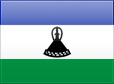 |
| History | |
| Basutoland was renamed the Kingdom of Lesotho upon independence from the UK in 1966. The Basotho National Party ruled the country during its first two decades. King MOSHOESHOE II was exiled in 1990, but returned to Lesotho in 1992 and was reinstated in 1995 and subsequently succeeded by his son, King LETSIE III, in 1996. Constitutional government was restored in 1993 after seven years of military rule. In 1998, violent protests and a military mutiny following a contentious election prompted a brief but bloody intervention by South African and Botswana military forces under the aegis of the Southern African Development Community. Subsequent constitutional reforms restored relative political stability. Peaceful parliamentary elections were held in 2002, but the National Assembly elections in 2007 were hotly contested and aggrieved parties disputed how the electoral law was applied to award proportional seats in the Assembly. In 2012, competitive elections involving 18 parties saw Prime Minister Motsoahae Thomas THABANE form a coalition government - the first in the country's history - that ousted the 14-year incumbent, Pakalitha MOSISILI, who peacefully transferred power the following month. MOSISILI returned to power in snap elections in February 2015 after the collapse of THABANE’s coalition government and an alleged attempted military coup. In June 2017, THABANE returned to become prime minister. |
|
|  |
| |
| Geography | |
| |
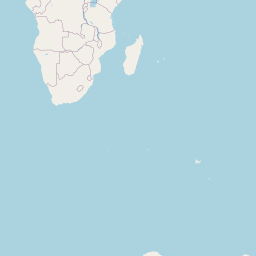
| Location: | Southern Africa, an enclave of South Africa |
| Geographic coordinates: | 29 30 S, 28 30 E |
| Area: | total: 30,355 sq km land: 30,355 sq km water: 0 sq km Size comparison: slightly smaller than Maryland |
| Land Boundaries: | total: 1,106 km border countries (1): South Africa 1106 km |
| Coastline: | 0 km (landlocked) |
| Maritime claims: | none (landlocked) |
| Climate: | temperate; cool to cold, dry winters; hot, wet summers |
| Terrain: | mostly highland with plateaus, hills, and mountains |
| Natural resources: | water, agricultural and grazing land, diamonds, sand, clay, building stone |
| Land use: | agricultural land: 76.1% (2011 est.) arable land: 10.1% (2011 est.) permanent crops: 0.1% (2011 est.) permanent pasture: 65.9% (2011 est.) forest: 1.5% (2011 est.) other: 22.4% (2011 est.) |
| Irrigated land: | 30 sq km (2012) |
| Natural hazards: | periodic droughts |
| Current Environment Issues: | population pressure forcing settlement in marginal areas results in overgrazing, severe soil erosion, and soil exhaustion; desertification; Highlands Water Project controls, stores, and redirects water to South Africa |
| International Environment Agreements: | party to: Biodiversity, Climate Change, Climate Change-Kyoto Protocol, Desertification, Endangered Species, Hazardous Wastes, Law of the Sea, Marine Life Conservation, Ozone Layer Protection, Wetlands signed, but not ratified: none of the selected agreements |
| ^Back to Top | |
| People | |
| |
| Nationality: | noun: Mosotho (singular), Basotho (plural) adjective: Basotho |
| Ethnic groups: | Sotho 99.7%, Europeans, Asians, and other 0.3% |
| Languages: | Sesotho (official) (southern Sotho), English (official), Zulu, Xhosa |
| Religions: | Protestant 47.8% (Pentecostal 23.1%, Lesotho Evangelical 17.3%, Anglican 7.4%), Roman Catholic 39.3%, other Christian 9.1%, non-Christian 1.4%, none 2.3% (2014 est.) |
| Population: | 1,962,461 (July 2018 est.) note: estimates for this country explicitly take into account the effects of excess mortality due to AIDS; this can result in lower life expectancy, higher infant mortality, higher death rates, lower population growth rates, and changes in the distribution of population by age and sex than would otherwise be expected |
| Age structure: | 0-14 years: 31.84% (male 314,155 /female 310,772) 15-24 years: 19.34% (male 181,332 /female 198,236) 25-54 years: 38.27% (male 366,652 /female 384,333) 55-64 years: 5.02% (male 52,490 /female 46,016) 65 years and over: 5.53% (male 55,804 /female 52,671) (2018 est.) |
| Dependency ratios: | total dependency ratio: 66.9 (2015 est.) youth dependency ratio: 59.5 (2015 est.) elderly dependency ratio: 7.4 (2015 est.) potential support ratio: 13.5 (2015 est.) |
| Median age: | total: 24.4 years male: 24.4 years female: 24.3 years (2018 est.) |
| Population growth rate: | 0.24% (2018 est.) |
| Birth rate: | 24.2 births/1,000 population (2018 est.) |
| Death rate: | 15.1 deaths/1,000 population (2018 est.) |
| Net migration rate: | -6.6 migrant(s)/1,000 population (2018 est.) |
| Urbanization: | urban population: 28.2% of total population (2018) rate of urbanization: 2.83% annual rate of change (2015-20 est.) |
| Major urban areas - population: | 202,000 MASERU (capital) (2018) |
| Sex ratio: | at birth: 1.03 male(s)/female 0-14 years: 1.01 male(s)/female 15-24 years: 0.91 male(s)/female 25-54 years: 0.95 male(s)/female 55-64 years: 1.14 male(s)/female 65 years and over: 1.06 male(s)/female total population: 0.98 male(s)/female (2018 est.) Mother's mean age at first birth: 21 years (2014 est.) note: median age at first birth among women 25-29 |
| Maternal mortality rate: | 487 deaths/100,000 live births (2015 est.) |
| Infant mortality rate: | total: 44.6 deaths/1,000 live births male: 48.1 deaths/1,000 live births female: 40.9 deaths/1,000 live births (2018 est.) |
| Life expectancy at birth: | total population: 53 years male: 53 years female: 53.1 years (2018 est.) |
| Total fertility rate: | 2.59 children born/woman (2018 est.) |
| Contraceptive prevalence rate: | 60.2% (2014) |
| Physicians density: | 0.07 physicians/1,000 population (2010) |
| Drinking water source: | improved: urban: 94.6% of population rural: 77% of population total: 81.8% of population unimproved: urban: 5.4% of population rural: 23% of population total: 18.2% of population (2015 est.) |
| Sanitation facility access: | improved: urban: 37.3% of population (2015 est.) rural: 27.6% of population (2015 est.) total: 30.3% of population (2015 est.) unimproved: urban: 62.7% of population (2015 est.) rural: 72.4% of population (2015 est.) total: 69.7% of population (2015 est.) |
| HIV/AIDS - adult prevalence rate: | 23.8% (2017 est.) |
| HIV/AIDS - people living with HIV/AIDS: | 320,000 (2017 est.) |
| HIV/AIDS - deaths: | 4,900 (2017 est.) |
| Obesity - adult prevalence rate: | 16.6% (2016) |
| Children under the age of 5 years underweight: | 10.5% (2014) |
| Education expenditures: | 6.4% of GDP (2018) |
| Literacy: | definition: age 15 and over can read and write (2015 est.) total population: 79.4% male: 70.1% female: 88.3% (2015 est.) |
| School life expectancy (primary to tertiary education): | total: 11 years male: 10 years female: 11 years (2015) Unemployment, youth ages 15-24: total: 34.4% male: n/a female: n/a (2013 est.) |
| ^Back to Top | |
| Government | |
| |
| Country name: | conventional long form: Kingdom of Lesotho conventional short form: Lesotho local long form: Kingdom of Lesotho local short form: Lesotho former: Basutoland etymology: the name translates as "Land of the Sesotho Speakers" |
| Government type: | parliamentary constitutional monarchy |
| Capital: | name: Maseru geographic coordinates: 29 19 S, 27 29 E time difference: UTC+2 (7 hours ahead of Washington, DC, during Standard Time) etymology: in the Sesotho language the name means "[place of] red sandstones" |
| Administrative divisions: | 10 districts; Berea, Butha-Buthe, Leribe, Mafeteng, Maseru, Mohale's Hoek, Mokhotlong, Qacha's Nek, Quthing, Thaba-Tseka |
| Independence: | 4 October 1966 (from the UK) |
| National holiday: | Independence Day, 4 October (1966) |
| Constitution: | history: previous 1959, 1967; latest adopted 2 April 1993 (effectively restoring the 1967 version) amendments: proposed by Parliament; passage of amendments affecting constitutional provisions including fundamental rights and freedoms, sovereignty of the kingdom, the office of the king, and powers of Parliament requires a majority vote by the National Assembly, approval by the Senate, approval in a referendum by a majority of qualified voters, and assent by the king; passage of amendments other than those specified provisions requires at least a two-thirds majority vote in both Parliament houses; amended several times, last in 2011 (2017) |
| Legal system: | mixed legal system of English common law and Roman-Dutch law; judicial review of legislative acts in High Court and Court of Appeal |
| Suffrage: | 18 years of age; universal |
| Executive branch: | chief of state: King LETSIE III (since 7 February 1996); note - King LETSIE III formerly occupied the throne from November 1990 to February 1995 while his father was in exile head of government: Prime Minister Thomas Motsoahae THABANE (since 16 June 2017) cabinet: consists of the prime minister, appointed by the King on the advice of the Council of State, the deputy prime minister, and 26 other ministers elections/appointments: the monarchy is hereditary, but under the terms of the constitution that came into effect after the March 1993 election, the monarch is a "living symbol of national unity" with no executive or legislative powers; under traditional law, the college of chiefs has the power to depose the monarch, to determine next in line of succession, or to serve as regent in the event that a successor is not of mature age; following legislative elections, the leader of the majority party or majority coalition in the Assembly automatically becomes prime minister |
| Legislative branch: | description: bicameral Parliament consists of: Senate (33 seats; 22 principal chiefs and 11 other senators nominated by the king with the advice of the Council of State, a 13-member body of key government and non-government officials; members serve 5-year terms) National Assembly (120 seats; 80 members directly elected in single-seat constituencies by simple majority vote and 40 elected through proportional representation; members serve 5-year terms) elections: Senate - last nominated by the king 11 July 2017 (next NA) National Assembly - last held on 3 June 2017 (next to be held in 2022) election results: Senate - percent of votes by party - NA, seats by party - NA; composition - men 25, women 8, percent of women 24.2% National Assembly - percent of votes by party - ABC 40.5%, DC 25.8%, LCD 9%, AD 7.3%, MEC 5.1%, BNP 4.1, PFD 2.3%, other 5.9%; seats by party - ABC 51, DC 30, LCD 11, AD 9, MEC 6, BNP 5, PFD 3, other 5; composition - men 95, women 27, percent of women 22.5%; note - total Parliament percent of women 22.9% |
| Judicial branch: | highest courts: Court of Appeal (consists of the court president, such number of justices of appeal as set by Parliament, and the Chief Justice and the puisne judges of the High Court ex officio); High Court (consists of the chief justice and such number of puisne judges as set by Parliament); note - both the Court of Appeal and the High Court have jurisdiction in constitutional issues judge selection and term of office: Court of Appeal president and High Court chief justice appointed by the monarch on the advice of the prime minister; puisne judges appointed by the monarch on advice of the Judicial Service Commission, an independent body of judicial officers and officials designated by the monarch; judges of both courts can serve until age 75 subordinate courts: Magistrate Courts; customary or traditional courts; military courts |
| Political parties and leaders: | All Basotho Convention or ABC [Thomas Motsoahae THABANE] Alliance of Democrats or AD [Monyane MOLELEKI] Basotho Congress Party or BCP [Thulo MAHLAKENG] Basotho National Party or BNP [Thesele MASERIBANE] Democratic Congress or DC [Pakalitha MOSISILI] Democratic Party of Lesotho or DPL [Limpho TAU] Lesotho Congress for Democracy or LCD [Mothetjoa METSING] Movement of Economic Change or MEC [Selibe MOCHOBOROANE] National Independent Party or NIP [Kimetso MATHABA] Popular Front for Democracy of PFD [Lekhetho RAKUOANE] Reformed Congress of Lesotho or RCL [Keketso RANTSO] |
| International organization participation: | ACP, AfDB, AU, C, CD, FAO, G-77, IAEA, IBRD, ICAO, ICCt, ICRM, IDA, IFAD, IFC, IFRCS, ILO, IMF, Interpol, IOC, IOM, IPU, ISO (correspondent), ITU, MIGA, NAM, OPCW, SACU, SADC, UN, UNAMID, UNCTAD, UNESCO, UNHCR, UNIDO, UNWTO, UPU, WCO, WFTU (NGOs), WHO, WIPO, WMO, WTO |
| National symbol(s): | mokorotio (Basotho hat); national colors: blue, white, green, black |
| National anthem: | name: "Lesotho fatse la bo ntat'a rona" (Lesotho, Land of Our Fathers) lyrics/music: Francois COILLARD/Ferdinand-Samuel LAUR note: adopted 1967; music derives from an 1823 Swiss songbook |
| Diplomatic representation in the US: | chief of mission: Ambassador Sankatana Gabriel MAJA (since 22 June 2018) chancery: 2511 Massachusetts Avenue NW, Washington, DC 20008 telephone: [1] (202) 797-5533 FAX: [1] (202) 234-6815 |
| Diplomatic representation from the US: | chief of mission: Ambassador Rebecca E. GONZALES (since 8 February 2018) embassy: 254 Kingsway Road, Maseru West mailing address: P.O. Box 333, Maseru 100, Lesotho telephone: [266] 22 312 666 FAX: [266] 22 310 116 |
| ^Back to Top | |
| Economy | |
Small, mountainous, and completely landlocked by South Africa, Lesotho depends on a narrow economic base of textile manufacturing, agriculture, remittances, and regional customs revenue. About three-fourths of the people live in rural areas and engage in animal herding and subsistence agriculture, although Lesotho produces less than 20% of the nation's demand for food. Agriculture is vulnerable to weather and climate variability. Lesotho relies on South Africa for much of its economic activity; Lesotho imports 85% of the goods it consumes from South Africa, including most agricultural inputs. Households depend heavily on remittances from family members working in South Africa in mines, on farms, and as domestic workers, though mining employment has declined substantially since the 1990s. Lesotho is a member of the Southern Africa Customs Union (SACU), and revenues from SACU accounted for roughly 26% of total GDP in 2016; however, SACU revenues are volatile and expected to decline over the next 5 years. Lesotho also gains royalties from the South African Government for water transferred to South Africa from a dam and reservoir system in Lesotho. However, the government continues to strengthen its tax system to reduce dependency on customs duties and other transfers. The government maintains a large presence in the economy - government consumption accounted for about 26% of GDP in 2017. The government remains Lesotho's largest employer; in 2016, the government wage bill rose to 23% of GDP – the largest in sub-Saharan Africa. Lesotho's largest private employer is the textile and garment industry - approximately 36,000 Basotho, mainly women, work in factories producing garments for export to South Africa and the US. Diamond mining in Lesotho has grown in recent years and accounted for nearly 35% of total exports in 2015. Lesotho managed steady GDP growth at an average of 4.5% from 2010 to 2014, dropping to about 2.5% in 2015-16, but poverty remains widespread around 57% of the total population. | |
| GDP (purchasing power parity): | $6.656 billion (2017 est.) $6.762 billion (2016 est.) $6.561 billion (2015 est.) note: data are in 2017 dollars |
| GDP (official exchange rate): | $2.749 billion (2017 est.) |
| GDP - real growth rate: | -1.6% (2017 est.) 3.1% (2016 est.) 2.5% (2015 est.) |
| GDP - per capita (PPP): | $3,300 (2017 est.) $3,400 (2016 est.) $3,300 (2015 est.) note: data are in 2017 dollars |
| Gross national saving: | 20.3% of GDP (2017 est.) 19.7% of GDP (2016 est.) 24.7% of GDP (2015 est.) GDP - composition, by end use: household consumption: 69.2% (2017 est.) government consumption: 26.4% (2017 est.) investment in fixed capital: 31.4% (2017 est.) investment in inventories: -13.4% (2017 est.) exports of goods and services: 40.8% (2017 est.) imports of goods and services: -54.4% (2017 est.) GDP - composition, by sector of origin: agriculture: 5.8% (2016 est.) industry: 39.2% (2016 est.) services: 54.9% (2017 est.) |
| Agriculture - products: | corn, wheat, pulses, sorghum, barley; livestock |
| Industries: | food, beverages, textiles, apparel assembly, handicrafts, construction, tourism |
| Industrial production growth rate: | 12.5% (2017 est.) |
| Labor force: | 930,800 (2017 est.) |
| Labor force - by occupation: | agriculture: 86% industry and services: 14% (2002 est.) note: most of the resident population is engaged in subsistence agriculture; roughly 35% of the active male wage earners work in South Africa |
| Unemployment rate: | 28.1% (2014 est.) 25% (2008 est.) |
| Population below poverty line: | 57% (2016 est.) |
| Household income or consumption by percentage share: | lowest 10%: 1% highest 10%: 39.4% (2003) |
| Distribution of family income - Gini index: | 63.2 (1995) 56 (1986-87) |
| Budget: | revenues: 1.09 billion (2017 est.) expenditures: 1.255 billion (2017 est.) |
| Taxes and other revenues: | 39.7% (of GDP) (2017 est.) Budget surplus (+) or deficit (-): -6% (of GDP) (2017 est.) |
| Public debt: | 33.7% of GDP (2017 est.) 36.2% of GDP (2016 est.) |
| Fiscal year: | 1 April - 31 March |
| Inflation rate (consumer prices): | 5.3% (2017 est.) 6.2% (2016 est.) |
| Current account balance: | -$102 million (2017 est.) -$201 million (2016 est.) |
| Exports: | $1.028 billion (2017 est.) $894 million (2016 est.) |
| Exports - commodities: | manufactures (clothing, footwear), wool and mohair, food and live animals, electricity, water, diamonds |
| Exports - partners: | South Africa 57%, US 33.5% (2017) |
| Imports: | $1.826 billion (2017 est.) $1.613 billion (2016 est.) |
| Imports - commodities: | food; building materials, vehicles, machinery, medicines, petroleum products |
| Imports - partners: | South Africa 87.2% (2017) |
| Reserves of foreign exchange and gold: | $657.7 million (31 December 2017 est.) $925.2 million (31 December 2016 est.) |
| Debt - external: | $934.6 million (31 December 2017 est.) $921.3 million (31 December 2016 est.) |
| Stock of direct foreign investment - at home: | $497.7 million (31 December 2017 est.) $456.5 million (31 December 2016 est.) |
| Stock of direct foreign investment - abroad: | $122 million (31 December 2017 est.) $206.9 million (31 December 2016 est.) |
| Exchange rates: | maloti (LSL) per US dollar - 14.48 (2017 est.) 14.71 (2016 est.) 14.71 (2015 est.) 12.76 (2014 est.) 10.85 (2013 est.) |
| ^Back to Top | |
| Energy | |
| |
| Electricity - production: | 510 million kWh (2016 est.) |
| Electricity - consumption: | 847.3 million kWh (2016 est.) |
| Electricity - exports: | 0 kWh (2016 est.) |
| Electricity - imports: | 373 million kWh (2016 est.) |
| Electricity - installed generating capacity: | 80,400 kW (2016 est.) |
| Electricity - from fossil fuels: | 0% of total installed capacity (2016 est.) |
| Electricity - from nuclear fuels: | 0% of total installed capacity (2017 est.) |
| Electricity - from hydroelectric plants: | 100% of total installed capacity (2017 est.) |
| Electricity - from other renewable sources: | 1% of total installed capacity (2017 est.) |
| Crude oil - production: | 0 bbl/day (2017 est.) |
| Crude oil - exports: | 0 bbl/day (2015 est.) |
| Crude oil - imports: | 0 bbl/day (2015 est.) |
| Crude oil - proved reserves: | 0 bbl (1 January 2018 est.) |
| Refined petroleum products - production: | 0 bbl/day (2015 est.) |
| Refined petroleum products - consumption: | 5,000 bbl/day (2016 est.) |
| Refined petroleum products - exports: | 0 bbl/day (2015 est.) |
| Refined petroleum products - imports: | 5,118 bbl/day (2015 est.) |
| Natural gas - production: | 0 cu m (2017 est.) |
| Natural gas - consumption: | 0 cu m (2017 est.) |
| Natural gas - exports: | 0 cu m (2017 est.) |
| Natural gas - imports: | 0 cu m (2017 est.) |
| Natural gas - proved reserves: | 0 cu m (1 January 2014 est.) |
| Carbon dioxide emissions from consumption of energy: | 711,100 Mt (2017 est.) |
| ^Back to Top | |
| Communications | |
| |
| Cellular Phones in use: | total subscriptions: 2,380,804 subscriptions per 100 inhabitants: 122 (2017 est.) |
| Telephone system: | general assessment: rudimentary system consisting of a modest number of landlines, a small microwave radio relay system, and a small radiotelephone communication system; fixed-line teledensity is low; mobile-cellular telephone system is expanding; commercial services with LTE technology (2018) domestic: mobile-cellular service dominates the market with a subscribership now over 122 per 100 persons; fixed-line is 1 per 100 subscriptions (2018) international: country code - 266; satellite earth station - 1 Intelsat (Atlantic Ocean); Internet accessibility has improved with several submarine fibre optic cables that land on African east and west coasts, but the country's land locked position makes access prices expensive (2019) |
| Broadcast media: | 1 state-owned TV station and 2 state-owned radio stations; government controls most private broadcast media; satellite TV subscription service available; transmissions of multiple international broadcasters obtainable (2019) |
| Internet country code: | .ls |
| Internet users: | total: 534,360 percent of population: 27.4% (July 2016 est.) |
| ^Back to Top | |
| Transportation | |
| |
| Airports: | 24 (2013) |
| Airports (paved runways): | total 3 (2017) over 3,047 m: 1 (2017) 914 to 1,523 m: 1 (2017) under 914 m: 1 (2017) |
| Airports (unpaved runways): | total 21 (2013) 914 to 1,523 m: 5 (2013) under 914 m: 16 (2013) |
| Roadways: | total 5,940 km (2011) paved: 1,069 km (2011) unpaved: 4,871 km (2011) |
| ^Back to Top | |
| Military | |
| |
| Lesotho's declared policy for its military is the maintenance of the country's sovereignty and the preservation of internal security; in practice, external security is guaranteed by South Africa | |
| Military branches: | Lesotho Defense Force (LDF): Army (includes Air Wing) (2012) |
| Military service age and obligation: | 18-24 years of age for voluntary military service; no conscription; women serve as commissioned officers (2012) |
| Military expenditures: | 1.85% of GDP (2016) 1.89% of GDP (2015) 1.89% of GDP (2014) 1.89% of GDP (2013) 1.99% of GDP (2012) |
| ^Back to Top | |
| Transnational Issues | |
| |
| Disputes - International: | South Africa has placed military units to assist police operations along the border of Lesotho, Zimbabwe, and Mozambique to control smuggling, poaching, and illegal migration |
| ^Back to Top | |
Lesotho Previous Country | Next Country »
Source: CIA - The World Factbook