 Comoros


Comoros Population: 821,164
«  Previous Country | Next Country Previous Country | Next Country  » » | 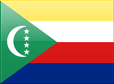 |
| History | |
| The archipelago of the Comoros in the Indian Ocean, composed of the islands of Mayotte, Anjouan, Moheli, and Grande Comore declared independence from France on 6 July 1975. Residents of Mayotte voted to remain in France, and France now has classified it as a department of France. Since independence, Comoros has endured political instability through realized and attempted coups. In 1997, the islands of Anjouan and Moheli declared independence from Comoros. In 1999, military chief Col. AZALI Assoumani seized power of the entire government in a bloodless coup; he initiated the 2000 Fomboni Accords, a power-sharing agreement in which the federal presidency rotates among the three islands, and each island maintains its local government. AZALI won the 2002 federal presidential election as president of the Union of the Comoros from Grande Comore Island, which held the first four-year term. AZALI stepped down in 2006 and President Ahmed Abdallah Mohamed SAMBI was elected to office as president from Anjouan. In 2007, Mohamed BACAR effected Anjouan's de-facto secession from the Union of the Comoros, refusing to step down when Comoros' other islands held legitimate elections in July. The African Union (AU) initially attempted to resolve the political crisis by applying sanctions and a naval blockade to Anjouan, but in March 2008 the AU and Comoran soldiers seized the island. The island's inhabitants generally welcomed the move. In 2009, the Comorian population approved a constitutional referendum extending the term of the president from four years to five years. In May 2011, Ikililou DHOININE won the presidency in peaceful elections widely deemed to be free and fair. In closely contested elections in 2016, former President AZALI Assoumani won a second term, when the rotating presidency returned to Grande Comore. A new constitution was passed in July 2018, which allowed for two consecutive five-year presidential terms and abolished the island specific vice presidents. Under the new constitution, the incumbent president can run for a second term against candidates from the next island in line for the rotation. In August 2018, President AZALI formed a new government and subsequently ran and was elected president in March 2019. |
|
|  |
| |
| Geography | |
| |
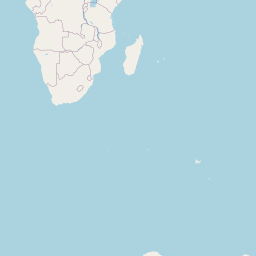
| Location: | Southern Africa, group of islands at the northern mouth of the Mozambique Channel, about two-thirds of the way between northern Madagascar and northern Mozambique |
| Geographic coordinates: | 12 10 S, 44 15 E |
| Area: | total: 2,235 sq km land: 2,235 sq km water: 0 sq km Size comparison: slightly more than 12 times the size of Washington, DC |
| Land Boundaries: | 0 km |
| Coastline: | 340 km |
| Maritime claims: | territorial sea: 12 nm exclusive economic zone: 200 nm |
| Climate: | tropical marine; rainy season (November to May) |
| Terrain: | volcanic islands, interiors vary from steep mountains to low hills |
| Natural resources: | fish |
| Land use: | agricultural land: 84.4% (2011 est.) arable land: 46.7% (2011 est.) permanent crops: 29.6% (2011 est.) permanent pasture: 8.1% (2011 est.) forest: 1.4% (2011 est.) other: 14.2% (2011 est.) |
| Irrigated land: | 1.3 sq km (2012) |
| Natural hazards: | cyclones possible during rainy season (December to April); volcanic activity on Grand Comore volcanism: Karthala (2,361 m) on Grand Comore Island last erupted in 2007; a 2005 eruption forced thousands of people to be evacuated and produced a large ash cloud |
| Current Environment Issues: | deforestation; soil degradation and erosion results from forest loss and from crop cultivation on slopes without proper terracing; marine biodiversity affected as soil erosion leads to the silting of coral reefs |
| International Environment Agreements: | party to: Biodiversity, Climate Change, Climate Change-Kyoto Protocol, Desertification, Endangered Species, Hazardous Wastes, Law of the Sea, Ozone Layer Protection, Ship Pollution, Wetlands signed, but not ratified: none of the selected agreements |
| ^Back to Top | |
| People | |
| |
| Nationality: | noun: Comoran(s) adjective: Comoran |
| Ethnic groups: | Antalote, Cafre, Makoa, Oimatsaha, Sakalava |
| Languages: | Arabic (official), French (official), Shikomoro (official; a blend of Swahili and Arabic) (Comorian) |
| Religions: | Sunni Muslim 98%, other (including Shia Muslim, Roman Catholic, Jehovah's Witness, Protestant) 2% note: Sunni Islam is the state religion |
| Population: | 821,164 (July 2018 est.) |
| Age structure: | 0-14 years: 38.54% (male 157,764 /female 158,676) 15-24 years: 19.89% (male 79,133 /female 84,181) 25-54 years: 33.25% (male 129,645 /female 143,408) 55-64 years: 4.34% (male 15,957 /female 19,690) 65 years and over: 3.98% (male 14,881 /female 17,829) (2018 est.) |
| Dependency ratios: | total dependency ratio: 75.5 (2015 est.) youth dependency ratio: 70.5 (2015 est.) elderly dependency ratio: 5.1 (2015 est.) potential support ratio: 19.7 (2015 est.) |
| Median age: | total: 20.2 years male: 19.5 years female: 20.8 years (2018 est.) |
| Population growth rate: | 1.57% (2018 est.) |
| Birth rate: | 25.3 births/1,000 population (2018 est.) |
| Death rate: | 7.1 deaths/1,000 population (2018 est.) |
| Net migration rate: | -2.4 migrant(s)/1,000 population (2018 est.) |
| Urbanization: | urban population: 29% of total population (2018) rate of urbanization: 2.87% annual rate of change (2015-20 est.) |
| Major urban areas - population: | 62,000 MORONI (capital) (2018) |
| Sex ratio: | at birth: 1.03 male(s)/female 0-14 years: 0.99 male(s)/female 15-24 years: 0.94 male(s)/female 25-54 years: 0.9 male(s)/female 55-64 years: 0.81 male(s)/female 65 years and over: 0.83 male(s)/female total population: 0.94 male(s)/female (2018 est.) Mother's mean age at first birth: 24.6 years (2012 est.) note: median age at first birth among women 25-29 |
| Maternal mortality rate: | 335 deaths/100,000 live births (2015 est.) |
| Infant mortality rate: | total: 58.3 deaths/1,000 live births male: 68.4 deaths/1,000 live births female: 47.9 deaths/1,000 live births (2018 est.) |
| Life expectancy at birth: | total population: 64.9 years male: 62.6 years female: 67.4 years (2018 est.) |
| Total fertility rate: | 3.21 children born/woman (2018 est.) |
| Contraceptive prevalence rate: | 19.4% (2012) |
| Physicians density: | 0.17 physicians/1,000 population (2012) |
| Hospital bed density: | 2.2 beds/1,000 population (2010) |
| Drinking water source: | improved: urban: 92.6% of population rural: 89.1% of population total: 90.1% of population unimproved: urban: 7.4% of population rural: 10.9% of population total: 9.9% of population (2015 est.) |
| Sanitation facility access: | improved: urban: 48.3% of population (2015 est.) rural: 30.9% of population (2015 est.) total: 35.8% of population (2015 est.) unimproved: urban: 51.7% of population (2015 est.) rural: 69.1% of population (2015 est.) total: 64.2% of population (2015 est.) |
| HIV/AIDS - adult prevalence rate: | <.1% (2017 est.) |
| HIV/AIDS - people living with HIV/AIDS: | <200 (2017 est.) |
| HIV/AIDS - deaths: | <100 (2017 est.) |
| Obesity - adult prevalence rate: | 7.8% (2016) |
| Children under the age of 5 years underweight: | 16.9% (2012) |
| Education expenditures: | 4.3% of GDP (2015) |
| Literacy: | definition: age 15 and over can read and write (2015 est.) total population: 77.8% male: 81.8% female: 73.7% (2015 est.) |
| School life expectancy (primary to tertiary education): | total: 11 years male: 11 years female: 11 years (2014) |
| ^Back to Top | |
| Government | |
| |
| Country name: | conventional long form: Union of the Comoros conventional short form: Comoros local long form: Udzima wa Komori (Comorian) local short form: Komori (Comorian) etymology: name derives from the Arabic designation "Juzur al Qamar" meaning "Islands of the Moon" Union des Comores (French)Jumhuriyat al Qamar al Muttahidah (Arabic)Comores (French)Juzur al Qamar (Arabic) |
| Government type: | federal presidential republic |
| Capital: | name: Moroni geographic coordinates: 11 42 S, 43 14 E time difference: UTC+3 (8 hours ahead of Washington, DC, during Standard Time) etymology: Moroni derives from "mroni," which means "at the river" in Shingazidja, the Comorian language spoken on Grande Comore (N'gazidja) |
| Administrative divisions: | 3 islands; Anjouan (Ndzuwani), Grande Comore (N'gazidja), Moheli (Mwali) |
| Independence: | 6 July 1975 (from France) |
| National holiday: | Independence Day, 6 July (1975) |
| Constitution: | history: previous 1996, 2001; newest adopted 30 July 2018 amendments: proposed by the president of the union or supported by at least one-third of the Assembly of the Union membership; adoption requires approval by at three-quarters majority of the total Assembly membership or approval in a referendum (2019) |
| Legal system: | mixed legal system of Islamic religious law, the French civil code of 1975, and customary law |
| Suffrage: | 18 years of age; universal |
| Executive branch: | chief of state: President AZALI Assoumani (since 26 May 2016); note - the president is both chief of state and head of government; note - AZALI takes oath of office 2 June 2019 after 24 March 2019 re-election head of government: President AZALI Assoumani (since 26 May 2016) cabinet: Council of Ministers appointed by the president elections/appointments: president directly elected by simple majority popular vote in 2 rounds for a 5-year term (eligible for a second term); election last held on 24 March 2019 (next to be held in 2024) election results: AZALI Assoumani (CRC) elected president in first round; with a 59% of the vote; - AZALI Assoumani (CRC) 60.8%, Ahamada MAHAMOUDOU (PJ) 14.6%, and Mouigni Baraka Said SOILIHI (independent) 5.6% |
| Legislative branch: | description: unicameral Assembly of the Union (33 seats; 24 members directly elected by absolute majority vote in 2 rounds if needed and 9 members indirectly elected by the 3 island assemblies; members serve 5-year terms) (2017) elections: last held on 25 January 2015 with a runoff on 22 February 2015 (next to be held in 2020) (2017) election results: percent of vote by party - UPDC 29.1%, PJ 20.5%, RDC 21.3%, other 29.1%; seats by party - UPDC 8, PJ 7, RDC 2, CRC 2, RADHI 1, PEC 1, independent 3; composition - men 32, women 1, percent of women 3%; note - 9 additional seats filled by the 3 island assemblies |
| Judicial branch: | highest courts: Supreme Court or Cour Supreme (consists of 7 judges) judge selection and term of office: Supreme Court judges - selection and term of office NA subordinate courts: Court of Appeals (in Moroni); Tribunal de premiere instance; island village (community) courts; religious courts note: a referendum held on 30 July 2018 - boycotted by the opposition - overwhelmingly approved a new constitution that allows for 2 consecutive 5-year presidential terms and revises the rotating presidency within the islands |
| Political parties and leaders: | Convention for the Renewal of the Comoros or CRC [AZALI Assoumani] Democratic Rally of the Comoros or RDC [Mouigni BARAKA] Juwa Party or PJ [Ahmed Abdallah SAMBI, Mahamoudou AHAMADA] Party for the Comorian Agreement (Partie Pour l'Entente Commorienne) or PEC [Fahmi Said IBRAHIM] Rally for an Alternative of Harmonious and Integrated Development or RADHI [Abdou SOEFO] Rally with a Development Initiative for Enlightened Youth or RIDJA [Said LARIFOU] Union for the Development of the Comoros or UPDC [Mohamed HALIFA] |
| International organization participation: | ACP, AfDB, AMF, AOSIS, AU, CAEU (candidates), COMESA, FAO, FZ, G-77, IBRD, ICAO, ICCt, ICRM, IDA, IDB, IFAD, IFC, IFRCS, ILO, IMF, IMO, IMSO, InOC, Interpol, IOC, IOM, ITSO, ITU, ITUC (NGOs), LAS, MIGA, NAM, OIC, OIF, OPCW, UN, UNCTAD, UNESCO, UNIDO, UPU, WCO, WHO, WIPO, WMO, WTO (observer) |
| National symbol(s): | four five-pointed stars and crescent moon; national colors: green, white |
| National anthem: | name: "Udzima wa ya Masiwa" (The Union of the Great Islands) lyrics/music: Said Hachim SIDI ABDEREMANE/Said Hachim SIDI ABDEREMANE and Kamildine ABDALLAH note: adopted 1978 |
| Diplomatic representation in the US: | chief of mission: vacant chancery: Mission to the US, 866 United Nations Plaza, Suite 418, New York, NY 10017 telephone: [1] (212) 750-1637 FAX: [1] (212) 750-1657 |
| Diplomatic representation from the US: | the US does not have an embassy in Comoros; the US Ambassador to Madagascar is accredited to Comoros |
| ^Back to Top | |
| Economy | |
One of the world's poorest and smallest economies, the Comoros is made up of three islands that are hampered by inadequate transportation links, a young and rapidly increasing population, and few natural resources. The low educational level of the labor force contributes to a subsistence level of economic activity and a heavy dependence on foreign grants and technical assistance. Agriculture, including fishing, hunting, and forestry, accounts for about 50% of GDP, employs a majority of the labor force, and provides most of the exports. Export income is heavily reliant on the three main crops of vanilla, cloves, and ylang ylang (perfume essence); and the Comoros' export earnings are easily disrupted by disasters such as fires and extreme weather. Despite agriculture’s importance to the economy, the country imports roughly 70% of its food; rice, the main staple, and other dried vegetables account for more than 25% of imports. Remittances from about 300,000 Comorans contribute about 25% of the country’s GDP. France, Comoros’s colonial power, remains a key trading partner and bilateral donor. Comoros faces an education system in need of upgrades, limited opportunities for private commercial and industrial enterprises, poor health services, limited exports, and a high population growth rate. Recurring political instability, sometimes initiated from outside the country, and an ongoing electricity crisis have inhibited growth. The government, elected in mid-2016, has moved to improve revenue mobilization, reduce expenditures, and improve electricity access, although the public sector wage bill remains one of the highest in sub-Saharan Africa. In mid-2017, Comoros joined the Southern African Development Community with 15 other regional member states. | |
| GDP (purchasing power parity): | $1.319 billion (2017 est.) $1.284 billion (2016 est.) $1.257 billion (2015 est.) note: data are in 2017 dollars |
| GDP (official exchange rate): | $652 million (2017 est.) |
| GDP - real growth rate: | 2.7% (2017 est.) 2.2% (2016 est.) 1% (2015 est.) |
| GDP - per capita (PPP): | $1,600 (2017 est.) $1,600 (2016 est.) $1,600 (2015 est.) note: data are in 2017 dollars |
| Gross national saving: | 17.3% of GDP (2017 est.) 13.6% of GDP (2016 est.) 18% of GDP (2015 est.) GDP - composition, by end use: household consumption: 92.6% (2017 est.) government consumption: 20.4% (2017 est.) investment in fixed capital: 20% (2017 est.) investment in inventories: -3.1% (2017 est.) exports of goods and services: 17.2% (2017 est.) imports of goods and services: -47.1% (2017 est.) GDP - composition, by sector of origin: agriculture: 47.7% (2017 est.) industry: 11.8% (2017 est.) services: 40.5% (2017 est.) |
| Agriculture - products: | vanilla, cloves, ylang-ylang (perfume essence), coconuts, bananas, cassava (manioc) |
| Industries: | fishing, tourism, perfume distillation |
| Industrial production growth rate: | 1% (2017 est.) |
| Labor force: | 278,500 (2016 est.) |
| Labor force - by occupation: | agriculture: 80% industry: 20% (1996 est.) industry and services: 20% (1996 est.) |
| Unemployment rate: | 6.5% (2014 est.) |
| Population below poverty line: | 44.8% (2004 est.) |
| Household income or consumption by percentage share: | lowest 10%: 0.9% highest 10%: 55.2% (2004) |
| Distribution of family income - Gini index: | 55.9 (2004 est.) |
| Budget: | revenues: 165.2 million (2017 est.) expenditures: 207.3 million (2017 est.) |
| Taxes and other revenues: | 25.3% (of GDP) (2017 est.) Budget surplus (+) or deficit (-): -6.5% (of GDP) (2017 est.) |
| Public debt: | 32.4% of GDP (2017 est.) 27.7% of GDP (2016 est.) |
| Fiscal year: | calendar year |
| Inflation rate (consumer prices): | 1% (2017 est.) 1.8% (2016 est.) |
| Current account balance: | -$27 million (2017 est.) -$45 million (2016 est.) |
| Exports: | $18.9 million (2017 est.) $17.9 million (2016 est.) |
| Exports - commodities: | vanilla, ylang-ylang (perfume essence), cloves |
| Exports - partners: | France 36.5%, India 12.2%, Germany 8.2%, Pakistan 6.3%, Switzerland 5.8%, South Korea 4.7%, Russia 4.3% (2017) |
| Imports: | $207.8 million (2017 est.) $189.9 million (2016 est.) |
| Imports - commodities: | rice and other foodstuffs, consumer goods, petroleum products, cement and construction materials, transport equipment |
| Imports - partners: | UAE 32.8%, France 17.3%, China 13.2%, Madagascar 6.1%, Pakistan 4.5%, India 4.3% (2017) |
| Reserves of foreign exchange and gold: | $208 million (31 December 2017 est.) $159.5 million (31 December 2016 est.) |
| Debt - external: | $199.8 million (31 December 2017 est.) $132 million (31 December 2016 est.) |
| Exchange rates: | Comoran francs (KMF) per US dollar - 458.2 (2017 est.) 444.76 (2016 est.) 444.76 (2015 est.) 443.6 (2014 est.) 370.81 (2013 est.) |
| ^Back to Top | |
| Energy | |
| |
| Electricity - production: | 42 million kWh (2016 est.) |
| Electricity - consumption: | 39.06 million kWh (2016 est.) |
| Electricity - exports: | 0 kWh (2016 est.) |
| Electricity - imports: | 0 kWh (2016 est.) |
| Electricity - installed generating capacity: | 27,000 kW (2016 est.) |
| Electricity - from fossil fuels: | 96% of total installed capacity (2016 est.) |
| Electricity - from nuclear fuels: | 0% of total installed capacity (2017 est.) |
| Electricity - from hydroelectric plants: | 4% of total installed capacity (2017 est.) |
| Electricity - from other renewable sources: | 0% of total installed capacity (2017 est.) |
| Crude oil - production: | 0 bbl/day (2017 est.) |
| Crude oil - exports: | 0 bbl/day (2015 est.) |
| Crude oil - imports: | 0 bbl/day (2015 est.) |
| Crude oil - proved reserves: | 0 bbl (1 January 2018 est.) |
| Refined petroleum products - production: | 0 bbl/day (2015 est.) |
| Refined petroleum products - consumption: | 1,300 bbl/day (2016 est.) |
| Refined petroleum products - exports: | 0 bbl/day (2015 est.) |
| Refined petroleum products - imports: | 1,241 bbl/day (2015 est.) |
| Natural gas - production: | 0 cu m (2017 est.) |
| Natural gas - consumption: | 0 cu m (2017 est.) |
| Natural gas - exports: | 0 cu m (2017 est.) |
| Natural gas - imports: | 0 cu m (2017 est.) |
| Natural gas - proved reserves: | 0 cu m (1 January 2014 est.) |
| Carbon dioxide emissions from consumption of energy: | 193,600 Mt (2017 est.) |
| ^Back to Top | |
| Communications | |
| |
| Cellular Phones in use: | total subscriptions: 446,868 subscriptions per 100 inhabitants: 55 (2017 est.) |
| Telephone system: | general assessment: sparse system of microwave radio relay and HF radiotelephone communication stations; telephone service limited to the islands' few towns (2018) domestic: fixed-line connections only about 2 per 100 persons; mobile-cellular usage over 55 per 100 persons; two companies, Comoros Telecom and Telma, provide domestic and international mobile service and wireless data (2018) international: country code - 269; landing point for the EASSy fiber-optic submarine cable system connecting East Africa with Europe and North America; HF radiotelephone communications to Madagascar and Reunion |
| Broadcast media: | national state-owned TV station and a TV station run by Anjouan regional government; national state-owned radio; regional governments on the islands of Grande Comore and Anjouan each operate a radio station; a few independent and small community radio stations operate on the islands of Grande Comore and Moheli, and these two islands have access to Mayotte Radio and French TV |
| Internet country code: | .km |
| Internet users: | total: 63,084 percent of population: 7.9% (July 2016 est.) |
| ^Back to Top | |
| Transportation | |
| |
| Airports: | 4 (2013) |
| Airports (paved runways): | total 4 (2017) 2,438 to 3,047 m: 1 (2017) 914 to 1,523 m: 3 (2017) |
| Roadways: | total 880 km (2002) paved: 673 km (2002) unpaved: 207 km (2002) |
| Merchant marine: | total 218 by type: bulk carrier 7, container ship 2, general cargo 102, oil tanker 29, other 78 (2018) |
| Ports and terminals: | major seaport(s): Moroni, Moutsamoudou |
| ^Back to Top | |
| Military | |
| |
| Military branches: | National Army for Development (l'Armee Nationale de Developpement, AND): Comoran Security Force (also called Comoran Defense Force (Force Comorienne de Defense, FCD), includes Gendarmerie), Comoran Coast Guard, Comoran Federal Police (2015) |
| Military service age and obligation: | 18 years of age for 2-year voluntary male and female military service; no conscription (2015) |
| ^Back to Top | |
| Transnational Issues | |
| |
| Disputes - International: | claims French-administered Mayotte and challenges France's and Madagascar's claims to Banc du Geyser, a drying reef in the Mozambique Channel; in May 2008, African Union forces assisted the Comoros military recapture Anjouan Island from rebels who seized it in 2001 |
| ^Back to Top | |
Comoros Previous Country | Next Country »
Source: CIA - The World Factbook