 Iran
Iran


Iran Population: 83,024,745
«  Previous Country | Next Country Previous Country | Next Country  » » | 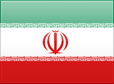 |
| History | |
| Known as Persia until 1935, Iran became an Islamic republic in 1979 after the ruling monarchy was overthrown and Shah Mohammad Reza PAHLAVI was forced into exile. Conservative clerical forces led by Ayatollah Ruhollah KHOMEINI established a theocratic system of government with ultimate political authority vested in a learned religious scholar referred to commonly as the Supreme Leader who, according to the constitution, is accountable only to the Assembly of Experts (AOE) - a popularly elected 88-member body of clerics. US-Iranian relations became strained when a group of Iranian students seized the US Embassy in Tehran in November 1979 and held embassy personnel hostages until mid-January 1981. The US cut off diplomatic relations with Iran in April 1980. During the period 1980-88, Iran fought a bloody, indecisive war with Iraq that eventually expanded into the Persian Gulf and led to clashes between US Navy and Iranian military forces. Iran has been designated a state sponsor of terrorism for its activities in Lebanon and elsewhere in the world and remains subject to US, UN, and EU economic sanctions and export controls because of its continued involvement in terrorism and concerns over possible military dimensions of its nuclear program. Following the election of reformer Hojjat ol-Eslam Mohammad KHATAMI as president in 1997 and a reformist Majles (legislature) in 2000, a campaign to foster political reform in response to popular dissatisfaction was initiated. The movement floundered as conservative politicians, supported by the Supreme Leader, unelected institutions of authority like the Council of Guardians, and the security services reversed and blocked reform measures while increasing security repression. Starting with nationwide municipal elections in 2003 and continuing through Majles elections in 2004, conservatives reestablished control over Iran's elected government institutions, which culminated with the August 2005 inauguration of hardliner Mahmud AHMADINEZHAD as president. His controversial reelection in June 2009 sparked nationwide protests over allegations of electoral fraud, but the protests were quickly suppressed. Deteriorating economic conditions due primarily to government mismanagement and international sanctions prompted at least two major economically based protests in July and October 2012, but Iran's internal security situation remained stable. President AHMADINEZHAD's independent streak angered regime establishment figures, including the Supreme Leader, leading to conservative opposition to his agenda for the last year of his presidency, and an alienation of his political supporters. In June 2013 Iranians elected a centrist cleric Dr. Hasan Fereidun ROHANI to the presidency. He is a longtime senior member in the regime, but has made promises of reforming society and Iran's foreign policy. The UN Security Council has passed a number of resolutions calling for Iran to suspend its uranium enrichment and reprocessing activities and comply with its IAEA obligations and responsibilities, and in July 2015 Iran and the five permanent members, plus Germany (P5+1) signed the Joint Comprehensive Plan of Action (JCPOA) under which Iran agreed to restrictions on its nuclear program in exchange for sanctions relief. Iran held elections in 2016 for the AOE and Majles, resulting in a conservative-controlled AOE and a Majles that many Iranians perceive as more supportive of the ROHANI administration than the previous, conservative-dominated body. RUHANI was reelected president in May 2017. Economic concerns once again led to nationwide protests in December 2017 and January 2018 but they were contained by Iran's security services. In May 2018, the US withdrew from the JCPOA and reinstituted economic sanctions on Iran in November. |
|
|  |
| |
| Geography | |
| |
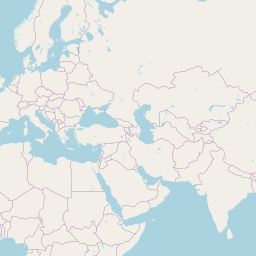
| Location: | Middle East, bordering the Gulf of Oman, the Persian Gulf, and the Caspian Sea, between Iraq and Pakistan |
| Geographic coordinates: | 32 00 N, 53 00 E |
| Area: | total: 1,648,195 sq km land: 1,531,595 sq km water: 116,600 sq km Size comparison: almost 2.5 times the size of Texas; slightly smaller than Alaska |
| Land Boundaries: | total: 5,894 km border countries (7): Afghanistan 921 km, Armenia 44 km, Azerbaijan 689 km, Iraq 1599 km, Pakistan 959 km, Turkey 534 km, Turkmenistan 1148 km |
| Coastline: | 2,440 km - note: Iran also borders the Caspian Sea (740 km) |
| Maritime claims: | territorial sea: 12 nm exclusive economic zone: bilateral agreements or median lines in the Persian Gulf contiguous zone: 24 nm continental shelf: natural prolongation |
| Climate: | mostly arid or semiarid, subtropical along Caspian coast |
| Terrain: | rugged, mountainous rim; high, central basin with deserts, mountains; small, discontinuous plains along both coasts |
| Natural resources: | petroleum, natural gas, coal, chromium, copper, iron ore, lead, manganese, zinc, sulfur |
| Land use: | agricultural land: 30.1% (2011 est.) arable land: 10.8% (2011 est.) permanent crops: 1.2% (2011 est.) permanent pasture: 18.1% (2011 est.) forest: 6.8% (2011 est.) other: 63.1% (2011 est.) |
| Irrigated land: | 95,530 sq km (2012) |
| Natural hazards: | periodic droughts, floods; dust storms, sandstorms; earthquakes |
| Current Environment Issues: | air pollution, especially in urban areas, from vehicle emissions, refinery operations, and industrial effluents; deforestation; overgrazing; desertification; oil pollution in the Persian Gulf; wetland losses from drought; soil degradation (salination); inadequate supplies of potable water; water pollution from raw sewage and industrial waste; urbanization |
| International Environment Agreements: | party to: Biodiversity, Climate Change, Climate Change-Kyoto Protocol, Desertification, Endangered Species, Hazardous Wastes, Marine Dumping, Ozone Layer Protection, Ship Pollution, Wetlands signed, but not ratified: Environmental Modification, Law of the Sea, Marine Life Conservation |
| ^Back to Top | |
| People | |
| |
| Nationality: | noun: Iranian(s) adjective: Iranian |
| Ethnic groups: | Persian, Azeri, Kurd, Lur, Baloch, Arab, Turkmen and Turkic tribes |
| Languages: | Persian (official), Azeri Turkic and Turkic dialects, Kurdish, Gilaki and Mazandarani, Luri, Balochi, Arabic |
| Religions: | Muslim (official) 99.4% (Shia 90-95%, Sunni 5-10%), other (includes Zoroastrian, Jewish, and Christian) 0.3%, unspecified 0.4% (2011 est.) |
| Population: | 83,024,745 (July 2018 est.) |
| Age structure: | 0-14 years: 24.23% (male 10,291,493 /female 9,823,838) 15-24 years: 14.05% (male 5,973,320 /female 5,689,501) 25-54 years: 48.86% (male 20,698,748 /female 19,863,223) 55-64 years: 7.39% (male 3,022,134 /female 3,113,443) 65 years and over: 5.48% (male 2,111,390 /female 2,437,655) (2018 est.) |
| Dependency ratios: | total dependency ratio: 40.2 (2015 est.) youth dependency ratio: 33.1 (2015 est.) elderly dependency ratio: 7.1 (2015 est.) potential support ratio: 14.2 (2015 est.) |
| Median age: | total: 30.8 years male: 30.5 years female: 31 years (2018 est.) |
| Population growth rate: | 1.19% (2018 est.) |
| Birth rate: | 17.4 births/1,000 population (2018 est.) |
| Death rate: | 5.3 deaths/1,000 population (2018 est.) |
| Net migration rate: | -0.2 migrant(s)/1,000 population (2018 est.) |
| Urbanization: | urban population: 74.9% of total population (2018) rate of urbanization: 1.71% annual rate of change (2015-20 est.) |
| Major urban areas - population: | 8.896 million TEHRAN (capital) 3.097 million Mashhad 2.041 million Esfahan 1.605 million Shiraz 1.585 million Karaj 1.582 million Tabriz (2018) |
| Sex ratio: | at birth: 1.05 male(s)/female 0-14 years: 1.05 male(s)/female 15-24 years: 1.05 male(s)/female 25-54 years: 1.04 male(s)/female 55-64 years: 0.97 male(s)/female 65 years and over: 0.87 male(s)/female total population: 1.03 male(s)/female (2018 est.) |
| Maternal mortality rate: | 25 deaths/100,000 live births (2015 est.) |
| Infant mortality rate: | total: 15.5 deaths/1,000 live births male: 16.6 deaths/1,000 live births female: 14.4 deaths/1,000 live births (2018 est.) |
| Life expectancy at birth: | total population: 74.2 years male: 72.8 years female: 75.6 years (2018 est.) |
| Total fertility rate: | 1.96 children born/woman (2018 est.) |
| Contraceptive prevalence rate: | 77.4% (2010/11) |
| Physicians density: | 1.14 physicians/1,000 population (2015) |
| Hospital bed density: | 0.2 beds/1,000 population (2014) |
| Drinking water source: | improved: urban: 97.7% of population rural: 92.1% of population total: 96.2% of population unimproved: urban: 2.3% of population rural: 7.9% of population total: 3.8% of population (2015 est.) |
| Sanitation facility access: | improved: urban: 92.8% of population (2015 est.) rural: 82.3% of population (2015 est.) total: 90% of population (2015 est.) unimproved: urban: 7.2% of population (2015 est.) rural: 17.7% of population (2015 est.) total: 10% of population (2015 est.) |
| HIV/AIDS - adult prevalence rate: | 0.1% (2017 est.) |
| HIV/AIDS - people living with HIV/AIDS: | 60,000 (2017 est.) |
| HIV/AIDS - deaths: | 3,500 (2017 est.) |
| Obesity - adult prevalence rate: | 25.8% (2016) |
| Children under the age of 5 years underweight: | 4.1% (2011) |
| Education expenditures: | 3.8% of GDP (2017) |
| Literacy: | definition: age 15 and over can read and write (2016 est.) total population: 85.5% male: 90.4% female: 80.8% (2016 est.) |
| School life expectancy (primary to tertiary education): | total: 15 years male: 15 years female: 15 years (2015) Unemployment, youth ages 15-24: total: 28.4% male: 24.2% female: 43.7% (2017 est.) |
| ^Back to Top | |
| Government | |
| |
| Country name: | conventional long form: Islamic Republic of Iran conventional short form: Iran local long form: Jomhuri-ye Eslami-ye Iran local short form: Iran former: Persia etymology: name derives from the Avestan term "aryanam" meaning "Land of the noble [ones]" |
| Government type: | theocratic republic |
| Capital: | name: Tehran geographic coordinates: 35 42 N, 51 25 E time difference: UTC+3.5 (8.5 hours ahead of Washington, DC, during Standard Time) daylight saving time: +1hr, begins fourth Wednesday in March; ends fourth Friday in September |
| Administrative divisions: | 31 provinces (ostanha, singular - ostan); Alborz, Ardabil, Azarbayjan-e Gharbi (West Azerbaijan), Azarbayjan-e Sharqi (East Azerbaijan), Bushehr, Chahar Mahal va Bakhtiari, Esfahan, Fars, Gilan, Golestan, Hamadan, Hormozgan, Ilam, Kerman, Kermanshah, Khorasan-e Jonubi (South Khorasan), Khorasan-e Razavi (Razavi Khorasan), Khorasan-e Shomali (North Khorasan), Khuzestan, Kohgiluyeh va Bowyer Ahmad, Kordestan, Lorestan, Markazi, Mazandaran, Qazvin, Qom, Semnan, Sistan va Baluchestan, Tehran, Yazd, Zanjan |
| Independence: | 1 April 1979 (Islamic Republic of Iran proclaimed); notable earlier dates: ca. 550 B.C. (Achaemenid (Persian) Empire established); A.D. 1501 (Iran reunified under the Safavid Dynasty); 1794 (beginning of Qajar Dynasty); 12 December 1925 (modern Iran established under the PAHLAVI Dynasty) |
| National holiday: | Republic Day, 1 April (1979) |
| Constitution: | history: previous 1906; latest adopted 24 October 1979, effective 3 December 1979 amendments: proposed by the supreme leader – after consultation with the Exigency Council – and submitted as an edict to the "Council for Revision of the Constitution," a body consisting of various executive, legislative, judicial, and academic leaders and members; passage requires absolute majority vote in a referendum and approval of the supreme leader; articles including Iran’s political system, its religious basis, and its form of government cannot be amended; amended 1989 (2016) |
| Legal system: | religious legal system based on secular and Islamic law |
| Suffrage: | 18 years of age; universal |
| Executive branch: | chief of state: Supreme Leader Ali Hoseini-KHAMENEI (since 4 June 1989) head of government: President Hasan Fereidun ROHANI (since 3 August 2013); First Vice President Eshagh JAHANGIRI (since 5 August 2013) cabinet: Council of Ministers selected by the president with legislative approval; the supreme leader has some control over appointments to several ministries elections/appointments: supreme leader appointed for life by Assembly of Experts; president directly elected by absolute majority popular vote in 2 rounds if needed for a 4-year term (eligible for a second term and an additional nonconsecutive term); election last held on 19 May 2017 (next to be held in 2021) election results: Hasan Fereidun ROHANI reelected president; percent of vote - Hasan Fereidun ROHANI (Moderation and Development Party) 58.8%, Ebrahim RAI'SI (Combat Clergy Association) 39.4% , Mostafa MIR-SALIM Islamic Coalition Party) 1.2%, Mostafa HASHEMITABA(Executives of Construction Party) 0.5% note: 3 oversight bodies are also considered part of the executive branch of government |
| Legislative branch: | description: unicameral Islamic Consultative Assembly or Majles-e Shura-ye Eslami or Majles (290 seats; 285 members directly elected in single- and multi-seat constituencies by 2-round vote, and 1 seat each for Zoroastrians, Jews, Assyrian and Chaldean Christians, Armenians in the north of the country and Armenians in the south; members serve 4-year terms); note - all candidates to the Majles must be approved by the Council of Guardians, a 12-member group of which 6 are appointed by the supreme leader and 6 are jurists nominated by the judiciary and elected by the Majles elections: first round held on 26 February 2016 and second round for 68 remaining seats held on 29 April 2016; (next full Majles election to be held in 2020) election results: percent of vote by coalition - List of Hope 37.2%, Principlists Grand Coalition 25.9%, People's Voice Coalition 4.5%, joint Hope/People's Voice 4.1%, joint People's Voice/Principlist 0.3%, religious minorities 1.7%, independent 26.4%; seats by coalition - List of Hope 108, Principlists Grand Coalition 75, People's Voice Coalition 13, joint Hope/People's Voice 12, joint People's Voice/Principlist 1, religious minorities 5, independent 76; composition - men 273, women 17, percent of women 5.9% |
| Judicial branch: | highest courts: Supreme Court (consists of the president andn/ajudges) judge selection and term of office: Supreme Court president appointed by the head of the High Judicial Council (HJC), a 5-member body to include the Supreme Court chief justice, the prosecutor general, and 3 clergy, in consultation with judges of the Supreme Court; president appointed for a single, renewable 5-year term; other judges appointed by the HJC; judge tenure NA subordinate courts: Penal Courts I and II; Islamic Revolutionary Courts; Courts of Peace; Special Clerical Court (functions outside the judicial system and handles cases involving clerics); military courts |
| Political parties and leaders: | Combatant Clergy Association Council for Coordinating the Reforms Front Executives of Construction Party Followers of the Guardianship of the Jurisprudent [Ali LARIJANI] Front of Islamic Revolutionary Stability [Morteza AGHA-TEHRANI, general secretary] Islamic Coalition Party Islamic Iran Participation Front [associated with former President Mohammed KHATAMI] Militant Clerics Society Moderation and Development Party National Trust Party National Unity Party Pervasive Coalition of Reformists [Ali SUFI, chairman] (includes Council for Coordinating the Reforms Front, National Trust Party, Union of Islamic Iran People Party, Moderation and Development Party) Principlists Grand Coalition [Ali Reza ZAKANI] (includes Combatant Clergy Association and Islamic Coalition Party, Society of Devotees and Pathseekers of the Islamic Revolution, Front of Islamic Revolution Stability) Progress, Welfare, and Justice Front Progress and Justice Population of Islamic Iran or PJP [Hosein GHORBANZADEH, general secretary] Resistance Front of Islamic Iran [Yadollah HABIBI, general secretary] Steadfastness Front Union of Islamic Iran People's Party Wayfarers of the Islamic Revolution |
| International organization participation: | CICA, CP, D-8, ECO, FAO, G-15, G-24, G-77, IAEA, IBRD, ICAO, ICC (national committees), ICRM, IDA, IDB, IFAD, IFC, IFRCS, IHO, ILO, IMF, IMO, IMSO, Interpol, IOC, IOM, IPU, ISO, ITSO, ITU, MIGA, NAM, OIC, OPCW, OPEC, PCA, SAARC (observer), SCO (observer), UN, UNAMID, UNCTAD, UNESCO, UNHCR, UNIDO, UNITAR, UNWTO, UPU, WCO, WFTU (NGOs), WHO, WIPO, WMO, WTO (observer) |
| National symbol(s): | lion; national colors: green, white, red |
| National anthem: | name: "Soroud-e Melli-ye Jomhouri-ye Eslami-ye Iran" (National Anthem of the Islamic Republic of Iran) lyrics/music: multiple authors/Hassan RIAHI note 1: adopted 1990; Iran has had six national anthems; the first, entitled Salam-e Shah (Royal Salute) was in use from 1873-1909; next came Salamati-ye Dowlat-e Elliye-ye Iran (Salute of the Sublime State of Persia, 1909-1933); it was followed by Sorud-e melli (The Imperial Anthem of Iran; 1933-1979), which chronicled the exploits of the Pahlavi Dynasty; Ey Iran (Oh Iran) functioned unofficially as the national anthem for a brief period between the ouster of the Shah in 1979 and the early days of the Islamic Republic in 1980; Payandeh Bada Iran (Long Live Iran) was used between 1980 and 1990 during the time of Ayatollah KHOMEINI note 2: a recording of the current Iranian national anthem is unavailable since the US Navy Band does not record anthems for countries from which the US does not anticipate official visits; the US does not have diplomatic relations with Iran |
| Diplomatic representation in the US: | none; note - Iran has an Interests Section in the Pakistani Embassy; address: Iranian Interests Section, Pakistani Embassy, 2209 Wisconsin Avenue NW, Washington, DC 20007; telephone: [1] (202) 965-4990; FAX [1] (202) 965-1073 |
| Diplomatic representation from the US: | none; note - the US Interests Section is located in the Embassy of Switzerland, No. 39 Shahid Mousavi (Golestan 5th), Pasdaran Ave., Tehran, Iran; telephone [98] 21 2254 2178/2256 5273; FAX [98] 21 2258 0432 |
| ^Back to Top | |
| Economy | |
Iran's economy is marked by statist policies, inefficiencies, and reliance on oil and gas exports, but Iran also possesses significant agricultural, industrial, and service sectors. The Iranian government directly owns and operates hundreds of state-owned enterprises and indirectly controls many companies affiliated with the country's security forces. Distortions - including corruption, price controls, subsidies, and a banking system holding billions of dollars of non-performing loans - weigh down the economy, undermining the potential for private-sector-led growth. Private sector activity includes small-scale workshops, farming, some manufacturing, and services, in addition to medium-scale construction, cement production, mining, and metalworking. Significant informal market activity flourishes and corruption is widespread. The lifting of most nuclear-related sanctions under the Joint Comprehensive Plan of Action (JCPOA) in January 2016 sparked a restoration of Iran’s oil production and revenue that drove rapid GDP growth, but economic growth declined in 2017 as oil production plateaued. The economy continues to suffer from low levels of investment and declines in productivity since before the JCPOA, and from high levels of unemployment, especially among women and college-educated Iranian youth. In May 2017, the re-election of President Hasan RUHANI generated widespread public expectations that the economic benefits of the JCPOA would expand and reach all levels of society. RUHANI will need to implement structural reforms that strengthen the banking sector and improve Iran’s business climate to attract foreign investment and encourage the growth of the private sector. Sanctions that are not related to Iran’s nuclear program remain in effect, and these—plus fears over the possible re-imposition of nuclear-related sanctions—will continue to deter foreign investors from engaging with Iran. | |
| GDP (purchasing power parity): | $1.64 trillion (2017 est.) $1.581 trillion (2016 est.) $1.405 trillion (2015 est.) note: data are in 2017 dollars |
| GDP (official exchange rate): | $430.7 billion (2017 est.) |
| GDP - real growth rate: | 3.7% (2017 est.) 12.5% (2016 est.) -1.6% (2015 est.) |
| GDP - per capita (PPP): | $20,100 (2017 est.) $19,600 (2016 est.) $17,700 (2015 est.) note: data are in 2017 dollars |
| Gross national saving: | 37.9% of GDP (2017 est.) 37.6% of GDP (2016 est.) 35.2% of GDP (2015 est.) GDP - composition, by end use: household consumption: 49.7% (2017 est.) government consumption: 14% (2017 est.) investment in fixed capital: 20.6% (2017 est.) investment in inventories: 14.5% (2017 est.) exports of goods and services: 26% (2017 est.) imports of goods and services: -24.9% (2017 est.) GDP - composition, by sector of origin: agriculture: 9.6% (2016 est.) industry: 35.3% (2016 est.) services: 55% (2017 est.) |
| Agriculture - products: | wheat, rice, other grains, sugar beets, sugarcane, fruits, nuts, cotton; dairy products, wool; caviar |
| Industries: | petroleum, petrochemicals, gas, fertilizer, caustic soda, textiles, cement and other construction materials, food processing (particularly sugar refining and vegetable oil production), ferrous and nonferrous metal fabrication, armaments |
| Industrial production growth rate: | 3% (2017 est.) |
| Labor force: | 30.5 million (2017 est.) note: shortage of skilled labor |
| Labor force - by occupation: | agriculture: 16.3% industry: 35.1% services: 48.6% (2013 est.) |
| Unemployment rate: | 11.8% (2017 est.) 12.4% (2016 est.) note: data are Iranian Government numbers |
| Population below poverty line: | 18.7% (2007 est.) |
| Household income or consumption by percentage share: | lowest 10%: 2.6% highest 10%: 29.6% (2005) |
| Distribution of family income - Gini index: | 44.5 (2006) |
| Budget: | revenues: 74.4 billion (2017 est.) expenditures: 84.45 billion (2017 est.) |
| Taxes and other revenues: | 17.3% (of GDP) (2017 est.) Budget surplus (+) or deficit (-): -2.3% (of GDP) (2017 est.) |
| Public debt: | 39.5% of GDP (2017 est.) 47.5% of GDP (2016 est.) note: includes publicly guaranteed debt |
| Fiscal year: | 21 March - 20 March |
| Inflation rate (consumer prices): | 9.6% (2017 est.) 9.1% (2016 est.) note: official Iranian estimate |
| Current account balance: | $9.491 billion (2017 est.) $16.28 billion (2016 est.) |
| Exports: | $101.4 billion (2017 est.) $83.98 billion (2016 est.) |
| Exports - commodities: | petroleum 60%, chemical and petrochemical products, fruits and nuts, carpets, cement, ore |
| Exports - partners: | China 27.5%, India 15.1%, South Korea 11.4%, Turkey 11.1%, Italy 5.7%, Japan 5.3% (2017) |
| Imports: | $76.39 billion (2017 est.) $63.14 billion (2016 est.) |
| Imports - commodities: | industrial supplies, capital goods, foodstuffs and other consumer goods, technical services |
| Imports - partners: | UAE 29.8%, China 12.7%, Turkey 4.4%, South Korea 4%, Germany 4% (2017) |
| Reserves of foreign exchange and gold: | $120.6 billion (31 December 2017 est.) $133.7 billion (31 December 2016 est.) |
| Debt - external: | $7.995 billion (31 December 2017 est.) $8.196 billion (31 December 2016 est.) |
| Stock of direct foreign investment - at home: | $50.33 billion (31 December 2017 est.) $46.02 billion (31 December 2016 est.) |
| Stock of direct foreign investment - abroad: | $5.226 billion (31 December 2017 est.) $4.656 billion (31 December 2016 est.) |
| Market value of publicly traded shares: | $89.43 billion (31 December 2015 est.) $116.6 billion (31 December 2014 est.) $345.8 billion (31 December 2013 est.) |
| Exchange rates: | Iranian rials (IRR) per US dollar - 32,769.7 (2017 est.) 30,914.9 (2016 est.) 30,914.9 (2015 est.) 29,011.5 (2014 est.) 25,912 (2013 est.) |
| ^Back to Top | |
| Energy | |
| |
| Electricity - production: | 272.3 billion kWh (2016 est.) |
| Electricity - consumption: | 236.3 billion kWh (2016 est.) |
| Electricity - exports: | 6.822 billion kWh (2015 est.) |
| Electricity - imports: | 4.221 billion kWh (2016 est.) |
| Electricity - installed generating capacity: | 77.6 million kW (2016 est.) |
| Electricity - from fossil fuels: | 84% of total installed capacity (2016 est.) |
| Electricity - from nuclear fuels: | 1% of total installed capacity (2017 est.) |
| Electricity - from hydroelectric plants: | 15% of total installed capacity (2017 est.) |
| Electricity - from other renewable sources: | 0% of total installed capacity (2017 est.) |
| Crude oil - production: | 4.469 million bbl/day (2017 est.) |
| Crude oil - exports: | 750,200 bbl/day (2015 est.) |
| Crude oil - imports: | 0 bbl/day (2015 est.) |
| Crude oil - proved reserves: | 157.2 billion bbl (1 January 2018 est.) |
| Refined petroleum products - production: | 1.764 million bbl/day (2015 est.) |
| Refined petroleum products - consumption: | 1.804 million bbl/day (2016 est.) |
| Refined petroleum products - exports: | 397,200 bbl/day (2015 est.) |
| Refined petroleum products - imports: | 64,160 bbl/day (2015 est.) |
| Natural gas - production: | 214.5 billion cu m (2017 est.) |
| Natural gas - consumption: | 206.9 billion cu m (2017 est.) |
| Natural gas - exports: | 11.64 billion cu m (2017 est.) |
| Natural gas - imports: | 3.993 billion cu m (2017 est.) |
| Natural gas - proved reserves: | 33.72 trillion cu m (1 January 2018 est.) |
| Carbon dioxide emissions from consumption of energy: | 638.3 million Mt (2017 est.) |
| ^Back to Top | |
| Communications | |
| |
| Cellular Phones in use: | total subscriptions: 87,106,508 subscriptions per 100 inhabitants: 106 (2017 est.) |
| Telephone system: | general assessment: opportunities for telecoms growth, but the disadvantage of lack of significant investment; one of the largest populations in the Middle East with a huge demand for services; mobile penetration is high with over 125% accessing 2G & 3G; 4G LTE becoming available; Iranian-net, is currently expanding a fiber network to have 8 million customers by 2020 (2018) domestic: 38 per 100 for fixed-line and 106 per 100 for mobile-cellular subscriptions; heavy investment by Iran's state-owned telecom company has greatly improved and expanded both the fixed-line and mobile cellular networks; a huge percentage of the cell phones in the market have been smuggled into the country (2018) international: country code - 98; submarine fiber-optic cable to UAE with access to Fiber-Optic Link Around the Globe (FLAG); Trans-Asia-Europe (TAE) fiber-optic line runs from Azerbaijan through the northern portion of Iran to Turkmenistan with expansion to Georgia and Azerbaijan; HF radio and microwave radio relay to Turkey, Azerbaijan, Pakistan, Afghanistan, Turkmenistan, Syria, Kuwait, Tajikistan, and Uzbekistan; satellite earth stations - 13 (9 Intelsat and 4 Inmarsat) |
| Broadcast media: | state-run broadcast media with no private, independent broadcasters; Islamic Republic of Iran Broadcasting (IRIB), the state-run TV broadcaster, operates 19 nationwide channels including a news channel, about 34 provincial channels, and several international channels; about 20 foreign Persian-language TV stations broadcasting on satellite TV are capable of being seen in Iran; satellite dishes are illegal and, while their use is subjectively tolerated, authorities confiscate satellite dishes from time to time; IRIB operates 16 nationwide radio networks, a number of provincial stations, and an external service; most major international broadcasters transmit to Iran (2019) |
| Internet country code: | .ir |
| Internet users: | total: 36.07 million percent of population: 44.1% (July 2016 est.) |
| ^Back to Top | |
| Transportation | |
| |
| Airports: | 319 (2013) |
| Airports (paved runways): | total 140 (2017) over 3,047 m: 42 (2017) 2,438 to 3,047 m: 29 (2017) 1,524 to 2,437 m: 26 (2017) 914 to 1,523 m: 36 (2017) under 914 m: 7 (2017) |
| Airports (unpaved runways): | total 179 (2013) over 3,047 m: 1 (2013) 2,438 to 3,047 m: 2 (2013) 1,524 to 2,437 m: 9 (2013) 914 to 1,523 m: 135 (2013) under 914 m: 32 (2013) |
| Heliports: | 26 (2013) |
| Pipelines: | 7 km condensate, 973 km condensate/gas, 20794 km gas, 570 km liquid petroleum gas, 8625 km oil, 7937 km refined products (2013) |
| Railways: | total 8,484 km (2014) standard gauge: 8,389.5 km 1.435-m gauge (189.5 km electrified) (2014) broad gauge: 94 km 1.676-m gauge (2014) |
| Roadways: | total 223,485 km (2018) paved: 195,485 km (2018) unpaved: 28,000 km (2018) |
| Waterways: | 850 km (on Karun River; some navigation on Lake Urmia) (2012) |
| Merchant marine: | total 720 by type: bulk carrier 31, container ship 25, general cargo 336, oil tanker 17, other 311 (2018) |
| Ports and terminals: | major seaport(s): Bandar-e Asaluyeh, Bandar Abbas, Bandar Emam container port(s) (TEUs): Bandar Abbas (2,607,000) (2017) |
| ^Back to Top | |
| Military | |
| |
| Military branches: | Islamic Republic of Iran Regular Forces (Artesh): Ground Forces, Navy, Air Force (IRIAF), Khatemolanbia Air Defense Headquarters; Islamic Revolutionary Guard Corps (Sepah-e Pasdaran-e Enqelab-e Eslami, IRGC): Ground Forces, Navy, Aerospace Force, Qods Force (special operations); Law Enforcement Forces (2019) |
| Military service age and obligation: | 18 years of age for compulsory military service; 16 years of age for volunteers; 17 years of age for Law Enforcement Forces; 15 years of age for Basij Forces (Popular Mobilization Army); conscript military service obligation is 18-24 months; women exempt from military service (2019) |
| Military expenditures: | 5% of GDP (2017) 4.4% of GDP (2016) 4.4% of GDP (2015) 3.3% of GDP (2014) 4.3% of GDP (2013) |
| ^Back to Top | |
| Transnational Issues | |
| |
| Disputes - International: | Iran protests Afghanistan's limiting flow of dammed Helmand River tributaries during drought; Iraq's lack of a maritime boundary with Iran prompts jurisdiction disputes beyond the mouth of the Shatt al Arab in the Persian Gulf; Iran and UAE dispute Tunb Islands and Abu Musa Island, which are occupied by Iran; Azerbaijan, Kazakhstan, and Russia ratified Caspian seabed delimitation treaties based on equidistance, while Iran continues to insist on a one-fifth slice of the sea; Afghan and Iranian commissioners have discussed boundary monument densification and resurvey |
| Refugees and internally displaced persons: | refugees (country of origin): 2.5-3.0 (1 million registered, 1.5-2.0 million undocumented) (Afghanistan) (2017); 28,268 (Iraq) (2018) |
| Illicit drugs: | despite substantial interdiction efforts and considerable control measures along the border with Afghanistan, Iran remains one of the primary transshipment routes for Southwest Asian heroin to Europe; suffers one of the highest opiate addiction rates in the world, and has an increasing problem with synthetic drugs; regularly enforces the death penalty for drug offences; lacks anti-money laundering laws; has reached out to neighboring countries to share counter-drug intelligence |
| ^Back to Top | |
Iran Previous Country | Next Country »
Source: CIA - The World Factbook