
Gambia Population: 2,092,731
«  Previous Country | Next Country Previous Country | Next Country  » » | 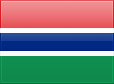 |
| History | |
| The Gambia gained its independence from the UK in 1965. Geographically surrounded by Senegal, it formed a short-lived Confederation of Senegambia between 1982 and 1989. In 1991, the two nations signed a friendship and cooperation treaty, although tensions flared up intermittently during the regime of Yahya JAMMEH. JAMMEH led a military coup in 1994 that overthrew the president and banned political activity. A new constitution and presidential election in 1996, followed by parliamentary balloting in 1997, completed a nominal return to civilian rule. JAMMEH was elected president in all subsequent elections including most recently in late 2011. After 22 years of increasingly authoritarian rule, President JAMMEH was defeated in free and fair elections in December 2016. Due to The Gambia’s poor human rights record under JAMMEH, international development partners had distanced themselves, and substantially reduced aid to the country. These channels have now reopened under the administration of President Adama BARROW, who took office in January 2017. The US and The Gambia currently enjoy improved relations. US assistance to the country has supported military education and training programs, as well as various capacity building and democracy strengthening activities. |

|  |
| |
| Geography | |
| |
| Location: | Western Africa, bordering the North Atlantic Ocean and Senegal |
| Geographic coordinates: | 13 28 N, 16 34 W |
| Area: | total: 11,300 sq km land: 10,120 sq km water: 1,180 sq km Size comparison: slightly less than twice the size of Delaware |
| Land Boundaries: | total: 749 km border countries (1): Senegal 749 km |
| Coastline: | 80 km |
| Maritime claims: | territorial sea: 12 nm contiguous zone: 18 nm continental shelf: extent not specified exclusive fishing zone: 200 nm |
| Climate: | tropical; hot, rainy season (June to November); cooler, dry season (November to May) |
| Terrain: | flood plain of the Gambia River flanked by some low hills |
| Natural resources: | fish, clay, silica sand, titanium (rutile and ilmenite), tin, zircon |
| Land use: | agricultural land: 56.1% (2011 est.) arable land: 41% (2011 est.) permanent crops: 0.5% (2011 est.) permanent pasture: 14.6% (2011 est.) forest: 43.9% (2011 est.) other: 0% (2011 est.) |
| Irrigated land: | 50 sq km (2012) |
| Natural hazards: | droughts |
| Current Environment Issues: | deforestation due to slash-and-burn agriculture; desertification; water pollution; water-borne diseases |
| International Environment Agreements: | party to: Biodiversity, Climate Change, Climate Change-Kyoto Protocol, Desertification, Endangered Species, Hazardous Wastes, Law of the Sea, Ozone Layer Protection, Ship Pollution, Wetlands, Whaling signed, but not ratified: none of the selected agreements |
| ^Back to Top | |
| People | |
| |
| Nationality: | noun: Gambian(s) adjective: Gambian |
| Ethnic groups: | Mandinka/Jahanka 34%, Fulani/Tukulur/Lorobo 22.4%, Wolof 12.6%, Jola/Karoninka 10.7%, Serahuleh 6.6%, Serer 3.2%, Manjago 2.1%, Bambara 1%, Creole/Aku Marabout 0.7%, other 0.9%, non-Gambian 5.2%, no answer 0.6% (2013 est.) |
| Languages: | English (official), Mandinka, Wolof, Fula, other indigenous vernaculars |
| Religions: | Muslim 95.7%, Christian 4.2%, none 0.1%, no response 0.1% (2013 est.) |
| Population: | 2,092,731 (July 2018 est.) |
| Age structure: | 0-14 years: 36.97% (male 388,615 /female 385,172) 15-24 years: 20.31% (male 210,217 /female 214,807) 25-54 years: 34.9% (male 357,934 /female 372,428) 55-64 years: 4.26% (male 42,655 /female 46,591) 65 years and over: 3.55% (male 34,328 /female 39,984) (2018 est.) |
| Dependency ratios: | total dependency ratio: 92.3 (2015 est.) youth dependency ratio: 87.8 (2015 est.) elderly dependency ratio: 4.5 (2015 est.) potential support ratio: 22.3 (2015 est.) |
| Median age: | total: 21.3 years male: 20.9 years female: 21.6 years (2018 est.) |
| Population growth rate: | 1.99% (2018 est.) |
| Birth rate: | 28.6 births/1,000 population (2018 est.) |
| Death rate: | 6.9 deaths/1,000 population (2018 est.) |
| Net migration rate: | -1.8 migrant(s)/1,000 population (2018 est.) |
| Urbanization: | urban population: 61.3% of total population (2018) rate of urbanization: 4.07% annual rate of change (2015-20 est.) |
| Major urban areas - population: | 437,000 BANJUL (capital) (2018) note: includes the local government areas of Banjul and Kanifing |
| Sex ratio: | at birth: 1.03 male(s)/female 0-14 years: 1.01 male(s)/female 15-24 years: 0.98 male(s)/female 25-54 years: 0.96 male(s)/female 55-64 years: 0.92 male(s)/female 65 years and over: 0.86 male(s)/female total population: 0.98 male(s)/female (2018 est.) Mother's mean age at first birth: 20.9 years (2013 est.) note: median age at first birth among women 25-29 |
| Maternal mortality rate: | 706 deaths/100,000 live births (2015 est.) |
| Infant mortality rate: | total: 58.4 deaths/1,000 live births male: 63.7 deaths/1,000 live births female: 52.9 deaths/1,000 live births (2018 est.) |
| Life expectancy at birth: | total population: 65.4 years male: 63 years female: 67.8 years (2018 est.) |
| Total fertility rate: | 3.42 children born/woman (2018 est.) |
| Contraceptive prevalence rate: | 9% (2013) |
| Physicians density: | 0.11 physicians/1,000 population (2015) |
| Hospital bed density: | 1.1 beds/1,000 population (2011) |
| Drinking water source: | improved: urban: 94.2% of population rural: 84.4% of population total: 90.2% of population unimproved: urban: 5.8% of population rural: 15.6% of population total: 9.8% of population (2015 est.) |
| Sanitation facility access: | improved: urban: 61.5% of population (2015 est.) rural: 55% of population (2015 est.) total: 58.9% of population (2015 est.) unimproved: urban: 38.5% of population (2015 est.) rural: 45% of population (2015 est.) total: 41.1% of population (2015 est.) |
| HIV/AIDS - adult prevalence rate: | 1.6% (2017 est.) |
| HIV/AIDS - people living with HIV/AIDS: | 21,000 (2017 est.) |
| HIV/AIDS - deaths: | 1,100 (2017 est.) |
| Obesity - adult prevalence rate: | 10.3% (2016) |
| Children under the age of 5 years underweight: | 16.5% (2013) |
| Education expenditures: | 3.1% of GDP (2016) |
| Literacy: | definition: age 15 and over can read and write (2015 est.) total population: 55.5% male: 63.9% female: 47.6% (2015 est.) |
| School life expectancy (primary to tertiary education): | total: 9 years male: 9 years female: 9 years (2010) Unemployment, youth ages 15-24: total: 13.1% male: 9.1% female: 17.2% (2012 est.) |
| ^Back to Top | |
| Government | |
| |
| Country name: | conventional long form: Republic of The Gambia conventional short form: The Gambia etymology: named for the Gambia River that flows through the heart of the country |
| Government type: | presidential republic |
| Capital: | name: Banjul geographic coordinates: 13 27 N, 16 34 W time difference: UTC 0 (5 hours ahead of Washington, DC, during Standard Time) etymology: Banjul is located on Saint Mary's Island at the mouth of the Gambia River; the Mandinka used to gather fibrous plants on the island for the manufacture of ropes; "bang julo" is Mandinka for "rope fiber"; mispronunciation over time caused the term became the word Banjul |
| Administrative divisions: | 5 regions, 1 city*, and 1 municipality**; Banjul*, Central River, Kanifing**, Lower River, North Bank, Upper River, West Coast |
| Independence: | 18 February 1965 (from the UK) |
| National holiday: | Independence Day, 18 February (1965) |
| Constitution: | history: previous 1965 (independence act), 1970; latest adopted 8 April 1996, approved by referendum 8 August 1996, effective 16 January 1997; note - referendum on new constitution planned over the next 2 years amendments: proposed by the National Assembly; passage requires at least three-fourths majority vote by the Assembly membership in each of several readings and approval by the president of the republic; a referendum is required for amendments affecting national sovereignty, fundamental rights and freedoms, government structures and authorities, taxation, and public funding; passage by referendum requires participation of at least 50% of eligible voters and approval by at least 75% of votes cast; amended 2001, 2004, 2010 (2017) |
| Legal system: | mixed legal system of English common law, Islamic law, and customary law |
| Suffrage: | 18 years of age; universal |
| Executive branch: | chief of state: President Adama BARROW (since 19 January 2017); Vice President Isatou TOURAY (since 15 March 2019); note - the president is both chief of state and head of government head of government: President Adama BARROW (since 19 January 2017); Vice President Isatou TOURAY (since 15 March 2019) cabinet: Cabinet appointed by the president elections/appointments: president directly elected by simple majority popular vote for a 5-year term (no term limits); election last held on 1 December 2016 (next to be held in 2021); vice president appointed by the president election results: Adama BARROW elected president; percent of vote - Adama BARROW (Coalition 2016) 43.3%, Yahya JAMMEH (APRC) 39.6%, Mamma KANDEH (GDC) 17.1% |
| Legislative branch: | description: unicameral National Assembly (58 seats; 53 members directly elected in single-seat constituencies by simple majority vote and 5 appointed by the president; members serve 5-year terms) elections: last held on 6 April 2017 (next to be held in 2022) election results: percent of vote by party - UDP 37.5%, GDC 17.4%, APRC 16%, PDOIS 9%, NRP 6.3%, PPP 2.5%, other 1.7%, independent 9.6%; seats by party - UDP 31, APRC 5, GDC 5, NRP 5, PDOIS 4, PPP 2, independent 1; composition - men 52, women 6, percent of women 10.3% |
| Judicial branch: | highest courts: Supreme Court of The Gambia (consists of the chief justice and 6 justices; court sessions held with 5 justices) judge selection and term of office: justices appointed by the president after consultation with the Judicial Service Commission, a 6-member independent body of high-level judicial officials, a presidential appointee, and a National Assembly appointee; justices appointed for life or until mandatory retirement at age 75 subordinate courts: Court of Appeal; High Court; Special Criminal Court; Khadis or Muslim courts; district tribunals; magistrates courts; cadi courts |
| Political parties and leaders: | Alliance for Patriotic Reorientation and Construction or APRC [Fabakary JATTA] Coalition 2016 [collective leadership] (electoral coalition includes UDP, PDOIS, NRP, GMC, GDC, PPP, and GPDP) Gambia Democratic Congress or GDC [Mama KANDEH] Gambia Moral Congress or GMC [Mai FATTY] Gambia Party for Democracy and Progress or GPDP [Sarja JARJOU] National Convention Party or NCP [Yaya SANYANG and Majanko SAMUSA (both claiming leadership)] National Democratic Action Movement or NDAM [Lamin Yaa JUARA] National Reconciliation Party or NRP [Hamat BAH] People's Democratic Organization for Independence and Socialism or PDOIS [Sidia JATTA] People's Progressive Party or PPP [Yaya CEESAY)] United Democratic Party or UDP [Ousainou DARBOE] |
| International organization participation: | ACP, AfDB, AU, ECOWAS, FAO, G-77, IBRD, ICAO, ICCt, ICRM, IDA, IDB, IFAD, IFC, IFRCS, ILO, IMF, IMO, Interpol, IOC, IOM, IPU, ISO (correspondent), ITSO, ITU, ITUC (NGOs), MIGA, MINUSMA, NAM, OIC, OPCW, UN, UNAMID, UNCTAD, UNESCO, UNIDO, UNMIL, UNOCI, UNWTO, UPU, WCO, WFTU (NGOs), WHO, WIPO, WMO, WTO |
| National symbol(s): | lion; national colors: red, blue, green, white |
| National anthem: | name: For The Gambia, Our Homeland lyrics/music: Virginia Julie HOWE/adapted by Jeremy Frederick HOWE note: adopted 1965; the music is an adaptation of the traditional Mandinka song "Foday Kaba Dumbuya" |
| Diplomatic representation in the US: | chief of mission: Ambassador Dawda D. FADERA (since 24 January 2018) telephone: [1] (202) 785-1399 FAX: [1] (202) 342-0240 embassy: 5630 16th St NW, Washington, DC 20011 |
| Diplomatic representation from the US: | chief of mission: Ambassador Richard "Carl" PASCHALL (since 9 April 2019) embassy: Kairaba Avenue, Fajara, P.M.B.19, Banjul mailing address: P.M.B. 19, Banjul telephone: [220] 439-2856 FAX: [220] 439-2475 |
| ^Back to Top | |
| Economy | |
The government has invested in the agriculture sector because three-quarters of the population depends on the sector for its livelihood and agriculture provides for about one-third of GDP, making The Gambia largely reliant on sufficient rainfall. The agricultural sector has untapped potential - less than half of arable land is cultivated and agricultural productivity is low. Small-scale manufacturing activity features the processing of cashews, groundnuts, fish, and hides. The Gambia's reexport trade accounts for almost 80% of goods exports and China has been its largest trade partner for both exports and imports for several years. The Gambia has sparse natural resource deposits. It relies heavily on remittances from workers overseas and tourist receipts. Remittance inflows to The Gambia amount to about one-fifth of the country’s GDP. The Gambia's location on the ocean and proximity to Europe has made it one of the most frequented tourist destinations in West Africa, boosted by private sector investments in eco-tourism and facilities. Tourism normally brings in about 20% of GDP, but it suffered in 2014 from tourists’ fears of Ebola virus in neighboring West African countries. Unemployment and underemployment remain high. Economic progress depends on sustained bilateral and multilateral aid, on responsible government economic management, and on continued technical assistance from multilateral and bilateral donors. International donors and lenders were concerned about the quality of fiscal management under the administration of former President Yahya JAMMEH, who reportedly stole hundreds of millions of dollars of the country’s funds during his 22 years in power, but anticipate significant improvements under the new administration of President Adama BARROW, who assumed power in early 2017. As of April 2017, the IMF, the World Bank, the European Union, and the African Development Bank were all negotiating with the new government of The Gambia to provide financial support in the coming months to ease the country’s financial crisis. The country faces a limited availability of foreign exchange, weak agricultural output, a border closure with Senegal, a slowdown in tourism, high inflation, a large fiscal deficit, and a high domestic debt burden that has crowded out private sector investment and driven interest rates to new highs. The government has committed to taking steps to reduce the deficit, including through expenditure caps, debt consolidation, and reform of state-owned enterprises. | |
| GDP (purchasing power parity): | $5.556 billion (2017 est.) $5.314 billion (2016 est.) $5.292 billion (2015 est.) note: data are in 2017 dollars |
| GDP (official exchange rate): | $1.482 billion (2017 est.) |
| GDP - real growth rate: | 4.6% (2017 est.) 0.4% (2016 est.) 5.9% (2015 est.) |
| GDP - per capita (PPP): | $2,600 (2017 est.) $2,600 (2016 est.) $2,700 (2015 est.) note: data are in 2017 dollars |
| Gross national saving: | 6.8% of GDP (2017 est.) 7.1% of GDP (2016 est.) 3.7% of GDP (2015 est.) GDP - composition, by end use: household consumption: 90.7% (2017 est.) government consumption: 12% (2017 est.) investment in fixed capital: 19.2% (2017 est.) investment in inventories: -2.7% (2017 est.) exports of goods and services: 20.8% (2017 est.) imports of goods and services: -40% (2017 est.) GDP - composition, by sector of origin: agriculture: 20.4% (2017 est.) industry: 14.2% (2017 est.) services: 65.4% (2017 est.) |
| Agriculture - products: | rice, millet, sorghum, peanuts, corn, sesame, cassava (manioc, tapioca), palm kernels; cattle, sheep, goats |
| Industries: | peanuts, fish, hides, tourism, beverages, agricultural machinery assembly, woodworking, metalworking, clothing |
| Industrial production growth rate: | -0.8% (2017 est.) |
| Labor force: | 777,100 (2007 est.) |
| Labor force - by occupation: | agriculture: 75% industry: 19% services: 6% (1996 est.) |
| Unemployment rate: | n/a |
| Population below poverty line: | 48.4% (2010 est.) |
| Household income or consumption by percentage share: | lowest 10%: 2% highest 10%: 36.9% (2003) |
| Distribution of family income - Gini index: | 50.2 (1998) |
| Budget: | revenues: 300.4 million (2017 est.) expenditures: 339 million (2017 est.) |
| Taxes and other revenues: | 20.3% (of GDP) (2017 est.) Budget surplus (+) or deficit (-): -2.6% (of GDP) (2017 est.) |
| Public debt: | 88% of GDP (2017 est.) 82.3% of GDP (2016 est.) |
| Fiscal year: | calendar year |
| Inflation rate (consumer prices): | 8% (2017 est.) 7.2% (2016 est.) |
| Current account balance: | -$194 million (2017 est.) -$85 million (2016 est.) |
| Exports: | $72.9 million (2017 est.) $106.6 million (2016 est.) |
| Exports - commodities: | peanut products, fish, cotton lint, palm kernels |
| Exports - partners: | Guinea-Bissau 51.9%, Vietnam 14.6%, Senegal 8.8%, Mali 7.2% (2017) |
| Imports: | $376.9 million (2017 est.) $310.5 million (2016 est.) |
| Imports - commodities: | foodstuffs, manufactures, fuel, machinery and transport equipment |
| Imports - partners: | Cote dIvoire 11.5%, Brazil 10.6%, Spain 10.2%, China 7.8%, Russia 6.4%, Netherlands 5.3%, India 5% (2017) |
| Reserves of foreign exchange and gold: | $170 million (31 December 2017 est.) $87.64 million (31 December 2016 est.) |
| Debt - external: | $586.8 million (31 December 2017 est.) $571.2 million (31 December 2016 est.) |
| Market value of publicly traded shares: | n/a |
| Exchange rates: | dalasis (GMD) per US dollar - 49.74 (2017 est.) 43.8846 (2016 est.) 43.8846 (2015 est.) 41.89 (2014 est.) 41.733 (2013 est.) |
| ^Back to Top | |
| Energy | |
| |
| Electricity - production: | 304.1 million kWh (2016 est.) |
| Electricity - consumption: | 282.8 million kWh (2016 est.) |
| Electricity - exports: | 0 kWh (2016 est.) |
| Electricity - imports: | 0 kWh (2016 est.) |
| Electricity - installed generating capacity: | 117,000 kW (2016 est.) |
| Electricity - from fossil fuels: | 97% of total installed capacity (2016 est.) |
| Electricity - from nuclear fuels: | 0% of total installed capacity (2017 est.) |
| Electricity - from hydroelectric plants: | 0% of total installed capacity (2017 est.) |
| Electricity - from other renewable sources: | 3% of total installed capacity (2017 est.) |
| Crude oil - production: | 0 bbl/day (2017 est.) |
| Crude oil - exports: | 0 bbl/day (2015 est.) |
| Crude oil - imports: | 0 bbl/day (2015 est.) |
| Crude oil - proved reserves: | 0 bbl (1 January 2018 est.) |
| Refined petroleum products - production: | 0 bbl/day (2017 est.) |
| Refined petroleum products - consumption: | 3,800 bbl/day (2016 est.) |
| Refined petroleum products - exports: | 42 bbl/day (2015 est.) |
| Refined petroleum products - imports: | 3,738 bbl/day (2015 est.) |
| Natural gas - production: | 0 cu m (2017 est.) |
| Natural gas - consumption: | 0 cu m (2017 est.) |
| Natural gas - exports: | 0 cu m (2017 est.) |
| Natural gas - imports: | 0 cu m (2017 est.) |
| Natural gas - proved reserves: | 0 cu m (1 January 2014 est.) |
| Carbon dioxide emissions from consumption of energy: | 607,300 Mt (2017 est.) |
| ^Back to Top | |
| Communications | |
| |
| Cellular Phones in use: | total subscriptions: 2,838,127 subscriptions per 100 inhabitants: 138 (July 2016 est.) |
| Telephone system: | general assessment: adequate microwave radio relay and open-wire network; state-owned Gambia Telecommunications partially privatized but still retaining a monopoly; multiple mobile networks offering effective competition; three licensed ISPs which serve local area without much competion (2018) domestic: fixed-line stands at 2 per 100 subscriptions with one dominant company and mobile-cellular teledensity, aided by multiple mobile-cellular providers, is over 138 per 100 persons (2018) international: country code - 220; microwave radio relay links to Senegal and Guinea-Bissau; a landing station for the Africa Coast to Europe (ACE) undersea fiber-optic cable completed in 2011 and launched in 2012; satellite earth station - 1 Intelsat (Atlantic Ocean) |
| Broadcast media: | 1 state-run TV-channel; one privately-owned TV-station; 1 Online TV-station; three state-owned radio station and 31 privately owned radio stations; eight community radio stations; transmissions of multiple international broadcasters are available, some via shortwave radio; cable and satellite TV subscription services are obtainable in some parts of the country (2019) |
| Internet country code: | .gm |
| Internet users: | total: 371,785 percent of population: 18.5% (July 2016 est.) |
| ^Back to Top | |
| Transportation | |
| |
| Airports: | 1 (2013) |
| Airports (paved runways): | total 1 (2017) over 3,047 m: 1 (2017) |
| Roadways: | total 2,977 km (2011) paved: 518 km (2011) unpaved: 2,459 km (2011) |
| Waterways: | 390 km (on River Gambia; small oceangoing vessels can reach 190 km) (2010) |
| Merchant marine: | total 9 by type: other 9 (2018) |
| Ports and terminals: | major seaport(s): Banjul |
| ^Back to Top | |
| Military | |
| |
| Military branches: | Office of the Chief of Defense Staff: Gambian National Army (GNA), Gambian Navy (GN), Republican National Guard (RNG) (2018) |
| Military service age and obligation: | 18 years of age for male and female voluntary military service; no conscription; service obligation 6 months (2012) |
| Military expenditures: | 3% of GDP (2018) 1.48% of GDP (2015) 1.72% of GDP (2014) 1.15% of GDP (2013) 1.22% of GDP (2012) |
| ^Back to Top | |
| Transnational Issues | |
| |
| Disputes - International: | attempts to stem refugees, cross-border raids, arms smuggling, and other illegal activities by separatists from southern Senegal's Casamance region, as well as from conflicts in other west African states |
| ^Back to Top | |
«
Previous Country | Next Country »
Source: CIA - The World Factbook