Grenada Population: 112,207
«  Previous Country | Next Country Previous Country | Next Country  » » | 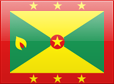 |
| History | |
| Carib Indians inhabited Grenada when Christopher COLUMBUS discovered the island in 1498, but it remained uncolonized for more than a century. The French settled Grenada in the 17th century, established sugar estates, and imported large numbers of African slaves. Britain took the island in 1762 and vigorously expanded sugar production. In the 19th century, cacao eventually surpassed sugar as the main export crop; in the 20th century, nutmeg became the leading export. In 1967, Britain gave Grenada autonomy over its internal affairs. Full independence was attained in 1974 making Grenada one of the smallest independent countries in the Western Hemisphere. In 1979, a leftist New Jewel Movement seized power under Maurice BISHOP ushering in the Grenada Revolution. On 19 October 1983, factions within the revolutionary government overthrew and killed BISHOP and members of his party. Six days later the island was invaded by US forces and those of six other Caribbean nations, which quickly captured the ringleaders and their hundreds of Cuban advisers. The rule of law was restored and democratic elections were reinstituted the following year and have continued since then. |
 |
| |
| Geography | |
| |
| Location: | Caribbean, island between the Caribbean Sea and Atlantic Ocean, north of Trinidad and Tobago |
| Geographic coordinates: | 12 07 N, 61 40 W |
| Area: | total: 344 sq km land: 344 sq km water: 0 sq km Size comparison: twice the size of Washington, DC |
| Land Boundaries: | 0 km |
| Coastline: | 121 km |
| Maritime claims: | territorial sea: 12 nm exclusive economic zone: 200 nm |
| Climate: | tropical; tempered by northeast trade winds |
| Terrain: | volcanic in origin with central mountains |
| Natural resources: | timber, tropical fruit |
| Land use: | agricultural land: 32.3% (2011 est.) arable land: 8.8% (2011 est.) permanent crops: 20.6% (2011 est.) permanent pasture: 2.9% (2011 est.) forest: 50% (2011 est.) other: 17.7% (2011 est.) |
| Irrigated land: | 20 sq km (2012) |
| Natural hazards: | lies on edge of hurricane belt; hurricane season lasts from June to November volcanism: Mount Saint Catherine (840 m) lies on the island of Grenada; Kick 'em Jenny, an active submarine volcano (seamount) on the Caribbean Sea floor, lies about 8 km north of the island of Grenada; these two volcanoes are at the southern end of the volcanic island arc of the Lesser Antilles that extends up to the Netherlands dependency of Saba in the north |
| Current Environment Issues: | deforestation causing habitat destruction and species loss; coastal erosion and contamination; pollution and sedimentation; inadequate solid waste management |
| International Environment Agreements: | party to: Biodiversity, Climate Change, Climate Change-Kyoto Protocol, Desertification, Endangered Species, Law of the Sea, Ozone Layer Protection, Whaling signed, but not ratified: none of the selected agreements |
| ^Back to Top | |
| People | |
| |
| Nationality: | noun: Grenadian(s) adjective: Grenadian |
| Ethnic groups: | African descent 82.4%, mixed 13.3%, East Indian 2.2%, other 1.3%, unspecified 0.9% (2011 est.) |
| Languages: | English (official), French patois |
| Religions: | Protestant 49.2% (includes Pentecostal 17.2%, Seventh Day Adventist 13.2%, Anglican 8.5%, Baptist 3.2%, Church of God 2.4%, Evangelical 1.9%, Methodist 1.6%, other 1.2%), Roman Catholic 36%, Jehovah's Witness 1.2%, Rastafarian 1.2%, other 5.5%, none 5.7%, unspecified 1.3% (2011 est.) |
| Population: | 112,207 (July 2018 est.) |
| Age structure: | 0-14 years: 23.84% (male 13,901 /female 12,851) 15-24 years: 14.61% (male 8,196 /female 8,201) 25-54 years: 40.27% (male 23,121 /female 22,067) 55-64 years: 10.97% (male 6,284 /female 6,023) 65 years and over: 10.31% (male 5,377 /female 6,186) (2018 est.) |
| Dependency ratios: | total dependency ratio: 50.7 (2015 est.) youth dependency ratio: 39.9 (2015 est.) elderly dependency ratio: 10.8 (2015 est.) potential support ratio: 9.3 (2015 est.) |
| Median age: | total: 32.1 years male: 32 years female: 32.2 years (2018 est.) |
| Population growth rate: | 0.42% (2018 est.) |
| Birth rate: | 15.2 births/1,000 population (2018 est.) |
| Death rate: | 8.2 deaths/1,000 population (2018 est.) |
| Net migration rate: | -2.8 migrant(s)/1,000 population (2018 est.) |
| Urbanization: | urban population: 36.3% of total population (2018) rate of urbanization: 0.76% annual rate of change (2015-20 est.) |
| Major urban areas - population: | 39,000 SAINT GEORGE'S (capital) (2018) |
| Sex ratio: | at birth: 1.1 male(s)/female 0-14 years: 1.08 male(s)/female 15-24 years: 1 male(s)/female 25-54 years: 1.05 male(s)/female 55-64 years: 1.04 male(s)/female 65 years and over: 0.87 male(s)/female total population: 1.03 male(s)/female (2018 est.) |
| Maternal mortality rate: | 27 deaths/100,000 live births (2015 est.) |
| Infant mortality rate: | total: 9.4 deaths/1,000 live births male: 9 deaths/1,000 live births female: 9.9 deaths/1,000 live births (2018 est.) |
| Life expectancy at birth: | total population: 74.8 years male: 72.1 years female: 77.6 years (2018 est.) |
| Total fertility rate: | 2 children born/woman (2018 est.) |
| Physicians density: | 1.45 physicians/1,000 population (2017) |
| Hospital bed density: | 3.7 beds/1,000 population (2014) |
| Drinking water source: | improved: urban: 99% of population rural: 95.3% of population total: 96.6% of population unimproved: urban: 1% of population rural: 4.7% of population total: 3.4% of population (2015 est.) |
| Sanitation facility access: | improved: urban: 97.5% of population (2015 est.) rural: 98.3% of population (2015 est.) total: 98% of population (2015 est.) unimproved: urban: 2.5% of population (2015 est.) rural: 1.7% of population (2015 est.) total: 2% of population (2015 est.) |
| HIV/AIDS - adult prevalence rate: | n/a |
| HIV/AIDS - people living with HIV/AIDS: | n/a |
| HIV/AIDS - deaths: | n/a |
| Obesity - adult prevalence rate: | 21.3% (2016) |
| Education expenditures: | 10.3% of GDP (2016) |
| Literacy: | definition: age 15 and over can read and write (2014 est.) total population: 98.6% male: 98.6% female: 98.6% (2014 est.) |
| School life expectancy (primary to tertiary education): | total: 17 years male: 16 years female: 17 years (2017) |
| ^Back to Top | |
| Government | |
| |
| Country name: | conventional long form: none conventional short form: Grenada etymology: derivation of the name remains obscure; some sources attribute the designation to Spanish influence (most likely named for the Spanish city of Granada), with subsequent French and English interpretations resulting in the present-day Grenada; in Spanish "granada" means "pomegranate" |
| Government type: | parliamentary democracy (Parliament) under a constitutional monarchy; a Commonwealth realm |
| Capital: | name: Saint George's geographic coordinates: 12 03 N, 61 45 W time difference: UTC-4 (1 hour ahead of Washington, DC, during Standard Time) etymology: the 1763 Treaty of Paris transferred possession of Grenada from France to Great Britain; the new administration renamed Ville de Fort Royal (Fort Royal Town) to Saint George's Town, after the patron saint of England; eventually the name became simply Saint George's |
| Administrative divisions: | 6 parishes and 1 dependency*; Carriacou and Petite Martinique*, Saint Andrew, Saint David, Saint George, Saint John, Saint Mark, Saint Patrick |
| Independence: | 7 February 1974 (from the UK) |
| National holiday: | Independence Day, 7 February (1974) |
| Constitution: | history: previous 1967; latest presented 19 December 1973, effective 7 February 1974, suspended 1979 following a revolution, but restored in 1983 amendments: proposed by either house of Parliament; passage requires two-thirds majority vote by the membership in both houses and assent to by the governor general; passage of amendments to constitutional sections such as personal rights and freedoms, the structure, authorities, and procedures of the branches of government, the delimitation of electoral constituencies, or the procedure for amending the constitution also requires two-thirds majority approval in a referendum; amended 1991, 1992 (2018) |
| Legal system: | common law based on English model |
| Suffrage: | 18 years of age; universal |
| Executive branch: | chief of state: Queen ELIZABETH II (since 6 February 1952); represented by Governor General Cecile LA GRENADE (since 7 May 2013) head of government: Prime Minister Keith MITCHELL (since 20 February 2013) cabinet: Cabinet appointed by the governor general on the advice of the prime minister elections/appointments: the monarchy is hereditary; governor general appointed by the monarch; following legislative elections, the leader of the majority party or majority coalition usually appointed prime minister by the governor general |
| Legislative branch: | description: bicameral Parliament consists of: Senate (13 seats; members appointed by the governor general - 10 on the advice of the prime minister and 3 on the advice of the leader of the opposition party; members serve 5-year terms) House of Representatives (15 seats; members directly elected in single-seat constituencies by simple majority vote to serve 5-year terms) elections: Senate - last appointments on 27 April 2018 (next no later than2023) House of Representatives - last held on 13 March 2018 (next no later than 2023) election results: Senate - percent by party - NA; seats by party - NA; composition - men 11, women 2 percent of women 15.4% House of Representatives - percent of vote by party - NNP 58.9%, NDC 40.5%; other 0.6% seats by party - NNP 15; composition - men 8, women 7, percent of women 46.7%; note - total Parliament percent of women 32.1% |
| Judicial branch: | highest courts: regionally, the Eastern Caribbean Supreme Court (ECSC) is the superior court of the Organization of Eastern Caribbean States; the ECSC - headquartered on St. Lucia - consists of the Court of Appeal - headed by the chief justice and 4 judges - and the High Court with 18 judges; the Court of Appeal is itinerant, travelling to member states on a schedule to hear appeals from the High Court and subordinate courts; High Court judges reside in the member states, with 2 in Grenada; appeals beyond the ECSC in civil and criminal matters are heard by the Judicial Committee of the Privy Council (in London) judge selection and term of office: chief justice of Eastern Caribbean Supreme Court appointed by the Her Majesty, Queen ELIZABETH II; other justices and judges appointed by the Judicial and Legal Services Commission, and independent body of judicial officials; Court of Appeal justices appointed for life with mandatory retirement at age 65; High Court judges appointed for life with mandatory retirement at age 62 subordinate courts: magistrates' courts; Court of Magisterial Appeals |
| Political parties and leaders: | National Democratic Congress or NDC [Nazim BURKE] New National Party or NNP [Keith MITCHELL] |
| International organization participation: | ACP, AOSIS, C, Caricom, CDB, CELAC, FAO, G-77, IBRD, ICAO, ICCt (signatory), ICRM, IDA, IFAD, IFC, IFRCS, ILO, IMF, IMO, Interpol, IOC, ITU, ITUC, LAES, MIGA, NAM, OAS, OECS, OPANAL, OPCW, Petrocaribe, UN, UNCTAD, UNESCO, UNIDO, UPU, WHO, WIPO, WTO |
| National symbol(s): | Grenada dove, bougainvillea flower; national colors: red, yellow, green |
| National anthem: | name: Hail Grenada lyrics/music: Irva Merle BAPTISTE/Louis Arnold MASANTO note: adopted 1974 |
| Diplomatic representation in the US: | chief of mission: Ambassador Ethelstan Angus FRIDAY (since 3 September 2013) chancery: 1701 New Hampshire Avenue NW, Washington, DC 20009 telephone: [1] (202) 265-2561 FAX: [1] (202) 265-2468 consulate(s) general: Miami |
| Diplomatic representation from the US: | chief of mission: the US does not have an official embassy in Grenada; the US Ambassador to Barbados is accredited to Grenada embassy: Lance-aux-Epines Stretch, Saint George's, Grenada mailing address: P. O. Box 54, Saint George's telephone: [1] (473) 444-1173 through 1176 FAX: [1] (473) 444-4820 |
| ^Back to Top | |
| Economy | |
Grenada relies on tourism and revenue generated by St. George’s University - a private university offering degrees in medicine, veterinary medicine, public health, the health sciences, nursing, arts and sciences, and business - as its main source of foreign exchange. In the past two years the country expanded its sources of revenue, including from selling passports under its citizenship by investment program. These projects produced a resurgence in the construction and manufacturing sectors of the economy. In 2017, Grenada experienced its fifth consecutive year of growth and the government successfully marked the completion of its five-year structural adjustment program that included among other things austerity measures, increased tax revenue and debt restructuring. Public debt-to-GDP was reduced from 100% of GDP in 2013 to 71.8% in 2017. | |
| GDP (purchasing power parity): | $1.634 billion (2017 est.) $1.555 billion (2016 est.) $1.5 billion (2015 est.) note: data are in 2017 dollars |
| GDP (official exchange rate): | $1.119 billion (2017 est.) |
| GDP - real growth rate: | 5.1% (2017 est.) 3.7% (2016 est.) 6.4% (2015 est.) |
| GDP - per capita (PPP): | $15,100 (2017 est.) $14,500 (2016 est.) $14,000 (2015 est.) note: data are in 2017 dollars |
| Gross national saving: | 11.7% of GDP (2017 est.) 17% of GDP (2016 est.) 13.9% of GDP (2015 est.) GDP - composition, by end use: household consumption: 63% (2017 est.) government consumption: 12% (2017 est.) investment in fixed capital: 20% (2017 est.) investment in inventories: -0.1% (2017 est.) exports of goods and services: 60% (2017 est.) imports of goods and services: -55% (2017 est.) GDP - composition, by sector of origin: agriculture: 6.8% (2017 est.) industry: 15.5% (2017 est.) services: 77.7% (2017 est.) |
| Agriculture - products: | bananas, cocoa, nutmeg, mace, soursop, citrus, avocados, root crops, corn, vegetables, fish |
| Industries: | food and beverages, textiles, light assembly operations, tourism, construction, education, call-center operations |
| Industrial production growth rate: | 10% (2017 est.) |
| Labor force: | 55,270 (2017 est.) |
| Labor force - by occupation: | agriculture: 11% industry: 20% services: 69% (2008 est.) |
| Unemployment rate: | 24% (2017 est.) 28.2% (2016 est.) |
| Population below poverty line: | 38% (2008 est.) |
| Household income or consumption by percentage share: | lowest 10%: n/a highest 10%: n/a |
| Budget: | revenues: 288.4 million (2017 est.) expenditures: 252.3 million (2017 est.) |
| Taxes and other revenues: | 25.8% (of GDP) (2017 est.) Budget surplus (+) or deficit (-): 3.2% (of GDP) (2017 est.) |
| Public debt: | 70.4% of GDP (2017 est.) 82% of GDP (2016 est.) |
| Fiscal year: | calendar year |
| Inflation rate (consumer prices): | 0.9% (2017 est.) 1.7% (2016 est.) |
| Current account balance: | -$77 million (2017 est.) -$34 million (2016 est.) |
| Exports: | $39.9 million (2017 est.) $44.2 million (2016 est.) |
| Exports - commodities: | nutmeg, bananas, cocoa, fruit and vegetables, clothing, mace, chocolate, fish |
| Exports - partners: | US 25.3%, Japan 10.1%, Guyana 8.7%, Dominica 6.6%, St. Lucia 6.4%, Netherlands 4.7%, Barbados 4.1%, St. Kitts and Nevis 4% (2017) |
| Imports: | $316 million (2017 est.) $314.7 million (2016 est.) |
| Imports - commodities: | food, manufactured goods, machinery, chemicals, fuel |
| Imports - partners: | US 31.7%, Trinidad and Tobago 24.9%, China 6.7% (2017) |
| Reserves of foreign exchange and gold: | $199.1 million (31 December 2017 est.) $198 million (31 December 2015 est.) |
| Debt - external: | $793.5 million (2017 est.) $682.3 million (2016 est.) |
| Market value of publicly traded shares: | n/a |
| Exchange rates: | East Caribbean dollars (XCD) per US dollar - 2.7 (2017 est.) 2.7 (2016 est.) 2.7 (2015 est.) 2.7 (2014 est.) 2.7 (2013 est.) |
| ^Back to Top | |
| Energy | |
| |
| Electricity - production: | 202.1 million kWh (2016 est.) |
| Electricity - consumption: | 185.1 million kWh (2016 est.) |
| Electricity - exports: | 0 kWh (2016 est.) |
| Electricity - imports: | 0 kWh (2016 est.) |
| Electricity - installed generating capacity: | 51,100 kW (2016 est.) |
| Electricity - from fossil fuels: | 96% of total installed capacity (2016 est.) |
| Electricity - from nuclear fuels: | 0% of total installed capacity (2017 est.) |
| Electricity - from hydroelectric plants: | 0% of total installed capacity (2017 est.) |
| Electricity - from other renewable sources: | 4% of total installed capacity (2017 est.) |
| Crude oil - production: | 0 bbl/day (2017 est.) |
| Crude oil - exports: | 0 bbl/day (2015 est.) |
| Crude oil - imports: | 0 bbl/day (2015 est.) |
| Crude oil - proved reserves: | 0 bbl (1 January 2018 est.) |
| Refined petroleum products - production: | 0 bbl/day (2015 est.) |
| Refined petroleum products - consumption: | 2,000 bbl/day (2016 est.) |
| Refined petroleum products - exports: | 0 bbl/day (2015 est.) |
| Refined petroleum products - imports: | 1,886 bbl/day (2015 est.) |
| Natural gas - production: | 0 cu m (2017 est.) |
| Natural gas - consumption: | 0 cu m (2017 est.) |
| Natural gas - exports: | 0 cu m (2017 est.) |
| Natural gas - imports: | 0 cu m (2017 est.) |
| Natural gas - proved reserves: | 0 cu m (1 January 2014 est.) |
| Carbon dioxide emissions from consumption of energy: | 283,600 Mt (2017 est.) |
| ^Back to Top | |
| Communications | |
| |
| Cellular Phones in use: | total subscriptions: 113,177 subscriptions per 100 inhabitants: 101 (2017 est.) |
| Telephone system: | general assessment: adequate, automatic, island-wide telephone system; lack of local competition but telecoms are a high contributor to overall GDP (2018) domestic: interisland VHF and UHF radiotelephone links; 29 per 100 for fixed-line and 101 per 100 for mobile-cellular (2018) international: country code - 1-473; landing point for the East Caribbean Fiber System (ECFS) submarine cable with links to 13 other islands in the eastern Caribbean extending from the British Virgin Islands to Trinidad; also a landing point for the Southern Caribbean Fiber (SCF) submarine cable with links to 10 other islands in the Caribbean extending from Basseterre, Saint Kitts and Nevis to Trinidad and Tobago; SHF radiotelephone links to Trinidad and Tobago and Saint Vincent; VHF and UHF radio links to Trinidad |
| Broadcast media: | multiple publicly and privately owned television and radio stations; Grenada Information Service (GIS) is government-owned and provides television and radio services; the Grenada Broadcasting Network, jointly owned by the government and the Caribbean Communications Network of Trinidad and Tobago, operates a TV station and 2 radio stations; Meaningful Television (MTV) broadcasts island-wide and is part of a locally-owned media house, Moving Target Company, that also includes an FM radio station and a weekly newspaper; multi-channel cable TV subscription service is provided by Columbus Communications Grenada (FLOW GRENADA) and is available island wide; approximately 25 private radio stations also broadcast throughout the country (2019) |
| Internet country code: | .gd |
| Internet users: | total: 62,123 percent of population: 55.9% (July 2016 est.) |
| ^Back to Top | |
| Transportation | |
| |
| Airports: | 3 (2013) |
| Airports (paved runways): | total 3 (2017) 2,438 to 3,047 m: 1 (2017) 1,524 to 2,437 m: 1 (2017) under 914 m: 1 (2017) |
| Roadways: | total 1,127 km (2017) paved: 902 km (2017) unpaved: 225 km (2017) |
| Merchant marine: | total 6 by type: general cargo 3, other 3 (2018) |
| Ports and terminals: | major seaport(s): Saint George's |
| ^Back to Top | |
| Military | |
| |
| Military branches: | no regular military forces; Royal Grenada Police Force (includes Coast Guard) (2010) |
| ^Back to Top | |
| Transnational Issues | |
| |
| Disputes - International: | none |
| Illicit drugs: | small-scale cannabis cultivation; lesser transshipment point for marijuana and cocaine to US |
| ^Back to Top | |
«
Previous Country | Next Country »
Source: CIA - The World Factbook