 Dominican Republic


Dominican Republic Population: 10,298,756
«  Previous Country | Next Country Previous Country | Next Country  » » | 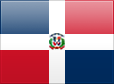 |
| History | |
| The Taino - indigenous inhabitants of Hispaniola prior to the arrival of the Europeans - divided the island into five chiefdoms and territories. Christopher COLUMBUS explored and claimed the island on his first voyage in 1492; it became a springboard for Spanish conquest of the Caribbean and the American mainland. In 1697, Spain recognized French dominion over the western third of the island, which in 1804 became Haiti. The remainder of the island, by then known as Santo Domingo, sought to gain its own independence in 1821 but was conquered and ruled by the Haitians for 22 years; it finally attained independence as the Dominican Republic in 1844. In 1861, the Dominicans voluntarily returned to the Spanish Empire, but two years later they launched a war that restored independence in 1865. A legacy of unsettled, mostly non-representative rule followed, capped by the dictatorship of Rafael Leonidas TRUJILLO from 1930 to 1961. Juan BOSCH was elected president in 1962 but was deposed in a military coup in 1963. In 1965, the US led an intervention in the midst of a civil war sparked by an uprising to restore BOSCH. In 1966, Joaquin BALAGUER defeated BOSCH in the presidential election. BALAGUER maintained a tight grip on power for most of the next 30 years when international reaction to flawed elections forced him to curtail his term in 1996. Since then, regular competitive elections have been held in which opposition candidates have won the presidency. Former President Leonel FERNANDEZ Reyna (first term 1996-2000) won election to a new term in 2004 following a constitutional amendment allowing presidents to serve more than one term, and was later reelected to a second consecutive term. In 2012, Danilo MEDINA Sanchez became president; he was reelected in 2016. |
|
|  |

| |
| Geography | |
| |
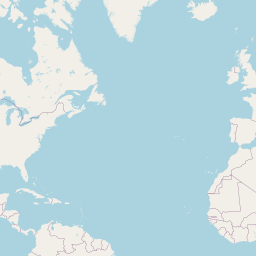
| Location: | Caribbean, eastern two-thirds of the island of Hispaniola, between the Caribbean Sea and the North Atlantic Ocean, east of Haiti |
| Geographic coordinates: | 19 00 N, 70 40 W |
| Area: | total: 48,670 sq km land: 48,320 sq km water: 350 sq km Size comparison: slightly more than twice the size of New Jersey |
| Land Boundaries: | total: 376 km border countries (1): Haiti 376 km |
| Coastline: | 1,288 km |
| Maritime claims: | territorial sea: 12 nm exclusive economic zone: 200 nm contiguous zone: 24 nm continental shelf: 200 nm or to the edge of the continental margin measured from claimed archipelagic straight baselines |
| Climate: | tropical maritime; little seasonal temperature variation; seasonal variation in rainfall |
| Terrain: | rugged highlands and mountains interspersed with fertile valleys |
| Natural resources: | nickel, bauxite, gold, silver, arable land |
| Land use: | agricultural land: 51.5% (2011 est.) arable land: 16.6% (2011 est.) permanent crops: 10.1% (2011 est.) permanent pasture: 24.8% (2011 est.) forest: 40.8% (2011 est.) other: 7.7% (2011 est.) |
| Irrigated land: | 3,070 sq km (2012) |
| Natural hazards: | lies in the middle of the hurricane belt and subject to severe storms from June to October; occasional flooding; periodic droughts |
| Current Environment Issues: | water shortages; soil eroding into the sea damages coral reefs; deforestation |
| International Environment Agreements: | party to: Biodiversity, Climate Change, Climate Change-Kyoto Protocol, Desertification, Endangered Species, Hazardous Wastes, Marine Dumping, Marine Life Conservation, Ozone Layer Protection, Ship Pollution, Wetlands signed, but not ratified: Law of the Sea |
| ^Back to Top | |
| People | |
| |
| Nationality: | noun: Dominican(s) adjective: Dominican |
| Ethnic groups: | mixed 70.4% (mestizo/indio 58%, mulatto 12.4%), black 15.8%, white 13.5%, other 0.3% (2014 est.) note: respondents self-identified their race; the term "indio" in the Dominican Republic is not associated with people of indigenous ancestry but people of mixed ancestry or skin color between light and dark |
| Languages: | Spanish (official) |
| Religions: | Roman Catholic 47.8%, Protestant 21.3%, other 2.2%, none 28%, don't know/no response .7% (2017 est.) |
| Population: | 10,298,756 (July 2018 est.) |
| Age structure: | 0-14 years: 27.56% (male 1,442,926 /female 1,395,809) 15-24 years: 18.52% (male 969,467 /female 937,765) 25-54 years: 40.28% (male 2,112,813 /female 2,035,902) 55-64 years: 7.71% (male 397,821 /female 396,172) 65 years and over: 5.92% (male 286,300 /female 323,781) (2018 est.) |
| Dependency ratios: | total dependency ratio: 57.8 (2015 est.) youth dependency ratio: 47.3 (2015 est.) elderly dependency ratio: 10.5 (2015 est.) potential support ratio: 9.5 (2015 est.) |
| Median age: | total: 27.3 years male: 27.1 years female: 27.4 years (2018 est.) |
| Population growth rate: | 0.99% (2018 est.) |
| Birth rate: | 18.9 births/1,000 population (2018 est.) |
| Death rate: | 6.4 deaths/1,000 population (2018 est.) |
| Net migration rate: | -2.6 migrant(s)/1,000 population (2018 est.) |
| Urbanization: | urban population: 81.1% of total population (2018) rate of urbanization: 2.06% annual rate of change (2015-20 est.) |
| Major urban areas - population: | 3.172 million SANTO DOMINGO (capital) (2018) |
| Sex ratio: | at birth: 1.04 male(s)/female 0-14 years: 1.03 male(s)/female 15-24 years: 1.03 male(s)/female 25-54 years: 1.04 male(s)/female 55-64 years: 1 male(s)/female 65 years and over: 0.88 male(s)/female total population: 1.02 male(s)/female (2018 est.) Mother's mean age at first birth: 21.3 years (2013 est.) note: median age at first birth among women 25-29 |
| Maternal mortality rate: | 92 deaths/100,000 live births (2015 est.) |
| Infant mortality rate: | total: 22.7 deaths/1,000 live births male: 25 deaths/1,000 live births female: 20.3 deaths/1,000 live births (2018 est.) |
| Life expectancy at birth: | total population: 71.3 years male: 69.7 years female: 73.1 years (2018 est.) |
| Total fertility rate: | 2.28 children born/woman (2018 est.) |
| Contraceptive prevalence rate: | 69.5% (2014) |
| Physicians density: | 1.56 physicians/1,000 population (2017) |
| Hospital bed density: | 1.6 beds/1,000 population (2014) |
| Drinking water source: | improved: urban: 85.4% of population rural: 81.9% of population total: 84.7% of population unimproved: urban: 14.6% of population rural: 18.1% of population total: 15.3% of population (2015 est.) |
| Sanitation facility access: | improved: urban: 86.2% of population (2015 est.) rural: 75.7% of population (2015 est.) total: 84% of population (2015 est.) unimproved: urban: 13.8% of population (2015 est.) rural: 24.3% of population (2015 est.) total: 16% of population (2015 est.) |
| HIV/AIDS - adult prevalence rate: | 0.9% (2017 est.) |
| HIV/AIDS - people living with HIV/AIDS: | 67,000 (2017 est.) |
| HIV/AIDS - deaths: | 2,600 (2017 est.) |
| Obesity - adult prevalence rate: | 27.6% (2016) |
| Children under the age of 5 years underweight: | 4% (2013) |
| Education expenditures: | n/a |
| Literacy: | definition: age 15 and over can read and write (2016 est.) total population: 93.8% male: 93.8% female: 93.8% (2016 est.) |
| School life expectancy (primary to tertiary education): | total: 14 years male: 13 years female: 14 years (2016) Unemployment, youth ages 15-24: total: 13.5% male: 9.9% female: 19.7% (2017 est.) |
| ^Back to Top | |
| Government | |
| |
| Country name: | conventional long form: Dominican Republic conventional short form: The Dominican local long form: Republica Dominicana local short form: La Dominicana etymology: the country name derives from the capital city of Santo Domingo (Saint Dominic) |
| Government type: | presidential republic |
| Capital: | name: Santo Domingo geographic coordinates: 18 28 N, 69 54 W time difference: UTC-4 (1 hour ahead of Washington, DC, during Standard Time) etymology: named after Saint Dominic de Guzman (1170-1221), founder of the Dominican Order |
| Administrative divisions: | 10 regions (regiones, singular - region); Cibao Nordeste, Cibao Noroeste, Cibao Norte, Cibao Sur, El Valle, Enriquillo, Higuamo, Ozama, Valdesia, Yuma |
| Independence: | 27 February 1844 (from Haiti) |
| National holiday: | Independence Day, 27 February (1844) |
| Constitution: | history: many previous (38 total); latest proclaimed 13 June 2015 amendments: proposed by a special session of the National Congress called the National Revisory Assembly; passage requires at least two-thirds majority approval by at least one-half of those present in both houses of the Assembly; passage of amendments to constitutional articles such as fundamental rights and guarantees, territorial composition, nationality, or the procedures for constitutional reform also requires approval in a referendum; amended many times, last in 2017 (2018) |
| Legal system: | civil law system based on the French civil code; Criminal Procedures Code modified in 2004 to include important elements of an accusatory system |
| Suffrage: | 18 years of age; universal and compulsory; married persons regardless of age can vote; note - members of the armed forces and national police by law cannot vote |
| Executive branch: | chief of state: President Danilo MEDINA Sanchez (since 16 August 2012); Vice President Margarita CEDENO DE FERNANDEZ (since 16 August 2012); note - the president is both chief of state and head of government head of government: President Danilo MEDINA Sanchez (since 16 August 2012); Vice President Margarita CEDENO DE FERNANDEZ (since 16 August 2012) cabinet: Cabinet nominated by the president elections/appointments: president and vice president directly elected on the same ballot by absolute vote in 2 rounds if needed for a 4-year term (eligible for a maximum of two consecutive terms); election last held on 15 May 2016 (next to be held in 2020) election results: Danilo MEDINA Sanchez reelected president in first round; percent of vote - Danilo MEDINA Sanchez (PLD) 61.7%, Luis Rodolfo ABINADER Corona (PRM) 35%, other 3.3%; Margarita CEDENO DE FERNANDEZ (PLD) reelected vice president |
| Legislative branch: | description: bicameral National Congress or Congreso Nacional consists of: Senate or Senado (32 seats; note - electoral system changes by the Central Election Commission are being challenged by the ruling party and opposition) House of Representatives or Camara de Diputados (190 seats; members directly elected in multi-seat constituencies by proportional representation vote; members serve 4-year terms) elections: Senate - last held on 15 May 2016 (next to be held in May 2020) House of Representatives - last held on 15 May 2016 (next to be held in May 2020) election results: Senate - percent of vote by party - NA; seats by party - PLD 26, PRM 2, BIS 1, PLRD 1, PRD 1, PRSC 1; composition as of 2018 - men 29, women 3, percent of women 9.4% House of Representatives - percent of vote by party - NA; seats by party - PLD 106, PRM 42, PRSC 18, PRD 16, PLRD 3, other 5; composition as of 2018 - men 139, women 51, percent of women 26.8%; note - total National Congress percent of women 24.3% |
| Judicial branch: | highest courts: Supreme Court of Justice or Suprema Corte de Justicia (consists of a minimum of 16 magistrates); Constitutional Court or Tribunal Constitucional (consists of 13 judges); note - the Constitutional Court was established in 2010 by constitutional amendment judge selection and term of office: Supreme Court and Constitutional Court judges appointed by the National Council of the Judiciary comprised of the president, the leaders of both chambers of congress, the president of the Supreme Court, and a non-governing party congressional representative; Supreme Court judges appointed for 7-year terms; Constitutional Court judges appointed for 9-year terms subordinate courts: courts of appeal; courts of first instance; justices of the peace; special courts for juvenile, labor, and land cases; Contentious Administrative Court for cases filed against the government |
| Political parties and leaders: | Dominican Liberation Party or PLD [Leonel FERNANDEZ Reyna] Dominican Revolutionary Party or PRD [Miguel VARGAS Maldonado] Institutional Social Democratic Bloc or BIS Liberal Reformist Party or PRL (formerly the Liberal Party of the Dominican Republic or PLRD) Modern Revolutionary Party or PRM [Jose Ignacio PALIZA] National Progressive Front or FNP [Vinicio CASTILLO, Pelegrin CASTILLO] Social Christian Reformist Party or PRSC [Federico ANTUN] |
| International organization participation: | ACP, AOSIS, BCIE, Caricom (observer), CD, CELAC, FAO, G-77, IADB, IAEA, IBRD, ICAO, ICC (national committees), ICCt, ICRM, IDA, IFAD, IFC, IFRCS, IHO, ILO, IMF, IMO, Interpol, IOC, IOM, IPU, ISO (correspondent), ITSO, ITU, ITUC (NGOs), LAES, LAIA, MIGA, MINUSMA, NAM, OAS, OIF (observer), OPANAL, OPCW, Pacific Alliance (observer), PCA, Petrocaribe, SICA (associated member), UN, UNCTAD, UNESCO, UNIDO, Union Latina, UNWTO, UPU, WCO, WFTU (NGOs), WHO, WIPO, WMO, WTO |
| National symbol(s): | palmchat (bird); national colors: red, white, blue |
| National anthem: | name: "Himno Nacional" (National Anthem) lyrics/music: Emilio PRUD'HOMME/Jose REYES note: adopted 1934; also known as "Quisqueyanos valientes" (Valient Sons of Quisqueye); the anthem never refers to the people as Dominican but rather calls them "Quisqueyanos," a reference to the indigenous name of the island |
| Diplomatic representation in the US: | chief of mission: Ambassador Jose Tomas PEREZ Vazquez(since 23 February 2015) chancery: 1715 22nd Street NW, Washington, DC 20008 telephone: [1] (202) 332-6280 FAX: [1] (202) 265-8057 consulate(s) general: Boston, Chicago, Los Angeles, Mayaguez (Puerto Rico), Miami, New Orleans, New York, San Juan (Puerto Rico) consulate(s): San Francisco |
| Diplomatic representation from the US: | chief of mission: Ambassador Robin BERNSTEIN (since 6 September 2018) embassy: Av. Republica de Colombia # 57, Santo Domingo mailing address: Unit 5500, APO AA 34041-5500 telephone: [1] (809) 567-7775 FAX: [1] (809) 686-7437 |
| ^Back to Top | |
| Economy | |
The Dominican Republic was for most of its history primarily an exporter of sugar, coffee, and tobacco, but over the last three decades the economy has become more diversified as the service sector has overtaken agriculture as the economy's largest employer, due to growth in construction, tourism, and free trade zones. The mining sector has also played a greater role in the export market since late 2012 with the commencement of the extraction phase of the Pueblo Viejo Gold and Silver mine, one of the largest gold mines in the world. For the last 20 years, the Dominican Republic has been one of the fastest growing economies in Latin America. The economy rebounded from the global recession in 2010-16, and the fiscal situation is improving. A tax reform package passed in November 2012, a reduction in government spending, and lower energy costs helped to narrow the central government budget deficit from 6.6% of GDP in 2012 to 2.6% in 2016, and public debt is declining. Marked income inequality, high unemployment, and underemployment remain important long-term challenges; the poorest half of the population receives less than one-fifth of GDP, while the richest 10% enjoys nearly 40% of GDP. The economy is highly dependent upon the US, the destination for approximately half of exports and the source of 40% of imports. Remittances from the US amount to about 7% of GDP, equivalent to about a third of exports and two-thirds of tourism receipts. The Central America-Dominican Republic Free Trade Agreement came into force in March 2007, boosting investment and manufacturing exports. | |
| GDP (purchasing power parity): | $173 billion (2017 est.) $165.4 billion (2016 est.) $155.2 billion (2015 est.) note: data are in 2017 dollars |
| GDP (official exchange rate): | $76.09 billion (2017 est.) |
| GDP - real growth rate: | 4.6% (2017 est.) 6.6% (2016 est.) 7% (2015 est.) |
| GDP - per capita (PPP): | $17,000 (2017 est.) $16,400 (2016 est.) $15,500 (2015 est.) note: data are in 2017 dollars |
| Gross national saving: | 21.6% of GDP (2017 est.) 20.8% of GDP (2016 est.) 20.7% of GDP (2015 est.) GDP - composition, by end use: household consumption: 69.3% (2017 est.) government consumption: 12.2% (2017 est.) investment in fixed capital: 21.9% (2017 est.) investment in inventories: -0.1% (2017 est.) exports of goods and services: 24.8% (2017 est.) imports of goods and services: -28.1% (2017 est.) GDP - composition, by sector of origin: agriculture: 5.6% (2017 est.) industry: 33% (2017 est.) services: 61.4% (2017 est.) |
| Agriculture - products: | cocoa, tobacco, sugarcane, coffee, cotton, rice, beans, potatoes, corn, bananas; cattle, pigs, dairy products, beef, eggs |
| Industries: | tourism, sugar processing, gold mining, textiles, cement, tobacco, electrical components, medical devices |
| Industrial production growth rate: | 3.1% (2017 est.) |
| Labor force: | 4.732 million (2017 est.) |
| Labor force - by occupation: | agriculture: 14.4% industry: 20.8% (2014) services: 64.7% (2014 est.) |
| Unemployment rate: | 5.1% (2017 est.) 5.5% (2016 est.) |
| Population below poverty line: | 30.5% (2016 est.) |
| Household income or consumption by percentage share: | lowest 10%: 1.9% highest 10%: 37.4% (2013 est.) |
| Distribution of family income - Gini index: | 47.1 (2013 est.) 45.7 (2012 est.) |
| Budget: | revenues: 11.33 billion (2017 est.) expenditures: 13.62 billion (2017 est.) |
| Taxes and other revenues: | 14.9% (of GDP) (2017 est.) Budget surplus (+) or deficit (-): -3% (of GDP) (2017 est.) |
| Public debt: | 37.2% of GDP (2017 est.) 34.6% of GDP (2016 est.) |
| Fiscal year: | calendar year |
| Inflation rate (consumer prices): | 3.3% (2017 est.) 1.6% (2016 est.) |
| Current account balance: | -$165 million (2017 est.) -$815 million (2016 est.) |
| Exports: | $10.12 billion (2017 est.) $9.86 billion (2016 est.) |
| Exports - commodities: | gold, silver, cocoa, sugar, coffee, tobacco, meats, consumer goods |
| Exports - partners: | US 50.3%, Haiti 9.1%, Canada 8.2%, India 5.6% (2017) |
| Imports: | $17.7 billion (2017 est.) $17.4 billion (2016 est.) |
| Imports - commodities: | petroleum, foodstuffs, cotton and fabrics, chemicals and pharmaceuticals |
| Imports - partners: | US 41.4%, China 13.9%, Mexico 4.5%, Brazil 4.3% (2017) |
| Reserves of foreign exchange and gold: | $6.873 billion (31 December 2017 est.) $6.134 billion (31 December 2016 est.) |
| Debt - external: | $29.16 billion (31 December 2017 est.) $27.7 billion (31 December 2016 est.) |
| Stock of direct foreign investment - at home: | $37.15 billion (31 December 2017 est.) $33.56 billion (31 December 2016 est.) |
| Stock of direct foreign investment - abroad: | $408.6 million (31 December 2017 est.) $387.8 million (31 December 2016 est.) |
| Market value of publicly traded shares: | n/a |
| Exchange rates: | Dominican pesos (DOP) per US dollar - 47.42 (2017 est.) 46.078 (2016 est.) 46.078 (2015 est.) 45.052 (2014 est.) 43.556 (2013 est.) |
| ^Back to Top | |
| Energy | |
| |
| Electricity - production: | 18.03 billion kWh (2016 est.) |
| Electricity - consumption: | 15.64 billion kWh (2016 est.) |
| Electricity - exports: | 0 kWh (2016 est.) |
| Electricity - imports: | 0 kWh (2016 est.) |
| Electricity - installed generating capacity: | 3.839 million kW (2016 est.) |
| Electricity - from fossil fuels: | 77% of total installed capacity (2016 est.) |
| Electricity - from nuclear fuels: | 0% of total installed capacity (2017 est.) |
| Electricity - from hydroelectric plants: | 16% of total installed capacity (2017 est.) |
| Electricity - from other renewable sources: | 7% of total installed capacity (2017 est.) |
| Crude oil - production: | 0 bbl/day (2017 est.) |
| Crude oil - exports: | 0 bbl/day (2015 est.) |
| Crude oil - imports: | 16,980 bbl/day (2015 est.) |
| Crude oil - proved reserves: | 0 bbl (1 January 2018 est.) |
| Refined petroleum products - production: | 16,060 bbl/day (2015 est.) |
| Refined petroleum products - consumption: | 134,000 bbl/day (2016 est.) |
| Refined petroleum products - exports: | 0 bbl/day (2015 est.) |
| Refined petroleum products - imports: | 108,500 bbl/day (2015 est.) |
| Natural gas - production: | 0 cu m (2017 est.) |
| Natural gas - consumption: | 1.161 billion cu m (2017 est.) |
| Natural gas - exports: | 0 cu m (2017 est.) |
| Natural gas - imports: | 1.161 billion cu m (2017 est.) |
| Natural gas - proved reserves: | 0 cu m (1 January 2014 est.) |
| Carbon dioxide emissions from consumption of energy: | 23.79 million Mt (2017 est.) |
| ^Back to Top | |
| Communications | |
| |
| Cellular Phones in use: | total subscriptions: 8,769,127 subscriptions per 100 inhabitants: 82 (2017 est.) |
| Telephone system: | general assessment: relatively efficient system based on island-wide microwave radio relay network; there are multiple operators licensed to provide services, most of them are small and localized; the telecom sector across the Caribbean region remains one of the key growth areas (2018) domestic: fixed-line teledensity is about 12 per 100 persons; multiple providers of mobile-cellular service with a subscribership of over 80 per 100 persons (2018) international: country code - 1-809; 1-829; 1-849; landing point for the Americas Region Caribbean Ring System (ARCOS-1), Antillas 1, AMX-1, and the Fibralink submarine cables that provide links to South and Central America, parts of the Caribbean, and US; satellite earth station - 1 Intelsat (Atlantic Ocean) |
| Broadcast media: | combination of state-owned and privately owned broadcast media; 1 state-owned TV network and a number of private TV networks; networks operate repeaters to extend signals throughout country; combination of state-owned and privately owned radio stations with more than 300 radio stations operating (2019) |
| Internet country code: | .do |
| Internet users: | total: 6,504,998 percent of population: 61.3% (July 2016 est.) |
| ^Back to Top | |
| Transportation | |
| |
| Airports: | 36 (2013) |
| Airports (paved runways): | total 16 (2017) over 3,047 m: 3 (2017) 2,438 to 3,047 m: 4 (2017) 1,524 to 2,437 m: 4 (2017) 914 to 1,523 m: 4 (2017) under 914 m: 1 (2017) |
| Airports (unpaved runways): | total 20 (2013) 1,524 to 2,437 m: 1 (2013) 914 to 1,523 m: 1 (2013) under 914 m: 18 (2013) |
| Heliports: | 1 (2013) |
| Pipelines: | 27 km gas, 103 km oil (2013) |
| Railways: | total 496 km (2014) standard gauge: 354 km 1.435-m gauge (2014) narrow gauge: 142 km 0.762-m gauge (2014) |
| Roadways: | total 19,705 km (2002) paved: 9,872 km (2002) unpaved: 9,833 km (2002) |
| Merchant marine: | total 23 by type: general cargo 2, oil tanker 1, other 20 (2018) |
| Ports and terminals: | major seaport(s): Puerto Haina, Puerto Plata, Santo Domingo oil terminal(s): Punta Nizao oil terminal LNG terminal(s) (import): Andres LNG terminal (Boca Chica) |
| ^Back to Top | |
| Military | |
| |
| Military branches: | Army (Ejercito Nacional, EN), Navy (Marina de Guerra, MdG, includes naval infantry), Dominican Air Force (Fuerza Aerea Dominicana, FAD) (2017) |
| Military service age and obligation: | 17-21 years of age for voluntary military service; recruits must have completed primary school and be Dominican Republic citizens; women may volunteer (2012) |
| Military expenditures: | 0.66% of GDP (2017) 0.67% of GDP (2016) 0.67% of GDP (2015) 0.67% of GDP (2014) 0.62% of GDP (2013) |
| ^Back to Top | |
| Transnational Issues | |
| |
| Disputes - International: | Haitian migrants cross the porous border into the Dominican Republic to find work; illegal migrants from the Dominican Republic cross the Mona Passage each year to Puerto Rico to find better work |
| Refugees and internally displaced persons: | stateless persons: 133,770 (2016); note - a September 2013 Constitutional Court ruling revoked the citizenship of those born after 1929 to immigrants without proper documentation, even though the constitution at the time automatically granted citizenship to children born in the Dominican Republic and the 2010 constitution provides that constitutional provisions cannot be applied retroactively; the decision overwhelmingly affected people of Haitian descent whose relatives had come to the Dominican Republic since the 1890s as a cheap source of labor for sugar plantations; a May 2014 law passed by the Dominican Congress regularizes the status of those with birth certificates but will require those without them to prove they were born in the Dominican Republic and to apply for naturalization; the government has issued documents to thousands of individuals who may claim citizenship under this law, but no official estimate has been released note: revised estimate includes only individuals born to parents who were both born abroad; it does not include individuals born in the country to one Dominican-born and one foreign-born parent or subsequent generations of individuals of foreign descent; the estimate, as such, does not include all stateless persons (2015) |
| Illicit drugs: | transshipment point for South American drugs destined for the US and Europe; has become a transshipment point for ecstasy from the Netherlands and Belgium destined for US and Canada; substantial money laundering activity in particular by Colombian narcotics traffickers; significant amphetamine consumption |
| ^Back to Top | |
Dominican Republic Previous Country | Next Country »
Source: CIA - The World Factbook