Djibouti Population: 884,017
«  Previous Country | Next Country Previous Country | Next Country  » » | 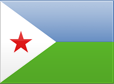 |
| History | |
| The French Territory of the Afars and the Issas became Djibouti in 1977. Hassan Gouled APTIDON installed an authoritarian one-party state and proceeded to serve as president until 1999. Unrest among the Afar minority during the 1990s led to a civil war that ended in 2001 with a peace accord between Afar rebels and the Somali Issa-dominated government. In 1999, Djibouti's first multiparty presidential election resulted in the election of Ismail Omar GUELLEH as president; he was reelected to a second term in 2005 and extended his tenure in office via a constitutional amendment, which allowed him to serve a third term in 2011 and begin a fourth term in 2016. Djibouti occupies a strategic geographic location at the intersection of the Red Sea and the Gulf of Aden. Its ports handle 95% of Ethiopia’s trade. Djibouti’s ports also service transshipments between Europe, the Middle East, and Asia. The government holds longstanding ties to France, which maintains a military presence in the country, as does the US, Japan, Italy, Germany, Spain, and China. |
 |
| |
| Geography | |
| |
| Location: | Eastern Africa, bordering the Gulf of Aden and the Red Sea, between Eritrea and Somalia |
| Geographic coordinates: | 11 30 N, 43 00 E |
| Area: | total: 23,200 sq km land: 23,180 sq km water: 20 sq km Size comparison: slightly smaller than New Jersey |
| Land Boundaries: | total: 528 km border countries (3): Eritrea 125 km, Ethiopia 342 km, Somalia 61 km |
| Coastline: | 314 km |
| Maritime claims: | territorial sea: 12 nm exclusive economic zone: 200 nm contiguous zone: 24 nm |
| Climate: | desert; torrid, dry |
| Terrain: | coastal plain and plateau separated by central mountains |
| Natural resources: | potential geothermal power, gold, clay, granite, limestone, marble, salt, diatomite, gypsum, pumice, petroleum |
| Land use: | agricultural land: 73.4% (2011 est.) arable land: 0.1% (2011 est.) permanent crops: 0% (2011 est.) permanent pasture: 73.3% (2011 est.) forest: 0.2% (2011 est.) other: 26.4% (2011 est.) |
| Irrigated land: | 10 sq km (2012) |
| Natural hazards: | earthquakes; droughts; occasional cyclonic disturbances from the Indian Ocean bring heavy rains and flash floods volcanism: experiences limited volcanic activity; Ardoukoba (298 m) last erupted in 1978; Manda-Inakir, located along the Ethiopian border, is also historically active |
| Current Environment Issues: | inadequate supplies of potable water; water pollution; limited arable land; deforestation (forests threatened by agriculture and the use of wood for fuel); desertification; endangered species |
| International Environment Agreements: | party to: Biodiversity, Climate Change, Climate Change-Kyoto Protocol, Desertification, Endangered Species, Hazardous Wastes, Law of the Sea, Ozone Layer Protection, Ship Pollution, Wetlands signed, but not ratified: none of the selected agreements |
| ^Back to Top | |
| People | |
| |
| Nationality: | noun: Djiboutian(s) adjective: Djiboutian |
| Ethnic groups: | Somali 60%, Afar 35%, other 5% (mostly Yemeni Arab, also French, Ethiopian, and Italian) |
| Languages: | French (official), Arabic (official), Somali, Afar |
| Religions: | Sunni Muslim 94% (nearly all Djiboutians), Christian 6% (mainly foreign-born residents) |
| Population: | 884,017 (July 2018 est.) |
| Age structure: | 0-14 years: 30.71% (male 136,191 /female 135,263) 15-24 years: 21.01% (male 87,520 /female 98,239) 25-54 years: 39.63% (male 145,427 /female 204,927) 55-64 years: 4.82% (male 18,967 /female 23,639) 65 years and over: 3.83% (male 15,136 /female 18,708) (2018 est.) |
| Dependency ratios: | total dependency ratio: 56.5 (2015 est.) youth dependency ratio: 50.1 (2015 est.) elderly dependency ratio: 6.4 (2015 est.) potential support ratio: 15.6 (2015 est.) |
| Median age: | total: 24.2 years male: 22.4 years female: 25.7 years (2018 est.) |
| Population growth rate: | 2.13% (2018 est.) |
| Birth rate: | 23.3 births/1,000 population (2018 est.) |
| Death rate: | 7.5 deaths/1,000 population (2018 est.) |
| Net migration rate: | 5.5 migrant(s)/1,000 population (2018 est.) |
| Urbanization: | urban population: 77.8% of total population (2018) rate of urbanization: 1.67% annual rate of change (2015-20 est.) |
| Major urban areas - population: | 562,000 DJIBOUTI (capital) (2018) |
| Sex ratio: | at birth: 1.03 male(s)/female 0-14 years: 1.01 male(s)/female 15-24 years: 0.89 male(s)/female 25-54 years: 0.71 male(s)/female 55-64 years: 0.8 male(s)/female 65 years and over: 0.81 male(s)/female total population: 0.84 male(s)/female (2018 est.) |
| Maternal mortality rate: | 229 deaths/100,000 live births (2015 est.) |
| Infant mortality rate: | total: 44.3 deaths/1,000 live births male: 50.9 deaths/1,000 live births female: 37.5 deaths/1,000 live births (2018 est.) |
| Life expectancy at birth: | total population: 64 years male: 61.4 years female: 66.6 years (2018 est.) |
| Total fertility rate: | 2.27 children born/woman (2018 est.) |
| Contraceptive prevalence rate: | 19% (2012) |
| Physicians density: | 0.22 physicians/1,000 population (2014) |
| Hospital bed density: | 1.4 beds/1,000 population (2014) |
| Drinking water source: | improved: urban: 97.4% of population rural: 64.7% of population total: 90% of population unimproved: urban: 2.6% of population rural: 35.3% of population total: 10% of population (2015 est.) |
| Sanitation facility access: | improved: urban: 59.8% of population (2015 est.) rural: 5.1% of population (2015 est.) total: 47.4% of population (2015 est.) unimproved: urban: 40.2% of population (2015 est.) rural: 94.9% of population (2015 est.) total: 52.6% of population (2015 est.) |
| HIV/AIDS - adult prevalence rate: | 1.3% (2017 est.) |
| HIV/AIDS - people living with HIV/AIDS: | 9,100 (2017 est.) |
| HIV/AIDS - deaths: | <1000 (2017 est.) |
| Obesity - adult prevalence rate: | 13.5% (2016) |
| Children under the age of 5 years underweight: | 29.9% (2012) |
| Education expenditures: | 4.5% of GDP (2010) |
| Literacy: | |
| School life expectancy (primary to tertiary education): | total: 6 years male: 7 years female: 6 years (2011) |
| ^Back to Top | |
| Government | |
| |
| Country name: | conventional long form: Republic of Djibouti conventional short form: Djibouti local long form: Republique de Djibouti/Jumhuriyat Jibuti local short form: Djibouti/Jibuti former: French Somaliland, French Territory of the Afars and Issas etymology: the country name derives from the capital city of Djibouti |
| Government type: | presidential republic |
| Capital: | name: Djibouti geographic coordinates: 11 35 N, 43 09 E time difference: UTC+3 (8 hours ahead of Washington, DC, during Standard Time) |
| Administrative divisions: | 6 districts (cercles, singular - cercle); Ali Sabieh, Arta, Dikhil, Djibouti, Obock, Tadjourah |
| Independence: | 27 June 1977 (from France) |
| National holiday: | Independence Day, 27 June (1977) |
| Constitution: | history: approved by referendum 4 September 1992 amendments: proposed by the president of the republic or by the National Assembly; Assembly consideration of proposals requires assent by at least one-third of the membership; passage requires a simple majority vote by the Assembly and approval by simple majority vote in a referendum; the president can opt to bypass a referendum if adopted by at least two-thirds majority vote of the Assembly; constitutional articles on the sovereignty of Djibouti, its republican form of government, and its pluralist form of democracy cannot by amended; amended 2006, 2008, 2010 (2017) |
| Legal system: | mixed legal system based primarily on the French civil code (as it existed in 1997), Islamic religious law (in matters of family law and successions), and customary law |
| Suffrage: | 18 years of age; universal |
| Executive branch: | chief of state: President Ismail Omar GUELLEH (since 8 May 1999) head of government: Prime Minister Abdoulkader Kamil MOHAMED (since 1 April 2013) cabinet: Council of Ministers appointed by the prime minister elections/appointments: president directly elected by absolute majority popular vote in 2 rounds if needed for a 5-year term; election last held on 8 April 2016 (next to be held by 2021); prime minister appointed by the president election results: Ismail Omar GUELLEH reelected president for a fourth term; percent of vote - Ismail Omar GUELLEH (RPP) 87%, Omar Elmi KHAIREH (CDU) 7.3%, other 5.6% |
| Legislative branch: | description: unicameral National Assembly or Assembl'ee Nationale, formerly the Chamber of Deputies (65 seats; members directly elected in multi-seat constituencies by party-list proportional representation vote; members serve 5-year terms) elections: last held on 23 February 2018 (next to be held in February 2023) election results: percent of vote by party - NA; seats by party - UMP 57, UDJ-PDD 7, CDU 1; composition - men 47, women 18, percent of women 26.7% |
| Judicial branch: | highest courts: Supreme Court or Cour Supreme (consists ofn/amagistrates); Constitutional Council (consists of 6 magistrates) judge selection and term of office: Supreme Court magistrates appointed by the president with the advice of the Superior Council of the Magistracy CSM, a 10-member body consisting of 4 judges, 3 members (non parliamentarians and judges) appointed by the president, and 3 appointed by the National Assembly president or speaker; magistrates appointed for life with retirement at age 65; Constitutional Council magistrate appointments - 2 by the president of the republic, 2 by the president of the National Assembly, and 2 by the CSM; magistrates appointed for 8-year, non-renewable terms subordinate courts: High Court of Appeal; 5 Courts of First Instance; customary courts; State Court (replaced sharia courts in 2003) |
| Political parties and leaders: | Center for United Democrats or CDU [Ahmed Mohamed YOUSSOUF, chairman] Democratic Renewal Party or PRD [Abdillahi HAMARITEH] Djibouti Development Party or PDD [Mohamed Daoud CHEHEM] Front for Restoration of Unity and Democracy (Front pour la Restauration de l'Unite Democratique) or FRUD [Ali Mohamed DAOUD] Movement for Democratic Renewal and Development [Daher Ahmed FARAH] Movement for Development and Liberty or MoDel [Ismail Ahmed WABERI] National Democratic Party or PND [Aden Robleh AWALEH] People's Rally for Progress or RPP [Ismail Omar GUELLEH] (governing party) Peoples Social Democratic Party or PPSD [Hasna Moumin BAHDON] Republican Alliance for Democracy or ARD [Aden Mohamed ABDOU, interim president] Union for a Presidential Majority or UMP (coalition includes RPP, FRUD, PND, PPSD) Union for Democracy and Justice or UDJ [Ilya Ismail GUEDI Hared] |
| International organization participation: | ACP, AfDB, AFESD, AMF, AU, CAEU (candidates), COMESA, FAO, G-77, IBRD, ICAO, ICCt, ICRM, IDA, IDB, IFAD, IFC, IFRCS, IGAD, ILO, IMF, IMO, Interpol, IOC, IOM, IPU, ITU, ITUC (NGOs), LAS, MIGA, MINURSO, NAM, OIC, OIF, OPCW, UN, UNCTAD, UNESCO, UNHCR, UNIDO, UNWTO, UPU, WCO, WFTU (NGOs), WHO, WIPO, WMO, WTO |
| National symbol(s): | red star; national colors: light blue, green, white, red |
| National anthem: | name: "Jabuuti" (Djibouti) lyrics/music: Aden ELMI/Abdi ROBLEH note: adopted 1977 |
| Diplomatic representation in the US: | chief of mission: Ambassador Mohamed Said DOUALEH (28 December 2016) chancery: 1156 15th Street NW, Suite 515, Washington, DC 20005 telephone: [1] (202) 331-0270 FAX: [1] (202) 331-0302 |
| Diplomatic representation from the US: | chief of mission: Ambassador Larry Edward ANDRE, Jr. (since 20 November 2017) embassy: Lot 350-B, Haramouss B. P . 185 mailing address: B.P. 185, Djibouti telephone: [253] 21 45 30 00 FAX: [253] 21 45 31 29 |
| ^Back to Top | |
| Economy | |
Djibouti's economy is based on service activities connected with the country's strategic location as a deepwater port on the Red Sea. Three-fourths of Djibouti's inhabitants live in the capital city; the remainder are mostly nomadic herders. Scant rainfall and less than 4% arable land limits crop production to small quantities of fruits and vegetables, and most food must be imported. Djibouti provides services as both a transit port for the region and an international transshipment and refueling center. Imports, exports, and reexports represent 70% of port activity at Djibouti's container terminal. Reexports consist primarily of coffee from landlocked neighbor Ethiopia. Djibouti has few natural resources and little industry. The nation is, therefore, heavily dependent on foreign assistance to support its balance of payments and to finance development projects. An official unemployment rate of nearly 40% - with youth unemployment near 80% - continues to be a major problem. Inflation was a modest 3% in 2014-2017, due to low international food prices and a decline in electricity tariffs. Djibouti’s reliance on diesel-generated electricity and imported food and water leave average consumers vulnerable to global price shocks, though in mid-2015 Djibouti passed new legislation to liberalize the energy sector. The government has emphasized infrastructure development for transportation and energy and Djibouti – with the help of foreign partners, particularly China – has begun to increase and modernize its port capacity. In 2017, Djibouti opened two of the largest projects in its history, the Doraleh Port and Djibouti-Addis Ababa Railway, funded by China as part of the "Belt and Road Initiative," which will increase the country’s ability to capitalize on its strategic location. | |
| GDP (purchasing power parity): | $3.64 billion (2017 est.) $3.411 billion (2016 est.) $3.203 billion (2015 est.) note: data are in 2017 dollars |
| GDP (official exchange rate): | $2.029 billion (2017 est.) |
| GDP - real growth rate: | 6.7% (2017 est.) 6.5% (2016 est.) 6.5% (2015 est.) |
| GDP - per capita (PPP): | $3,600 (2017 est.) $3,400 (2016 est.) $3,300 (2015 est.) note: data are in 2017 dollars |
| Gross national saving: | 22.3% of GDP (2017 est.) 38.1% of GDP (2016 est.) 19% of GDP (2015 est.) GDP - composition, by end use: household consumption: 56.5% (2017 est.) government consumption: 29.2% (2017 est.) investment in fixed capital: 41.8% (2017 est.) investment in inventories: 0.3% (2017 est.) exports of goods and services: 38.6% (2017 est.) imports of goods and services: -66.4% (2017 est.) GDP - composition, by sector of origin: agriculture: 2.4% (2017 est.) industry: 17.3% (2017 est.) services: 80.2% (2017 est.) |
| Agriculture - products: | fruits, vegetables; goats, sheep, camels, animal hides |
| Industries: | construction, agricultural processing, shipping |
| Industrial production growth rate: | 2.7% (2017 est.) |
| Labor force: | 294,600 (2012) |
| Labor force - by occupation: | agriculture: n/a industry: n/a services: n/a |
| Unemployment rate: | 40% (2017 est.) 60% (2014 est.) |
| Population below poverty line: | 23% (2015 est.) note: percent of population below $1.25 per day at purchasing power parity |
| Household income or consumption by percentage share: | lowest 10%: 2.4% highest 10%: 30.9% (2002) |
| Distribution of family income - Gini index: | 40.9 (2002) |
| Budget: | revenues: 717 million (2017 est.) expenditures: 899.2 million (2017 est.) |
| Taxes and other revenues: | 35.3% (of GDP) (2017 est.) Budget surplus (+) or deficit (-): -9% (of GDP) (2017 est.) |
| Public debt: | 31.8% of GDP (2017 est.) 33.7% of GDP (2016 est.) |
| Fiscal year: | calendar year |
| Inflation rate (consumer prices): | 0.7% (2017 est.) 2.7% (2016 est.) |
| Current account balance: | -$280 million (2017 est.) -$178 million (2016 est.) |
| Exports: | $161.4 million (2017 est.) $139.9 million (2016 est.) |
| Exports - commodities: | reexports, hides and skins, scrap metal |
| Exports - partners: | Ethiopia 38.8%, Somalia 17.1%, Qatar 9.1%, Brazil 8.9%, Yemen 4.9%, US 4.6% (2017) |
| Imports: | $726.4 million (2017 est.) $705.2 million (2016 est.) |
| Imports - commodities: | foods, beverages, transport equipment, chemicals, petroleum products, clothing |
| Imports - partners: | UAE 25%, France 15.2%, Saudi Arabia 11%, China 9.6%, Ethiopia 6.8%, Yemen 4.6% (2017) |
| Reserves of foreign exchange and gold: | $547.7 million (31 December 2017 est.) $398.5 million (31 December 2016 est.) |
| Debt - external: | $1.954 billion (31 December 2017 est.) $1.519 billion (31 December 2016 est.) |
| Stock of direct foreign investment - at home: | $1.47 billion (31 December 2017 est.) $1.483 billion (31 December 2016 est.) |
| Exchange rates: | Djiboutian francs (DJF) per US dollar - 177.7 (2017 est.) 177.72 (2016 est.) 177.72 (2015 est.) 177.72 (2014 est.) 177.72 (2013 est.) |
| ^Back to Top | |
| Energy | |
| |
| Electricity - production: | 405.5 million kWh (2016 est.) |
| Electricity - consumption: | 377.1 million kWh (2016 est.) |
| Electricity - exports: | 0 kWh (2016 est.) |
| Electricity - imports: | 0 kWh (2016 est.) |
| Electricity - installed generating capacity: | 130,300 kW (2016 est.) |
| Electricity - from fossil fuels: | 100% of total installed capacity (2016 est.) |
| Electricity - from nuclear fuels: | 0% of total installed capacity (2017 est.) |
| Electricity - from hydroelectric plants: | 0% of total installed capacity (2017 est.) |
| Electricity - from other renewable sources: | 0% of total installed capacity (2017 est.) |
| Crude oil - production: | 0 bbl/day (2017 est.) |
| Crude oil - exports: | 0 bbl/day (2015 est.) |
| Crude oil - imports: | 0 bbl/day (2015 est.) |
| Crude oil - proved reserves: | 0 bbl (1 January 2018 est.) |
| Refined petroleum products - production: | 0 bbl/day (2015 est.) |
| Refined petroleum products - consumption: | 6,360 bbl/day (2016 est.) |
| Refined petroleum products - exports: | 403 bbl/day (2015 est.) |
| Refined petroleum products - imports: | 6,692 bbl/day (2015 est.) |
| Natural gas - production: | 0 cu m (2017 est.) |
| Natural gas - consumption: | 0 cu m (2017 est.) |
| Natural gas - exports: | 0 cu m (2017 est.) |
| Natural gas - imports: | 0 cu m (2017 est.) |
| Natural gas - proved reserves: | 0 cu m (1 January 2014 est.) |
| Carbon dioxide emissions from consumption of energy: | 950,200 Mt (2017 est.) |
| ^Back to Top | |
| Communications | |
| |
| Cellular Phones in use: | total subscriptions: 373,052 subscriptions per 100 inhabitants: 43 (2017 est.) |
| Telephone system: | general assessment: telephone facilities in the city of Djibouti are adequate, as are the microwave radio relay connections to outlying areas of the country; Djibouti is one of the few remaining countries in which the national telco, Djibouti Telecom (DT), has a monopoly on all telecom services, including fixed lines, mobile, Internet and broadband; the lack of competition has meant that the market has not lived up to its potential (2018) domestic: Djibouti Telecom (DT) is the sole provider of telecommunications services and utilizes mostly a microwave radio relay network; fiber-optic cable is installed in the capital; rural areas connected via wireless local loop radio systems; mobile cellular coverage is primarily limited to the area in and around Djibouti city; 4 per 100 fixed-line, 43 per 100 moblie-cellular (2018) international: country code - 253; landing point for the SEA-ME-WE-3 and EASSy fiber-optic submarine cable systems providing links to Asia, the Middle East, Europe and North America; satellite earth stations - 2 (1 Intelsat - Indian Ocean and 1 Arabsat); work starts on the PEACE submarine cable linking Djibouti with Pakistan; Djibouti Telecom joins six other regional telcoms to build the DARE submarine cable system, is contracted to manage the Australia West Cable landing; Djibouti Internet Exchange (DjIX) joins the African IXP Association; Djibouti Telecom signs an agreement to peer IP traffic through France-IX's IXPs in Paris and Marseille; growth in the mobile and Internet sectors accelerates with 3G launch |
| Broadcast media: | state-owned Radiodiffusion-Television de Djibouti operates the sole terrestrial TV station, as well as the only 2 domestic radio networks; no private TV or radio stations; transmissions of several international broadcasters are available (2019) |
| Internet country code: | .dj |
| Internet users: | total: 111,212 percent of population: 13.1% (July 2016 est.) |
| ^Back to Top | |
| Transportation | |
| |
| Airports: | 13 (2013) |
| Airports (paved runways): | total 3 (2017) over 3,047 m: 1 (2017) 2,438 to 3,047 m: 1 (2017) 1,524 to 2,437 m: 1 (2017) |
| Airports (unpaved runways): | total 10 (2013) 1,524 to 2,437 m: 1 (2013) 914 to 1,523 m: 7 (2013) under 914 m: 2 (2013) |
| Railways: | total 97 km (Djibouti segment of the 756 km Addis Ababa-Djibouti railway) (2017) standard gauge: 97 km 1.435-m gauge (2017) |
| Roadways: | total 2,893 km (2013) |
| Merchant marine: | total 15 by type: other 15 (2018) |
| Ports and terminals: | major seaport(s): Djibouti |
| ^Back to Top | |
| Military | |
| |
| Military branches: | Djibouti Armed Forces (Forces Armees Djiboutiennes, FAD): Djibouti National Army (includes Navy, Djiboutian Air Force (Force Aerienne Djiboutienne, FAD), National Gendarmerie (GN)) (2013) |
| Military service age and obligation: | 18 years of age for voluntary military service; 16-25 years of age for voluntary military training; no conscription (2012) |
| ^Back to Top | |
| Transnational Issues | |
| |
| Disputes - International: | Djibouti maintains economic ties and border accords with "Somaliland" leadership while maintaining some political ties to various factions in Somalia; Kuwait is chief investor in the 2008 restoration and upgrade of the Ethiopian-Djibouti rail link; in 2008, Eritrean troops moved across the border on Ras Doumera peninsula and occupied Doumera Island with undefined sovereignty in the Red Sea |
| Refugees and internally displaced persons: | refugees (country of origin): 12,139 (Somalia) (2019) |
| ^Back to Top | |
«
Previous Country | Next Country »
Source: CIA - The World Factbook