 Costa Rica


Costa Rica Population: 4,987,142
«  Previous Country | Next Country Previous Country | Next Country  » » | 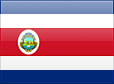 |
| History | |
| Although explored by the Spanish early in the 16th century, initial attempts at colonizing Costa Rica proved unsuccessful due to a combination of factors, including disease from mosquito-infested swamps, brutal heat, resistance by natives, and pirate raids. It was not until 1563 that a permanent settlement of Cartago was established in the cooler, fertile central highlands. The area remained a colony for some two and a half centuries. In 1821, Costa Rica became one of several Central American provinces that jointly declared their independence from Spain. Two years later it joined the United Provinces of Central America, but this federation disintegrated in 1838, at which time Costa Rica proclaimed its sovereignty and independence. Since the late 19th century, only two brief periods of violence have marred the country's democratic development. On 1 December 1948, Costa Rica dissolved its armed forces. Although it still maintains a large agricultural sector, Costa Rica has expanded its economy to include strong technology and tourism industries. The standard of living is relatively high. Land ownership is widespread. |
|
|  |

| |
| Geography | |
| |
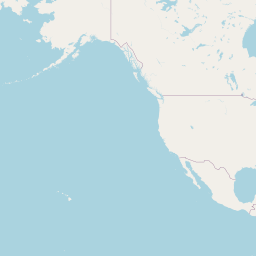
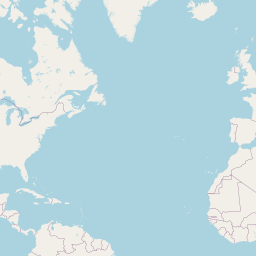
| Location: | Central America, bordering both the Caribbean Sea and the North Pacific Ocean, between Nicaragua and Panama |
| Geographic coordinates: | 10 00 N, 84 00 W |
| Area: | total: 51,100 sq km land: 51,060 sq km water: 40 sq km note: includes Isla del Coco Size comparison: slightly smaller than West Virginia |
| Land Boundaries: | total: 661 km border countries (2): Nicaragua 313 km, Panama 348 km |
| Coastline: | 1,290 km |
| Maritime claims: | territorial sea: 12 nm exclusive economic zone: 200 nm continental shelf: 200 nm |
| Climate: | tropical and subtropical; dry season (December to April); rainy season (May to November); cooler in highlands |
| Terrain: | coastal plains separated by rugged mountains including over 100 volcanic cones, of which several are major active volcanoes |
| Natural resources: | hydropower |
| Land use: | agricultural land: 37.1% (2011 est.) arable land: 4.9% (2011 est.) permanent crops: 6.7% (2011 est.) permanent pasture: 25.5% (2011 est.) forest: 51.5% (2011 est.) other: 11.4% (2011 est.) |
| Irrigated land: | 1,015 sq km (2012) |
| Natural hazards: | occasional earthquakes, hurricanes along Atlantic coast; frequent flooding of lowlands at onset of rainy season and landslides; active volcanoes volcanism: Arenal (1,670 m), which erupted in 2010, is the most active volcano in Costa Rica; a 1968 eruption destroyed the town of Tabacon; Irazu (3,432 m), situated just east of San Jose, has the potential to spew ash over the capital city as it did between 1963 and 1965; other historically active volcanoes include Miravalles, Poas, Rincon de la Vieja, and Turrialba |
| Current Environment Issues: | deforestation and land use change, largely a result of the clearing of land for cattle ranching and agriculture; soil erosion; coastal marine pollution; fisheries protection; solid waste management; air pollution |
| International Environment Agreements: | party to: Biodiversity, Climate Change, Climate Change-Kyoto Protocol, Desertification, Endangered Species, Environmental Modification, Hazardous Wastes, Law of the Sea, Marine Dumping, Ozone Layer Protection, Wetlands, Whaling signed, but not ratified: Marine Life Conservation |
| ^Back to Top | |
| People | |
| |
| Nationality: | noun: Costa Rican(s) adjective: Costa Rican |
| Ethnic groups: | white or mestizo 83.6%, mulatto 6.7%, indigenous 2.4%, black of African descent 1.1%, other 1.1%, none 2.9%, unspecified 2.2% (2011 est.) |
| Languages: | Spanish (official), English |
| Religions: | Roman Catholic 71.8%, Evangelical and Pentecostal 12.3%, other Protestant 2.6%, Jehovah's Witness 0.5%, other 2.4%, none 10.4% (2016 est.) |
| Population: | 4,987,142 (July 2018 est.) |
| Age structure: | 0-14 years: 22.43% (male 572,172 /female 546,464) 15-24 years: 15.94% (male 405,515 /female 389,433) 25-54 years: 44.04% (male 1,105,944 /female 1,090,434) 55-64 years: 9.48% (male 229,928 /female 242,696) 65 years and over: 8.11% (male 186,531 /female 218,025) (2018 est.) |
| Dependency ratios: | total dependency ratio: 45.4 (2015 est.) youth dependency ratio: 32.4 (2015 est.) elderly dependency ratio: 12.9 (2015 est.) potential support ratio: 7.7 (2015 est.) |
| Median age: | total: 31.7 years male: 31.2 years female: 32.2 years (2018 est.) |
| Population growth rate: | 1.13% (2018 est.) |
| Birth rate: | 15.3 births/1,000 population (2018 est.) |
| Death rate: | 4.8 deaths/1,000 population (2018 est.) |
| Net migration rate: | 0.8 migrant(s)/1,000 population (2018 est.) |
| Urbanization: | urban population: 79.3% of total population (2018) rate of urbanization: 1.5% annual rate of change (2015-20 est.) |
| Major urban areas - population: | 1.358 million SAN JOSE (capital) (2018) |
| Sex ratio: | at birth: 1.05 male(s)/female 0-14 years: 1.05 male(s)/female 15-24 years: 1.04 male(s)/female 25-54 years: 1.01 male(s)/female 55-64 years: 0.95 male(s)/female 65 years and over: 0.86 male(s)/female total population: 1.01 male(s)/female (2018 est.) |
| Maternal mortality rate: | 25 deaths/100,000 live births (2015 est.) |
| Infant mortality rate: | total: 7.8 deaths/1,000 live births male: 8.6 deaths/1,000 live births female: 7.1 deaths/1,000 live births (2018 est.) |
| Life expectancy at birth: | total population: 78.9 years male: 76.2 years female: 81.7 years (2018 est.) |
| Total fertility rate: | 1.89 children born/woman (2018 est.) |
| Contraceptive prevalence rate: | 77.8% (2015) |
| Physicians density: | 1.15 physicians/1,000 population (2013) |
| Hospital bed density: | 1.1 beds/1,000 population (2014) |
| Drinking water source: | improved: urban: 99.6% of population rural: 91.9% of population total: 97.8% of population unimproved: urban: 0.4% of population rural: 8.1% of population total: 2.2% of population (2015 est.) |
| Sanitation facility access: | improved: urban: 95.2% of population (2015 est.) rural: 92.3% of population (2015 est.) total: 94.5% of population (2015 est.) unimproved: urban: 4.8% of population (2015 est.) rural: 7.7% of population (2015 est.) total: 5.5% of population (2015 est.) |
| HIV/AIDS - adult prevalence rate: | 0.4% (2017 est.) |
| HIV/AIDS - people living with HIV/AIDS: | 13,000 (2017 est.) |
| HIV/AIDS - deaths: | <200 (2017 est.) |
| Obesity - adult prevalence rate: | 25.7% (2016) |
| Education expenditures: | 7.4% of GDP (2017) |
| Literacy: | definition: age 15 and over can read and write (2015 est.) total population: 97.8% male: 97.7% female: 97.8% (2015 est.) |
| School life expectancy (primary to tertiary education): | total: 15 years male: 15 years female: 16 years (2016) Unemployment, youth ages 15-24: total: 20.6% male: 17.6% female: 25.9% (2017 est.) |
| ^Back to Top | |
| Government | |
| |
| Country name: | conventional long form: Republic of Costa Rica conventional short form: Costa Rica local long form: Republica de Costa Rica local short form: Costa Rica etymology: the name means "rich coast" in Spanish and was first applied in the early colonial period of the 16th century |
| Government type: | presidential republic |
| Capital: | name: San Jose geographic coordinates: 9 56 N, 84 05 W time difference: UTC-6 (1 hour behind Washington, DC, during Standard Time) etymology: named in honor of Saint Joseph |
| Administrative divisions: | 7 provinces (provincias, singular - provincia); Alajuela, Cartago, Guanacaste, Heredia, Limon, Puntarenas, San Jose |
| Independence: | 15 September 1821 (from Spain) |
| National holiday: | Independence Day, 15 September (1821) |
| Constitution: | history: many previous; latest effective 8 November 1949 amendments: proposals require the signatures of at least 10 Legislative Assembly members or by petition of at least 5% of qualified voters; consideration of proposals requires two-thirds majority approval in each of 3 readings by the Assembly, followed by preparation of the proposal as a legislative bill and its approval by simple majority of the Assembly; passage requires at least two-thirds majority vote of the Assembly membership; a referendum is required only if approved by at least two-thirds of the Assembly; amended many times, last in 2015 (2018) |
| Legal system: | civil law system based on Spanish civil code; judicial review of legislative acts in the Supreme Court |
| Suffrage: | 18 years of age; universal and compulsory |
| Executive branch: | chief of state: President Carlos ALVARADO Quesada (since 8 May 2018); First Vice President Epsy CAMPBELL Barr (since 8 May 2018); Second Vice President Marvin RODRIGUEZ Cordero (since 8 May 2018); note - the president is both chief of state and head of government head of government: President Carlos ALVARADO Quesada (since 8 May 2018); First Vice President Epsy CAMPBELL Barr (since 8 May 2018); Second Vice President Marvin RODRIGUEZ Cordero (since 8 May 2018) cabinet: Cabinet selected by the president elections/appointments: president and vice presidents directly elected on the same ballot by modified majority popular vote (40% threshold) for a 4-year term (eligible for non-consecutive terms); election last held on 4 February 2018 with a runoff on 1 April 2018 (next to be held in February 2022) election results: Carlos ALVARADO Quesada elected president in second round; percent of vote in first round - Fabricio ALVARADO Munoz (PRN) 25%; Carlos ALVARADO Quesada (PAC) 21.6%; Antonio ALVAREZ (PLN) 18.6%; Rodolfo PIZA (PUSC) 16%; Juan Diego CASTRO (PIN) 9.5%; Rodolfo HERNANDEZ (PRS) 4.9%, other 4.4%; percent of vote in second round - Carlos ALVARADO Quesada (PAC) 60.7%; Fabricio ALVARADO Munoz (PRN) 39.3% |
| Legislative branch: | description: unicameral Legislative Assembly or Asamblea Legislativa (57 seats; members directly elected in multi-seat constituencies - corresponding to the country's 7 provinces - by closed list proportional representation vote; members serve 4-year terms) elections: last held on 4 February 2018 (next to be held in February 2022) election results: percent of vote by party - PLN 19.5%, PRN 18.2%, PAC 16.3%, PUSC 14.6%, PIN 7.7%, PRS 4.2%, PFA 4%, ADC 2.5%, ML 2.3%, PASE 2.3%, PNG 2.2%, other 6.2%; seats by party - PLN 17, PRN 14, PAC 10, PUSC 9, PIN 4, PRS 2, PFA 1; composition - men 31, women 26, percent of women 45.6% |
| Judicial branch: | highest courts: Supreme Court of Justice (consists of 22 judges organized into 3 cassation chambers each with 5 judges and the Constitutional Chamber with 7 judges) judge selection and term of office: Supreme Court of Justice judges elected by the National Assembly for 8-year terms with renewal decided by the National Assembly subordinate courts: appellate courts; trial courts; first instance and justice of the peace courts; Superior Electoral Tribunal |
| Political parties and leaders: | Accessibility Without Exclusion or PASE [Oscar Andres LOPEZ Arias] Broad Front (Frente Amplio) or PFA [Ana Patricia MORA Castellanos] Christian Democratic Alliance or ADC [Mario REDONDO Poveda] Citizen Action Party or PAC [Marta Eugenia SOLANO Arias] Costa Rican Renewal Party or PRC [Justo OROZCO Alvarez] Libertarian Movement Party or ML [Victor Danilo CUBERO Corrales] National Integration Party or PIN [Walter MUNOZ Cespedes] National Liberation Party or PLN [Jorge Julio PATTONI Saenz] National Restoration Party or PRN [Carlos Luis AVENDANO Calvo] New Generation or PNG [Sergio MENA] Patriotic Alliance [Jorge ARAYA Westover] Social Christian Republican Party or PRS [Dragos DOLANESCU Valenciano] Social Christian Unity Party or PUSC [Pedro MUNOZ Fonseca] |
| International organization participation: | BCIE, CACM, CD, CELAC, FAO, G-77, IADB, IAEA, IBRD, ICAO, ICC (national committees), ICCt, ICRM, IDA, IFAD, IFC, IFRCS, ILO, IMF, IMO, IMSO, Interpol, IOC, IOM, IPU, ISO, ITSO, ITU, ITUC (NGOs), LAES, LAIA (observer), MIGA, NAM (observer), OAS, OIF (observer), OPANAL, OPCW, Pacific Alliance (observer), PCA, SICA, UN, UNCTAD, UNESCO, UNHCR, UNIDO, Union Latina, UNWTO, UPU, WCO, WFTU (NGOs), WHO, WIPO, WMO, WTO |
| National symbol(s): | yiguirro (clay-colored robin); national colors: blue, white, red |
| National anthem: | name: "Himno Nacional de Costa Rica" (National Anthem of Costa Rica) lyrics/music: Jose Maria ZELEDON Brenes/Manuel Maria GUTIERREZ note: adopted 1949; the anthem's music was originally written for an 1853 welcome ceremony for diplomatic missions from the US and UK; the lyrics were added in 1903 |
| Diplomatic representation in the US: | chief of mission: Ambassador Fernando LLORCA Castro (since 17 September 2018) chancery: 2114 S Street NW, Washington, DC 20008 telephone: [1] (202) 480-2200 FAX: [1] (202) 265-4795 consulate(s) general: Atlanta, Chicago, Houston, Los Angeles, Miami, New York, Washington DC consulate(s): Saint Paul (MN), San Juan (Puerto Rico), Tucson (AZ) |
| Diplomatic representation from the US: | chief of mission: Ambassador Sharon DAY (since 5 October 2017) embassy: Calle 98 Via 104, Pavas, San Jose mailing address: APO AA 34020 telephone: [506] 2519-2000 FAX: [506] 2519-2305 |
| ^Back to Top | |
| Economy | |
Since 2010, Costa Rica has enjoyed strong and stable economic growth - 3.8% in 2017. Exports of bananas, coffee, sugar, and beef are the backbone of its commodity exports. Various industrial and processed agricultural products have broadened exports in recent years, as have high value-added goods, including medical devices. Costa Rica's impressive biodiversity also makes it a key destination for ecotourism. Foreign investors remain attracted by the country's political stability and relatively high education levels, as well as the incentives offered in the free-trade zones; Costa Rica has attracted one of the highest levels of foreign direct investment per capita in Latin America. The US-Central American-Dominican Republic Free Trade Agreement (CAFTA-DR), which became effective for Costa Rica in 2009, helped increase foreign direct investment in key sectors of the economy, including insurance and telecommunication. However, poor infrastructure, high energy costs, a complex bureaucracy, weak investor protection, and uncertainty of contract enforcement impede greater investment. Costa Rica’s economy also faces challenges due to a rising fiscal deficit, rising public debt, and relatively low levels of domestic revenue. Poverty has remained around 20-25% for nearly 20 years, and the government’s strong social safety net has eroded due to increased constraints on its expenditures. Costa Rica’s credit rating was downgraded from stable to negative in 2015 and again in 2017, upping pressure on lending rates - which could hurt small business, on the budget deficit - which could hurt infrastructure development, and on the rate of return on investment - which could soften foreign direct investment (FDI). Unlike the rest of Central America, Costa Rica is not highly dependent on remittances - which represented just 1 % of GDP in 2016, but instead relies on FDI - which accounted for 5.1% of GDP. | |
| GDP (purchasing power parity): | $83.94 billion (2017 est.) $81.27 billion (2016 est.) $77.96 billion (2015 est.) note: data are in 2017 dollars |
| GDP (official exchange rate): | $58.27 billion (2017 est.) |
| GDP - real growth rate: | 3.3% (2017 est.) 4.2% (2016 est.) 3.6% (2015 est.) |
| GDP - per capita (PPP): | $16,900 (2017 est.) $16,600 (2016 est.) $16,100 (2015 est.) note: data are in 2017 dollars |
| Gross national saving: | 15.1% of GDP (2017 est.) 16.1% of GDP (2016 est.) 15% of GDP (2015 est.) GDP - composition, by end use: household consumption: 64.2% (2017 est.) government consumption: 17.3% (2017 est.) investment in fixed capital: 17.1% (2017 est.) investment in inventories: 1% (2017 est.) exports of goods and services: 33.3% (2017 est.) imports of goods and services: -32.9% (2017 est.) GDP - composition, by sector of origin: agriculture: 5.5% (2017 est.) industry: 20.6% (2017 est.) services: 73.9% (2017 est.) |
| Agriculture - products: | bananas, pineapples, coffee, melons, ornamental plants, sugar, corn, rice, beans, potatoes; beef, poultry, dairy; timber |
| Industries: | medical equipment, food processing, textiles and clothing, construction materials, fertilizer, plastic products |
| Industrial production growth rate: | 1.3% (2017 est.) |
| Labor force: | 2.229 million (2017 est.) note: official estimate; excludes Nicaraguans living in Costa Rica |
| Labor force - by occupation: | agriculture: 14% industry: 22% services: 64% (2006 est.) |
| Unemployment rate: | 8.1% (2017 est.) 9.5% (2016 est.) |
| Population below poverty line: | 21.7% (2014 est.) |
| Household income or consumption by percentage share: | lowest 10%: 1.5% highest 10%: 36.9% (2014 est.) |
| Distribution of family income - Gini index: | 48.5 (2014) 49.2 (2013) |
| Budget: | revenues: 8.357 billion (2017 est.) expenditures: 11.92 billion (2017 est.) |
| Taxes and other revenues: | 14.3% (of GDP) (2017 est.) Budget surplus (+) or deficit (-): -6.1% (of GDP) (2017 est.) |
| Public debt: | 48.9% of GDP (2017 est.) 44.9% of GDP (2016 est.) |
| Fiscal year: | calendar year |
| Inflation rate (consumer prices): | 1.6% (2017 est.) 0% (2016 est.) |
| Current account balance: | -$1.692 billion (2017 est.) -$1.326 billion (2016 est.) |
| Exports: | $10.81 billion (2017 est.) $10.15 billion (2016 est.) |
| Exports - commodities: | bananas, pineapples, coffee, melons, ornamental plants, sugar; beef; seafood; electronic components, medical equipment |
| Exports - partners: | US 40.9%, Belgium 6.3%, Panama 5.6%, Netherlands 5.6%, Nicaragua 5.1%, Guatemala 5% (2017) |
| Imports: | $15.15 billion (2017 est.) $14.53 billion (2016 est.) |
| Imports - commodities: | raw materials, consumer goods, capital equipment, petroleum, construction materials |
| Imports - partners: | US 38.1%, China 13.1%, Mexico 7.3% (2017) |
| Reserves of foreign exchange and gold: | $7.15 billion (31 December 2017 est.) $7.574 billion (31 December 2016 est.) |
| Debt - external: | $26.83 billion (31 December 2017 est.) $24.3 billion (31 December 2016 est.) |
| Stock of direct foreign investment - at home: | $33.92 billion (31 December 2017 est.) $31.84 billion (31 December 2016 est.) |
| Stock of direct foreign investment - abroad: | $4.007 billion (31 December 2017 est.) $3.781 billion (31 December 2016 est.) |
| Market value of publicly traded shares: | $2.015 billion (31 December 2012 est.) $1.443 billion (31 December 2011 est.) $1.445 billion (31 December 2010 est.) |
| Exchange rates: | Costa Rican colones (CRC) per US dollar - 573.5 (2017 est.) 544.74 (2016 est.) 544.74 (2015 est.) 534.57 (2014 est.) 538.32 (2013 est.) |
| ^Back to Top | |
| Energy | |
| |
| Electricity - production: | 10.79 billion kWh (2016 est.) |
| Electricity - consumption: | 9.812 billion kWh (2016 est.) |
| Electricity - exports: | 643 million kWh (2015 est.) |
| Electricity - imports: | 807 million kWh (2016 est.) |
| Electricity - installed generating capacity: | 3.584 million kW (2016 est.) |
| Electricity - from fossil fuels: | 18% of total installed capacity (2016 est.) |
| Electricity - from nuclear fuels: | 0% of total installed capacity (2017 est.) |
| Electricity - from hydroelectric plants: | 64% of total installed capacity (2017 est.) |
| Electricity - from other renewable sources: | 18% of total installed capacity (2017 est.) |
| Crude oil - production: | 0 bbl/day (2017 est.) |
| Crude oil - exports: | 0 bbl/day (2015 est.) |
| Crude oil - imports: | 0 bbl/day (2015 est.) |
| Crude oil - proved reserves: | 0 bbl (1 January 2018 est.) |
| Refined petroleum products - production: | 0 bbl/day (2015 est.) |
| Refined petroleum products - consumption: | 53,000 bbl/day (2016 est.) |
| Refined petroleum products - exports: | 0 bbl/day (2015 est.) |
| Refined petroleum products - imports: | 51,320 bbl/day (2015 est.) |
| Natural gas - production: | 0 cu m (2017 est.) |
| Natural gas - consumption: | 0 cu m (2017 est.) |
| Natural gas - exports: | 0 cu m (2017 est.) |
| Natural gas - imports: | 0 cu m (2017 est.) |
| Natural gas - proved reserves: | 0 cu m (1 January 2014 est.) |
| Carbon dioxide emissions from consumption of energy: | 7.653 million Mt (2017 est.) |
| ^Back to Top | |
| Communications | |
| |
| Cellular Phones in use: | total subscriptions: 8,840,342 subscriptions per 100 inhabitants: 179 (2017 est.) |
| Telephone system: | general assessment: good domestic telephone service in terms of breadth of coverage; in recent years growth has been achieved from liberalistion of the telecom sector and has seen substantial expansion in all sectors; Costa Rica's broadband market is the most advanced in Central America, with the highest broadband penetration for this sub-region; broadband penetration does lag behind many South American countries; with the implementation of number portability there is greater opportunity for increased competition in the future (2018) domestic: point-to-point and point-to-multi-point microwave, fiber-optic, and coaxial cable link rural areas; Internet service is available; 17 per 100 fixed-line, 179 per 100 mobile-cellular (2018) international: country code - 506; landing points for the Americas Region Caribbean Ring System (ARCOS-1), MAYA-1, and the Pan American Crossing submarine cables that provide links to South and Central America, parts of the Caribbean, and the US; connected to Central American Microwave System; satellite earth stations - 2 Intelsat (Atlantic Ocean) |
| Broadcast media: | multiple privately owned TV stations and 1 publicly owned TV station; cable network services are widely available; more than 100 privately owned radio stations and a public radio network (2017) |
| Internet country code: | .cr |
| Internet users: | total: 3,217,277 percent of population: 66% (July 2016 est.) |
| ^Back to Top | |
| Transportation | |
| |
| Airports: | 161 (2013) |
| Airports (paved runways): | total 47 (2017) 2,438 to 3,047 m: 2 (2017) 1,524 to 2,437 m: 2 (2017) 914 to 1,523 m: 27 (2017) under 914 m: 16 (2017) |
| Airports (unpaved runways): | total 114 (2013) 914 to 1,523 m: 18 (2013) under 914 m: 96 (2013) |
| Pipelines: | 662 km refined products (2013) |
| Railways: | total 278 km (2014) narrow gauge: 278 km 1.067-m gauge (2014) note: the entire rail network fell into disrepair and out of use at the end of the 20th century; since 2005, certain sections of rail have been rehabilitated |
| Roadways: | total 5,035 km (2017) |
| Waterways: | 730 km (seasonally navigable by small craft) (2011) |
| Merchant marine: | total 11 by type: general cargo 2, other 9 (2018) |
| Ports and terminals: | major seaport(s): Atlantic Ocean (Caribbean) - Puerto Limon Pacific Ocean - Caldera |
| ^Back to Top | |
| Military | |
| |
| Military branches: | no regular military forces; Ministry of Public Security, Government, and Police (2011) |
| ^Back to Top | |
| Transnational Issues | |
| |
| Disputes - International: | Costa Rica and Nicaragua regularly file border dispute cases over the delimitations of the San Juan River and the northern tip of Calero Island to the International Court of Justice (ICJ); in 2009, the ICJ ruled that Costa Rican vessels carrying out police activities could not use the river, but official Costa Rican vessels providing essential services to riverside inhabitants and Costa Rican tourists could travel freely on the river; in 2011, the ICJ provisionally ruled that both countries must remove personnel from the disputed area; in 2013, the ICJ rejected Nicaragua's 2012 suit to halt Costa Rica's construction of a highway paralleling the river on the grounds of irreparable environmental damage; in 2013, the ICJ, regarding the disputed territory, ordered that Nicaragua should refrain from dredging or canal construction and refill and repair damage caused by trenches connecting the river to the Caribbean and upheld its 2010 ruling that Nicaragua must remove all personnel; in early 2014, Costa Rica brought Nicaragua to the ICJ over offshore oil concessions in the disputed region |
| Refugees and internally displaced persons: | refugees (country of origin): 14,322 (Venezuela) (economic and political crisis; includes Venezuelans who have claimed asylum or have received alternative legal stay) (2019) stateless persons: 82 (2018) |
| Illicit drugs: | transshipment country for cocaine and heroin from South America; illicit production of cannabis in remote areas; domestic cocaine consumption, particularly crack cocaine, is rising; significant consumption of amphetamines; seizures of smuggled cash in Costa Rica and at the main border crossing to enter Costa Rica from Nicaragua have risen in recent years |
| ^Back to Top | |
Costa Rica Previous Country | Next Country »
Source: CIA - The World Factbook