 Brazil


Brazil Population: 208,846,892
«  Previous Country | Next Country Previous Country | Next Country  » » | 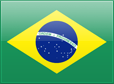 |
| History | |
| Following more than three centuries under Portuguese rule, Brazil gained its independence in 1822, maintaining a monarchical system of government until the abolition of slavery in 1888 and the subsequent proclamation of a republic by the military in 1889. Brazilian coffee exporters politically dominated the country until populist leader Getulio VARGAS rose to power in 1930. By far the largest and most populous country in South America, Brazil underwent more than a half century of populist and military government until 1985, when the military regime peacefully ceded power to civilian rulers. Brazil continues to pursue industrial and agricultural growth and development of its interior. Having successfully weathered a period of global financial difficulty in the late 20th century, Brazil was seen as one of the world's strongest emerging markets and a contributor to global growth. The awarding of the 2014 FIFA World Cup and 2016 Summer Olympic Games, the first ever to be held in South America, was seen as symbolic of the country's rise. However, from about 2013 to 2016, Brazil was plagued by a sagging economy, high unemployment, and high inflation, only emerging from recession in 2017. Former President Dilma ROUSSEFF (2011-2016) was removed from office in 2016 by Congress for having committed impeachable acts against Brazil's budgetary laws, and her vice president, Michel TEMER, served the remainder of her second term. In October 2018, Jair BOLSONARO won the presidency with 55 percent of the vote and assumed office on 1 January 2019. |
|
|  |

| |
| Geography | |
| |
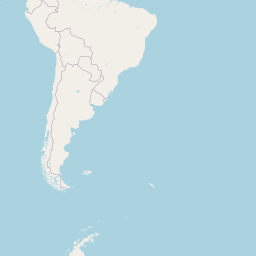
| Location: | Eastern South America, bordering the Atlantic Ocean |
| Geographic coordinates: | 10 00 S, 55 00 W |
| Area: | total: 8,515,770 sq km land: 8,358,140 sq km water: 157,630 sq km note: includes Arquipelago de Fernando de Noronha, Atol das Rocas, Ilha da Trindade, Ilhas Martin Vaz, and Penedos de Sao Pedro e Sao Paulo Size comparison: slightly smaller than the US |
| Land Boundaries: | total: 16,145 km border countries (10): Argentina 1263 km, Bolivia 3403 km, Colombia 1790 km, French Guiana 649 km, Guyana 1308 km, Paraguay 1371 km, Peru 2659 km, Suriname 515 km, Uruguay 1050 km, Venezuela 2137 km |
| Coastline: | 7,491 km |
| Maritime claims: | territorial sea: 12 nm exclusive economic zone: 200 nm contiguous zone: 24 nm continental shelf: 200 nm or to edge of the continental margin |
| Climate: | mostly tropical, but temperate in south |
| Terrain: | mostly flat to rolling lowlands in north; some plains, hills, mountains, and narrow coastal belt |
| Natural resources: | alumina, bauxite, beryllium, gold, iron ore, manganese, nickel, niobium, phosphates, platinum, tantalum, tin, rare earth elements, uranium, petroleum, hydropower, timber |
| Land use: | agricultural land: 32.9% (2011 est.) arable land: 8.6% (2011 est.) permanent crops: 0.8% (2011 est.) permanent pasture: 23.5% (2011 est.) forest: 61.9% (2011 est.) other: 5.2% (2011 est.) |
| Irrigated land: | 54,000 sq km (2012) |
| Natural hazards: | recurring droughts in northeast; floods and occasional frost in south |
| Current Environment Issues: | deforestation in Amazon Basin destroys the habitat and endangers a multitude of plant and animal species indigenous to the area; illegal wildlife trade; illegal poaching; air and water pollution in Rio de Janeiro, Sao Paulo, and several other large cities; land degradation and water pollution caused by improper mining activities; wetland degradation; severe oil spills |
| International Environment Agreements: | party to: Antarctic-Environmental Protocol, Antarctic-Marine Living Resources, Antarctic Seals, Antarctic Treaty, Biodiversity, Climate Change, Climate Change-Kyoto Protocol, Desertification, Endangered Species, Environmental Modification, Hazardous Wastes, Law of the Sea, Marine Dumping, Ozone Layer Protection, Ship Pollution, Tropical Timber 83, Tropical Timber 94, Wetlands, Whaling signed, but not ratified: none of the selected agreements |
| ^Back to Top | |
| People | |
| |
| Nationality: | noun: Brazilian(s) adjective: Brazilian |
| Ethnic groups: | white 47.7%, mulatto (mixed white and black) 43.1%, black 7.6%, Asian 1.1%, indigenous 0.4% (2010 est.) |
| Languages: | Portuguese (official and most widely spoken language) note: less common languages include Spanish (border areas and schools), German, Italian, Japanese, English, and a large number of minor Amerindian languages |
| Religions: | Roman Catholic 64.6%, other Catholic 0.4%, Protestant 22.2% (includes Adventist 6.5%, Assembly of God 2.0%, Christian Congregation of Brazil 1.2%, Universal Kingdom of God 1.0%, other Protestant 11.5%), other Christian 0.7%, Spiritist 2.2%, other 1.4%, none 8%, unspecified 0.4% (2010 est.) |
| Population: | 208,846,892 (July 2018 est.) |
| Age structure: | 0-14 years: 21.89% (male 23,310,437 /female 22,414,551) 15-24 years: 16.29% (male 17,254,084 /female 16,758,140) 25-54 years: 43.86% (male 45,449,158 /female 46,151,759) 55-64 years: 9.35% (male 9,229,665 /female 10,296,824) 65 years and over: 8.61% (male 7,666,845 /female 10,315,429) (2018 est.) |
| Dependency ratios: | total dependency ratio: 43.8 (2015 est.) youth dependency ratio: 32.4 (2015 est.) elderly dependency ratio: 11.4 (2015 est.) potential support ratio: 8.7 (2015 est.) |
| Median age: | total: 32.4 years male: 31.5 years female: 33.3 years (2018 est.) |
| Population growth rate: | 0.71% (2018 est.) |
| Birth rate: | 13.9 births/1,000 population (2018 est.) |
| Death rate: | 6.7 deaths/1,000 population (2018 est.) |
| Net migration rate: | -0.1 migrant(s)/1,000 population (2018 est.) |
| Urbanization: | urban population: 86.6% of total population (2018) rate of urbanization: 1.05% annual rate of change (2015-20 est.) |
| Major urban areas - population: | 21.65 million Sao Paulo 13.293 million Rio de Janeiro 5.972 million Belo Horizonte 4.47 million BRASILIA (capital) 4.094 million Porto Alegre 4.028 million Recife (2018) |
| Sex ratio: | at birth: 1.05 male(s)/female 0-14 years: 1.04 male(s)/female 15-24 years: 1.03 male(s)/female 25-54 years: 0.98 male(s)/female 55-64 years: 0.9 male(s)/female 65 years and over: 0.74 male(s)/female total population: 0.97 male(s)/female (2018 est.) |
| Maternal mortality rate: | 44 deaths/100,000 live births (2015 est.) |
| Infant mortality rate: | total: 16.9 deaths/1,000 live births male: 19.9 deaths/1,000 live births female: 13.8 deaths/1,000 live births (2018 est.) |
| Life expectancy at birth: | total population: 74.3 years male: 70.7 years female: 78 years (2018 est.) |
| Total fertility rate: | 1.75 children born/woman (2018 est.) |
| Contraceptive prevalence rate: | 80.2% (2013) |
| Physicians density: | 2.15 physicians/1,000 population (2018) |
| Hospital bed density: | 2.2 beds/1,000 population (2014) |
| Drinking water source: | improved: urban: 100% of population rural: 87% of population total: 98.1% of population unimproved: urban: 0% of population rural: 13% of population total: 1.9% of population (2015 est.) |
| Sanitation facility access: | improved: urban: 88% of population (2015 est.) rural: 51.5% of population (2015 est.) total: 82.8% of population (2015 est.) unimproved: urban: 12% of population (2015 est.) rural: 48.5% of population (2015 est.) total: 17.2% of population (2015 est.) |
| HIV/AIDS - adult prevalence rate: | 0.6% (2017 est.) |
| HIV/AIDS - people living with HIV/AIDS: | 860,000 (2017 est.) |
| HIV/AIDS - deaths: | 14,000 (2017 est.) |
| Obesity - adult prevalence rate: | 22.1% (2016) |
| Education expenditures: | 6.2% of GDP (2015) |
| Literacy: | definition: age 15 and over can read and write (2015 est.) total population: 92% male: 91.7% female: 92.3% (2015 est.) |
| School life expectancy (primary to tertiary education): | total: 15 years male: 15 years female: 16 years (2015) Unemployment, youth ages 15-24: total: 28.5% male: 25.3% female: 32.8% (2018 est.) |
| ^Back to Top | |
| Government | |
| |
| Country name: | conventional long form: Federative Republic of Brazil conventional short form: Brazil local long form: Republica Federativa do Brasil local short form: Brasil etymology: the country name derives from the brazilwood tree that used to grow plentifully along the coast of Brazil and that was used to produce a deep red dye |
| Government type: | federal presidential republic |
| Capital: | name: Brasilia geographic coordinates: 15 47 S, 47 55 W time difference: UTC-3 (2 hours ahead of Washington, DC, during Standard Time) daylight saving time: +1hr, begins third Sunday in October; ends third Sunday in February note: Brazil has four time zones, including one for the Fernando de Noronha Islands etymology: name bestowed on the new capital of Brazil upon its inauguration in 1960; previous Brazilian capitals had been Salvador from 1549 to 1763 and Rio de Janeiro from 1763 to 1960 |
| Administrative divisions: | 26 states (estados, singular - estado) and 1 federal district* (distrito federal); Acre, Alagoas, Amapa, Amazonas, Bahia, Ceara, Distrito Federal*, Espirito Santo, Goias, Maranhao, Mato Grosso, Mato Grosso do Sul, Minas Gerais, Para, Paraiba, Parana, Pernambuco, Piaui, Rio de Janeiro, Rio Grande do Norte, Rio Grande do Sul, Rondonia, Roraima, Santa Catarina, Sao Paulo, Sergipe, Tocantins |
| Independence: | 7 September 1822 (from Portugal) |
| National holiday: | Independence Day, 7 September (1822) |
| Constitution: | history: several previous; latest ratified 5 October 1988 amendments: proposed by at least one-third of either house of the National Congress, by the president of the republic, or by simple majority vote by more than half of the state legislative assemblies; passage requires at least three-fifths majority vote by both houses in each of 2 readings; constitutional provisions affecting the federal form of government, separation of powers, suffrage, or individual rights and guarantees cannot be amended; amended many times, last in 2017 (2018) |
| Legal system: | civil law; note - a new civil law code was enacted in 2002 replacing the 1916 code |
| Suffrage: | voluntary between 16 to 18 years of age, over 70, and if illiterate; compulsory between 18 to 70 years of age; note - military conscripts by law cannot vote |
| Executive branch: | chief of state: President Jair BOLSONARO (since 1 January 2019); Vice President Antonio Hamilton Martins MOURAO (since 1 January 2019); note - the president is both chief of state and head of government head of government: President Jair BOLSONARO (since 1 January 2019); Vice President Antonio Hamilton Martins MOURAO (since 1 January 2019) cabinet: Cabinet appointed by the president elections/appointments: president and vice president directly elected on the same ballot by absolute majority popular vote in 2 rounds if needed for a single 4-year term (eligible for a second term); election last held on 7 October 2018 with runoff on 28 October 2018 (next to be held in October 2022) election results: Jair BOLSONARO elected president in second round; percent of vote in first round - Jair BOLSONARO (PSL) 46%, Fernando HADDAD (PT) 29.3%, Ciro GOMEZ (PDT) 12.5%, Geraldo ALCKMIN (PSDB) 4.8%, other 7.4%; percent of vote in second round - Jair BOLSONARO (PSL) 55.1%, Fernando HADDAD (PT) 44.9% |
| Legislative branch: | description: bicameral National Congress or Congresso Nacional consists of: Federal Senate or Senado Federal (81 seats; 3 members each from 26 states and 3 from the federal district directly elected in multi-seat constituencies by simple majority vote to serve 8-year terms, with one-third and two-thirds of the membership elected alternately every 4 years) Chamber of Deputies or Camara dos Deputados (513 seats; members directly elected in multi-seat constituencies by proportional representation vote to serve 4-year terms) elections: Federal Senate - last held on 7 October 2018 for two-thirds of the Senate (next to be held in October 2022 for one-third of the Senate) Chamber of Deputies - last held on 7 October 2018 (next to be held in October 2022) election results: Federal Senate - percent of vote by party - NA; seats by party - PMDB 7, PP 5, REDE 5, DEM 4, PSDB 4, PSDC 4, PSL 4, PT 4, PDT 2, PHS 2, PPS 2, PSB 2, PTB 2, Podemos 1, PR 1, PRB 1, PROS 1, PRP 1, PSC 1, SD 1; composition - men 70, women 11, percent of women 13.6% Chamber of Deputies - percent of vote by party - NA; seats by party - PT 56, PSL 52, PP 37, PMDB 34, PSDC 34, PR 33, PSB 32, PRB 30, DEM 29, PSDB 29, PDT 28, SD 13, Podemos 11, PSOL 10, PTB 10, PCdoB 9, NOVO 8, PPS 8, PROS 8, PSC 8, Avante 7, PHS 6, Patriota 5, PRP 4, PV 4, PMN 3, PTC 2, DC 1, PPL 1, REDE 1; composition - men 462, women 51, percent of women 9.9%; total National Congress percent of women 10.4% |
| Judicial branch: | highest courts: Supreme Federal Court or Supremo Tribunal Federal (consists of 11 justices) judge selection and term of office: justices appointed by the president and approved by the Federal Senate; justices appointed to serve until mandatory retirement at age 75 subordinate courts: Tribunal of the Union, Federal Appeals Court, Superior Court of Justice, Superior Electoral Court, regional federal courts; state court system |
| Political parties and leaders: | Avante [Luis TIBE] (formerly Labor Party of Brazil or PTdoB) Brazilian Communist Party or PCB [Ivan Martins PINHEIRO] Brazilian Democratic Movement Party or PMDB [Michel TEMER] Brazilian Labor Party or PTB [Cristiane BRASIL] Brazilian Renewal Labor Party or PRTB [Jose Levy FIDELIX da Cruz] Brazilian Republican Party or PRB [Marcos Antonio PEREIRA] Brazilian Social Democracy Party or PSDB [Tasso JEREISSATI] Brazilian Socialist Party or PSB [Carlos Roberto SIQUEIRA de Barros] Christian Democracy or DC [Jose Maria EYMAEL] (formerly Christian Social Democratic Party or PSDC) Christian Labor Party or PTC [Daniel TOURINHO] Communist Party of Brazil or PCdoB [Jose Renato RABELO] Democratic Labor Party or PDT [Carlos Roberto LUPI] The Democrats or DEM [Jose AGRIPINO] (formerly Liberal Front Party or PFL) Free Homeland Party or PPL [Sergio RUBENS] Green Party or PV [Jose Luiz PENNA] Humanist Party of Solidarity or PHS [Eduardo MACHADO] National Mobilization Party or PMN [Telma RIBEIRO dos Santos] New Party or NOVO [Moises JARDIM] Party of the Republic or PR [Alfredo NASCIMENTO] Patriota [Adilson BARROSO Oliveira] (formerly National Ecologic Party or PEN) Podemos [Renata ABREU] (formerly National Labor Party or PTN) Popular Socialist Party or PPS [Roberto Joao Pereira FREIRE] Progressive Party or PP [Ciro NOGUEIRA] Progressive Republican Party or PRP [Ovasco Roma Altimari RESENDE] Republican Social Order Party or PROS [Euripedes JUNIOR] Social Christian Party or PSC [Vitor Jorge Abdala NOSSEIS] Social Democratic Party or PSD [Guilherme CAMPOS] Social Liberal Party or PSL [Luciano Caldas BIVAR] Socialism and Freedom Party or PSOL [Luiz ARAUJO] Solidarity or SD [Paulo PEREIRA DA SILVA] Sustainability Network or REDE [Marina SILVA] United Socialist Workers' Party or PSTU [Jose Maria DE ALMEIDA] Workers' Cause Party or PCO [Rui Costa PIMENTA] Workers' Party or PT [Gleisi HOFFMAN] |
| International organization participation: | AfDB (nonregional member), BIS, BRICS, CAN (associate), CD, CELAC, CPLP, FAO, FATF, G-15, G-20, G-24, G-5, G-77, IADB, IAEA, IBRD, ICAO, ICC (national committees), ICCt, ICRM, IDA, IFAD, IFC, IFRCS, IHO, ILO, IMF, IMO, IMSO, Interpol, IOC, IOM, IPU, ISO, ITSO, ITU, ITUC (NGOs), LAES, LAIA, LAS (observer), Mercosur, MIGA, MINURSO, MINUSTAH, MONUSCO, NAM (observer), NSG, OAS, OECD (enhanced engagement), OPANAL, OPCW, Paris Club (associate), PCA, SICA (observer), UN, UNASUR, UNCTAD, UNESCO, UNFICYP, UNHCR, UNIDO, UNIFIL, Union Latina, UNISFA, UNITAR, UNMIL, UNMISS, UNOCI, UNRWA, UNWTO, UPU, WCO, WFTU (NGOs), WHO, WIPO, WMO, WTO |
| National symbol(s): | Southern Cross constellation; national colors: green, yellow, blue |
| National anthem: | name: "Hino Nacional Brasileiro" (Brazilian National Anthem) lyrics/music: Joaquim Osorio Duque ESTRADA/Francisco Manoel DA SILVA note: music adopted 1890, lyrics adopted 1922; the anthem's music, composed in 1822, was used unofficially for many years before it was adopted |
| Diplomatic representation in the US: | chief of mission: Ambassador (vacant); Charge d'Affaires Fernando PIMENTEL (since 3 June 2019) chancery: 3006 Massachusetts Avenue NW, Washington, DC 20008 telephone: [1] (202) 238-2700 FAX: [1] (202) 238-2827 consulate(s) general: Atlanta, Boston, Chicago, Hartford (CT), Houston, Los Angeles, Miami, New York, San Francisco, Washington, DC |
| Diplomatic representation from the US: | chief of mission: Ambassador (vacant); Charge d'Affaires William POPP (since 3 November 2018) embassy: Avenida das Nacoes, Quadra 801, Lote 3, Distrito Federal Cep 70403-900, Brasilia mailing address: Unit 7500, DPO, AA 34030 telephone: [55] (61) 3312-7000 FAX: [55] (61) 3225-9136 consulate(s) general: Belo Horizonte, Recife, Porto Alegre, Rio de Janeiro, Sao Paulo |
| ^Back to Top | |
| Economy | |
Brazil is the eighth-largest economy in the world, but is recovering from a recession in 2015 and 2016 that ranks as the worst in the country’s history. In 2017, Brazil`s GDP grew 1%, inflation fell to historic lows of 2.9%, and the Central Bank lowered benchmark interest rates from 13.75% in 2016 to 7%. The economy has been negatively affected by multiple corruption scandals involving private companies and government officials, including the impeachment and conviction of Former President Dilma ROUSSEFF in August 2016. Sanctions against the firms involved — some of the largest in Brazil — have limited their business opportunities, producing a ripple effect on associated businesses and contractors but creating opportunities for foreign companies to step into what had been a closed market. The succeeding TEMER administration has implemented a series of fiscal and structural reforms to restore credibility to government finances. Congress approved legislation in December 2016 to cap public spending. Government spending growth had pushed public debt to 73.7% of GDP at the end of 2017, up from over 50% in 2012. The government also boosted infrastructure projects, such as oil and natural gas auctions, in part to raise revenues. Other economic reforms, proposed in 2016, aim to reduce barriers to foreign investment, and to improve labor conditions. Policies to strengthen Brazil’s workforce and industrial sector, such as local content requirements, have boosted employment, but at the expense of investment. Brazil is a member of the Common Market of the South (Mercosur), a trade bloc that includes Argentina, Paraguay and Uruguay - Venezuela’s membership in the organization was suspended In August 2017. After the Asian and Russian financial crises, Mercosur adopted a protectionist stance to guard against exposure to volatile foreign markets and it currently is negotiating Free Trade Agreements with the European Union and Canada. | |
| GDP (purchasing power parity): | $3.248 trillion (2017 est.) $3.216 trillion (2016 est.) $3.332 trillion (2015 est.) note: data are in 2017 dollars |
| GDP (official exchange rate): | $2.055 trillion (2017 est.) |
| GDP - real growth rate: | 1% (2017 est.) -3.5% (2016 est.) -3.5% (2015 est.) |
| GDP - per capita (PPP): | $15,600 (2017 est.) $15,600 (2016 est.) $16,300 (2015 est.) note: data are in 2017 dollars |
| Gross national saving: | 15% of GDP (2017 est.) 14.1% of GDP (2016 est.) 14.1% of GDP (2015 est.) GDP - composition, by end use: household consumption: 63.4% (2017 est.) government consumption: 20% (2017 est.) investment in fixed capital: 15.6% (2017 est.) investment in inventories: -0.1% (2017 est.) exports of goods and services: 12.6% (2017 est.) imports of goods and services: -11.6% (2017 est.) GDP - composition, by sector of origin: agriculture: 6.6% (2017 est.) industry: 20.7% (2017 est.) services: 72.7% (2017 est.) |
| Agriculture - products: | coffee, soybeans, wheat, rice, corn, sugarcane, cocoa, citrus; beef |
| Industries: | textiles, shoes, chemicals, cement, lumber, iron ore, tin, steel, aircraft, motor vehicles and parts, other machinery and equipment |
| Industrial production growth rate: | 0% (2017 est.) |
| Labor force: | 104.2 million (2017) |
| Labor force - by occupation: | agriculture: 9.4% industry: 32.1% services: 58.5% (2017 est.) |
| Unemployment rate: | 12.8% (2017 est.) 11.3% (2016 est.) |
| Population below poverty line: | 4.2% (2016 est.) note: approximately 4% of the population are below the "extreme" poverty line |
| Household income or consumption by percentage share: | lowest 10%: 0.8% highest 10%: 43.4% (2016 est.) |
| Distribution of family income - Gini index: | 49 (2014) 54 (2004) |
| Budget: | revenues: 733.7 billion (2017 est.) expenditures: 756.3 billion (2017 est.) |
| Taxes and other revenues: | 35.7% (of GDP) (2017 est.) Budget surplus (+) or deficit (-): -1.1% (of GDP) (2017 est.) |
| Public debt: | 84% of GDP (2017 est.) 78.4% of GDP (2016 est.) |
| Fiscal year: | calendar year |
| Inflation rate (consumer prices): | 3.4% (2017 est.) 8.7% (2016 est.) |
| Current account balance: | -$9.762 billion (2017 est.) -$23.55 billion (2016 est.) |
| Exports: | $217.2 billion (2017 est.) $184.5 billion (2016 est.) |
| Exports - commodities: | transport equipment, iron ore, soybeans, footwear, coffee, automobiles |
| Exports - partners: | China 21.8%, US 12.5%, Argentina 8.1%, Netherlands 4.3% (2017) |
| Imports: | $153.2 billion (2017 est.) $139.4 billion (2016 est.) |
| Imports - commodities: | machinery, electrical and transport equipment, chemical products, oil, automotive parts, electronics |
| Imports - partners: | China 18.1%, US 16.7%, Argentina 6.3%, Germany 6.1% (2017) |
| Reserves of foreign exchange and gold: | $374 billion (31 December 2017 est.) $367.5 billion (31 December 2016 est.) |
| Debt - external: | $547.4 billion (31 December 2017 est.) $548.6 billion (31 December 2016 est.) |
| Stock of direct foreign investment - at home: | $778.3 billion (31 December 2017 est.) $703.3 billion (31 December 2016 est.) |
| Stock of direct foreign investment - abroad: | $358.9 billion (31 December 2017 est.) $341.5 billion (31 December 2016 est.) |
| Market value of publicly traded shares: | $642.5 billion (31 December 2017 est.) $561.1 billion (31 December 2014 est.) $420 billion (31 December 2013 est.) |
| Exchange rates: | reals (BRL) per US dollar - 3.19 (2017 est.) 3.48 (2016 est.) 3.4901 (2015 est.) 3.3315 (2014 est.) 2.3535 (2013 est.) |
| ^Back to Top | |
| Energy | |
| |
| Electricity - production: | 567.9 billion kWh (2016 est.) |
| Electricity - consumption: | 509.1 billion kWh (2016 est.) |
| Electricity - exports: | 219 million kWh (2015 est.) |
| Electricity - imports: | 41.31 billion kWh (2016 est.) |
| Electricity - installed generating capacity: | 150.8 million kW (2016 est.) |
| Electricity - from fossil fuels: | 17% of total installed capacity (2016 est.) |
| Electricity - from nuclear fuels: | 1% of total installed capacity (2017 est.) |
| Electricity - from hydroelectric plants: | 64% of total installed capacity (2017 est.) |
| Electricity - from other renewable sources: | 18% of total installed capacity (2017 est.) |
| Crude oil - production: | 2.622 million bbl/day (2017 est.) |
| Crude oil - exports: | 736,600 bbl/day (2015 est.) |
| Crude oil - imports: | 297,700 bbl/day (2015 est.) |
| Crude oil - proved reserves: | 12.63 billion bbl (1 January 2018 est.) |
| Refined petroleum products - production: | 2.811 million bbl/day (2015 est.) |
| Refined petroleum products - consumption: | 2.956 million bbl/day (2016 est.) |
| Refined petroleum products - exports: | 279,000 bbl/day (2015 est.) |
| Refined petroleum products - imports: | 490,400 bbl/day (2015 est.) |
| Natural gas - production: | 23.96 billion cu m (2017 est.) |
| Natural gas - consumption: | 34.35 billion cu m (2017 est.) |
| Natural gas - exports: | 134.5 million cu m (2017 est.) |
| Natural gas - imports: | 10.51 billion cu m (2017 est.) |
| Natural gas - proved reserves: | 377.4 billion cu m (1 January 2018 est.) |
| Carbon dioxide emissions from consumption of energy: | 513.8 million Mt (2017 est.) |
| ^Back to Top | |
| Communications | |
| |
| Cellular Phones in use: | total subscriptions: 236,488,548 subscriptions per 100 inhabitants: 114 (2017 est.) |
| Telephone system: | general assessment: good working system including an extensive microwave radio relay system and a domestic satellite system with 64 earth stations; four major mobile operators offering a range of voice and data services; one of the largest broadband markets in Latin America, broadband penetration only behind Chile, Argentina, and Uruguay; country is a pioneer in the region for m-commerce (electronic commerce conducted on mobile phones) (2018) domestic: fixed-line connections have remained relatively stable in recent years and stand at about 20 per 100 persons; less-expensive mobile-cellular technology has been a major impetus broadening telephone service to the lower-income segments of the population with mobile-cellular teledensity roughly 114 per 100 persons (2018) international: country code - 55; landing point for a number of submarine cables, including Americas-1, Americas-2, Atlantis-2, GlobeNet, South America-1, South American Crossing/Latin American Nautilus, and UNISUR that provide direct connectivity to South and Central America, the Caribbean, the US, Africa, and Europe; satellite earth stations - 3 Intelsat (Atlantic Ocean), 1 Inmarsat (Atlantic Ocean region east), connected by microwave relay system to Mercosur Brazilsat B3 satellite earth station; Brazil is connected through submarine cables to the USA, Central and South America, and the Caribbean; satellites is a major communication platform, as it is almost impossible to lay fibre optic cable in the thick vegetation |
| Broadcast media: | state-run Radiobras operates a radio and a TV network; more than 1,000 radio stations and more than 100 TV channels operating - mostly privately owned; private media ownership highly concentrated |
| Internet country code: | .br |
| Internet users: | total: 122,841,218 percent of population: 59.7% (July 2016 est.) |
| ^Back to Top | |
| Transportation | |
| |
| Airports: | 4,093 (2013) |
| Airports (paved runways): | total 698 (2017) over 3,047 m: 7 (2017) 2,438 to 3,047 m: 27 (2017) 1,524 to 2,437 m: 179 (2017) 914 to 1,523 m: 436 (2017) under 914 m: 49 (2017) |
| Airports (unpaved runways): | total 3,395 (2013) 1,524 to 2,437 m: 92 (2013) 914 to 1,523 m: 1,619 (2013) under 914 m: 1,684 (2013) |
| Heliports: | 13 (2013) |
| Pipelines: | 5959 km refined petroleum product (1,165 km distribution, 4,794 km transport), 11696 km natural gas (2,274 km distribution, 9,422 km transport), 1985 km crude oil (distribution), 77 km ethanol/petrochemical (37 km distribution, 40 km transport) (2016) |
| Railways: | total 29,850 km (2014) standard gauge: 194 km 1.435-m gauge (2014) narrow gauge: 23,341.6 km 1.000-m gauge (24 km electrified) (2014) broad gauge: 5,822.3 km 1.600-m gauge (498.3 km electrified) (2014) dual gauge: 492 km 1.600-1.000-m gauge (2014) |
| Roadways: | total: 2 million km (2018) paved: 246,000 km (2018) unpaved: 1.754 million km (2018) |
| Waterways: | 50,000 km (most in areas remote from industry and population) (2012) |
| Merchant marine: | total 791 by type: bulk carrier 13, container ship 15, general cargo 47, oil tanker 38, other 678 (2018) |
| Ports and terminals: | major seaport(s): Belem, Paranagua, Rio Grande, Rio de Janeiro, Santos, Sao Sebastiao, Tubarao oil terminal(s): DTSE/Gegua oil terminal, Ilha Grande (Gebig), Guaiba Island terminal, Guamare oil terminal container port(s) (TEUs): Santos (3,853,719) (2017) LNG terminal(s) (import): Pecem, Rio de Janiero river port(s): Manaus (Amazon) dry bulk cargo port(s): Sepetiba ore terminal, Tubarao |
| ^Back to Top | |
| Military | |
| |
| Military branches: | Brazilian Army (Exercito Brasileiro, EB), Brazilian Navy (Marinha do Brasil, MB, includes Naval Air and Marine Corps (Corpo de Fuzileiros Navais)), Brazilian Air Force (Forca Aerea Brasileira, FAB) (2011) |
| Military service age and obligation: | 18-45 years of age for compulsory military service; conscript service obligation is 10-12 months; 17-45 years of age for voluntary service; an increasing percentage of the ranks are "long-service" volunteer professionals; women were allowed to serve in the armed forces beginning in early 1980s, when the Brazilian Army became the first army in South America to accept women into career ranks; women serve in Navy and Air Force only in Women's Reserve Corps (2012) |
| Military expenditures: | 1.41% of GDP (2017) 1.32% of GDP (2016) 1.36% of GDP (2015) 1.33% of GDP (2014) 1.33% of GDP (2013) |
| ^Back to Top | |
| Transnational Issues | |
| |
| Disputes - International: | uncontested boundary dispute between Brazil and Uruguay over Braziliera/Brasiliera Island in the Quarai/Cuareim River leaves the tripoint with Argentina in question; smuggling of firearms and narcotics continues to be an issue along the Uruguay-Brazil border; Colombian-organized illegal narcotics and paramilitary activities penetrate Brazil's border region with Venezuela |
| Refugees and internally displaced persons: | refugees (country of origin): 103,636 (Venezuela) (economic and political crisis; includes Venezuelans who have claimed asylum or have received alternative legal stay) (2018) |
| Illicit drugs: | second-largest consumer of cocaine in the world; illicit producer of cannabis; trace amounts of coca cultivation in the Amazon region, used for domestic consumption; government has a large-scale eradication program to control cannabis; important transshipment country for Bolivian, Colombian, and Peruvian cocaine headed for Europe; also used by traffickers as a way station for narcotics air transshipments between Peru and Colombia; upsurge in drug-related violence and weapons smuggling; important market for Colombian, Bolivian, and Peruvian cocaine; illicit narcotics proceeds are often laundered through the financial system; significant illicit financial activity in the Tri-Border Area |
| ^Back to Top | |
Brazil Previous Country | Next Country »
Source: CIA - The World Factbook