 Bermuda


Bermuda Population: 71,176
«  Previous Country | Next Country Previous Country | Next Country  » » | 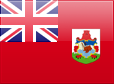 |
| History | |
| Bermuda was first settled in 1609 by shipwrecked English colonists heading for Virginia. Self-governing since 1620, Bermuda is the oldest and most populous of the British overseas territories. Vacationing to the island to escape North American winters first developed in Victorian times. Tourism continues to be important to the island's economy, although international business has overtaken it in recent years. Bermuda has also developed into a highly successful offshore financial center. A referendum on independence from the UK was soundly defeated in 1995. |
|
|  |

| |
| Geography | |
| |
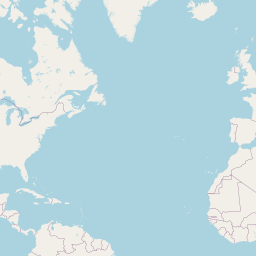
| Location: | North America, group of islands in the North Atlantic Ocean, east of South Carolina (US) |
| Geographic coordinates: | 32 20 N, 64 45 W |
| Area: | total: 54 sq km land: 54 sq km water: 0 sq km Size comparison: about one-third the size of Washington, DC |
| Land Boundaries: | 0 km |
| Coastline: | 103 km |
| Maritime claims: | territorial sea: 12 nm exclusive fishing zone: 200 nm |
| Climate: | subtropical; mild, humid; gales, strong winds common in winter |
| Terrain: | low hills separated by fertile depressions |
| Natural resources: | limestone, pleasant climate fostering tourism |
| Land use: | agricultural land: 14.8% (2011 est.) arable land: 14.8% (2011 est.) permanent crops: 0% (2011 est.) permanent pasture: 0% (2011 est.) forest: 20% (2011 est.) other: 65.2% (2011 est.) |
| Irrigated land: | n/a |
| Natural hazards: | hurricanes (June to November) |
| Current Environment Issues: | dense population and heavy vehicle traffic create serious congestion and air pollution problems; water resources scarce (most obtained as rainwater or from wells); solid waste disposal; hazardous waste disposal; sewage disposal; overfishing; oil spills |
| ^Back to Top | |
| People | |
| |
| Nationality: | noun: Bermudian(s) adjective: Bermudian |
| Ethnic groups: | African descent 53.8%, white 31%, mixed 7.5%, other 7.1%, unspecified 0.6% (2010 est.) |
| Languages: | English (official), Portuguese |
| Religions: | Protestant 46.2% (includes Anglican 15.8%, African Methodist Episcopal 8.6%, Seventh Day Adventist 6.7, Pentecostal 3.5%, Methodist 2.7%, Presbyterian 2.0%, Church of God 1.6%, Baptist 1.2%, Salvation Army 1.1%, Brethren 1.0%, other Protestant 2.0%), Roman Catholic 14.5%, Jehovah's Witness 1.3%, other Christian 9.1%, Muslim 1%, other 3.9%, none 17.8%, unspecified 6.2% (2010 est.) |
| Population: | 71,176 (July 2018 est.) |
| Age structure: | 0-14 years: 16.92% (male 6,088 /female 5,957) 15-24 years: 11.95% (male 4,306 /female 4,197) 25-54 years: 36.56% (male 13,049 /female 12,972) 55-64 years: 16.04% (male 5,383 /female 6,034) 65 years and over: 18.53% (male 5,596 /female 7,594) (2018 est.) |
| Median age: | total: 43.5 years male: 41.5 years female: 45.4 years (2018 est.) |
| Population growth rate: | 0.43% (2018 est.) |
| Birth rate: | 11.3 births/1,000 population (2018 est.) |
| Death rate: | 8.7 deaths/1,000 population (2018 est.) |
| Net migration rate: | 1.7 migrant(s)/1,000 population (2018 est.) |
| Urbanization: | urban population: 100% of total population (2018) rate of urbanization: -0.44% annual rate of change (2015-20 est.) |
| Major urban areas - population: | 10,000 HAMILTON (capital) (2018) |
| Sex ratio: | at birth: 1.02 male(s)/female 0-14 years: 1.02 male(s)/female 15-24 years: 1.03 male(s)/female 25-54 years: 1.01 male(s)/female 55-64 years: 0.89 male(s)/female 65 years and over: 0.74 male(s)/female total population: 0.94 male(s)/female (2018 est.) |
| Infant mortality rate: | total: 2.5 deaths/1,000 live births male: 2.6 deaths/1,000 live births female: 2.4 deaths/1,000 live births (2018 est.) |
| Life expectancy at birth: | total population: 81.5 years male: 78.3 years female: 84.7 years (2018 est.) |
| Total fertility rate: | 1.92 children born/woman (2018 est.) |
| HIV/AIDS - adult prevalence rate: | n/a |
| HIV/AIDS - people living with HIV/AIDS: | n/a |
| HIV/AIDS - deaths: | n/a |
| Education expenditures: | 1.5% of GDP (2017) |
| Literacy: | |
| School life expectancy (primary to tertiary education): | total: 12 years male: 11 years female: 12 years (2015) Unemployment, youth ages 15-24: total: 29.3% male: 29.7% female: 29% (2014 est.) |
| ^Back to Top | |
| Government | |
| |
| Country name: | conventional long form: none conventional short form: Bermuda former: Somers Islands etymology: the islands making up Bermuda are named after Juan de BERMUDEZ, an early 16th century Spanish sea captain and the first European explorer of the archipelago |
| Government type: | parliamentary democracy (Parliament); self-governing overseas territory of the UK |
| Capital: | name: Hamilton geographic coordinates: 32 17 N, 64 47 W time difference: UTC-4 (1 hour ahead of Washington, DC, during Standard Time) daylight saving time: +1hr, begins second Sunday in March; ends first Sunday in November etymology: named after Henry HAMILTON (ca. 1734-1796) who served as governor of Bermuda from 1788-1794 |
| Administrative divisions: | 9 parishes and 2 municipalities*; Devonshire, Hamilton, Hamilton*, Paget, Pembroke, Saint George*, Saint George's, Sandys, Smith's, Southampton, Warwick |
| Independence: | none (overseas territory of the UK) |
| National holiday: | Bermuda Day, 24 May; note - formerly known as Victoria Day, Empire Day, and Commonwealth Day |
| Constitution: | history: several previous (dating to 1684); latest entered into force 8 June 1968 (Bermuda Constitution Order 1968) amendments: proposal procedure - NA; passage by an Order in Council in the UK; amended several times, last in 2012 (2018) |
| Legal system: | English common law |
| Suffrage: | 18 years of age; universal |
| Executive branch: | chief of state: Queen ELIZABETH II (since 6 February 1952); represented by Governor John RANKIN (since 5 December 2016) head of government: Premier David BURT (since 19 July 2017) cabinet: Cabinet nominated by the premier, appointed by the governor elections/appointments: the monarchy is hereditary; governor appointed by the monarch; following legislative elections, the leader of the majority party or majority coalition usually appointed premier by the governor |
| Legislative branch: | description: bicameral Parliament consists of: Senate (11 seats; 3 members appointed by the governor, 5 by the premier, and 3 by the opposition party; members serve 5-year terms) and the House of Assembly (36 seats; members directly elected in single-seat constituencies by simple majority vote to serve up to 5-year terms) House of Assembly (36 seats; members directly elected in single-seat constituencies by simple majority vote to serve up to 5-year terms) elections: Senate - last appointments in August 2017 (next appointments in 2022) House of Assembly - last held on 18 July 2017 (next to be held not later than 2022) election results: Senate - composition - men 7, women 4, percent of women 36.4% House of Assembly - percent of vote by party - PLP 58.9%, OBA 40.6%, other 0.5%; seats by party - PLP 24, OBA 12; composition - men 28, women 8, percent of women 22.2%; note - total Parliament percent of women 25.5% |
| Judicial branch: | highest courts: Court of Appeal (consists of the court president and at least 2 justices); Supreme Court (consists of the chief justice, 4 puisne judges, and 1 associate justice); note - the Judicial Committee of the Privy Council (in London) is the court of final appeal judge selection and term of office: Court of Appeal justice appointed by the governor; justice tenure by individual appointment; Supreme Court judges nominated by the Judicial and Legal Services Commission and appointed by the governor; judge tenure based on terms of appointment subordinate courts: commercial court (began in 2006); magistrates' courts |
| Political parties and leaders: | One Bermuda Alliance or OBA (vacant) Progressive Labor Party or PLP [E. David BURT] |
| International organization participation: | Caricom (associate), ICC (NGOs), Interpol (subbureau), IOC, ITUC (NGOs), UPU, WCO |
| National symbol(s): | red lion |
| National anthem: | name: Hail to Bermuda lyrics/music: Bette JOHNS note: serves as a local anthem; as a territory of the United Kingdom, "God Save the Queen" is official (see United Kingdom) |
| Diplomatic representation in the US: | none (overseas territory of the UK) |
| Diplomatic representation from the US: | chief of mission: Consul General Mary Ellen KOENIG (since 28 November 2015) mailing address: P. O. Box HM325, Hamilton HMBX; American Consulate General Hamilton, US Department of State, 5300 Hamilton Place, Washington, DC 20520-5300 telephone: [1] (441) 295-1342 FAX: [1] (441) 295-1592, 296-9233 consulate(s) general: Crown Hill, 16 Middle Road, Devonshire DVO3 |
| ^Back to Top | |
| Economy | |
International business, which consists primarily of insurance and other financial services, is the real bedrock of Bermuda's economy, consistently accounting for about 85% of the island's GDP. Tourism is the country’s second largest industry, accounting for about 5% of Bermuda's GDP but a much larger share of employment. Over 80% of visitors come from the US and the sector struggled in the wake of the global recession of 2008-09. Even the financial sector has lost roughly 5,000 high-paying expatriate jobs since 2008, weighing heavily on household consumption and retail sales. Bermuda must import almost everything. Agriculture and industry are limited due to the small size of the island. Bermuda's economy returned to negative growth in 2016, reporting a contraction of 0.1% GDP, after growing by 0.6% in 2015. Unemployment reached 7% in 2016 and 2017, public debt is growing and exceeds $2.4 billion, and the government continues to work on attracting foreign investment. Still, Bermuda enjoys one of the highest per capita incomes in the world. | |
| GDP (purchasing power parity): | $6.127 billion (2016 est.) $6.133 billion (2015 est.) $6.097 billion (2014 est.) |
| GDP (official exchange rate): | $6.127 billion (2016 est.) (2016 est.) |
| GDP - real growth rate: | -0.1% (2016 est.) 0.6% (2015 est.) -0.3% (2014 est.) |
| GDP - per capita (PPP): | $99,400 (2016 est.) $95,500 (2015 est.) $87,500 (2014 est.) GDP - composition, by end use: household consumption: 51.3% (2017 est.) government consumption: 15.7% (2017 est.) investment in fixed capital: 13.7% (2017 est.) investment in inventories: 0% (2017 est.) exports of goods and services: 49.8% (2017 est.) imports of goods and services: -30.4% (2017 est.) GDP - composition, by sector of origin: agriculture: 0.9% (2017 est.) industry: 5.3% (2017 est.) services: 93.8% (2017 est.) |
| Agriculture - products: | bananas, vegetables, citrus, flowers; dairy products, honey |
| Industries: | international business, tourism, light manufacturing |
| Industrial production growth rate: | 2% (2017 est.) |
| Labor force: | 33,480 (2016 est.) |
| Labor force - by occupation: | agriculture: 2% industry: 13% services: 85% (2016 est.) |
| Unemployment rate: | 7% (2017 est.) 7% (2016 est.) |
| Population below poverty line: | 11% (2008 est.) |
| Household income or consumption by percentage share: | lowest 10%: n/a highest 10%: n/a |
| Budget: | revenues: 999.2 million (2017 est.) expenditures: 1.176 billion (2017 est.) |
| Taxes and other revenues: | 16.3% (of GDP) (2017 est.) Budget surplus (+) or deficit (-): -2.9% (of GDP) (2017 est.) |
| Public debt: | 43% of GDP (FY14/15) |
| Fiscal year: | 1 April - 31 March |
| Inflation rate (consumer prices): | 1.9% (2017 est.) 1.4% (2016 est.) |
| Current account balance: | $818.6 million (2017 est.) $763 million (2016 est.) |
| Exports: | $19 million (2017 est.) $19 million (2016 est.) |
| Exports - commodities: | reexports of pharmaceuticals |
| Exports - partners: | Jamaica 49.1%, Luxembourg 36.1%, US 4.9% (2017) |
| Imports: | $1.094 billion (2017 est.) $980 million (2016 est.) |
| Imports - commodities: | clothing, fuels, machinery and transport equipment, construction materials, chemicals, food and live animals |
| Imports - partners: | US 72.1%, South Korea 9.7%, Canada 4.2% (2017) |
| Debt - external: | $2.515 billion (2017 est.) $2.435 billion (2015 est.) |
| Stock of direct foreign investment - at home: | $2.641 billion (2014 est.) $2.664 billion (2013 est.) |
| Stock of direct foreign investment - abroad: | $889 million (2014 est.) $835 million (2013 est.) |
| Market value of publicly traded shares: | $1.85 billion (31 December 2015 est.) $1.601 billion (31 December 2014 est.) $1.467 billion (31 December 2013 est.) |
| Exchange rates: | Bermudian dollars (BMD) per US dollar - 1 (2017 est.) 1 (2016 est.) 1 (2015 est.) 1 (2014 est.) 1 (2013 est.) |
| ^Back to Top | |
| Energy | |
| |
| Electricity - production: | 650 million kWh (2016 est.) |
| Electricity - consumption: | 604.5 million kWh (2016 est.) |
| Electricity - exports: | 0 kWh (2016 est.) |
| Electricity - imports: | 0 kWh (2016 est.) |
| Electricity - installed generating capacity: | 171,000 kW (2016 est.) |
| Electricity - from fossil fuels: | 100% of total installed capacity (2016 est.) |
| Electricity - from nuclear fuels: | 0% of total installed capacity (2017 est.) |
| Electricity - from hydroelectric plants: | 0% of total installed capacity (2017 est.) |
| Electricity - from other renewable sources: | 0% of total installed capacity (2017 est.) note: the Tynes Bay Waste Treatment Facility turns waste to electric energy |
| Crude oil - production: | 0 bbl/day (2017 est.) |
| Crude oil - exports: | 0 bbl/day (2015 est.) |
| Crude oil - imports: | 0 bbl/day (2015 est.) |
| Crude oil - proved reserves: | 0 bbl (1 January 2018 est.) |
| Refined petroleum products - production: | 0 bbl/day (2017 est.) |
| Refined petroleum products - consumption: | 5,000 bbl/day (2016 est.) |
| Refined petroleum products - exports: | 0 bbl/day (2015 est.) |
| Refined petroleum products - imports: | 3,939 bbl/day (2015 est.) |
| Natural gas - production: | 0 cu m (2017 est.) |
| Natural gas - consumption: | 0 cu m (2017 est.) |
| Natural gas - exports: | 0 cu m (2017 est.) |
| Natural gas - imports: | 0 cu m (2017 est.) |
| Natural gas - proved reserves: | 0 cu m (1 January 2014 est.) |
| Carbon dioxide emissions from consumption of energy: | 793,700 Mt (2017 est.) |
| ^Back to Top | |
| Communications | |
| |
| Cellular Phones in use: | total subscriptions: 64,997 subscriptions per 100 inhabitants: 92 (2017 est.) |
| Telephone system: | general assessment: a good, fully automatic digital telephone system with fiber-optic trunk lines; telecom sector provides a relatively high contribution to overall GDP; numerous competitors licensed, but small and localized (2018) domestic: the system has a high fixed-line teledensity 31 per 100, coupled with a mobile-cellular teledensity of roughly 92 per 100 persons (2018) international: country code - 1-441; landing points for the GlobeNet, Gemini Bermuda, CBUS, and the Challenger Bermuda-1 (CB-1) submarine cables; satellite earth stations - 3 |
| Broadcast media: | 3 TV stations; cable and satellite TV subscription services are available; roughly 13 radio stations operating |
| Internet country code: | .bm |
| Internet users: | total: 69,126 percent of population: 98% (July 2016 est.) |
| ^Back to Top | |
| Transportation | |
| |
| Airports: | 1 (2013) |
| Airports (paved runways): | total 1 (2017) 2,438 to 3,047 m: 1 (2017) |
| Roadways: | total 447 km (2010) paved: 447 km (2010) note: 225 km public roads; 222 km private roads |
| Merchant marine: | total 160 by type: bulk carrier 6, container ship 11, general cargo 1, oil tanker 19, other 123 (2018) |
| Ports and terminals: | major seaport(s): Hamilton, Ireland Island, Saint George |
| ^Back to Top | |
| Military | |
| |
| Defense is the responsibility of the UK | |
| Military branches: | Bermuda Regiment (2012) |
| Military service age and obligation: | 18-45 years of age for voluntary male or female enlistment in the Bermuda Regiment; males must register at age 18 and may be subject to conscription; term of service is 38 months for volunteers or conscripts (2012) |
| ^Back to Top | |
| Transnational Issues | |
| |
| Disputes - International: | none |
| ^Back to Top | |
Bermuda Previous Country | Next Country »
Source: CIA - The World Factbook